

The average American wedding now costs over $29,000. But thousands of couples every year pull off stunning, joyful celebrations for a fraction of that price — and they are not cutting corners on love. They are cutting corners on overpriced vendor packages, unnecessary traditions, and industry upselling.
This guide will walk you through exactly how to plan a wedding on a budget, from setting your first number all the way to your wedding day. Every section includes actionable budget wedding ideas backed by what real couples actually did to save money.
Quick stat: Couples who set a written budget before booking any vendors spend 28% less on average. Start here.
Step 1: Set a Realistic Budget Before You Do Anything Else
The single most important wedding on a budget tip is this: agree on a hard number before you fall in love with a venue. Once you see the dreamy vineyard, the mental gymnastics begin. Decide your ceiling first.
Have an honest conversation with your partner — and anyone contributing financially — about three numbers:
- Your absolute maximum (the number that ends the conversation)
- Your target (where you ideally want to land)
- Your minimum viable wedding (courthouse + dinner with 10 people)
Knowing all three keeps you grounded. The minimum number is especially powerful — it reminds you that the marriage is the goal, not the party.
How to allocate your wedding budget by category
Use these percentages as a starting framework, then adjust based on your priorities:
| Category | Budget Avg | Our Target | Savings Tip |
| Venue | $5,000 | $800–1,200 | Opt for parks, backyards, or off-peak Sundays |
| Catering | $4,500 | $1,000–1,800 | Food trucks, buffet style, or brunch reception |
| Photography | $2,800 | $700–1,200 | Book emerging photographers, limit hours |
| Flowers/Decor | $2,000 | $300–600 | Greenery + candles, wholesale blooms, DIY |
| Music/DJ | $1,200 | $200–400 | Curated Spotify playlist + quality speaker |
| Dress/Attire | $1,800 | $300–800 | Sample sales, BHLDN, secondhand |
| Invitations | $500 | $50–100 | Canva digital invites or print-at-home |
| Wedding Cake | $600 | $100–200 | Sheet cakes, grocery store, dessert bar |
| Officiant | $400 | $0–150 | Friend ordained online or courthouse |
| Hair & Makeup | $600 | $150–300 | Beauty school students, one artist for all |
| Miscellaneous | $1,000 | $200–400 | 10% buffer for surprise costs |
| TOTAL | $20,400+ | $3,800–7,150 | Save 65%+ vs. average American wedding |
Step 2: Cut the Guest List First — It Changes Everything
No single decision affects your budget more than guest count. Every head at the table costs you in catering, seating, invitations, and venue size. Cutting 20 guests can easily save $2,000 to $5,000.
A budget wedding checklist should start here: write your ideal guest list, then cut it in thirds. Keep the first third (your inner circle), carefully review the second third, and genuinely question the third.
- Do not invite coworkers out of obligation
- Children under 12 can often be excluded with a polite note on the invite
- A smaller wedding lets you spend more per person on food and experience
Budget wedding idea: A 30-person micro-wedding with great food, an intimate venue, and a talented photographer will photograph and feel more special than a 150-person event where the budget is stretched thin.
Step 3: Choose the Right Venue to Save Thousands
Venue is typically the biggest line item in any wedding budget. It is also where the most creative savings live. The best cheap wedding venues are often the most beautiful — they just require a different mindset.
Venue types that slash your costs
- Public parks and gardens: Many charge $100 to $500 for a permit. Bring your own tables and chairs.
- Family property: A family farm, backyard, or lake house is often free. Add string lights and you have a magazine-worthy wedding.
- Community centers and local halls: $300 to $800 for the day, and you often supply your own catering.
- Restaurant private dining rooms: Many offer a set menu for 30 to 50 guests at a fraction of a traditional venue.
- Art galleries and studios: Off-hours rental is surprisingly affordable and already beautifully decorated.
- Weekday or Sunday weddings: Friday or Sunday venue rates are often 30 to 50% lower than Saturday.
- Off-season: November through March (excluding holidays) sees venue prices drop significantly.
Step 4: Master the Art of Inexpensive Wedding Flowers
Florals are one of the easiest places to overspend. A full floral package from a wedding florist can run $2,000 to $8,000. But inexpensive wedding flowers do not mean cheap-looking flowers — they mean smart choices.
- Order wholesale: Costco, Sam’s Club, and online wholesalers like Blooms by the Box sell flowers at 70 to 80% below retail.
- Choose seasonal blooms: Out-of-season flowers cost more to source. Ask your grocery store floral department what is seasonal and abundant.
- Go greenery-forward: Eucalyptus, ferns, and ivy are cheap, abundant, and photograph beautifully. They carry an arrangement without needing many blooms.
- Use potted plants: Succulents and herbs double as centerpieces and guest favors.
- Hire a florist for structure only: Pay a florist for a consultation and one or two statement arrangements, then DIY the rest with their guidance.
Real couple savings: Substituting 80% of blooms with eucalyptus garlands and candles saved one couple $1,400 on their floral budget — and their photos looked stunning.
Step 5: Budget Wedding Catering Ideas That Actually Work
Food and beverage is the area where budget wedding catering ideas get creative. The traditional sit-down dinner with a full open bar is expensive by design. Consider these alternatives:
- Brunch or lunch reception: Morning and midday food costs 25 to 40% less than dinner. Champagne toast instead of full bar.
- Food truck: One or two food trucks serve 50 to 100 guests for $1,500 to $3,000 and bring built-in fun.
- Buffet or family style: Less formal than plated service and requires fewer servers.
- Beer and wine only: Eliminating a full liquor bar cuts your bar bill by 50 to 60%.
- Potluck-style: Works beautifully for small, intimate weddings where guests love to contribute.
- Dessert bar instead of cake: Cookies, brownies, and mini pies from a grocery bakery cost $100 to $200 instead of $600.
Step 6: Save Money on Wedding Photography Without Sacrificing Quality
Photography is the one place many budget experts say: spend wisely, do not just go cheap. Your photos are your lasting memory. Here is how to find an affordable wedding photographer who delivers quality:
- Book an emerging photographer: Second and third-year photographers are building their portfolio and charge 40 to 60% less than established names. Review their galleries carefully — talent does not always correlate with price.
- Limit hours: Book four to five hours of coverage instead of eight. You get ceremony, portraits, and first dances without paying for the full reception.
- Skip the second shooter: For weddings under 80 guests, a skilled solo photographer is sufficient.
- Ask about weekday or off-season discounts: Many photographers reduce rates for non-Saturday dates.
- Use a photography student for engagement photos: Save your professional photographer for the wedding day only.
Step 7: DIY Strategically — Not Everything
DIY wedding decorations cheap is a popular search for good reason — but DIY done wrong costs more in time, stress, and reshoots than it saves. The rule is: DIY things that are simple, forgiving, and time-insensitive.
Good DIY candidates: invitations, table numbers, signage, favor tags, centerpiece assembly (with pre-bought components), guest book, seating chart.
Avoid DIYing: the cake (unless someone in your family is a baker), florals from scratch without experience, complex crafts that need professional tools, anything that must look perfect under pressure.
Step 8: Use Free Wedding Planning Tools
One of the most underused budget wedding ideas is leveraging free planning tools to stay organised and avoid costly mistakes. Here are the best free tools to use right now:
- Google Sheets: Build your master budget tracker, vendor contact list, and guest list in one place.
- Canva: Design save-the-dates, invitations, menus, signs, and programs for free. Print at home or through a cheap online printer.
- Zola: Free wedding website, guest RSVP management, and registry all in one.
- Trello or Notion: Manage your planning timeline and to-do lists visually.
- Pinterest: Research real budget weddings and collect ideas by category.
- YouTube: Find tutorials for every DIY project imaginable — florals, updo hairstyles, cake decorating, and more.
Step 9: Negotiate With Every Vendor
Most couples never ask for a discount. Vendors are often willing to negotiate — especially for off-peak dates, last-minute bookings, or bundled services. Here is how to save money on a wedding through negotiation:
- Always ask: ‘Is this your best price for a Sunday in November?’ — many vendors say yes to honest requests.
- Bundle services: A caterer who also provides tables and linens may discount the package.
- Pay cash where possible: Some small vendors offer a 3 to 5% discount to avoid card processing fees.
- Book early or last minute: Prime dates are gone early; last-minute slots are discounted.
- Ask what is included vs. what can be removed: Many packages include items you do not need.
Step 10: Track Every Penny in Real Time
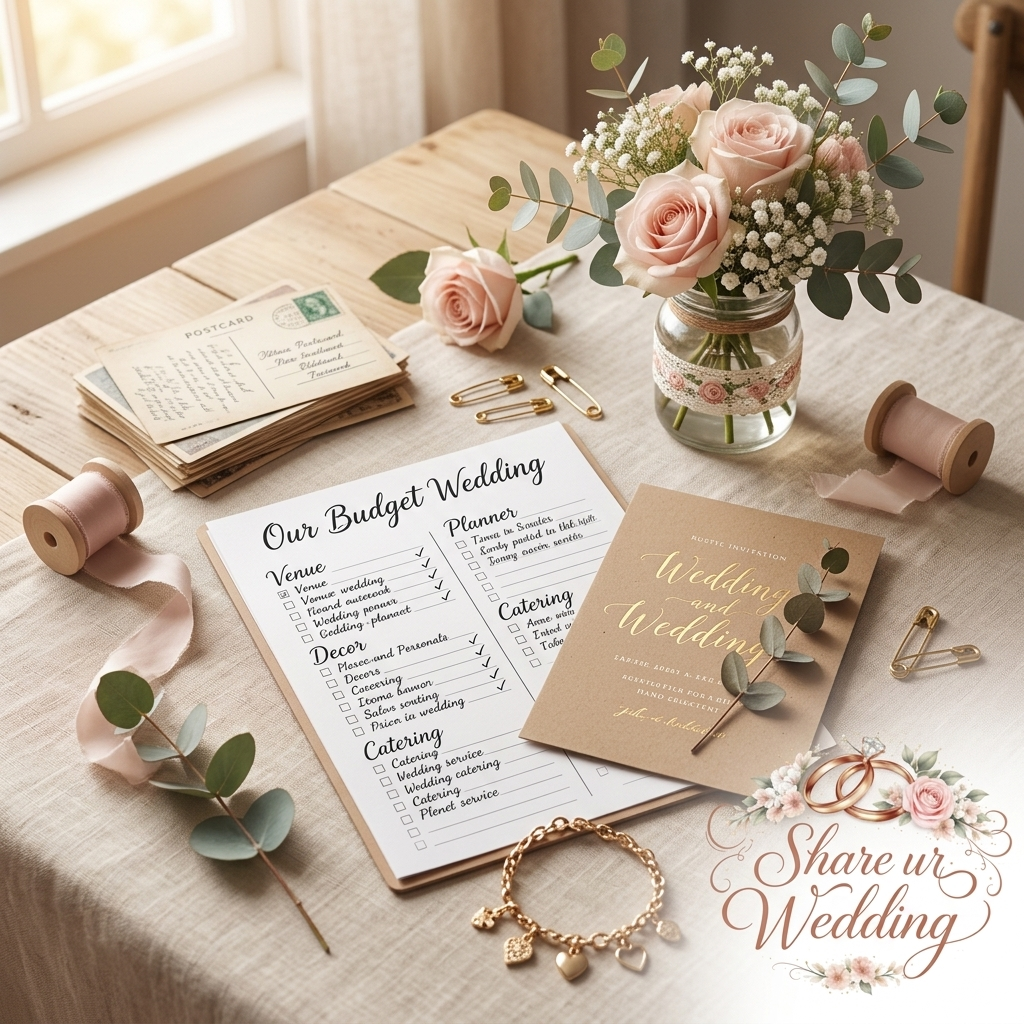
The biggest budget mistake couples make is losing track as they go. A budget wedding checklist is only useful if you use it consistently. Set a rule: no vendor is booked, no purchase is made, without updating your budget tracker first.
Use colour coding: green for under budget, yellow for on track, red for over. A single overspend in one category — say, a venue deposit that was higher than expected — needs to trigger immediate cuts elsewhere.
Pro tip: Review your full budget together as a couple every two weeks. Treat it like a financial date night. Couples who do this consistently end up spending 20% less and arriving at the wedding day without financial stress.
Frequently Asked Questions
What is a realistic budget for a small wedding?
For 30 to 50 guests, a realistic budget is $3,500 to $8,000. For 50 to 80 guests, plan for $6,000 to $14,000. Costs vary significantly by location — urban areas cost more than rural ones.
What are the best ways to save money on a wedding?
The five highest-impact ways to save money on a wedding are: reduce guest count, choose a non-Saturday date, use a non-traditional venue, limit the bar to beer and wine, and book an emerging photographer.
Can you plan a wedding on a budget checklist in one month?
Yes — micro-weddings of 20 to 30 people can be planned in 4 to 6 weeks. Focus on venue, officiant, photographer, and food in that order. Everything else is secondary.
What should I not cheap out on at a wedding?
Photography (you cannot redo it), food quality (guests remember it), and comfortable seating. Everything else has excellent budget alternatives.