

There is something about the haldi ceremony that no other wedding function quite matches.
The house smells like turmeric and marigold. Someone has dragged out the old brass urli from the storage room and filled it with flowers. The dhol has started somewhere in the background, and three aunties are already singing in the kitchen. The bride is sitting in the middle of all of it — slightly mortified, completely loved, smiling so wide her face hurts — while every person she has ever been close to takes turns making her laugh and covering her in yellow.
It is chaotic and beautiful and emotionally overwhelming in the best possible way. And it happens in about two hours, which is why the photographs from haldi ceremonies are consistently the most joyful, most alive images from the entire wedding.
But here is the thing — the chaos is worth planning around. The right decoration does not control the moment. It frames it. A marigold backdrop behind the bride, a decorated chowki, string lights overhead, flower petals on the ground — these things do not make the haldi ceremony more formal. They make it more beautiful. They turn the photographs from good to stunning. And they tell your guests, from the moment they walk in, that this morning is going to be something worth remembering.
This guide gives you 30 specific haldi ceremony decoration ideas for 2026 — organised by style, budget, venue type, and regional tradition. Whether you are decorating your living room for 30 people or setting up an outdoor lawn for 200 guests, there is something here that will work for you.
30 Haldi Ceremony Ideas — At a Glance
- Classic marigold floral backdrop — the timeless choice that never fails
- Suspended floral chandelier — the 2026 upgrade to the flower wall
- Bohemian marigold and jute setup — earthy, warm, and deeply photogenic
- South Indian traditional haldi — banana leaves, brass, kolam, and jasmine
- Eco-friendly green haldi — potted plants, terracotta, and zero waste
Read all 30 ideas below — organised by style, budget, and venue.
Why Haldi Decoration Matters More Than You Think
Most families spend months planning the wedding ceremony and reception decoration. The haldi gets whatever is left over — usually a last-minute call to the local florist the evening before.
This is a mistake. And we say it gently, because it is an understandable one.
Here is the truth: the haldi ceremony produces some of the most-viewed and most-shared photographs from any Indian wedding. The bright yellow, the turmeric paste flying through the air, the expressions of laughter and love — these are the images that end up on Instagram, framed on living room walls, and tucked into wedding albums as the photographs that best capture what the celebration actually felt like.
And those photographs look completely different with a thought-out backdrop versus without one. A marigold flower wall or a decorated seating area behind the bride takes the photography from nice to breathtaking. It creates a dedicated focal point. It tells the photographer where to put the frame. And it gives guests a backdrop they actually want to stand in front of.
You do not need a grand budget. You need a clear idea, executed well. That is exactly what these 30 ideas are designed to give you.
Before You Decide: Think about where your haldi will be held — home, outdoor lawn, banquet hall, or destination venue. Your decoration options differ significantly based on the space. Also decide early whether you want a traditional, contemporary, bohemian, or regionally specific theme. The ideas in this guide are organised to help with both decisions.
Part 1: Classic Floral Haldi Ceremony Decoration Ideas
Marigolds. Turmeric yellow. Warm orange. These three things have been the soul of Indian haldi decoration for generations and they continue to be the most beautiful, most culturally resonant choice in 2026. Here are the ten best ways to work with them.
1.The Classic Marigold Floral Backdrop
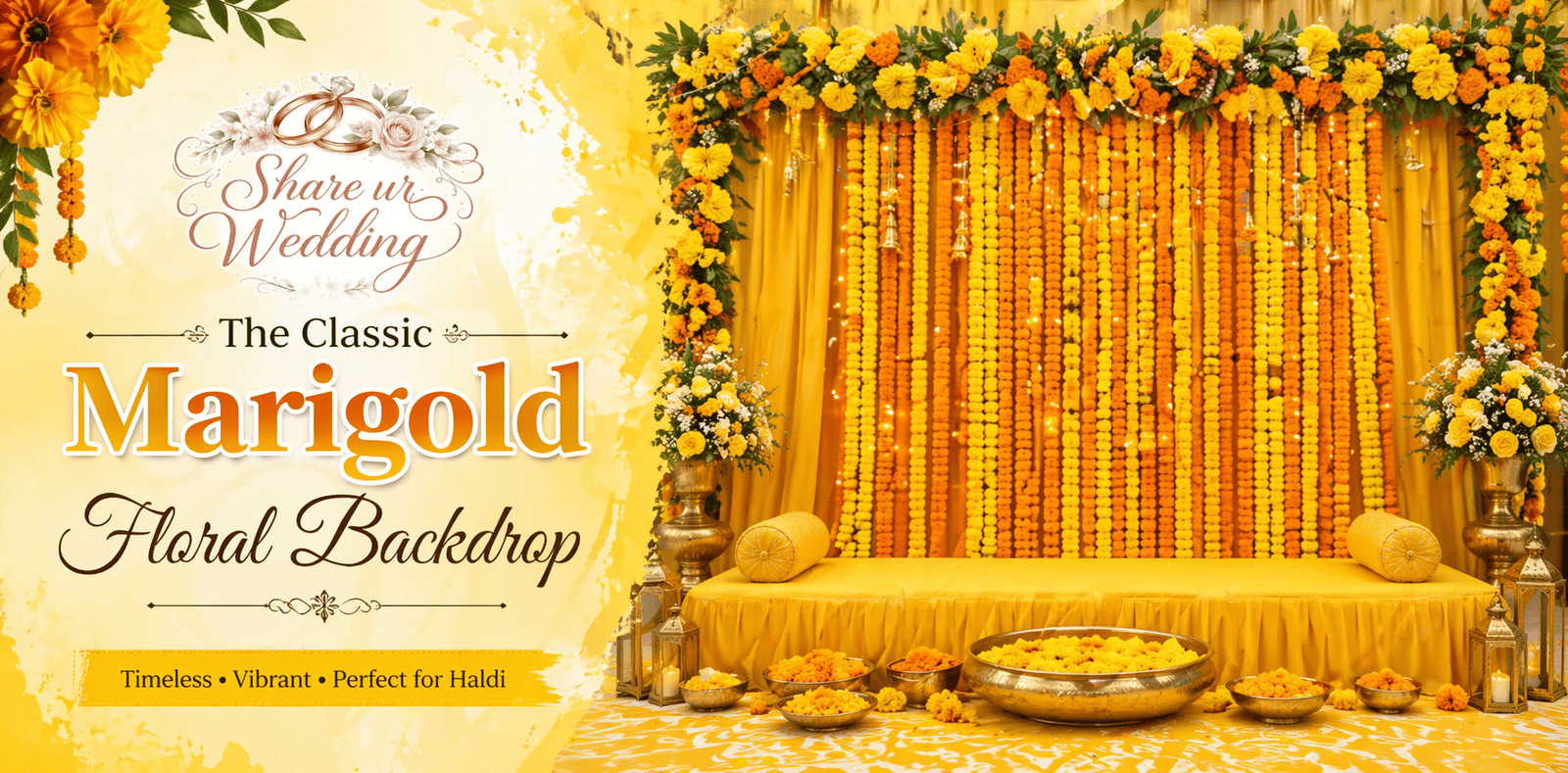
A wall of marigold flowers — strung densely, covering a full backdrop behind the bride’s seating area. In 2026, the flower wall is being elevated with layered depth: different sizes of marigold blooms, interspersed with smaller yellow and orange flowers, and occasionally with pops of white tuberose for contrast. This is the most widely photographed haldi decoration in India for good reason — it is vibrant, culturally resonant, and it makes every photograph look spectacular.
Budget: ₹3,000 – ₹15,000 depending on size and flower density
Pro tip: Have the backdrop assembled the morning of the ceremony — marigolds wilt in afternoon heat. Request fresh flowers delivered that morning, not the previous night.
2.Suspended Floral Chandelier Overhead
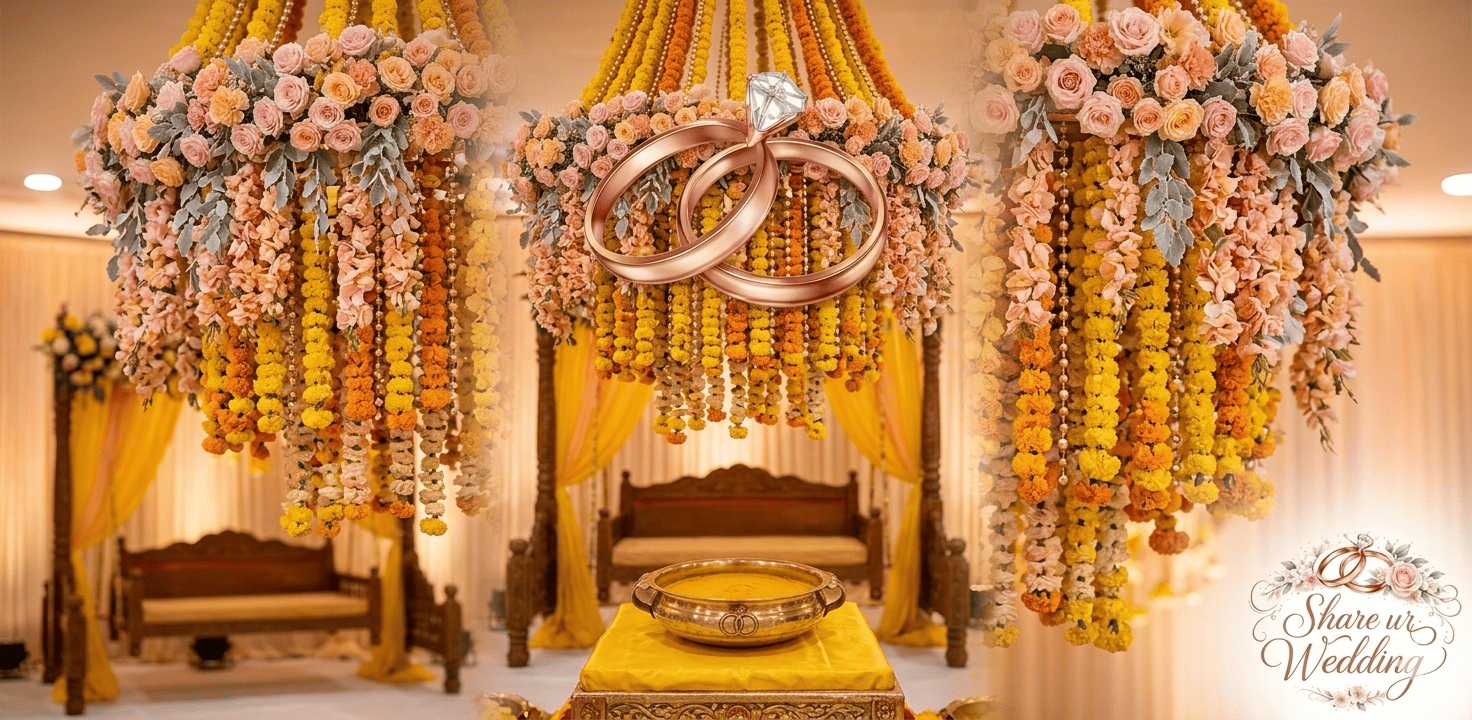
Instead of — or in addition to — a flat flower wall, suspend clusters of marigold, rose, and chrysanthemum blooms at varying heights from the ceiling above the ceremonial area. This creates a three-dimensional canopy of flowers that looks extraordinary from every angle and photographs beautifully from above (especially with a drone). This is one of the biggest haldi decoration trends of 2026, replacing the flat flower wall as the focal point in more adventurous setups.
Budget: ₹8,000 – ₹25,000 depending on volume and installation
Pro tip: Works best in outdoor venues with a sturdy overhead structure. For home haldis, use the doorframe or a simple bamboo structure — even a smaller cluster overhead transforms the space.
3.Marigold Gajra and String Light Canopy
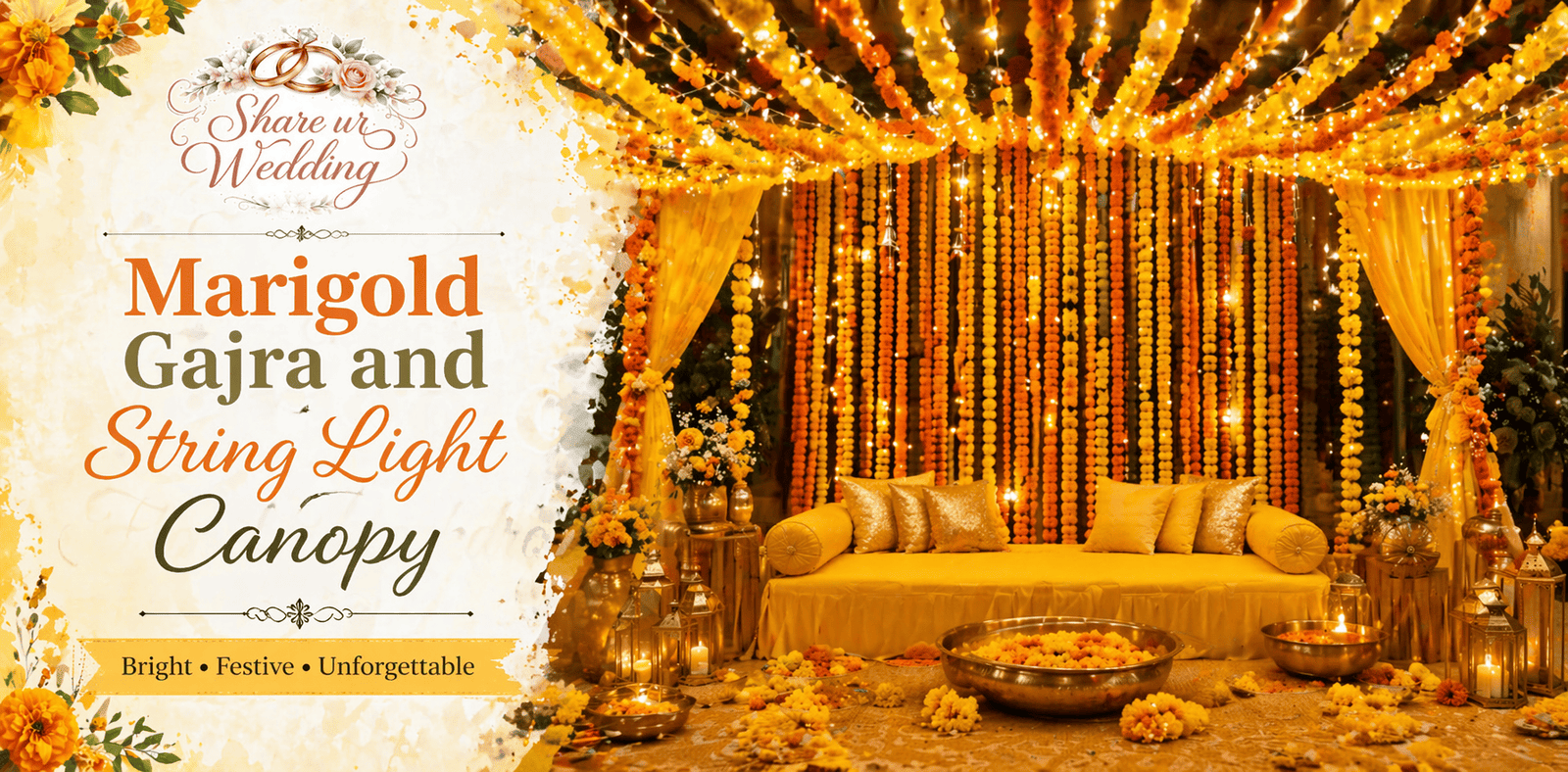
Long strings of marigold garlands draped overhead in parallel lines, interspersed with warm string lights. This creates a ceiling of gold and warmth that makes the entire space feel like the inside of a lantern. It is best suited for evening or early morning haldis where the light interplay becomes magical. Relatively affordable, extremely photogenic, and it works beautifully in both indoor and outdoor spaces.
Budget: ₹4,000 – ₹12,000
Pro tip: Use warm white string lights — not cool white or coloured. Warm white looks like candlelight and complements the golden marigold perfectly.
4.Floral Chowki and Bride’s Throne
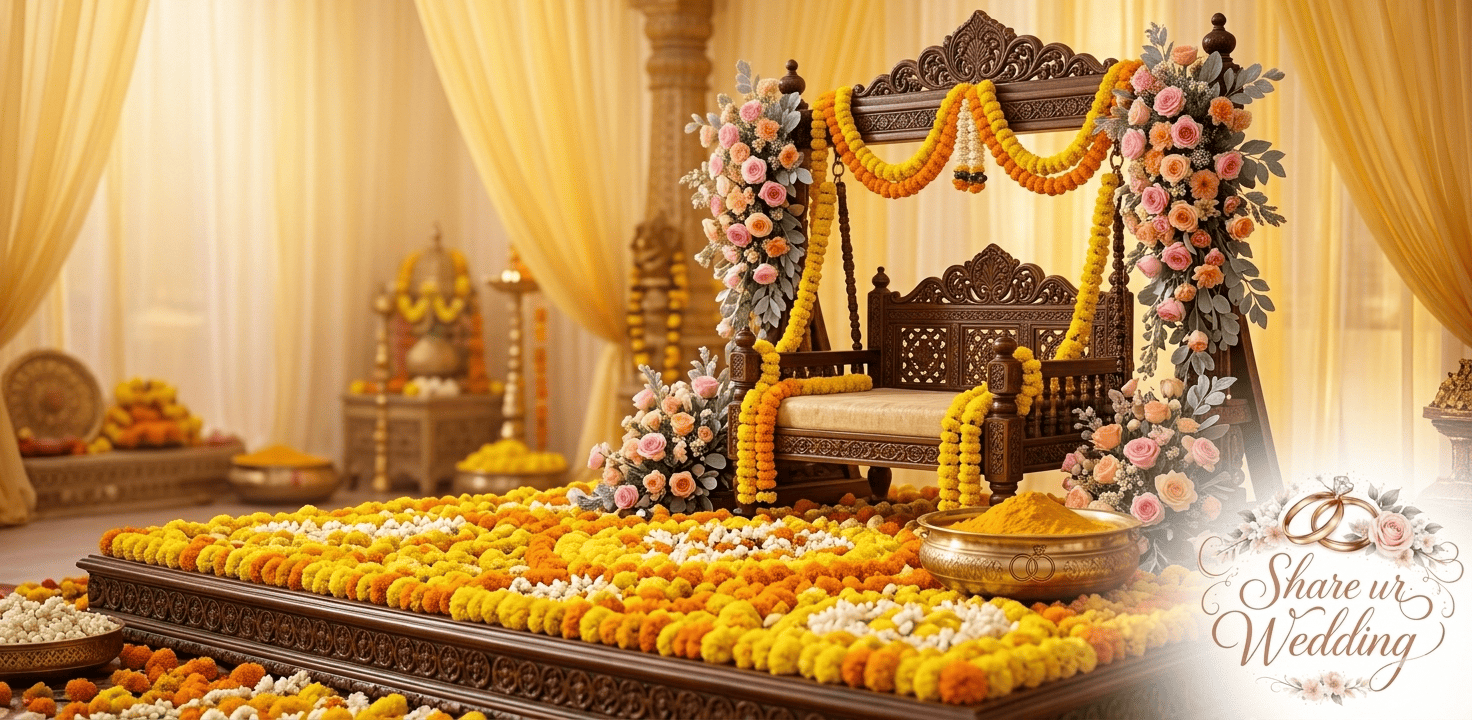
The bride’s seating area is the centrepiece of the entire haldi ceremony — everything else in the decoration leads the eye back to where she sits. A decorated chowki (low wooden platform) or a floor-level seating mat surrounded by marigold arrangements, rose petals, and rangoli creates a setting that feels sacred and festive simultaneously. Add a small canopy of flowers above the seating for additional visual impact.
Budget: ₹2,000 – ₹8,000
Pro tip: Ensure the seating is genuinely comfortable — the bride will sit here for the entire ceremony. A well-cushioned, low chowki with back support works better than a formal chair for the informal energy of a haldi.
5.Rangoli Welcome at the Entrance
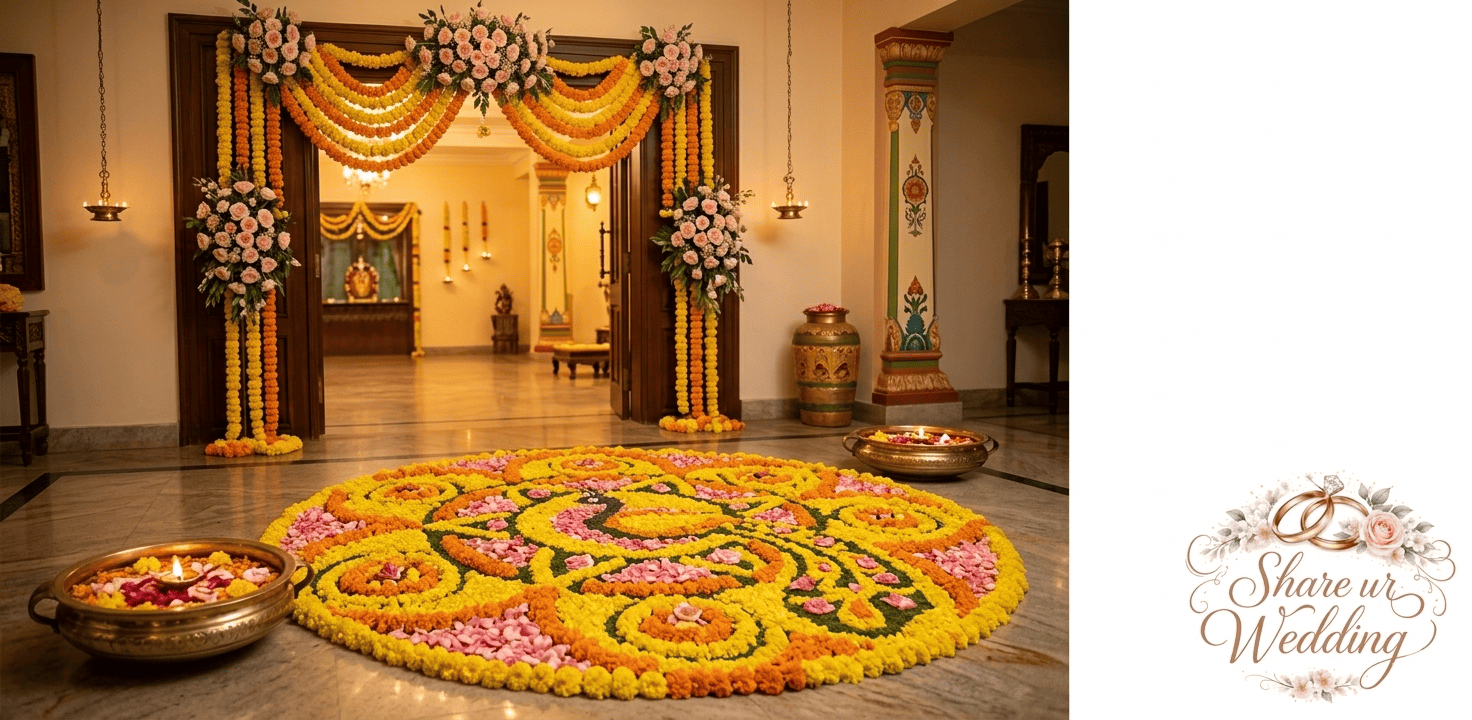
A large, intricate rangoli at the entrance to the haldi ceremony space sets the tone immediately. Yellow and orange turmeric-coloured rangoli patterns with marigold petal borders create a visually stunning welcome that guests walk through or around, immediately understanding the celebration’s colour palette. Add small brass diyas around the border for additional warmth.
Budget: ₹500 – ₹3,000 for a professional rangoli artist |
Pro tip: Commission a professional rangoli artist at least one week in advance. The best artists book quickly during wedding season. If doing it yourself, sketch the design with chalk first.
6.Marigold Toran and Entrance Archway
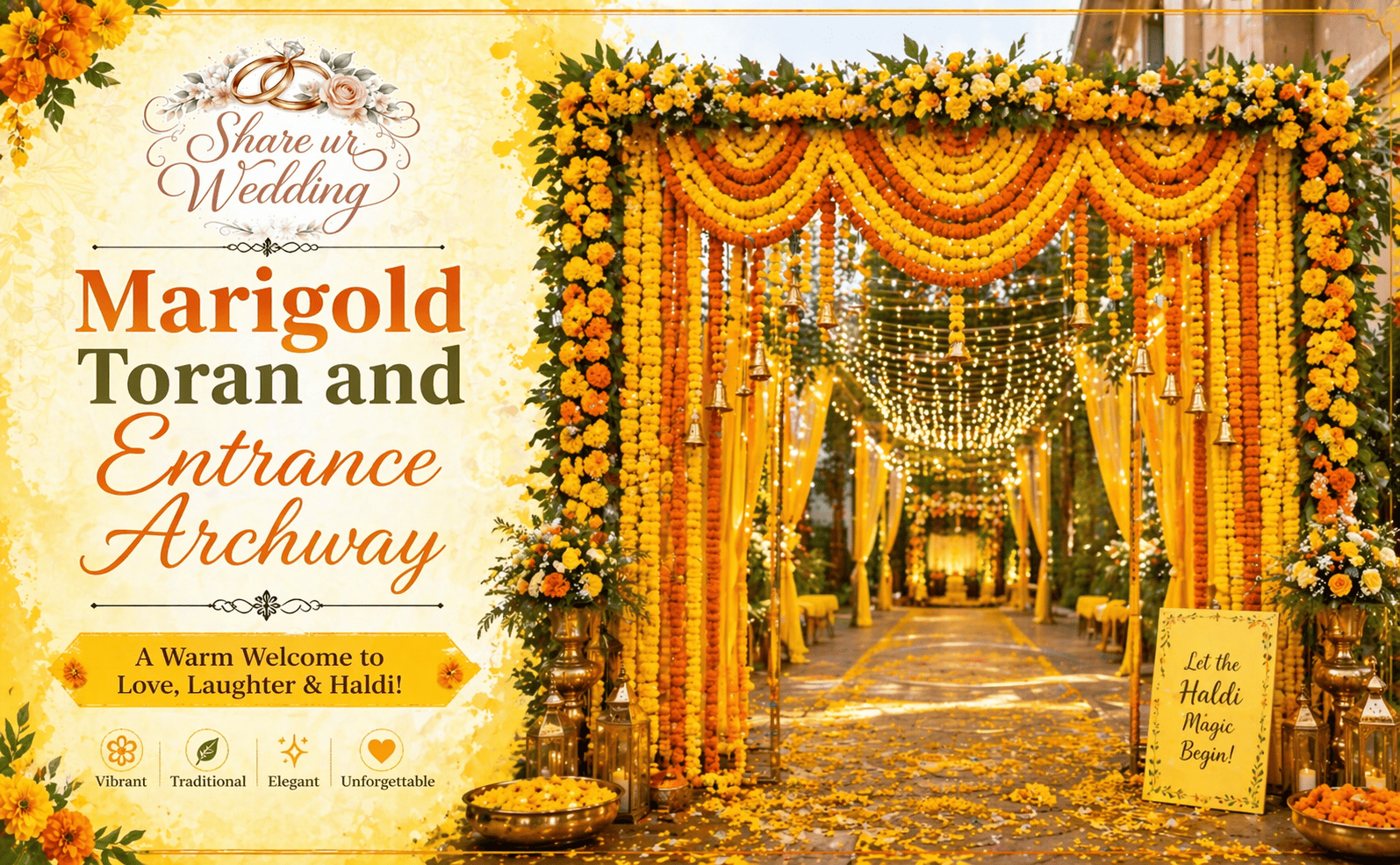
A floral archway at the entrance — strung with marigold garlands, mango leaves, and small flower bunches — creates an immediate visual statement and serves as a natural photography spot. Every guest will want to photograph walking under or standing in front of it. Keep the arch proportionate to the entrance — a very wide entrance needs a wider arch to maintain visual balance.
Budget: ₹2,500 – ₹8,000 |
Pro tip: Add a small welcome sign with the couple’s names or a haldi-themed message inside the arch. A hand-painted or calligraphy welcome board inside the marigold frame creates an Instagram-worthy moment.
7.Flower Cushion Seating for Guests
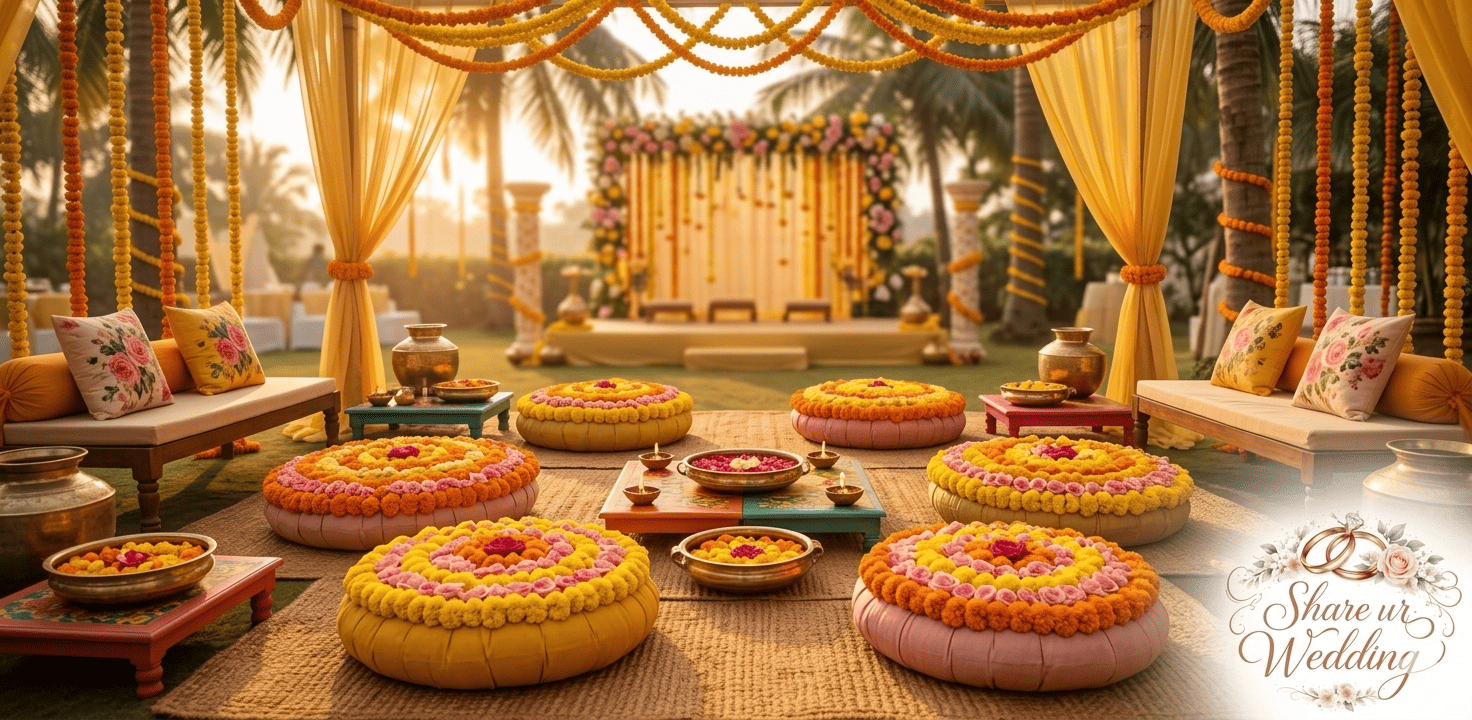
Instead of plastic chairs or standard banquet seating, create a low-level seating area for guests using floor cushions, mattresses with bolsters, and marigold flower arrangements at each seating cluster. This informal, ground-level seating mirrors the traditional Indian ceremony setup and creates a warm, close atmosphere that standard chair-and-table arrangements cannot replicate.
Budget: ₹5,000 – ₹18,000 for full seating setup |
Pro tip: This works best for smaller, more intimate haldis. For 100+ guests, a combination of cushion seating near the bride and chairs further back strikes the right balance.
8.Urli Bowl Floral Centrepieces
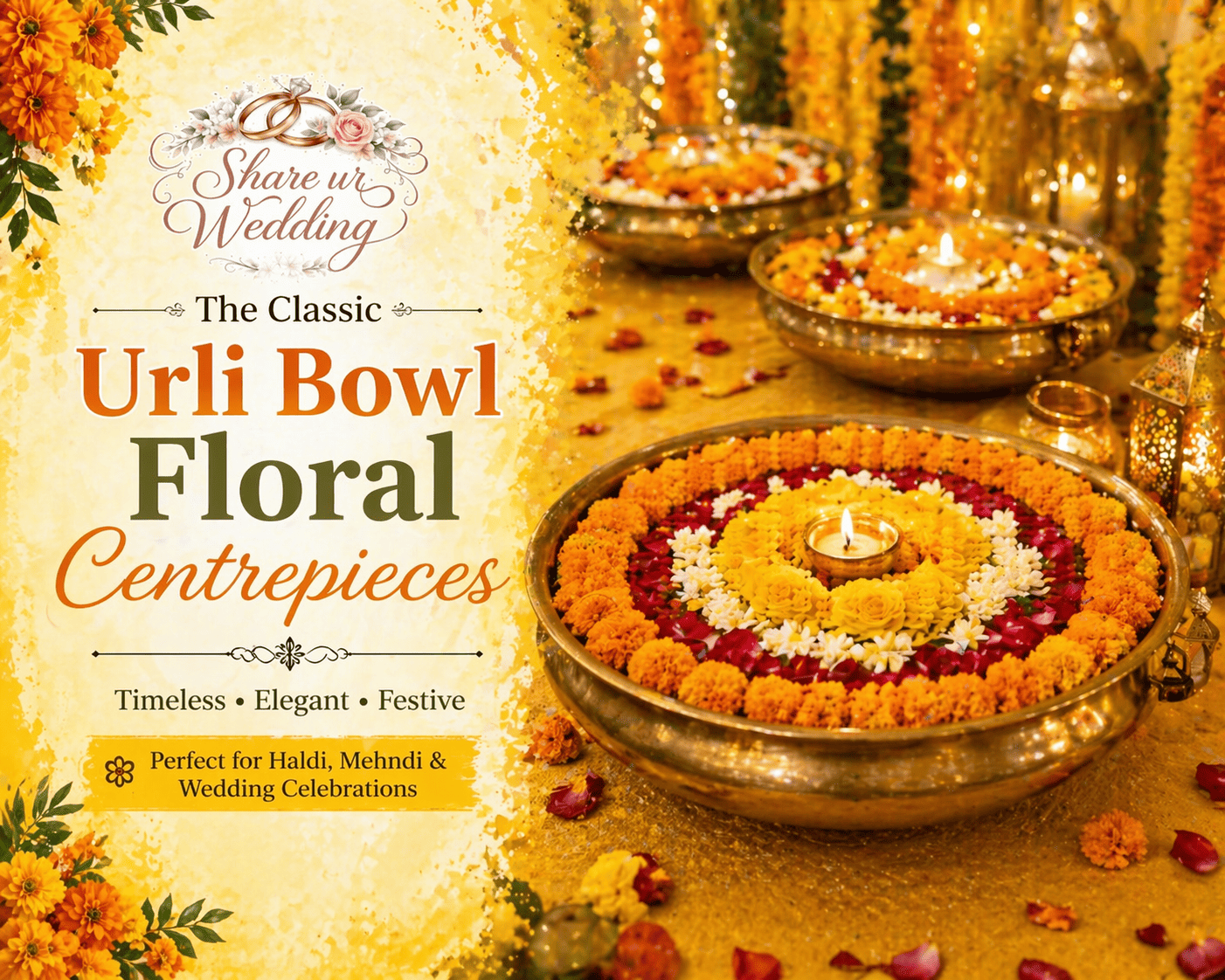
Traditional brass or copper urli bowls filled with water, floating marigold blooms, and rose petals create stunning centrepieces that are deeply rooted in Indian tradition and beautifully photogenic. Place them on the food table, the seating area, and at the entrance as a gentle, aromatic decoration. The reflection of flowers on the water surface photographs exquisitely.
Budget: ₹800 – ₹3,000 for multiple urlis |
Pro tip: Buy or rent genuine brass urlis rather than plastic replicas. The authentic warmth of real brass in photographs is unmistakably different from synthetic alternatives.
9.Petal Shower Station for the Ceremony
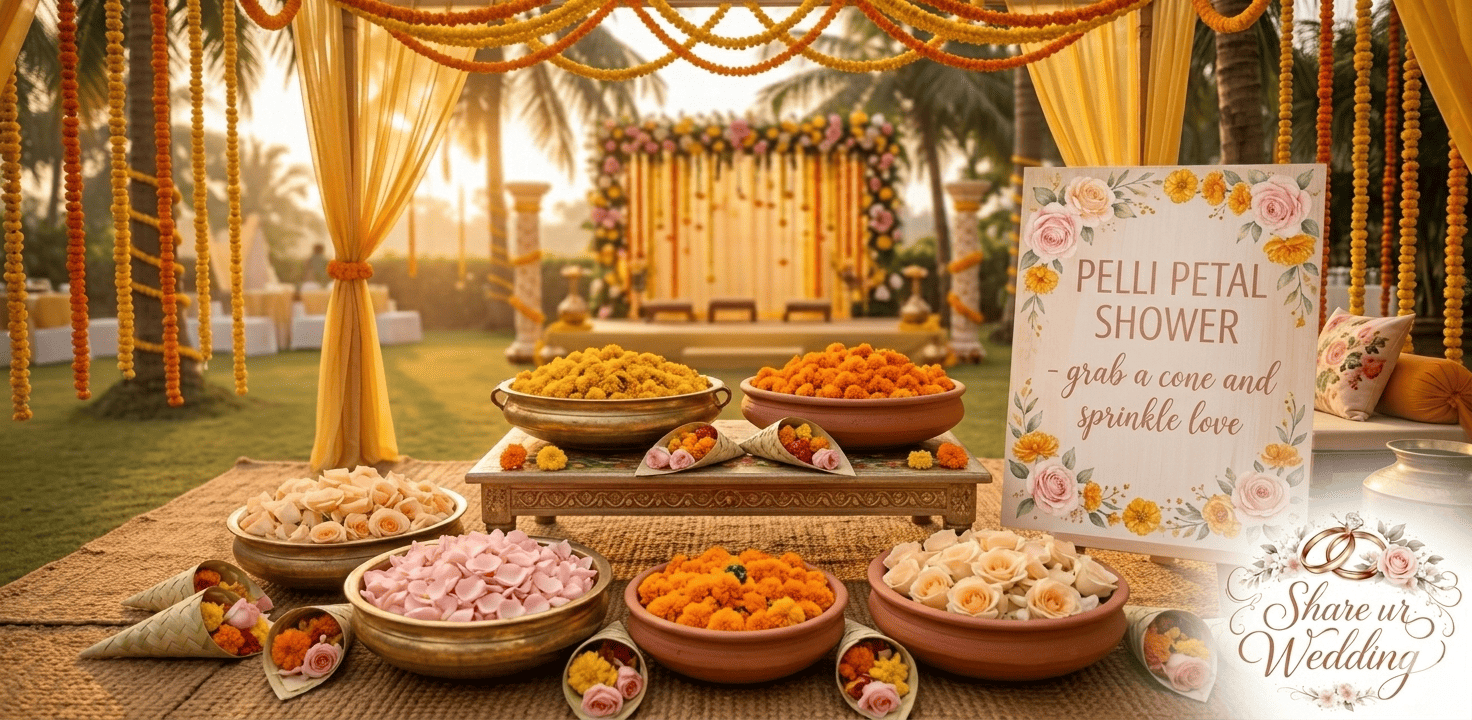
Set up a designated petal shower moment in the ceremony — baskets of yellow rose petals and orange marigold petals distributed to family members, with a planned moment when everyone showers the couple simultaneously. The photographer captures this in burst mode, producing images that look completely magical and joyfully chaotic.
Budget: ₹1,000 – ₹3,000 for petals |
Pro tip: Coordinate the petal shower with your photographer in advance so they are ready in position. A burst of 200 people throwing petals at the same moment produces one of the most spectacular wedding photographs possible.
10.Marigold and Sunflower Mix Backdrop
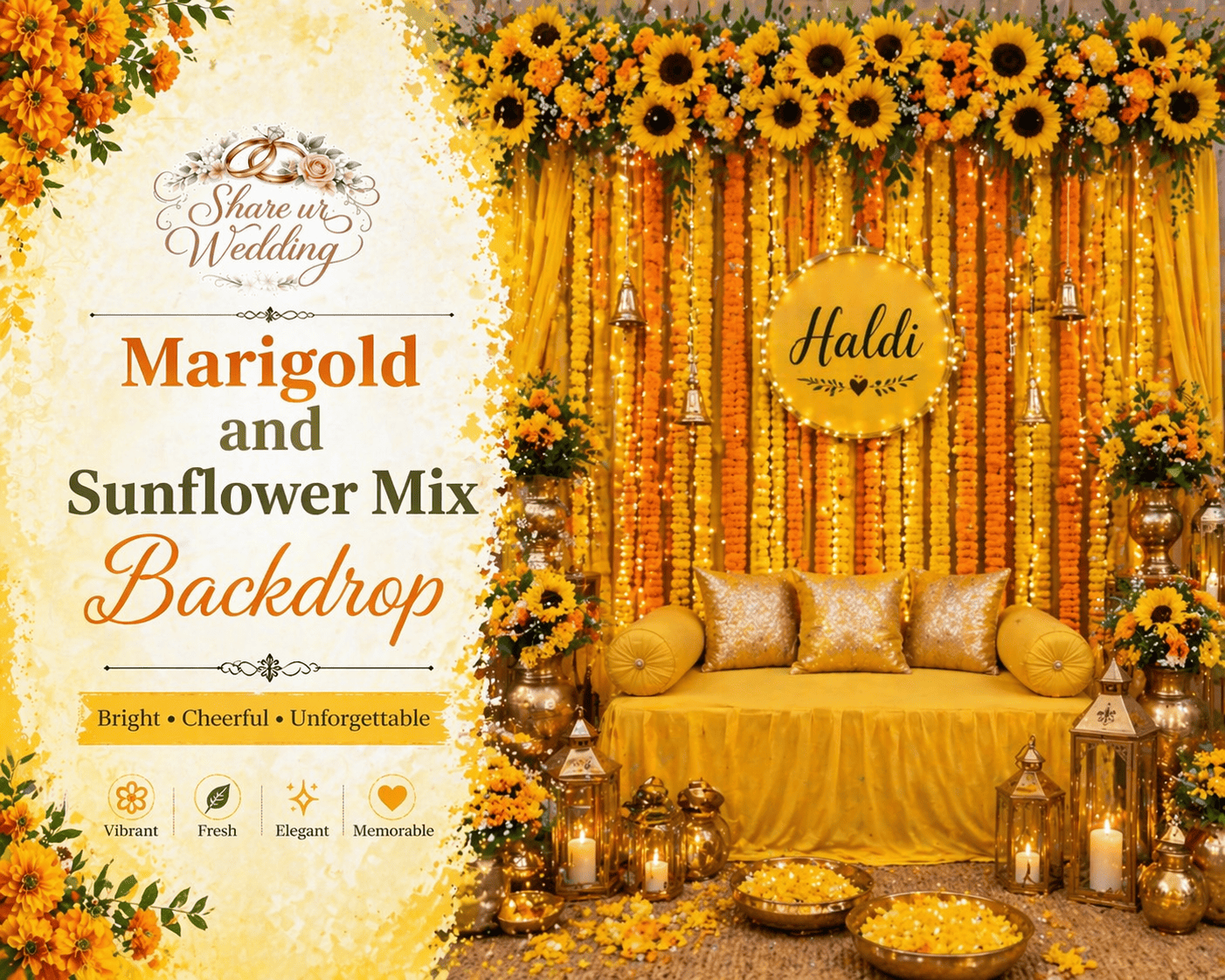
Sunflowers are having a major moment in Indian haldi decoration in 2026. Their large, bold faces — facing upward and outward — create a different texture and visual energy from marigolds. A backdrop that mixes marigold garlands with sunflower clusters, interspersed with yellow chrysanthemums, produces a richer, more dynamic floral wall than a single-flower approach.
Budget: ₹6,000 – ₹18,000 |
Pro tip: Sunflowers are seasonal — confirm availability with your florist before including them in your decoration plan. They are most available in winter months in India.
Part 2: Themed Haldi Ceremony Decoration Ideas
A theme does not mean your haldi has to look like a film set. It simply means that the decoration, the colour palette, the table settings, the welcome board, and the props all tell a consistent visual story. These themes are all achievable at home or at a venue with a good decorator and a clear brief.
11.Bohemian Marigold and Jute Theme
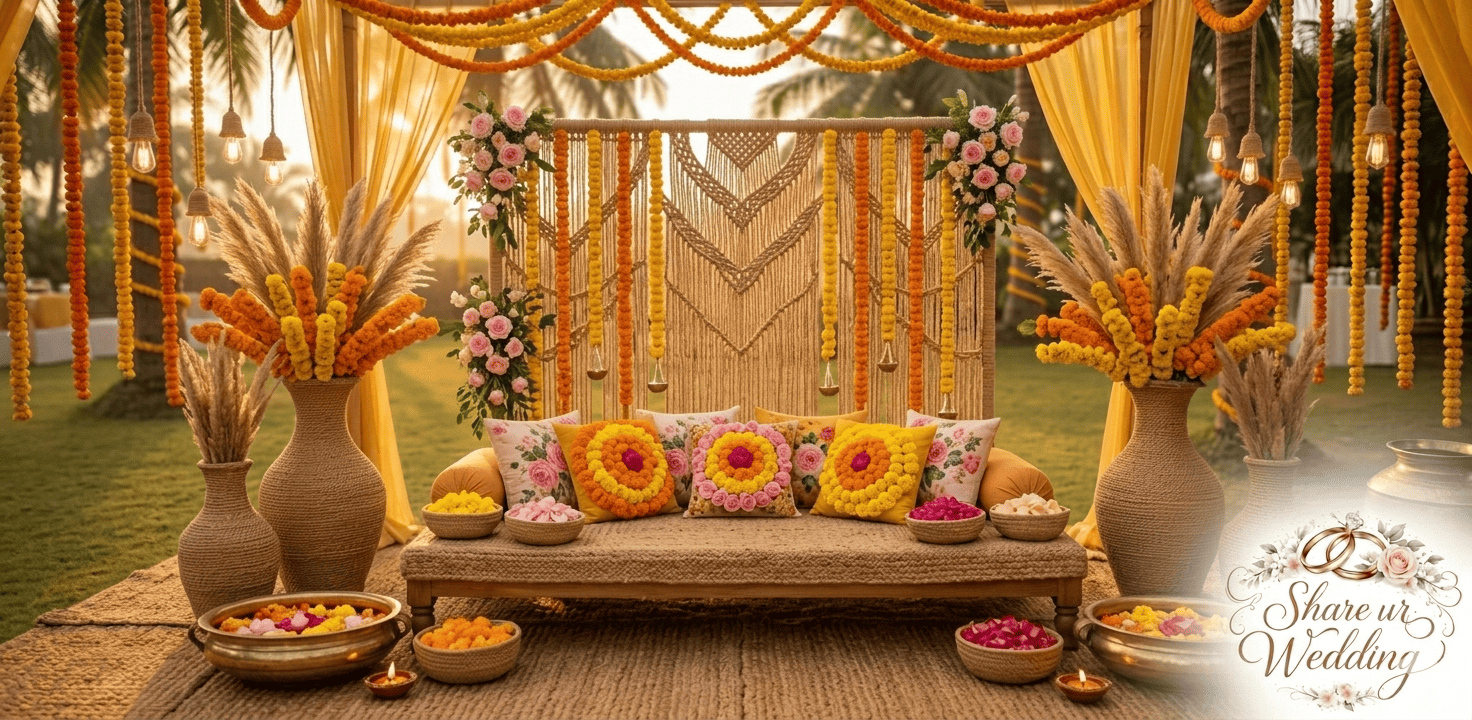
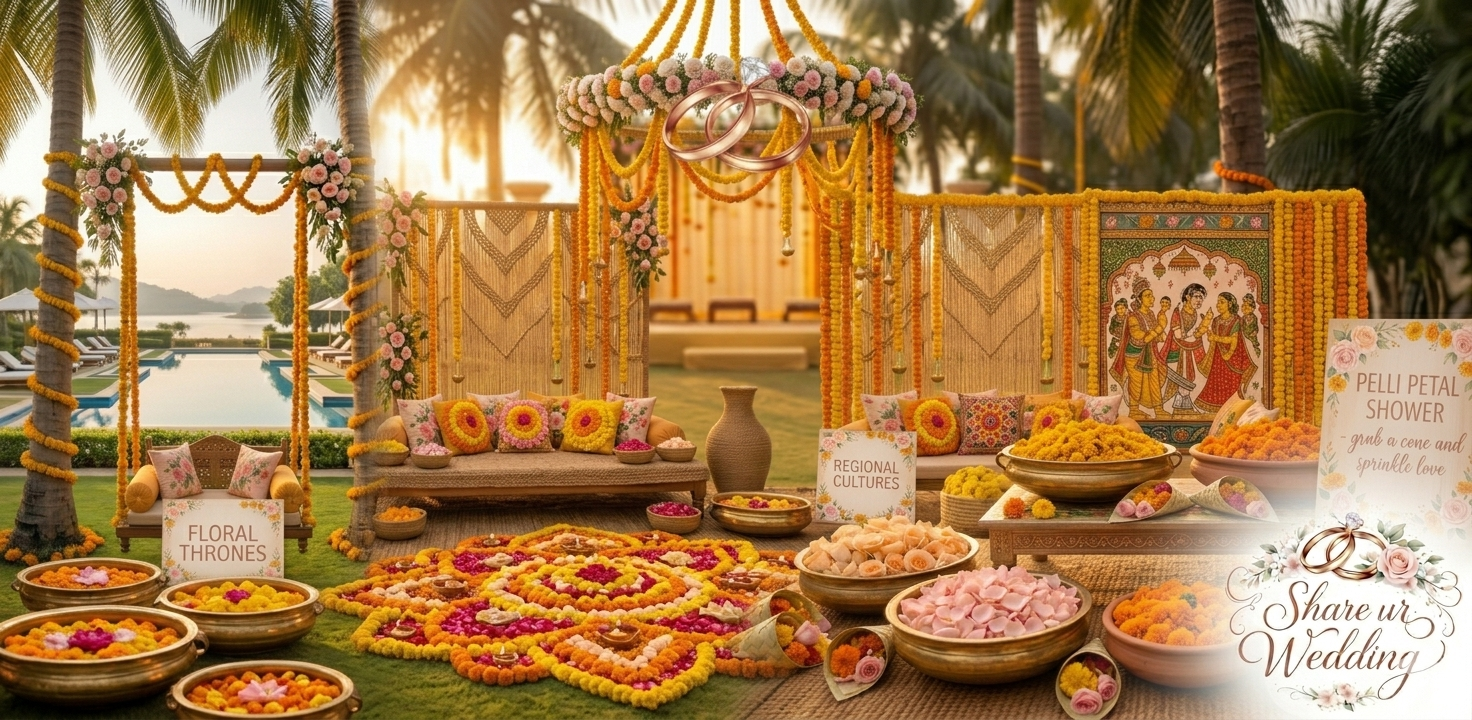
This is one of the most popular haldi decoration themes of 2026 — and for good reason. Orange and yellow marigold garlands paired with rustic, earthy elements: wooden logs, jute accents, brass decor, earthen diyas, cane furniture, and woven textiles. The result is a warm, organic aesthetic that feels simultaneously traditional and contemporary. It works beautifully in outdoor venues with natural greenery around it.
Budget: ₹12,000 – ₹35,000 for a full setup |
\Pro tip: Source cane or bamboo furniture locally — it is significantly cheaper than renting from event companies and looks genuinely better against the earthy backdrop.
12.Tropical and Coastal Theme
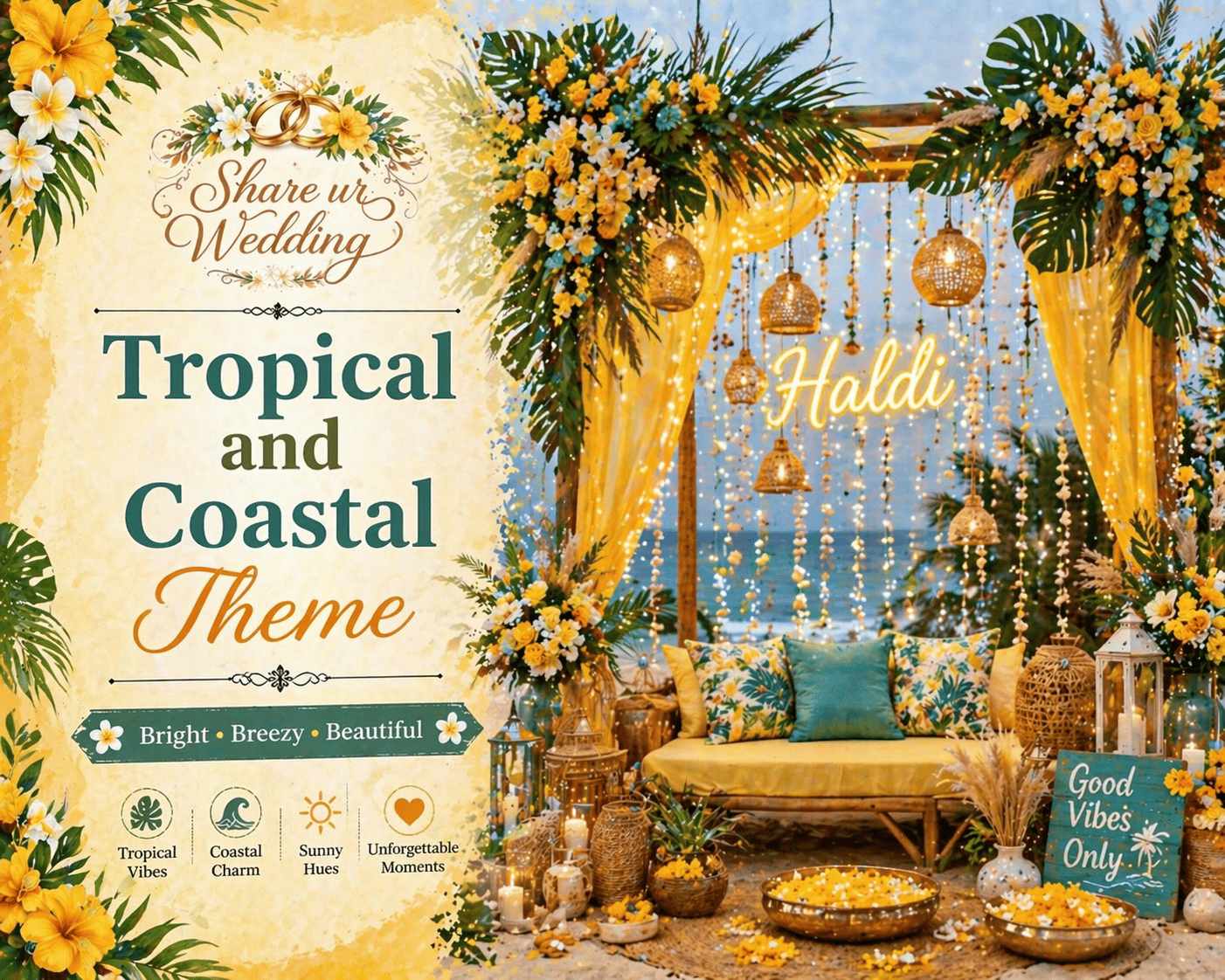
For destination haldis in Goa, Kerala, or beachside locations — a tropical theme with palm fronds, white flowers, seasonal fruits as decoration, and coastal elements creates a refreshing, distinctive atmosphere. The colour palette shifts slightly — still warm and bright, but with green and white balancing the traditional yellow. This theme works especially well in morning light at outdoor venues near water.
Budget: ₹15,000 – ₹40,000 |
Pro tip: Use real coconuts, pineapples, and tropical flowers as decoration elements — they double as photography props and dramatically reduce the plastic and synthetic decor in the space.
13.Carnival and Colour Pop Theme
Multi-coloured canopies, rainbow-style backdrops, and a riot of different flower colours — pink, purple, red, orange, and yellow together — create a carnival atmosphere that is energetic and joyful. This theme is perfect for couples who love colour and want the haldi to feel like a festival rather than a ceremony. It works for any age group and produces spectacularly colourful photographs.
Budget: ₹10,000 – ₹28,000 |
Pro tip: Keep the seating area and bride’s backdrop in yellow and orange as the anchor — the carnival theme works best when the ceremony focal point is still in traditional haldi colours, with the surrounding space going bold.
14.Eco-Friendly Green Haldi Theme
Potted plants instead of cut flowers. Terracotta pots everywhere. Bamboo furniture. Seed paper favours. A menu built around locally sourced, seasonal food. This is the fastest growing haldi decoration trend of 2026 — couples who want their celebration to respect the environment without sacrificing beauty. And here is the remarkable thing: a well-executed green haldi using potted plants, earthen diyas, bamboo, and living greenery looks more beautiful than most synthetic decoration setups.
Budget: ₹8,000 – ₹22,000 (many elements reusable / giftable) |
Pro tip: Donate the potted plants to guests as return gifts after the ceremony — or to a local school or park. This is a beautiful gesture that every guest remembers.
15.Pastel and Minimalist Haldi Theme
Not every bride wants the full-volume marigold experience. A soft pastel haldi — blush pink, pale yellow, ivory, and sage green — with minimal, curated decoration creates an understated, elegant ceremony that feels genuinely modern. Simple white and yellow flower arrangements, gauze fabric draping, and clean-lined furniture produce a sophisticated look that photographs beautifully in natural light.
Budget: ₹8,000 – ₹20,000 |
Pro tip: This theme requires very clean execution — every element must be intentional. A pastel haldi with mismatched elements looks underprepared rather than minimalist. Work with a decorator who understands the difference.
16.Gaye Holud — Bengali Haldi Theme
The Bengali tradition of Gaye Holud is one of India’s most visually distinctive pre-wedding ceremonies. Yellow and red as the dominant colours. Shankha (conch shells) and diyas as decor elements. Shuli (night jasmine) and marigold garlands. Alpona (Bengali floor art) patterns around the ceremonial seating. Dhak percussion as live music. Mishti Doi and Rosogolla as the food offering. For Bengali couples — or for any couple drawn to this particular aesthetic — the Gaye Holud setup is deeply meaningful and spectacularly beautiful.
Budget: ₹15,000 – ₹35,000 for an authentic setup |
Pro tip: Hire a professional alpona artist for the floor patterns — these are genuinely skilled work and the results are dramatically different from DIY attempts.
17.Punjabi Pithi Theme
Bright and energetic — the Punjabi haldi is a loud, joyful celebration with phulkari embroidery elements in the decoration, bright colours, and high-energy music. Yellow and pink as the primary palette. Phulkari dupattas used as decorative drapes. Brass and copper vessels. Dhol as live music. And the general sense that this ceremony is less about sitting still and more about dancing while people apply turmeric to your face.
Budget: ₹10,000 – ₹25,000 |
Pro tip: Live dhol is non-negotiable for an authentic Punjabi haldi experience. Book a dhol player at least a month in advance during wedding season.
Part 3: Regional Haldi Decoration Ideas
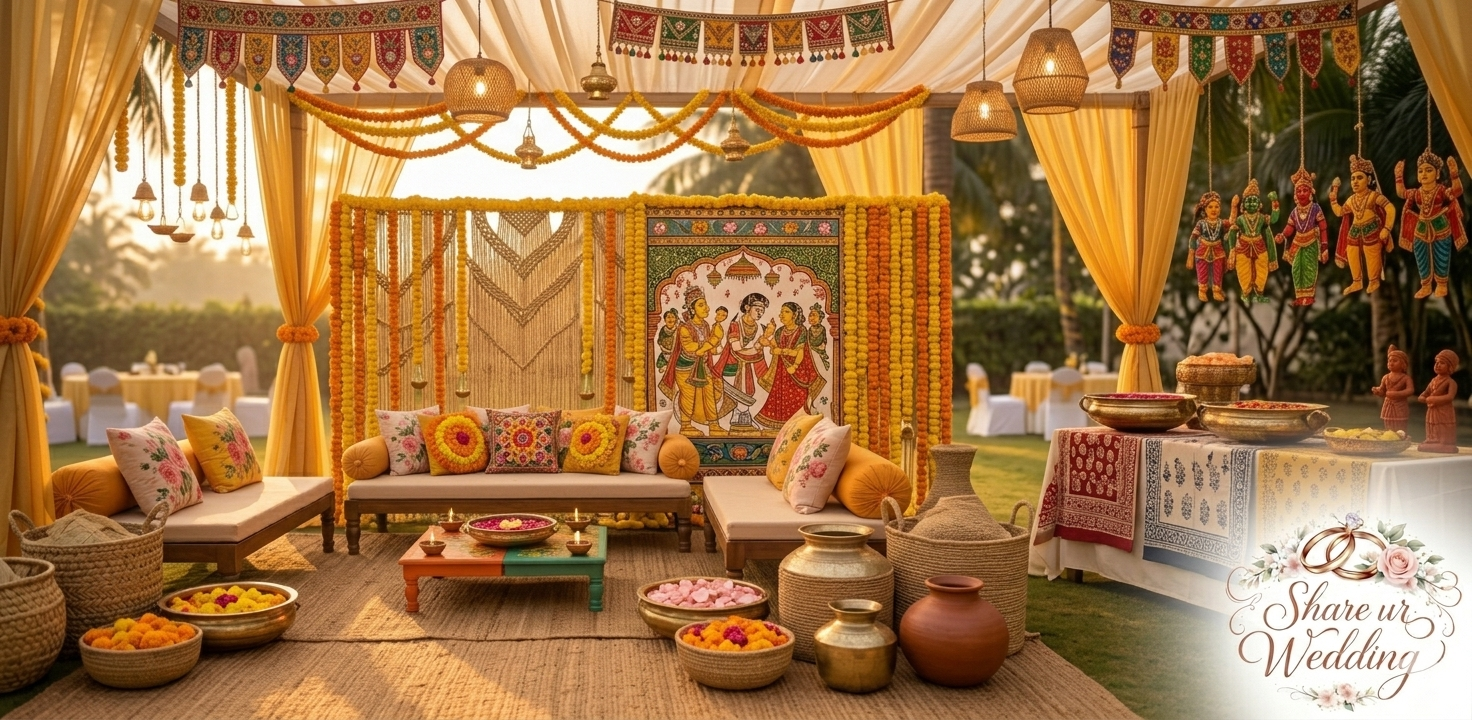
India has dozens of distinct haldi ceremony traditions — each one with its own name, its own rituals, its own colour palette, and its own decoration aesthetic. Honouring your regional tradition in the decoration is one of the most meaningful choices you can make. Here are four regional setups done with full authenticity.
18.South Indian Haldi (Nalugu / Snanam / Mangala Snanam)
Fresh banana leaves everywhere — as table runners, backdrops, floor decoration, and seating borders. Overflowing jasmine garlands hung from every surface. Bronze and brass vessels filled with rice, turmeric, and flowers. Terracotta lamps and earthen diyas. A large kolam (rangoli) pattern at the entrance and around the ceremonial seating. The South Indian haldi aesthetic is earthy, lush, and sacred — and it produces the most naturally fragrant ceremony environment of any regional tradition.
Budget: ₹8,000 – ₹22,000 |
Pro tip: Source fresh banana leaves from a local market the morning of the ceremony. They cost almost nothing but transform the entire aesthetic. Pair with fresh jasmine for the fragrance element.
19.Marathi Haldi Theme (Haldi-Kumkum)
Bright orange and yellow as the dominant palette, reflecting Maharashtra’s vibrant tradition. Nath (nose ring) and Amba (mango) motifs as decorative elements. Stalls serving Bhakarwadi, Misal Pav, and traditional Maharashtrian snacks. Paithani fabric swatches used as drapes. Terracotta lamps and earthen bowls. The Marathi haldi theme celebrates Maharashtra’s rich cultural identity in a way that feels genuinely rooted rather than performed.
Budget: ₹10,000 – ₹25,000 |
Pro tip: Commission a local artist to paint Warli art panels as backdrop elements — the geometric black-on-terracotta patterns are distinctively Maharashtrian and look extraordinary in photographs.
20.Rajasthani Haldi Theme
Gota patti embroidery elements in the decoration. Bandhani (tie-dye) fabric drapes in vibrant yellow and orange. Mirror work cushions and floor seating. Brass and copper vessels. Camel motifs in the props. Music from a folk musician playing the ravanhatta or dholak. The Rajasthani haldi aesthetic is the most elaborate and visually rich of any regional tradition — and it works beautifully in outdoor settings or haveli-style venues.
Budget: ₹12,000 – ₹30,000 | Pro tip: Source genuine gota patti fabric from Jaipur or a local wholesale market. Using authentic embroidered elements in the decoration creates significantly more visual richness than printed imitations.
Part 4: Haldi Decoration Ideas by Venue Type
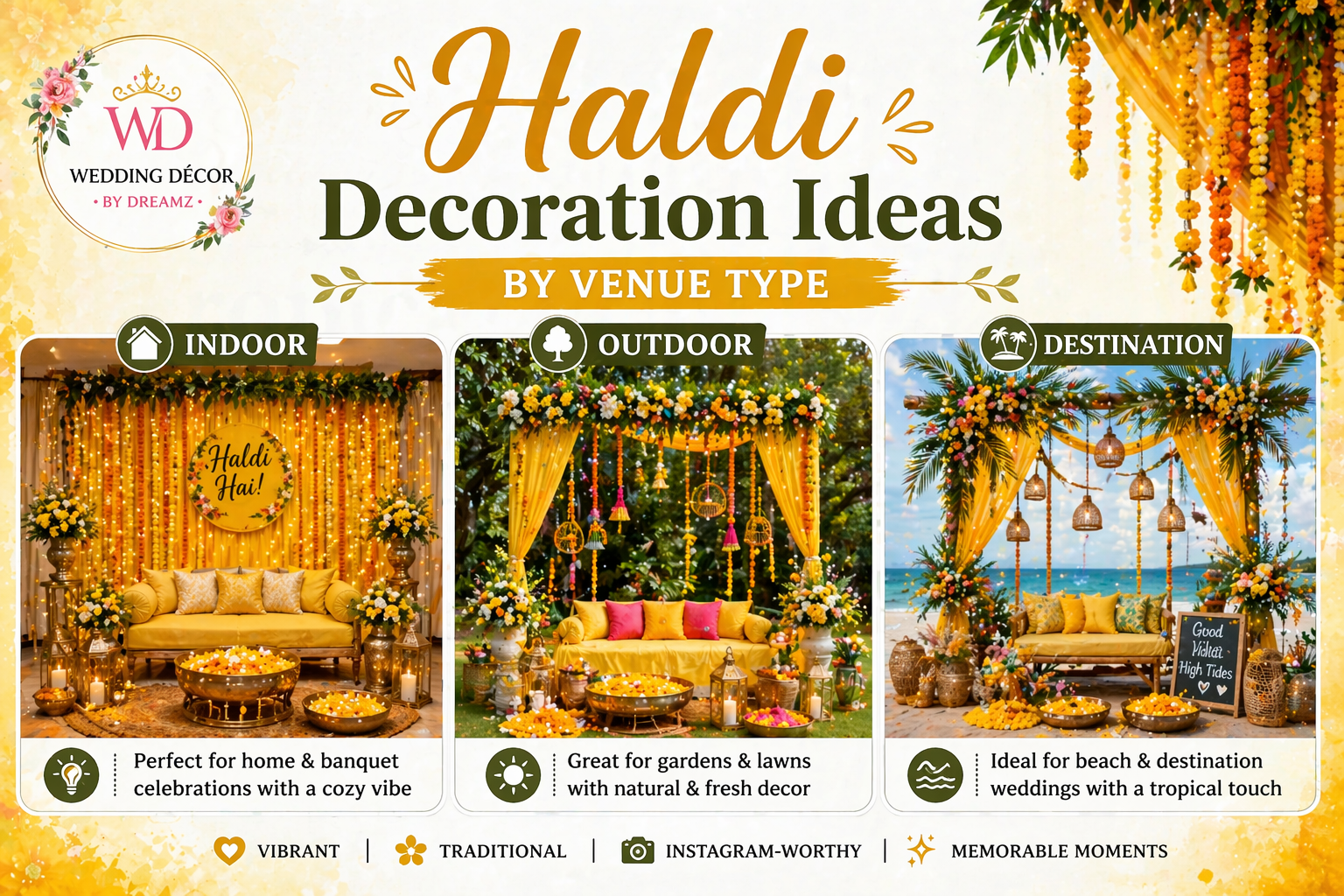
Where your haldi happens changes everything about how you should decorate. A home haldi in a 900-square-foot apartment needs a completely different approach from a destination haldi on a Goa beach or an outdoor lawn for 200 guests. Here are specific ideas for each venue type.
Haldi at Home — Making a Small Space Feel Magical
Most Indian haldi ceremonies happen at home. And honestly, home is the best possible setting — it has the warmth, the family photographs on the walls, the familiar chaos, and the smell of cooking from the kitchen. The decoration does not need to be elaborate. It needs to be thoughtful.
21.Single Wall Marigold Backdrop at Home
Choose one wall — ideally the wall behind where the bride will sit — and create a dense marigold backdrop against it. That single wall of flowers transforms the entire space. Everything else in the room can remain as-is. The contrast between the ordinary living room and the extraordinary floral backdrop creates a genuinely beautiful photography opportunity.
Budget: ₹2,500 – ₹6,000 |
Pro tip: Use command hooks to hang garlands without damaging the wall. Test the hooks the evening before to ensure they hold the weight of the flowers.
22.Terrace or Balcony Haldi Setup
A terrace or balcony haldi offers the best of both worlds — the intimacy of a home setting and the natural light and open air of an outdoor ceremony. String marigold garlands along the terrace railing, hang string lights overhead, place potted plants around the perimeter, and create a decorated seating area in the centre. Morning light on a terrace produces some of the most beautiful natural wedding photography possible.
Budget: ₹4,000 – ₹12,000 |
Pro tip: Check the weather forecast a week before. Have a simple fabric canopy option ready in case of sudden rain — the best terrace haldis always have a Plan B.
23.Flower Canopy Over a Garden Lawn
An outdoor lawn haldi allows for the most dramatic decoration option: a full fabric and flower canopy suspended from poles above the ceremonial area. Yellow and orange fabrics draped in waves, interspersed with hanging flower clusters, create a tent-like structure that frames the ceremony from above and provides partial shade from the morning sun.
Budget: ₹15,000 – ₹40,000 |
Pro tip: Always confirm with the venue whether poles and structures can be installed on the lawn. Some venues have restrictions. Plan the canopy setup the evening before to avoid morning setup chaos.
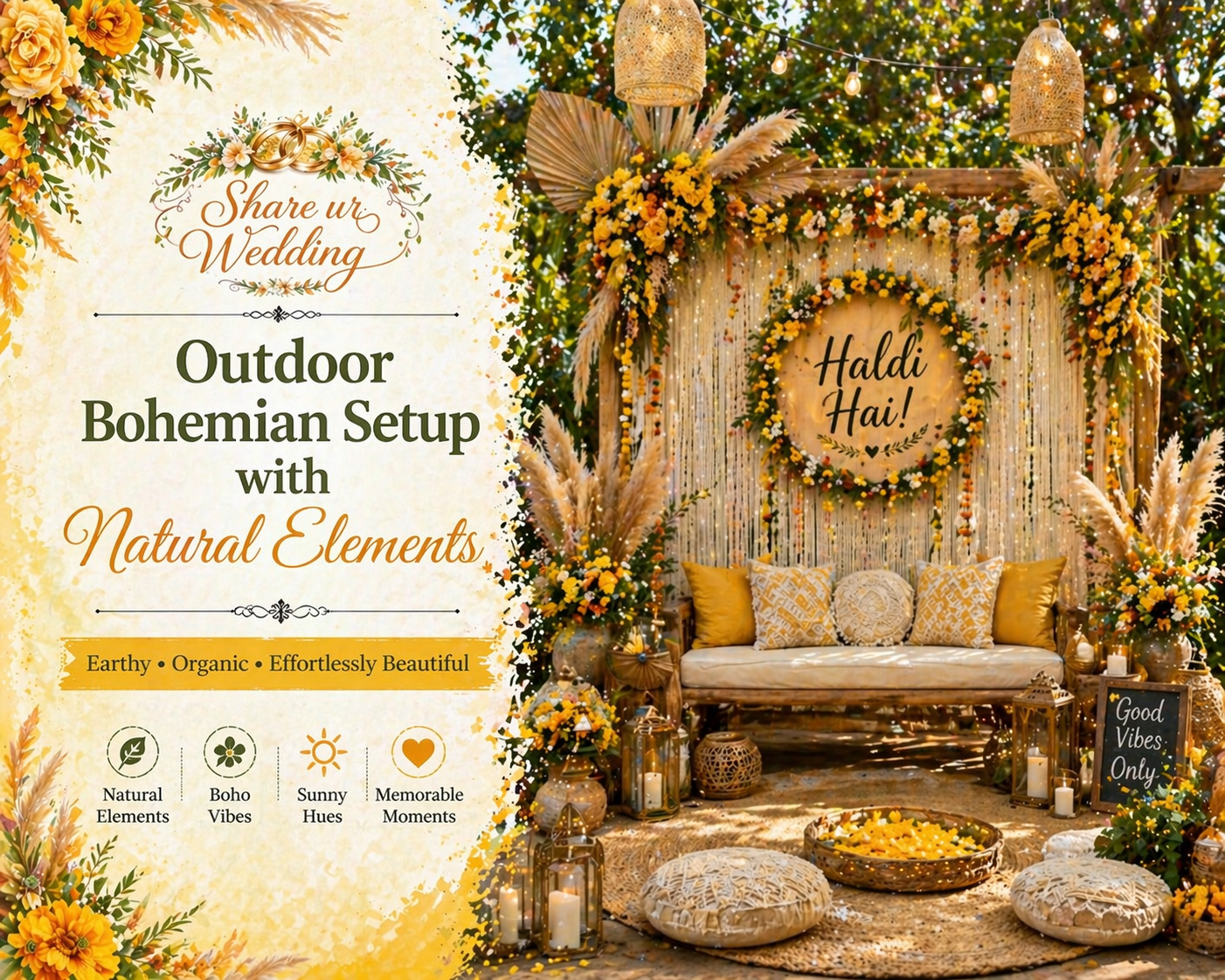
24.Outdoor Bohemian Setup with Natural Elements
Take the bohemian theme outdoors: wooden pallets as furniture, cane and bamboo seating areas, marigold garlands threaded through the natural vegetation, jute rope lights hanging from trees, and terracotta pots with succulents and small plants. An outdoor space with existing trees and greenery needs very little additional decoration — you are enhancing what is already there.
Budget: ₹10,000 – ₹22,000 | Pro tip: Always plan for the outdoor haldi ceremony to be in the morning — ideally before 11am. Indian summer heat after midday makes an outdoor haldi genuinely uncomfortable for everyone.
Destination Haldi — Resort, Beach, and Heritage Settings
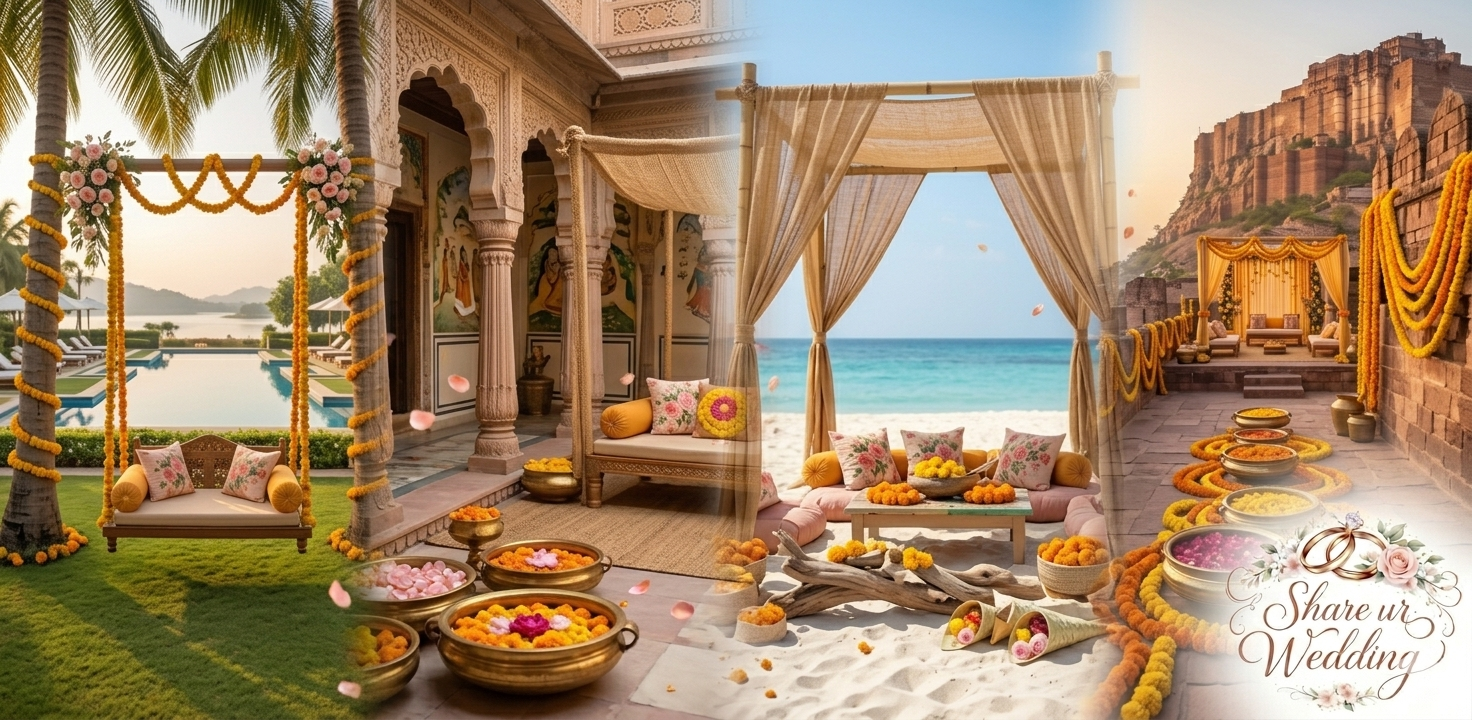
25.Palace Courtyard Haldi
For destination weddings at heritage properties — Udaipur palaces, Rajasthan havelis, Mysore guest houses — the architecture itself is the backdrop. Minimal additional decoration is needed. Marigold garlands and brass diyas placed against stone arches, sandstone pillars, and heritage courtyards create imagery that no amount of temporary decoration can replicate.
Budget: ₹20,000 – ₹50,000 |
Pro tip: Let the venue speak. The biggest mistake at heritage haldis is over-decorating and covering the architecture. Less is more — strategic placement of flowers at key focal points rather than full coverage.
26.Beach Haldi — Goa, Andaman, or Kerala
A beach haldi with the ocean as the backdrop requires the most minimal decoration of any setting. Fabric drapes to protect from wind, marigold garlands anchored to bamboo structures, coconut shells and tropical flowers as ground-level decoration, and the entire Indian Ocean behind you. The challenge is practical: wind, sand, and unpredictable weather. The reward is photographs that look unlike anything else.
Budget: ₹8,000 – ₹20,000 | Pro tip: Always schedule the beach haldi for early morning — 6 to 9am. Beach photography at golden hour is spectacular, heat and humidity are manageable, and the beach is less crowded than at other times of day.
Part 5: Budget Haldi Decoration Ideas That Look Expensive
The most beautiful haldi ceremonies are not always the most expensive ones. Some of the most photographed haldi setups in recent Indian weddings were done on modest budgets, with thoughtful creativity and good flower sourcing. Here are four ideas that deliver maximum visual impact for minimum spend.
27.DIY Marigold Garland Backdrop (Under ₹2,000)
Buy marigold flowers from your local market early in the morning — 5 to 7kg will be enough for a modest backdrop. String them yourself with a needle and thread, in alternating orange and yellow. Hang the garlands densely from a simple bamboo rod fixed to the wall. The result looks identical to professionally installed marigold backdrops that cost ten times more. This is the single most cost-effective haldi decoration possible.
Budget: ₹1,200 – ₹2,500 |
Pro tip: Rope in three or four family members the evening before to string the garlands. It is genuinely enjoyable and turns the decoration itself into a family activity.
28. Yellow Fabric Draping with Fairy Lights (Under ₹3,000)
Buy 10 to 15 meters of plain yellow or mustard cotton fabric from a textile shop. Drape it across the wall behind the bride’s seating area — gathered, pleated, or simply hung in waves. Add two strands of warm fairy lights woven through the draping. The combination of warm yellow fabric and soft fairy lights creates a beautiful, glowing backdrop that works especially well in the early morning or in indoor spaces.
Budget: ₹1,500 – ₹3,000 |
Pro tip: Use fabric, not satin — satin is shiny and reflects light awkwardly in photographs. Plain cotton or georgette drapes beautifully and photographs warmly
29.Repurposed Family Vessels and Flowers
Collect every brass, copper, and clay vessel in the house — urlis, kalasams, degchis, thalis — and fill them with water and floating marigold blooms. Arrange them around the ceremonial space, on the floor, on steps, and along the entrance. This approach uses objects that already carry family meaning and history, costs almost nothing beyond the flowers, and creates an authentically Indian aesthetic that no professional setup can replicate.
Budget: ₹800 – ₹2,000 for flowers |
Pro tip: Ask family members to bring their vessels from home in the week before the ceremony. The variety of shapes, sizes, and patinas creates a richer visual landscape than uniform rented urlis.
30.Mango Leaf Toran and Marigold Garland Entry
A mango leaf toran at the entrance — with marigold garlands woven in — is one of the most auspicious and visually beautiful decorations in Indian wedding tradition. It costs almost nothing (mango leaves are freely available in most Indian homes and neighbourhoods), it creates an immediate ceremonial atmosphere, and it smells extraordinary. Add small clay diyas on either side of the entrance and the setup is complete.
Budget: ₹500 – ₹1,500 | Pro tip: Fresh mango leaves are essential — dried or wilted toran looks sad, not auspicious. Source them the morning of the ceremony for maximum freshness and fragrance.
Haldi Ceremony Decoration Planning Checklist
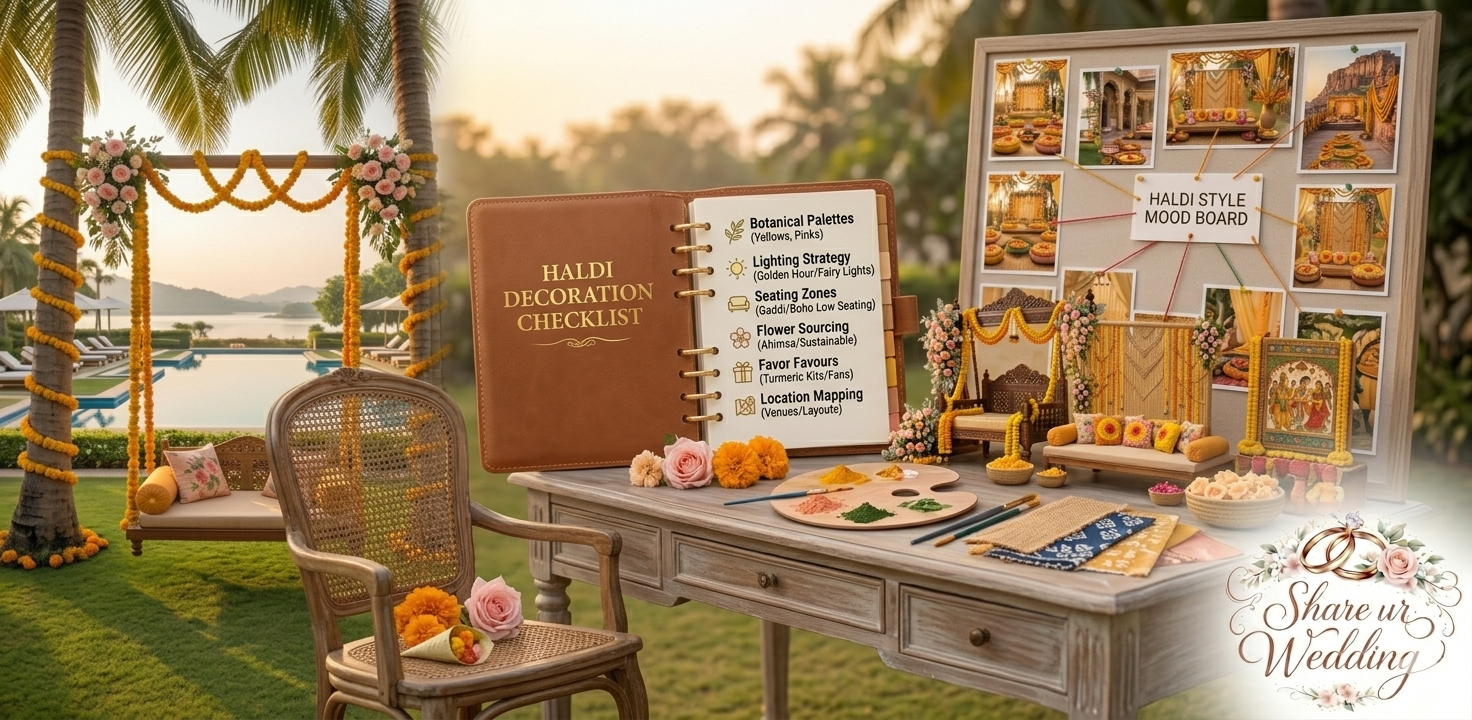
Use this checklist to organise your haldi decoration planning. Share it with your decorator, your family helpers, and anyone involved in the setup.
| Timeframe | Task | Who Is Responsible |
|---|---|---|
| 4–6 weeks before | Decide the theme and colour palette. Shortlist 2–3 ideas from this guide. | Couple together |
| 4–6 weeks before | Book the decorator or assign DIY tasks to family members. | Couple / family |
| 3–4 weeks before | Confirm the venue and understand any decoration restrictions. | Couple / decorator |
| 3 weeks before | Order any rental items — cane furniture, canopy structures, brass vessels. | Decorator / family |
| 1–2 weeks before | Book florist and confirm flower order — marigold, rose, jasmine, sunflower. | Decorator / family |
| 3–4 days before | Finalise the day-of schedule including decoration setup start time. | Couple / coordinator |
| Evening before | String DIY garlands. Set up furniture. Test string lights and anchoring. | Family + helpers |
| Morning of haldi | Fresh flower delivery and installation. Final arrangement. Setup complete before guests arrive. | Decorator / family |
| 30 min before guests | Final walkthrough. Remove any decoration debris. Ensure seating is clean and ready. | Coordinator / family |
Setup Time: Most professional haldi setups take 3 to 5 hours to install correctly. A large or elaborate setup can take up to 7 hours. Always ensure your decorator begins setup the evening before for morning ceremonies, or very early morning for afternoon events.
Haldi Decoration Budget Guide 2026
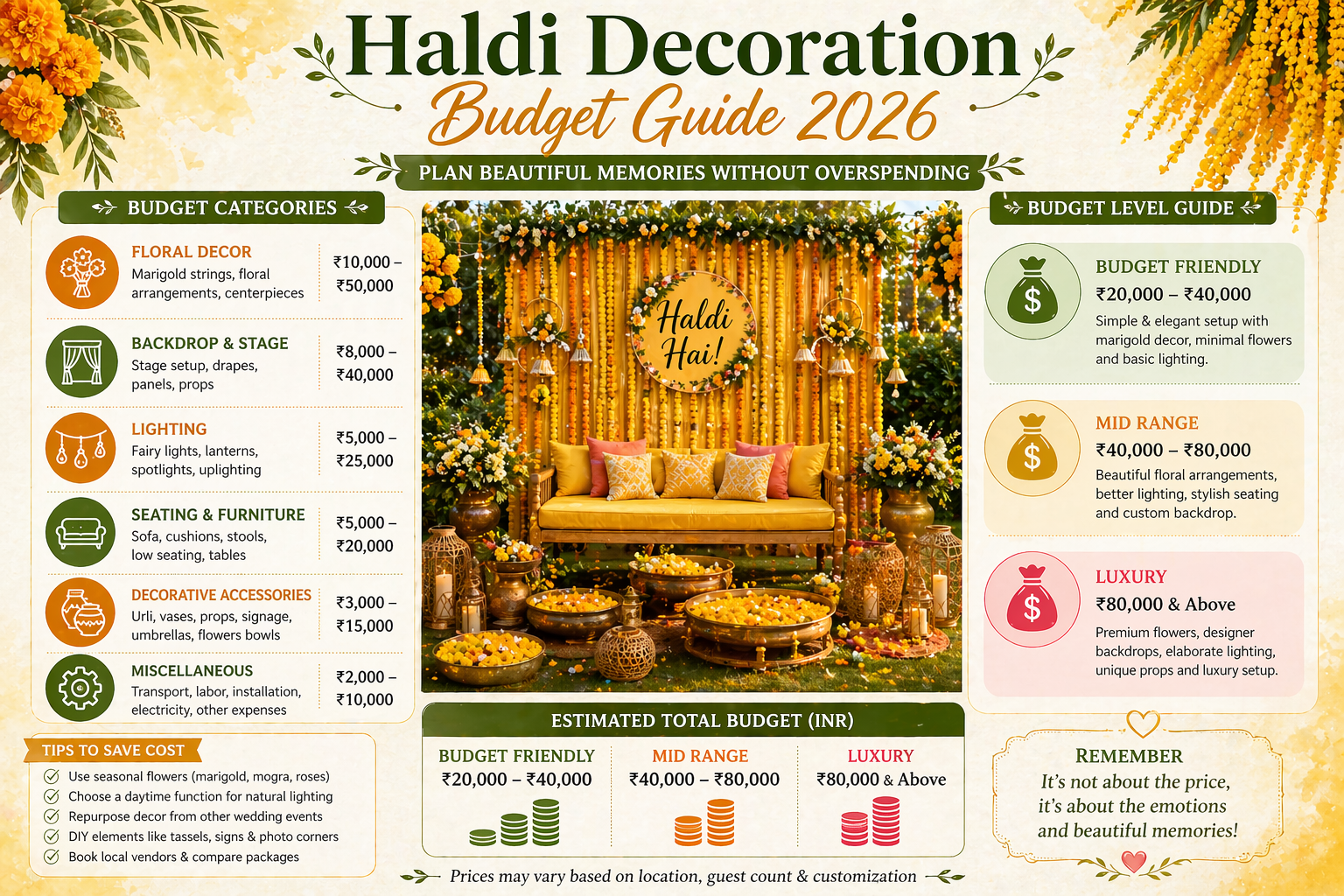
| Budget | What You Can Achieve | Best Ideas from This Guide | ||
|---|---|---|---|---|
| Under ₹5,000 | DIY marigold backdrop, mango leaf toran, repurposed vessels, simple entry decoration | Ideas 1, 5, 27, 28, 29, 30 | ||
| ₹5,000 – ₹15,000 | Flower canopy, decorated chowki, cushion seating, urli centrepieces, rangoli | Ideas 1, 3, 4, 7, 8, 9 | ||
| ₹15,000 – ₹35,000 | Full themed setup — bohemian, tropical, carnival, or regional tradition | Ideas 11, 12, 14, 15, 16, 17 | ||
| ₹35,000 – ₹75,000 | Suspended floral chandelier, outdoor canopy, destination setup at resort or garden | Ideas 2, 10, 23, 24, 25 | ||
| ₹75,000+ | Full destination haldi — palace courtyard, beach setup, heritage property | Ideas 25, 26 with full decorator team |
Frequently Asked Questions
What are the best haldi ceremony decoration ideas for 2026?
The most trending haldi ceremony decoration ideas for 2026 include the suspended floral chandelier (replacing the flat flower wall as the focal point), the bohemian marigold and jute setup with earthy elements, the eco-friendly green haldi using potted plants and terracotta instead of cut flowers, South Indian traditional haldi with banana leaves and brass vessels, and personalised pastel haldi setups for modern minimalist couples. Classic marigold flower walls and decorated chowki setups remain the most popular and most widely applicable choices for all budgets.
How much does haldi ceremony decoration cost in India?
Haldi ceremony decoration in India in 2026 ranges from approximately ₹2,000 to ₹3,000 for a DIY marigold backdrop at home, to ₹10,000 to ₹25,000 for a professionally decorated home or banquet hall setup, to ₹35,000 and above for elaborate outdoor, themed, or destination haldi setups. The most cost-effective approach is a single marigold flower wall as the main backdrop, which creates the most photographic impact for the least investment.
How do I decorate for a haldi ceremony at home?
For a home haldi, focus on one key backdrop wall — cover it with fresh marigold garlands hung densely from a bamboo rod or wall hooks. Add a decorated chowki or seating mat for the bride with flower arrangements on either side. Hang marigold toran at the entrance. Place brass or clay vessels with floating flowers around the space. String fairy lights overhead if possible. This setup costs between ₹3,000 and ₹8,000, takes 3 to 4 hours to install, and looks beautiful in photographs.
What colours are used for haldi ceremony decoration?
The primary colours for haldi decoration are yellow and orange — reflecting the turmeric and marigold that are central to the ceremony. These are complemented by green (from mango leaves and banana leaves), gold (brass and copper vessels), and white (tuberose and jasmine flowers). In 2026, some couples are exploring pastel palettes — blush pink, soft yellow, and ivory — for contemporary minimalist haldis. Regional variations include yellow and red for Bengali haldi, bright orange and green for South Indian haldi, and vibrant multi-colour for Punjabi and Rajasthani setups.
How early should I set up haldi ceremony decoration?
For a morning haldi ceremony (7am to 10am), decoration setup should begin the previous evening for DIY setups, or very early morning (4am to 5am) for professional decorator installations. Fresh flower elements — the marigold backdrop and garlands — should be installed on the morning of the ceremony, not the night before, as flowers wilt overnight. Allow 3 to 5 hours for a standard professional setup and 4 to 6 hours for an elaborate or large-scale setup.
A Final Thought About Haldi Decoration
Here is something worth remembering as you plan all of this.
The haldi ceremony will be messy. Someone will get turmeric on their white dupatta. The dhol will start before everyone is ready. A child will knock over one of the flower arrangements. The rangoli at the entrance will be slightly smudged by the tenth person who walks through.
None of that matters. Those are the moments that end up in the stories people tell for years.
What the decoration does is give those moments a setting worthy of being remembered. It is the difference between a wonderful morning that was poorly photographed and a wonderful morning that looks as beautiful in the photographs as it felt in real life.
Pick the ideas that feel like you. Do them as well as your budget allows. And then step back, sit on that decorated chowki, and let your people cover you in turmeric while you laugh so hard your face aches.
| Haldi is not about perfection. It is about togetherness. The decoration is just what togetherness looks like from the outside. |