

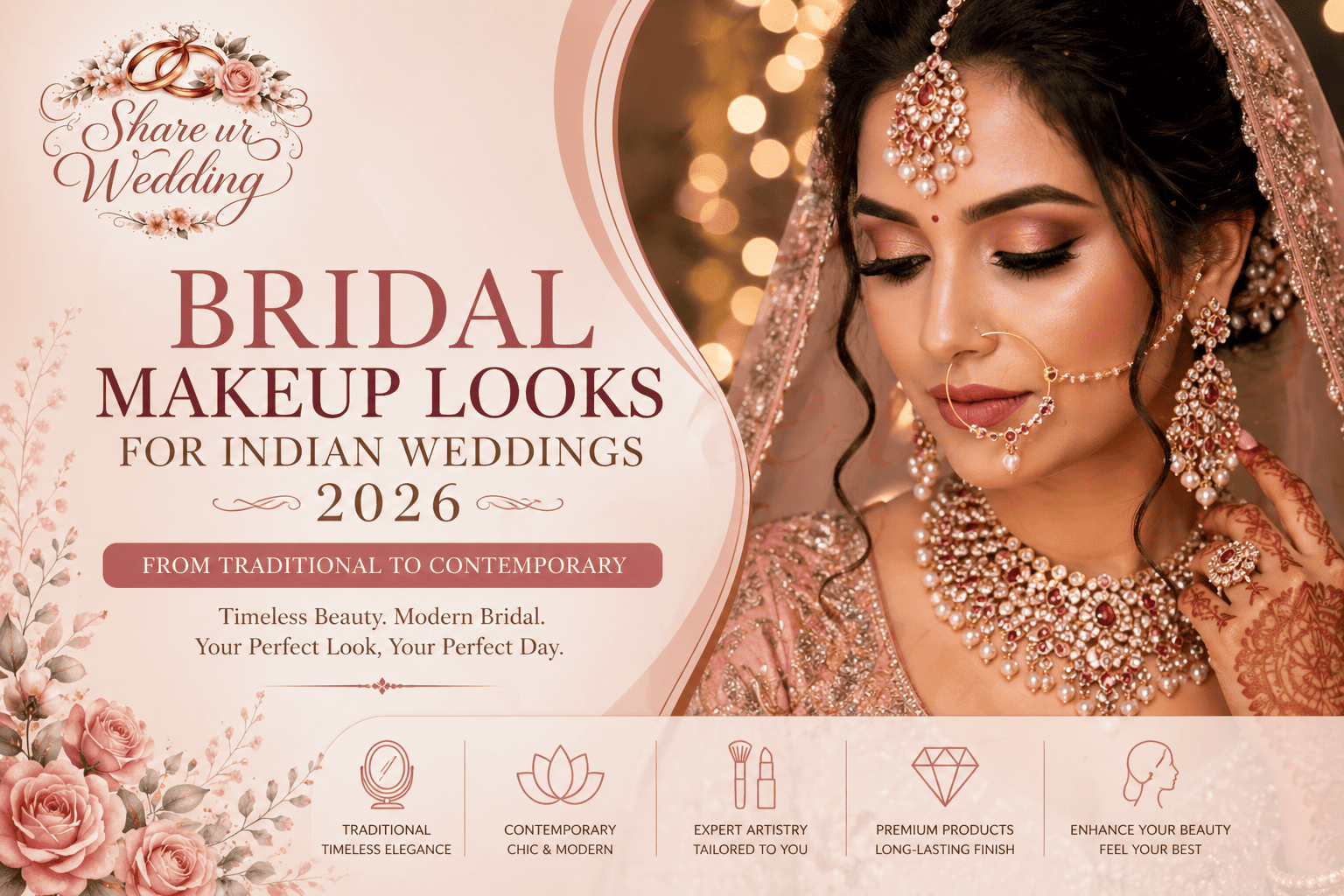
Your wedding makeup is one of the most visible and most photographed decisions of your entire wedding. It is the first thing people notice in your photographs before they register the lehenga, the flowers, or the venue. And yet, it is also one of the most personal — the difference between a bride who looks like herself on the best day of her life and a bride who looks beautiful but somehow unrecognisable.
Indian bridal makeup in 2026 is at an interesting crossroads. The tradition of elaborate, layered makeup — bold red lips, defined kohl eyes, heavily contoured skin — is being reimagined for a generation of brides who grew up watching beauty content, who know what works on their face, and who are increasingly confident about saying no to a makeup style that is technically impressive but does not feel like them.
This guide covers 12 distinct bridal makeup looks for Indian weddings in 2026 — from the deeply traditional to the freshly contemporary — so you can walk into your makeup trial knowing exactly what you want, and why it will work for your specific face, skin tone, and wedding aesthetic.
Before You Book: What Every Bride Should Know About Bridal Makeup in 2026
The most consistent advice from makeup artists working with brides in 2026 is this: do not make your makeup decision based on what you saw in someone else’s wedding photographs. Your skin tone, your face structure, your existing features, and your outfit create a completely unique combination that requires a completely unique approach. What looked breath taking on your colleague’s wedding day may not suit your skin undertones or complement your deep navy lehenga.
Start your makeup research by identifying three things about your own face: your skin undertone (warm, cool, or neutral — look at the veins on your wrist in natural light: green veins indicate warm undertones, blue-purple indicate cool, both indicate neutral), your skin type (oily, dry, combination, or sensitive — especially important for choosing the right base products), and the features you want to highlight and the ones you prefer to balance.
Then look for makeup artists whose portfolio contains brides with similar skin tones and features to yours. Request a trial at least 6 to 8 weeks before the wedding. Photograph yourself in natural light, indoor event lighting, and flash. The lighting in which your wedding photographs are taken is the only lighting that matters for bridal makeup evaluation.
Non-Negotiable Rule: Always do a bridal makeup trial. No exceptions. The morning of your wedding is not the time to discover that the artist’s preferred red lip shade clashes with your skin undertone or that the foundation oxidises to an orange by the second hour. A trial takes 3 hours. It protects the photographs of your entire life.
The 12 Bridal Makeup Looks — Detailed Descriptions
Look 1: Classic Red Lip with Deep Kohl Eyes
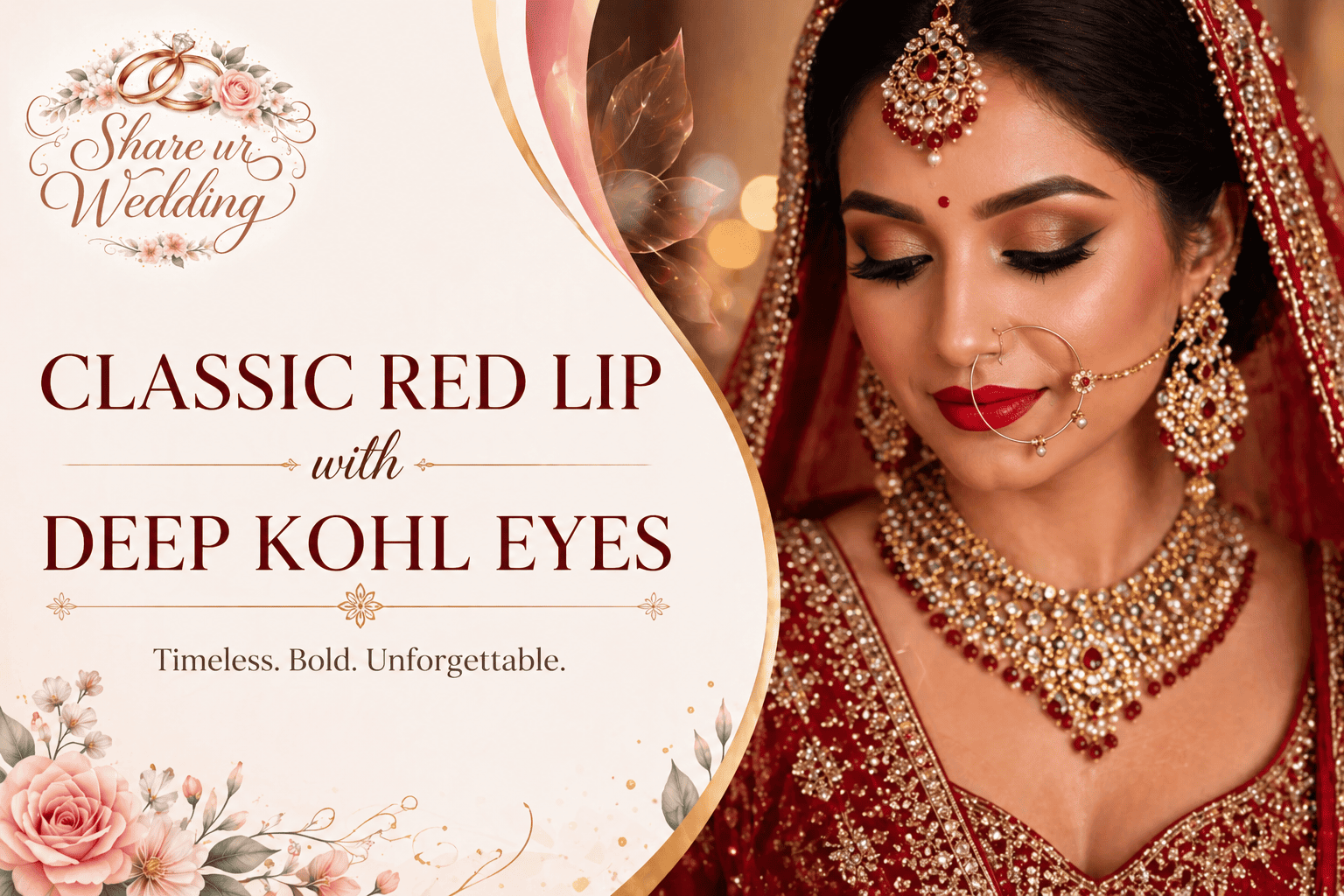
This is the look that has defined Indian bridal beauty for generations, and in 2026 it remains the most requested look in bridal makeup studios across the country. When done well, it is genuinely magnificent. When done wrong — too dark a red for the skin tone, kohl applied too heavily without blending — it can look theatrical rather than beautiful.
In 2026, makeup artists are updating the classic red lip look with lighter, more breathable foundation formulas that allow the bride’s skin texture to remain visible rather than creating the porcelain mask effect of older makeup techniques. The kohl eye is being applied with more precision — a tighter liner on the upper waterline, a softer smoke on the lower lash line — rather than the heavy all-over kohl that dominated Indian bridal makeup a decade ago. And critically, the red is being chosen based on the bride’s skin undertone rather than from a generic ‘bridal red’ palette.
- For warm undertones (yellow-gold): choose reds with orange or brick undertones — tomato red, vermillion, coral red
- For cool undertones (pink-blue): choose reds with blue undertones — true red, burgundy, wine, deep crimson
- For neutral undertones: almost any red works — the classic traffic-signal red is universally flattering here
- For deep skin tones: deep wine, oxblood, and true red look extraordinary — avoid very bright orangey reds which can appear harsh
Look 2: Warm Terracotta and Gold — The 2026 Bride’s Favourite
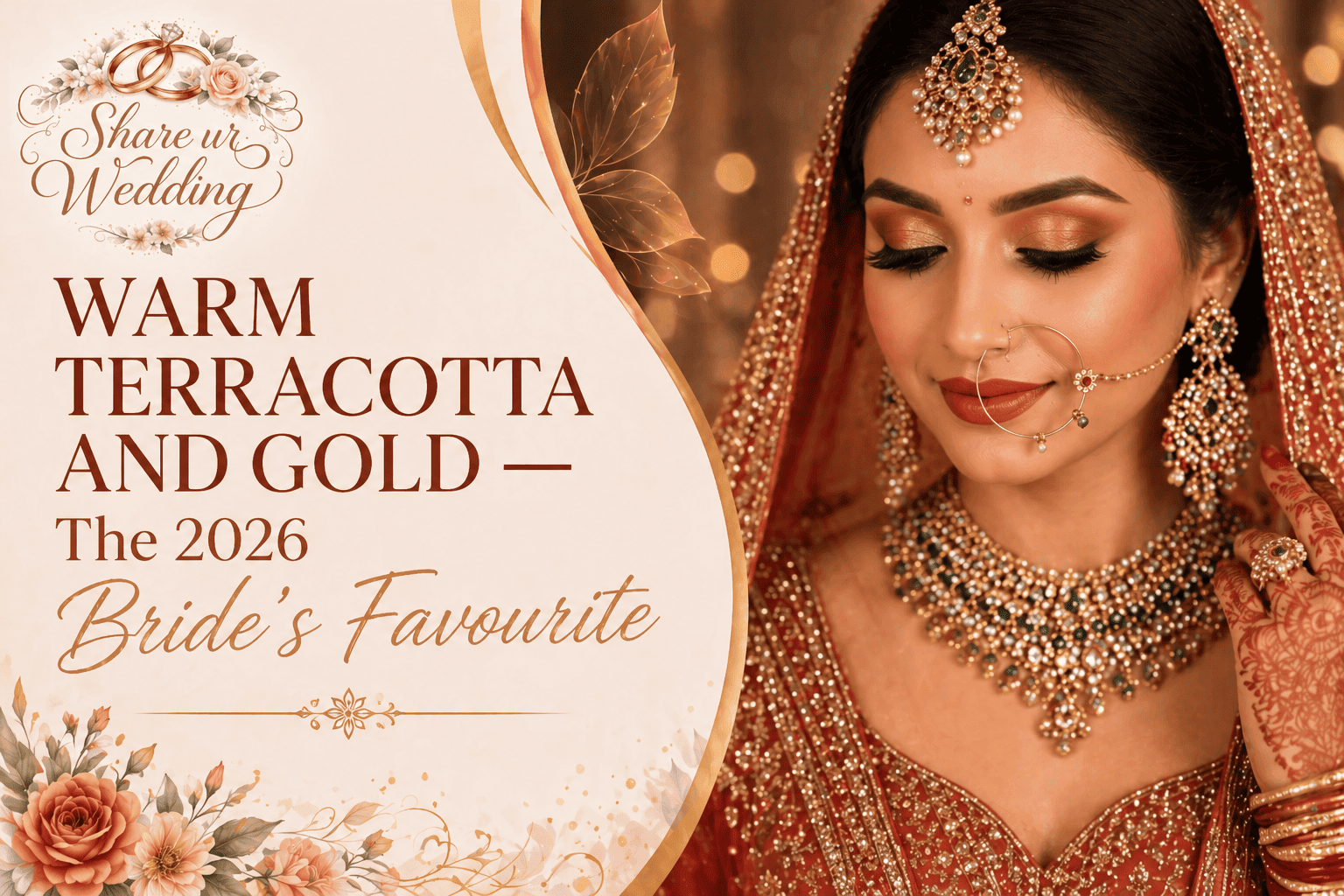
If one makeup look defines the aesthetic of the 2026 Indian bride, it is this one. Warm terracotta-toned eyeshadow blended from the inner corner to beyond the outer lid, with a sharp champagne or rose gold highlight on the centre of the lid and the inner corner. A warm bronzed skin finish that looks sun-kissed rather than contoured. And a lip in either a warm nude — a sandy pink or peachy beige — or a soft terracotta that coordinates with the eye rather than competing with it.
This look is exceptionally versatile. It works beautifully for ceremony looks when paired with a warm-toned lehenga (terracotta, rust, blush, ivory), for sangeet nights in a more editorial version, and for outdoor and destination weddings where the natural light enhances the warmth of the palette. It also happens to photograph beautifully across every type of camera — digital, film, and phone photography all capture the warmth of this palette with remarkable accuracy.
Look 3: Dewy Skin and Nude Lip — The Contemporary Minimalist Bride
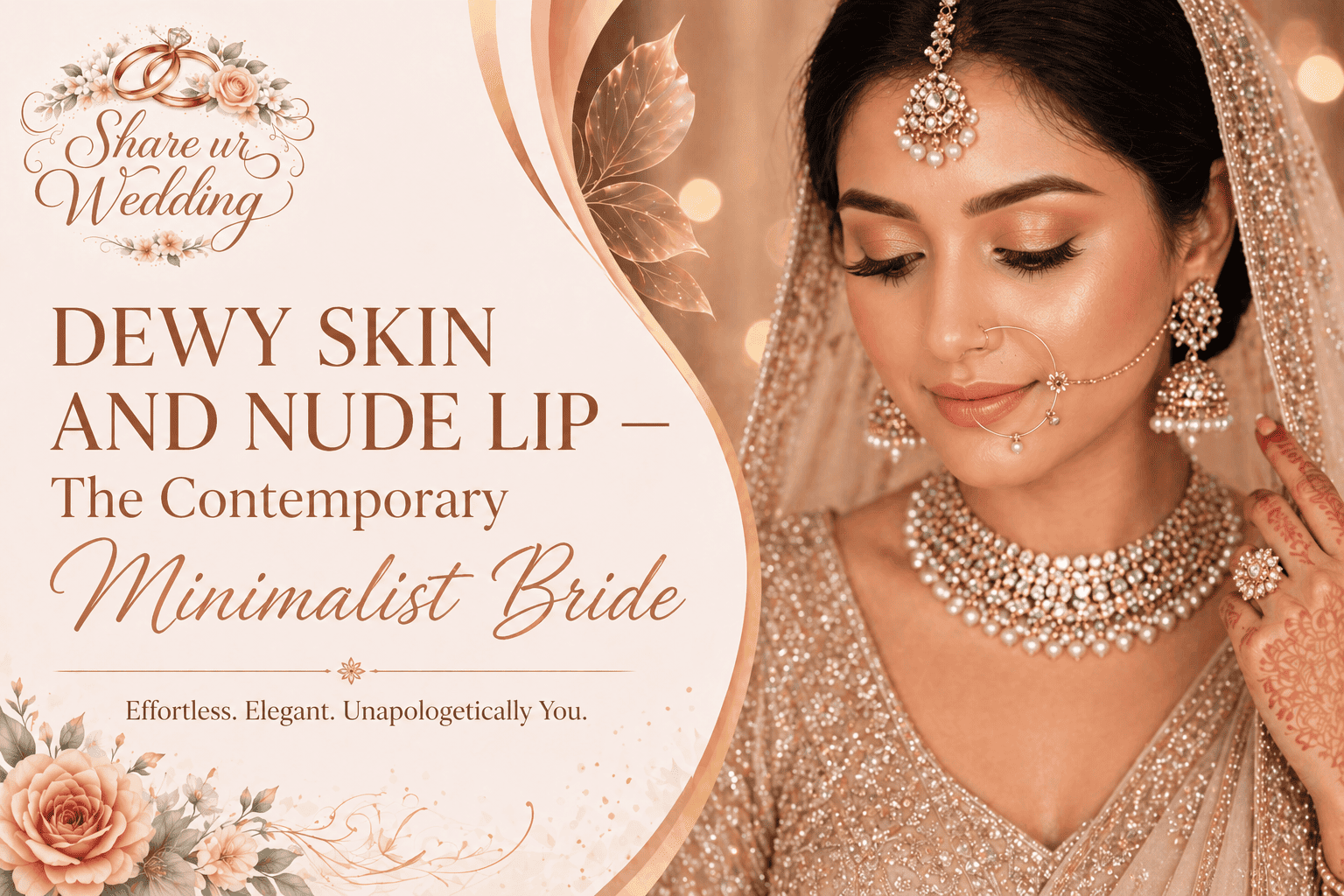
The minimalist bridal look of 2026 is not about doing less. It is about doing the right things exceptionally well. Flawless skin — genuinely glowing from within, not covered — with precisely filled and shaped brows, a soft warm eye with minimal shadow and individual lash extensions rather than a heavy strip lash, and a lip that is a few shades deeper than the natural lip colour rather than a statement shade.
The technical challenge of this look is the skin. A heavy foundation gives the appearance of coverage but creates a mask. A skin-tinted serum or lightweight coverage foundation, layered strategically only where needed, allows the skin’s natural texture to show while evening the tone. This is the look that photographs most naturally in golden hour light and that guests consistently describe as ‘she looked so herself.’
Look 4: South Indian Traditional — Kumkum, Kajal, and Jasmine
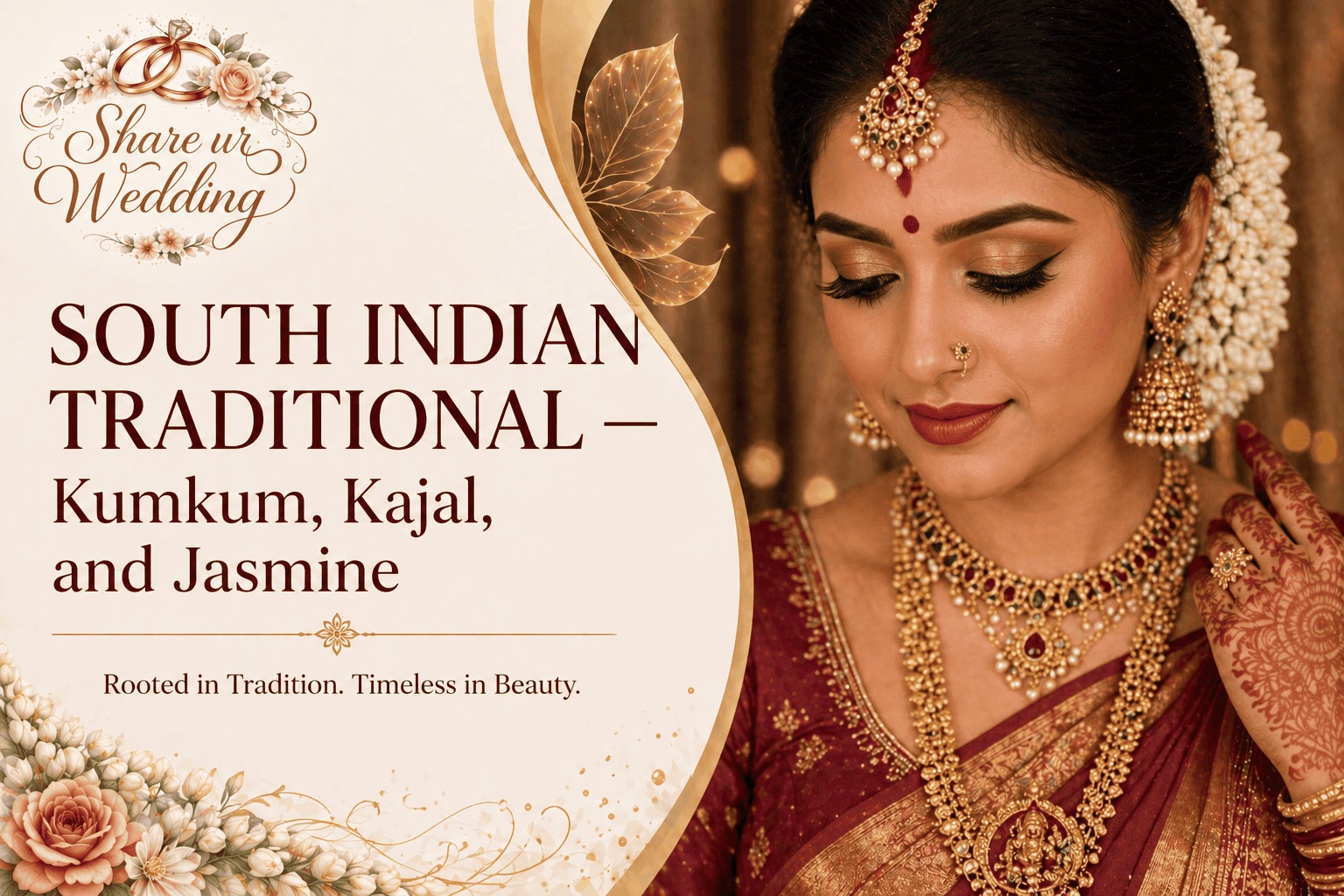
The traditional South Indian bridal makeup aesthetic has its own beauty language — one that is deeply tied to regional identity and cultural ritual. At its foundation is deeply pigmented skin preparation (typically with a yellow turmeric base in pre-wedding rituals), rich black kajal applied generously to the waterline and lash lines, a deep red lip, and the signature bold red bindi.
What distinguishes South Indian bridal makeup from North Indian bridal approaches is not just the specific products but the relationship between the makeup and the jewellery. Temple jewellery — the long chains, the layered necklaces, the heavy earrings — requires a specific makeup approach: the face must be visible and expressive enough to not be overwhelmed by the jewellery. This means cleaner skin with less contouring, eyes that are defined but not extended dramatically outward, and lips that hold their own without competing with the jewellery.
For Kanjivaram saree brides specifically: the rich colours of the silk saree and the warmth of the gold zari means the makeup palette should be warm and deep rather than cool and light. Avoid cool-toned foundations, silver eye looks, and pink lip shades on the day of the ceremony.
Look 5: Bronze and Rose Gold — Maximum Glamour for Evening Receptions
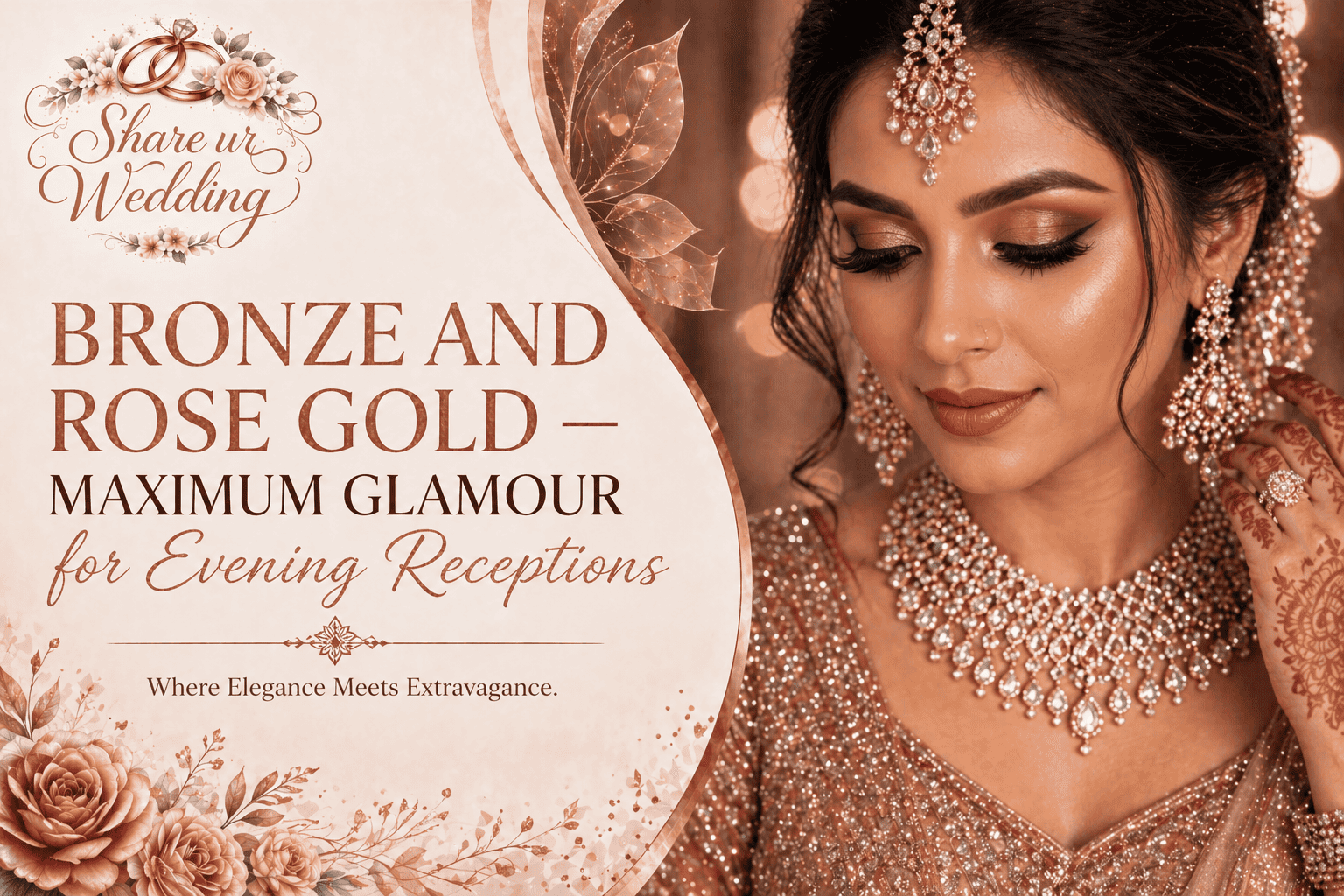
The reception is where Indian brides who wore traditional makeup for the ceremony often choose to explore something more evening-appropriate and fashion-forward. The bronze and rose gold look is built for this moment — it catches the warm chandelier and string light typically found at Indian reception venues and creates an extraordinary luminosity in photographs taken under event lighting.
Bronze eyeshadow, blended from the lid to slightly above the crease, with a rose gold shimmering highlight at the centre of the lid and swept across the highest point of the cheekbones. Skin finish should be luminous — a dewier base than the ceremony look, with a satin finish rather than matte. Lip in a warm rose or mauve that coordinates with the metallic palette without overwhelming it.
Photographer Note: Tell your makeup artist which lighting your reception uses before the trial. Warm amber lighting (candles, string lights) requires different makeup choices than cool blue-tinted corporate event lighting. Makeup that glows under candles can look flat under overhead fluorescents, and vice versa.
Look 6: Fresh Floral and Pastel — Daytime and Garden Wedding Looks
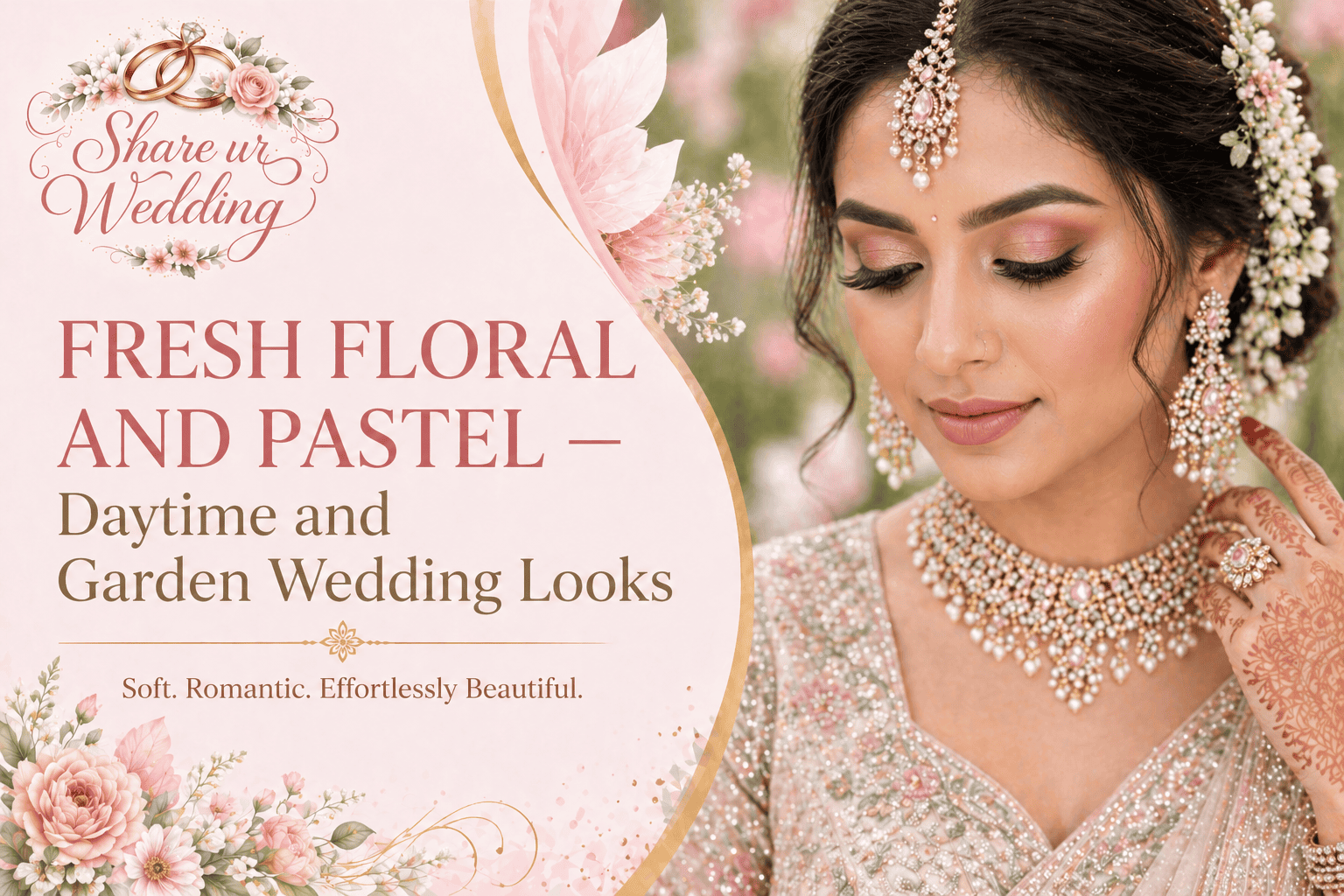
Outdoor and garden wedding ceremonies in natural light reveal makeup very differently from indoor event lighting. The skin shows more texture, the makeup palette appears more true to its actual colour, and heavy contouring looks obviously artificial. The floral and pastel makeup look is designed specifically for daylight — soft lavender, blush pink, or sage green eye shadow applied lightly, with a fresh skin finish, peachy cheeks, and a lip in a natural rose or berry.
This look pairs beautifully with pastel and floral lehengas, ivory and off-white outfits, and the newer lightweight organza and Chanderi sarees that are trending in 2026. It photographs with a freshness and warmth in natural light that heavier evening makeup cannot achieve.
Look 7: Bold Eye, Bare Lip — Editorial and Fashion-Forward
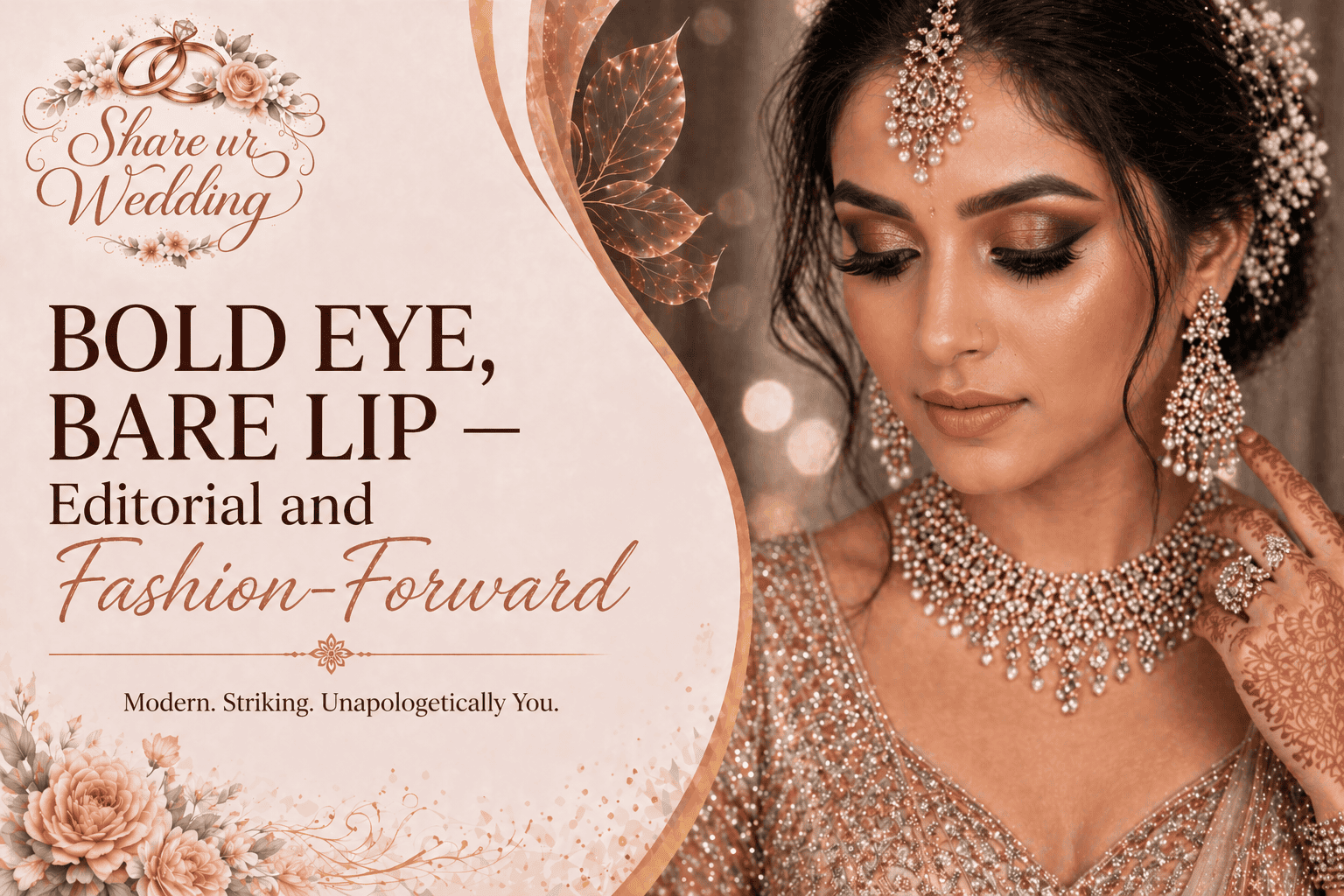
The most confident bridal makeup choice of 2026 is also the most simple to describe: one extraordinary, dramatic eye look — a deep blue smoky eye, a cut-crease in jewel tones, an avant-garde graphic liner — with completely bare, unlined lips in the bride’s natural colour or a tinted balm. The logic of this look is mathematical: when one element of the face is the star, every other element becomes the supporting cast. The result looks editorial, intentional, and completely modern.
This look requires a makeup artist with strong editorial skills. It is less common in traditional Indian bridal contexts but is increasingly popular among urban brides in their late 20s and early 30s who are deeply familiar with international makeup trends and want their wedding look to feel genuinely current rather than traditionally prescribed.
Look 8: Film-Inspired Vintage Glam
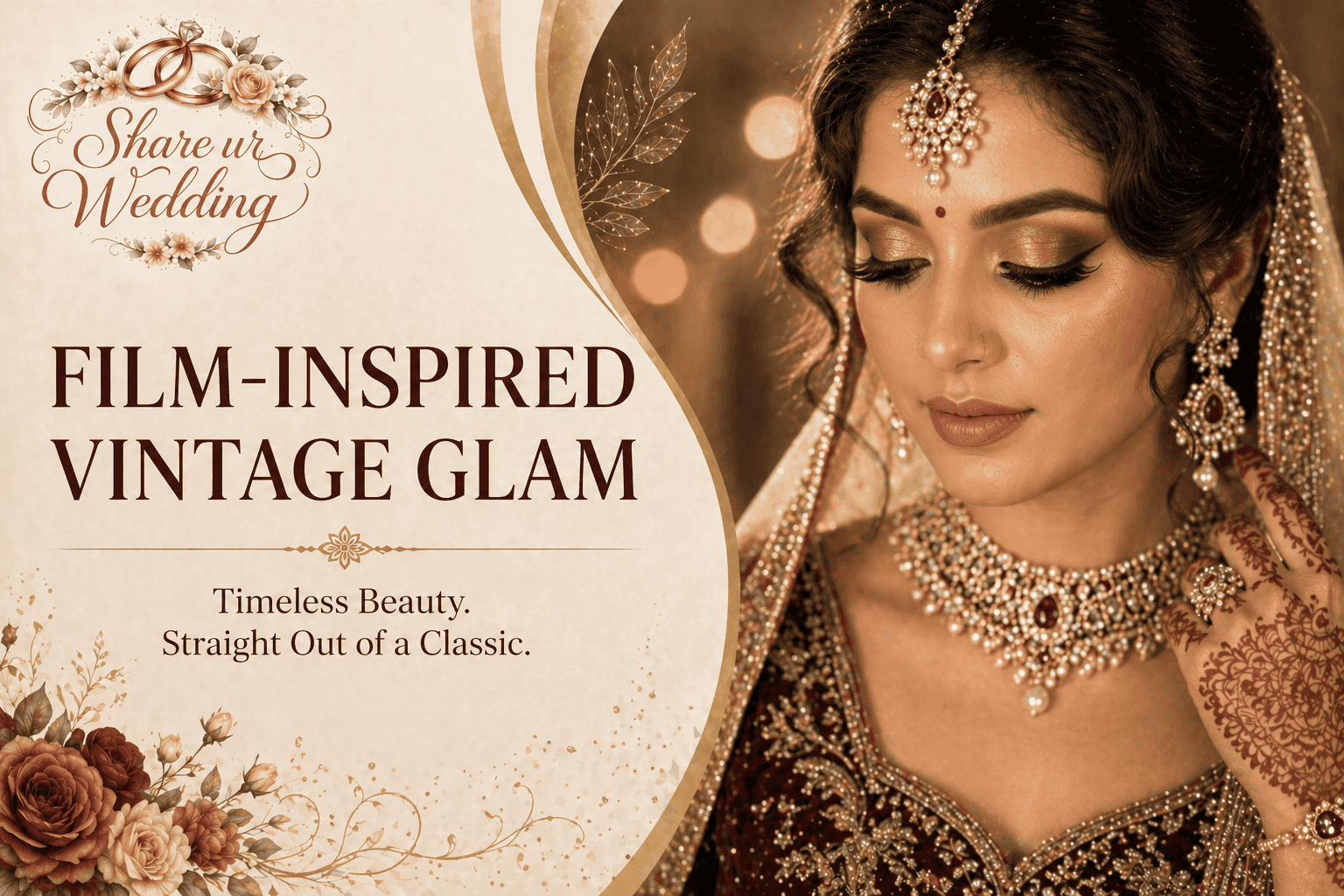
Inspired by 1960s and 1970s Indian cinema, this look features a bold cat-eye wing in black, a defined brow, matte skin, and a classic red or cherry lip. Think the aesthetic of old Bollywood at its most glamorous — controlled, deliberate, and cinematic. In 2026, couples choosing the film emulation aesthetic for their wedding photography are specifically requesting this makeup look to coordinate with the grain and warm tones of their film-inspired photographs.
Look 9: Monochrome Pink — The Millennial Favourite
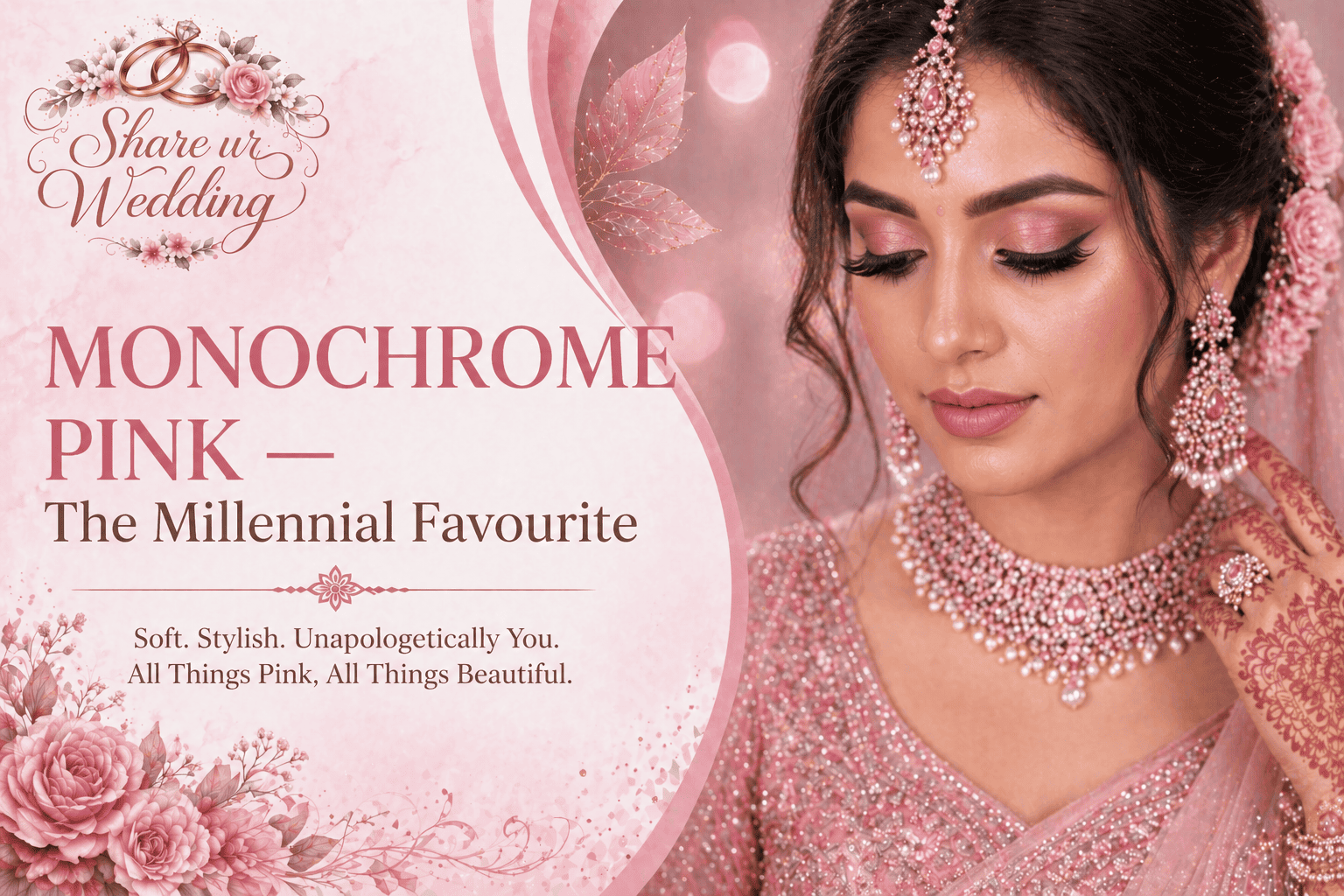
A single pink family used across eyes, cheeks, and lips in coordinating shades creates a monochromatic warmth that is simultaneously modern and feminine. Dusty rose or mauve on the eyes, a warm pink blush on the cheeks, and a berry or deep rose lip in the same colour family. The skin finish should be luminous and the overall effect should feel cohesive rather than colour-blocked.
Look 10: Jewel-Toned Eye — The Gemstone Makeup Trend
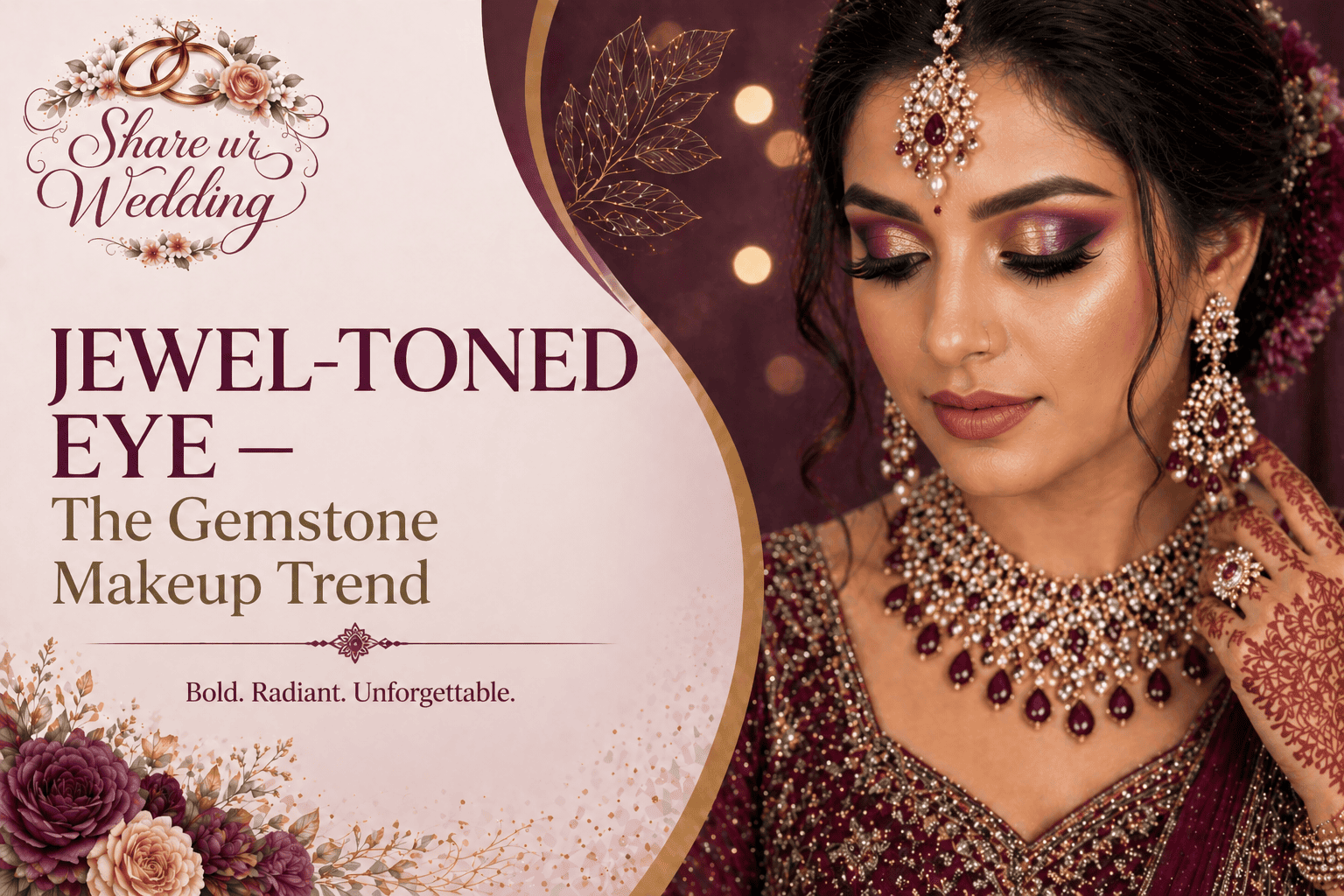
Deep sapphire, emerald green, or amethyst purple applied to the eye area — blended precisely, not smudged — with completely clean skin and a lip that is either bare or in a coordinating deep tone. This is the makeup version of the jewellery-forward bride. It works particularly well with ivory and champagne lehengas where the outfit itself is understated and the makeup becomes the single most dramatic element of the bridal look.
Look 11: Natural No-Makeup Makeup — Looking Like Yourself
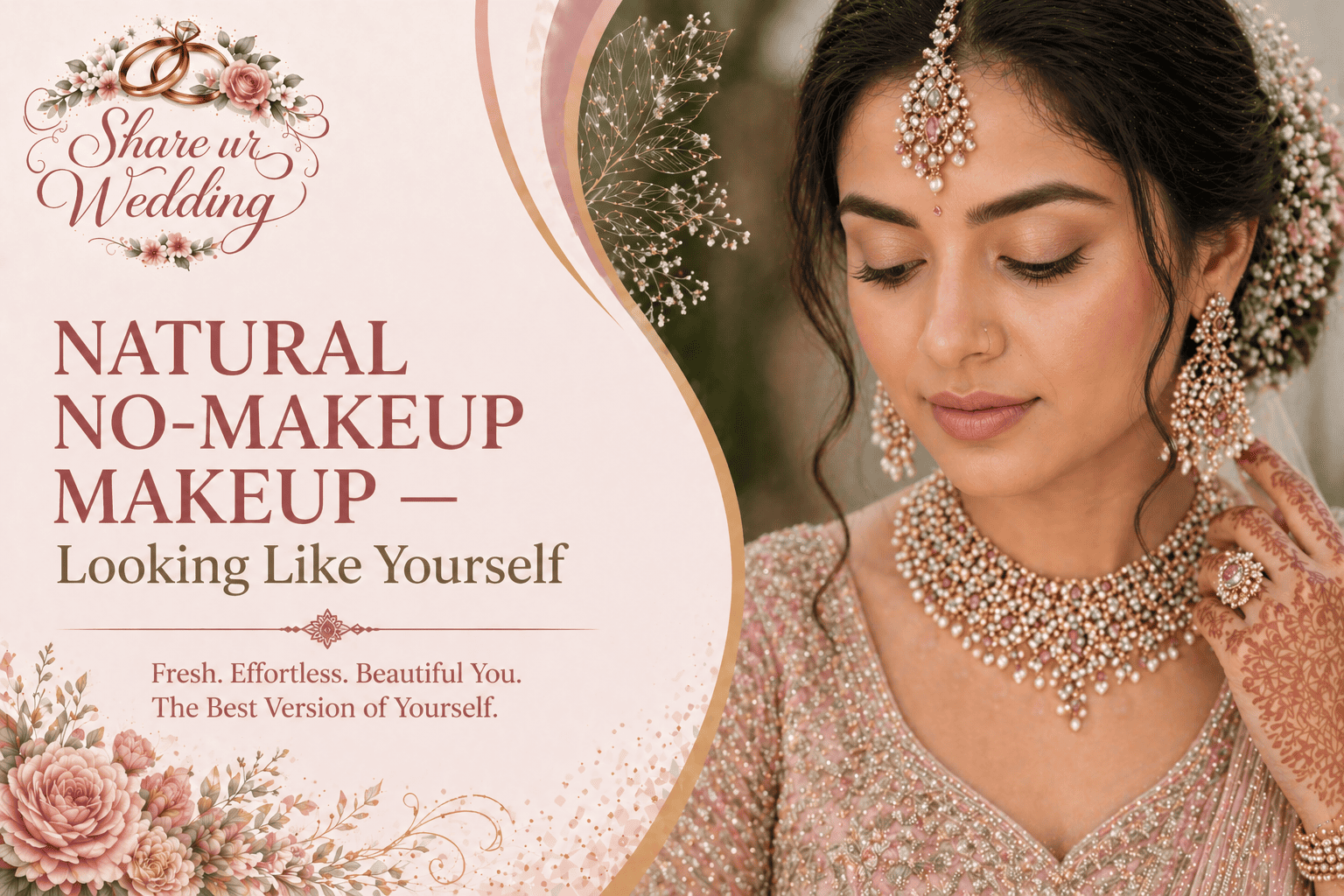
The hardest look to execute and the most often requested in 2026. The no-makeup makeup look requires the most skilled makeup artist of any look on this list, because every product must be applied invisibly while still achieving perfection. The skin must look flawless without appearing covered. The brows must be defined without appearing drawn. The eyes must appear bright and open without visible eyeshadow. The lips must be coloured without looking lipsticked.
This look requires a colour-matched foundation that disappears into the skin, brow grooming products that fill without creating a sharp line, a mascara that extends without clumping, and a lip product that is genuinely close to the bride’s natural lip colour but two shades more perfect. It rewards brides who have invested in their skin in the months before the wedding more than any other look.
Look 12: Waterproof and Wedding-Proof Makeup — The Practical Guide
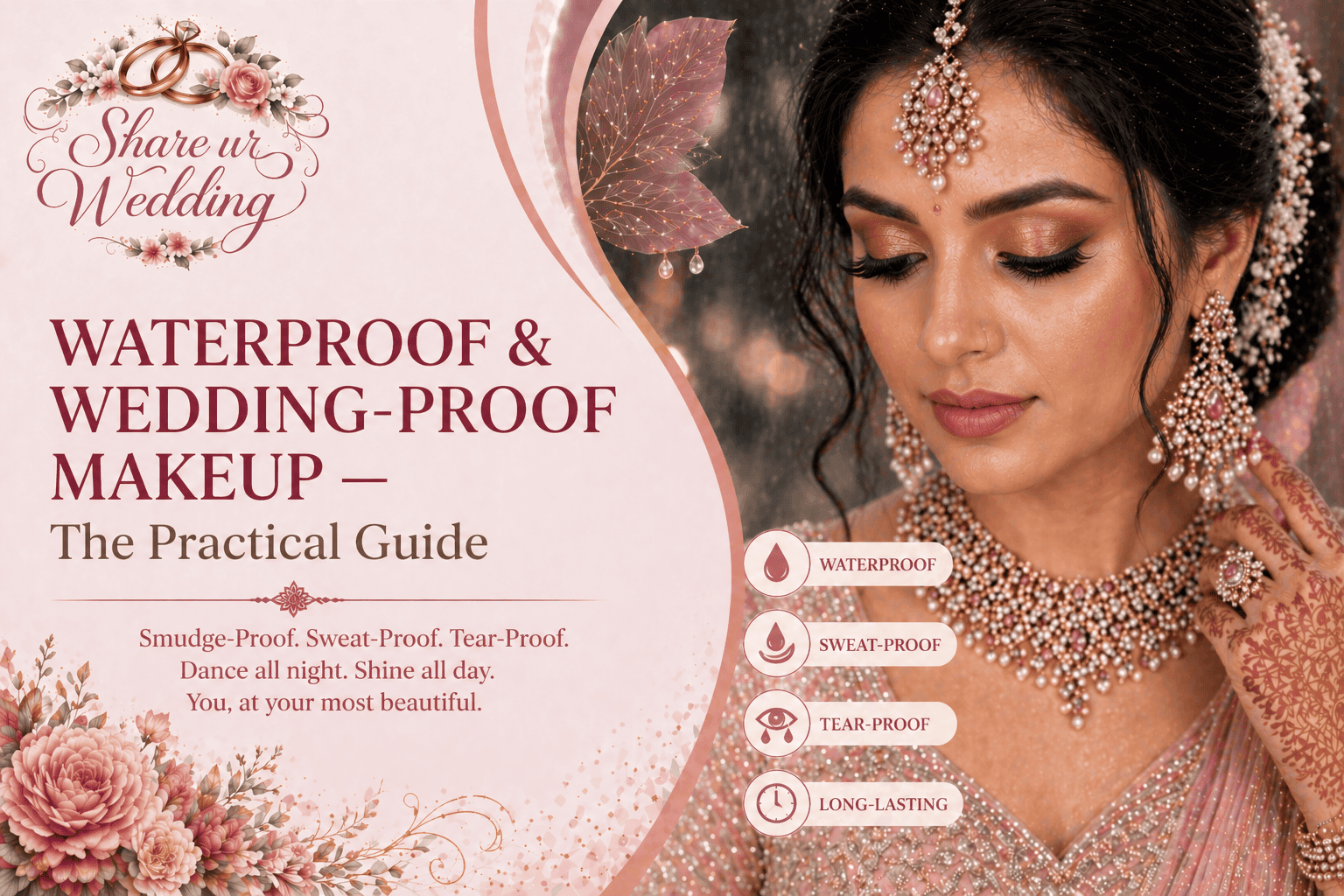
This is not an aesthetic look but a technical one — and it may be the most practically important section in this entire guide. Indian wedding days are long, emotionally intense, and often physically demanding. A bride who walks into the ceremony at 9am and finishes the reception at 11pm has had her makeup on for 14 hours, cried at the vidaai, danced at the sangeet, sweated through an afternoon ceremony, and hugged approximately 300 people. Her makeup must survive all of it.
- Use a primer designed for your skin type before any foundation — silicone-based for oily skin, hydrating for dry skin
- Apply foundation in layers rather than one heavy application — thin coats build coverage without the mask effect
- Set with a translucent setting powder around the T-zone and under the eyes
- Use a makeup setting spray with a finishing spray — apply before and after the completed look
- Waterproof mascara and eyeliner are non-negotiable for the ceremony, especially for emotional events like the vidaai
- Keep the same lip product in your bridal kit for touch-ups — apply after every meal
- Avoid touching the face during the day — oil from hands breaks down makeup faster than almost anything else
How to Choose a Bridal Makeup Artist — A Practical Guide
The makeup artist decision is as important as the photographer decision for most brides — and is given significantly less thought. Here is how to evaluate bridal makeup artists specifically for Indian weddings.
- Look at their portfolio specifically for skin tones similar to yours. A portfolio of only fair-skinned brides tells you nothing about how they work with wheatish, dusky, or deep skin tones.
- Request to see their full wedding photographs, not just the close-up makeup shots. Makeup that looks beautiful in a focused portrait sometimes reads differently in wide ceremony shots.
- Ask about their product brands and formulas. Professional makeup artists use professional-grade, long-wearing products. If they cannot name their products or seem evasive, that is a concern.
- Request a trial 6 to 8 weeks before the wedding — never closer than 4 weeks. You need time to adjust if the trial does not go as planned.
- Confirm what is included in the booking: trials, touch-ups during the day, travel charges, and whether they provide a makeup assistant for the day.
Skin Tone Works Beautifully Approach Carefully Best 2026 Look
Fair / Light Deep jewel tones, pastels, true red, ivory Very pale nudes which can wash out Vintage glam (Look 8) or Jewel-tone eye (Look 10)
Wheatish / Medium Terracotta, coral, warm berries, gold Cool-toned pastels — can look dull Terracotta and gold (Look 2) or Bronze reception (Look 5)
Dusky / Deep Warm reds, fuchsia, deep berries, metallics Very muted nudes which can disappear Bold eye bare lip (Look 7) or Jewel-toned eye (Look 10)
Olive / Golden Earthy tones, warm pinks, deep reds Cool lavenders and blues Monochrome pink (Look 9) or Fresh floral (Look 6)
Bridal Makeup Booking Timeline — When to Do What
| Timeframe | Action | Why It Matters |
|---|---|---|
| 6–9 months before | Research makeup artists, shortlist 3–5, check portfolios | Top bridal MUAs book 8–12 months in advance during wedding season |
| 4–6 months before | Book your makeup artist and schedule the trial | Securing your date locks in their availability |
| 6–8 weeks before | Full bridal makeup trial — complete look with jewellery | Time to adjust if something needs to change |
| 4 weeks before | Trial photographs reviewed in all lighting types | Final confirmation of look before wedding |
| 2 weeks before | Confirm day-of timing, touch-up plan, travel logistics | Prevents morning-of surprises |
| Wedding morning | Arrive with clean, moisturised skin and washed hair | Foundation applies better on fresh skin |
Frequently Asked Questions
What is the best bridal makeup look for Indian weddings in 2026?
The most popular bridal makeup look for Indian weddings in 2026 is the warm terracotta and gold look — a versatile, contemporary approach that works across skin tones and complements both traditional and modern outfits. For traditional ceremonies, the classic red lip with kohl eyes remains the most culturally resonant choice. For receptions, bronze and rose gold metallic looks are trending strongly. The best look for your wedding depends on your skin tone, your outfit colour, your venue lighting, and whether you want to look like an elevated version of yourself or a more dramatically transformed bridal version.
How far in advance should I book a bridal makeup artist?
Book your bridal makeup artist 6 to 9 months before your wedding if it falls in peak Indian wedding season (October to February). For off-season weddings, 4 to 6 months is generally sufficient. The very best makeup artists in major Indian cities book 12 months in advance during peak season. Always do a full trial at least 6 weeks before the wedding day — never leave the trial to the final 2 to 3 weeks, as there may not be time to course-correct if anything needs adjustment.
What bridal makeup works best for South Indian brides?
South Indian bridal makeup traditionally features deep black kajal on the waterline and lash lines, a rich red lip, clean warm-toned skin, and a bold red bindi. In 2026, this traditional foundation is being paired with more natural skin finishes, more precisely blended kajal, and occasionally with South Indian jasmine-inspired accessories. Kanjivaram silk saree brides should choose warm-toned foundations and avoid cool-toned base products that conflict with the warm gold of the zari. Temple jewellery requires eye makeup that is defined but not so dramatic that it competes with the jewellery.
How do I make bridal makeup last all day at an Indian wedding?
Use a primer suited to your skin type before foundation. Apply foundation in thin layers for coverage without heaviness. Set with a translucent powder, especially the T-zone and under-eye area. Use a setting spray before and after the completed look. Choose waterproof formulas for mascara and eyeliner — especially critical for emotional moments like the vidaai. Keep your lip product in the bridal bag for touch-ups. Avoid touching your face during the day. Most importantly, work with a makeup artist who specifically uses long-wearing professional-grade products.
Can I do my own bridal makeup for an Indian wedding?
For mehndi, haldi, or sangeet events, self-applied or friend-applied makeup is genuinely manageable, especially if you have good makeup skills. For the main wedding ceremony and reception, professional bridal makeup is strongly recommended for most brides. Indian weddings produce hundreds of photographs that you and your family will look at for decades. A professional makeup artist understands colour theory, lighting, camera flash, and the specific needs of Indian bridal makeup in ways that even skilled self-taught makeup enthusiasts typically do not. If budget is a concern, prioritise professional makeup for the ceremony and use a skilled friend for pre-wedding events.
A Final Thought
The best bridal makeup is the kind that makes you look in the mirror two hours before the ceremony and feel — not just ‘I look beautiful,’ but ‘I look like me, just completely right.’ That feeling is not achieved by following trends or booking the most expensive artist. It is achieved by knowing what works on your face, communicating it clearly, doing the trial early enough to refine it, and trusting a professional to execute it under the demanding conditions of a 14-hour Indian wedding day.