

There is a distinct, unforgettable sensory memory that comes with sorting through your grandmother’s old wooden chest. Beneath the heavy silk sarees and the faint scent of dried marigolds, you invariably find a stack of loose, textured photographs. The corners are slightly softened by time, and the colors have a warm, creamy glow that feels incredibly alive. When you look closely at her wedding portrait, you don’t see a clinical, pin-sharp reconstruction of a face; instead, you feel a mood. The gentle textures across the image make the moment feel less like a performance and more like a soft, permanent memory.
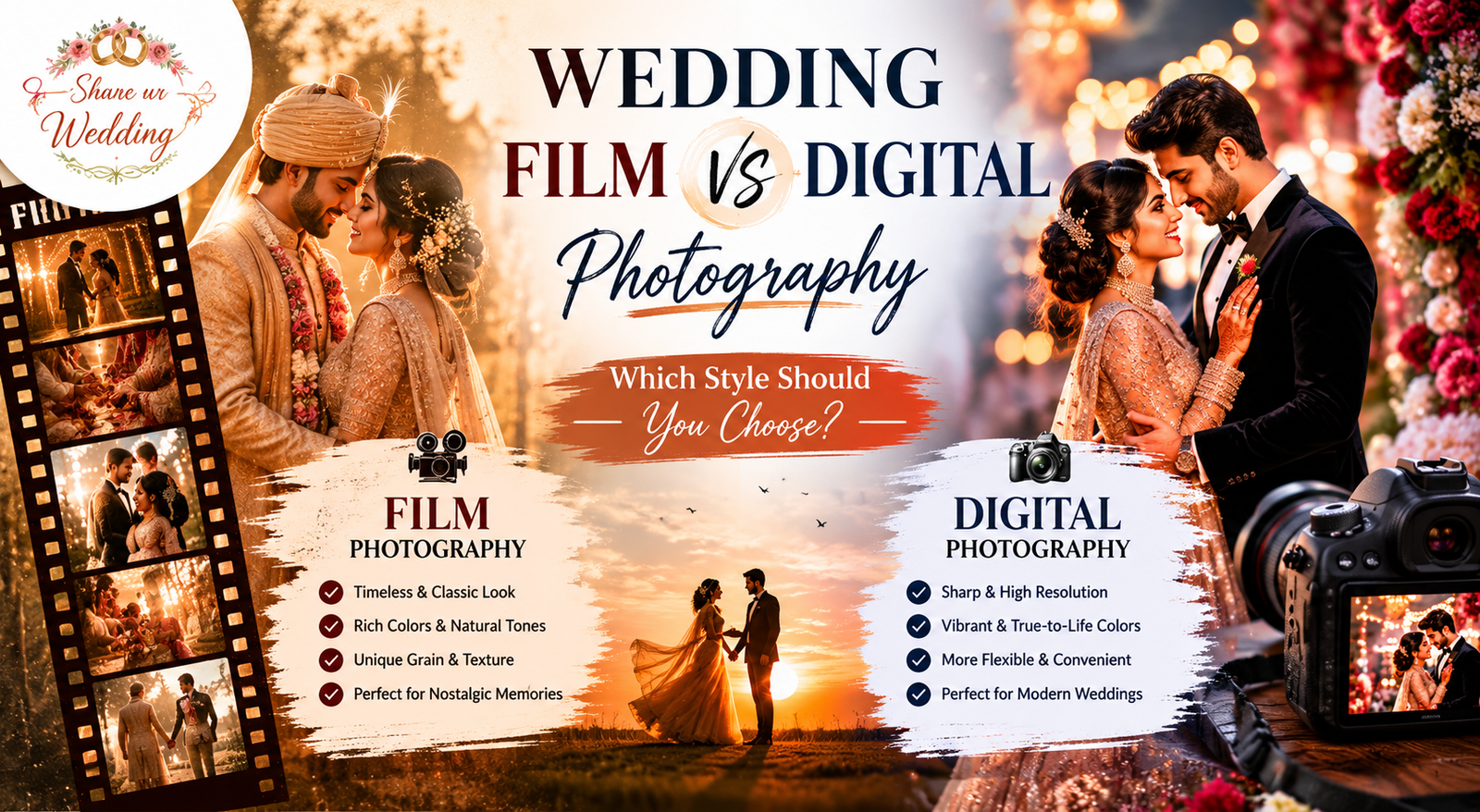
Fast forward to the present day, and our modern celebrations are captured with absolute technical perfection. We have ultra-high-definition sensors, lenses that can see in pitch darkness, and mirrorless cameras that fire thirty frames per second without breaking a sweat. Yet, in our relentless pursuit of pixels, a growing number of couples are feeling a strange sense of visual fatigue. This longing for authenticity explains why we are witnessing a massive resurgence of film vs digital wedding photography India wide. Brides are looking past the hyper-polished, heavily airbrushed aesthetic of the last decade and turning their attention toward the slow, deliberate craft of analog image-making. It isn’t a rejection of modern convenience, but rather a conscious desire for a wedding archive that feels deeply human, beautifully imperfect, and undeniably timeless.
What Is Film Photography? A Quick Refresher for the Digital Generation
For those of us who grew up entirely in the era of smartphones and memory cards, the mechanics of a film camera can feel beautifully foreign. Unlike a digital camera, which translates light into a series of ones and zeros on a silicon sensor, an analog camera relies entirely on chemistry and physical mechanics. Inside a roll of film is a strip of plastic coated with millions of microscopic, light-sensitive silver halide crystals. When the shutter clicks, the camera lens allows light to hit this emulsion for a fraction of a second, burning a latent image onto the strip.
This physical reality means that analog wedding photography India artists use does not offer instant gratification. There is no back screen to check after a shot is taken, no instant preview to ensure everyone’s eyes were open, and no safety net of infinite storage. A standard roll of 35mm wedding photography film yields exactly 36 frames, while a medium-format roll (like 120 film) provides a mere 12 to 15 shots. Every single click carries a tangible financial and artistic cost. The exposed canisters must be carefully packaged, shipped to a professional lab, developed in chemical baths, and finally scanned using specialized machinery to create the digital files you can eventually view on your phone. It is a slow, methodical process that rewards patience and extreme technical mastery.
What Makes Film Wedding Photos Look Different?
The distinct visual language of film cannot be perfectly replicated by digital software, no matter how many vintage filters or editing presets you apply. The difference is rooted in how the two mediums interact with light, shadow, and color. When you look at a digital image, the transitions between light and dark are mathematically linear. If a bright patch of sunlight hits a white silk sherwani, a digital sensor can easily overexpose, leaving a harsh, blown-out white block with zero detail.
DIGITAL HIGHLIGHT HIGHLIGHT BLOWOUT
[ Harsh Sun ] —-> [ Hard Edge ] —-> [ Loss of Fabric Texture ]
FILM HIGHLIGHT ROLL-OFF
[ Harsh Sun ] —-> [ Gentle Gradient ] —-> [ Creamy Soft Details Retained ]
Film, conversely, possesses an incredible highlight latitude. When film encounters intense light, it gently Compresses the data, creating what photographers call a soft highlight roll-off. This means that even in harsh afternoon sun, the intricate gold zari embroidery on your lehenga remains beautifully visible, wrapped in a soft, luminous glow.
Furthermore, film grain wedding photos feature a texture that is radically different from digital noise. Digital noise occurs when a camera sensor struggles in low light, resulting in sharp, ugly pixels that look like colorful static. Film grain is the physical structure of the silver crystals themselves. It is organic, random, and incredibly pleasing to the eye, giving the final print a painterly quality.
Color rendering is another area where analog shines. Legendary film stocks like Kodak Portra 400 are celebrated worldwide for their gorgeous, warm skin tones, rendering rich Indian complexions with an unmatched, creamy warmth. On the other side, stocks like the now-iconic Fuji 400H are famous for their pastel undertones, rendering mint greens, pale pinks, and outdoor garden details with a dreamy, romantic airiness that defines the high-end wedding photo aesthetic of today.
Digital Wedding Photography: The Clear Advantages
While the romance of film is undeniable, it is easy to see why digital remains the undisputed king of the modern wedding industry. The primary advantage can be summed up in one word: certainty. When a digital wedding photographer vs film specialist works, they have immediate feedback. They can check their exposure levels, confirm focus on an intricate piece of jewelry, and instantly verify that the couple’s parents were smiling during a crucial ritual. This real-time validation provides immense peace of mind during a high-stakes, fast-moving event.
+------------------------------------+------------------------------------+
|       DIGITAL ADVANTAGES           |         FILM ADVANTAGES            |
+------------------------------------+------------------------------------+
| - Instant image validation         | - Luminous, soft highlight detail  |
| - Infinite low-light flexibility   | - Timeless, organic grain structure|
| - Fast turnaround times (weeks)     | - Intentional, slow pacing         |
| - High-volume burst shooting       | - True-to-life, warm skin tones    |
+------------------------------------+------------------------------------+
Another massive advantage is digital’s extraordinary low-light capability. Modern full-frame digital cameras can shoot at incredibly high ISO settings, allowing photographers to capture a dim, ambient-lit indoor reception or a late-night mandap ceremony without needing harsh, disruptive flash units.
Additionally, digital offers the benefit of sheer volume. A single digital memory card can hold thousands of images, allowing a photographer to use burst modes to capture every micro-expression during a fast-paced jaimala or an energetic sangeet performance. This high volume translates directly into a fast turnaround time; because there is no chemical processing involved, digital galleries can often be delivered to couples within a matter of weeks.
The Honest Drawbacks of Film at Indian Weddings
To make an informed choice, a bride must look past the romanticized social media clips and understand the practical limitations of shooting analog within the context of a traditional Indian celebration. Our weddings are magnificent, beautiful beasts—they are long, incredibly fast-paced, filled with hundreds of guests, and logistically complex. These specific factors present unique challenges for a pure analog workflow.
-
The Velocity of Rituals: Traditional Indian ceremonies do not pause for a photographer to reload. When the priest asks the groom to apply sindoor, the moment lasts for a brief few seconds. If your photographer runs out of film at frame 36 right at that moment, the entire milestone could be missed while they open their camera bag, extract a fresh roll, and manually thread it into the camera body.
-
The Nighttime Mandap Challenge: A significant portion of Indian weddings take place under a mandap late at night, or inside deep banquet halls with mixed, unflattering lighting. Film requires a substantial amount of physical light to expose correctly. While a digital camera can adapt to low light seamlessly, a film photographer in a dark hall must rely heavily on external on-camera flash units or heavy studio lighting setups, which completely alters the candid, unposed mood of the space.
-
The Waiting Game: The physical journey of a roll of film takes time. Because premium professional processing labs within India are concentrated in a few major metros, your rolls often need to be shipped safely, developed, cut, and scanned. This adds weeks to your final delivery timeline, meaning you won’t have instant access to high-res previews for your immediate post-wedding social media posts.
Understanding these realities ensures you won’t be caught off guard when managing your post-wedding timelines and expectations.
Cost Comparison Table: Film vs Digital in India 2026
To help you budget effectively for your big day, it is essential to look at the tangible financial investment required for both formats. The pricing for film photography isn’t arbitrary luxury markup; it reflects the direct, raw material costs of film stock, chemical processing, and professional lab scanning fees that accumulate with every single click of the shutter.
| Photography Service Component | Premium Digital Coverage | Dedicated Analog/Film Coverage |
| Average Raw Material Cost | Included in gear investment | ₹2,500 – ₹3,500 per roll (Film + Lab Fees) |
| Volume Delivered (3-Day Event) | 800 – 1,200 fully edited images | 150 – 250 curated analog frames |
| Turnaround Time Framework | 4 to 6 weeks for full gallery | 8 to 12 weeks (Due to lab queues) |
| Estimated Base Fee Range (INR) | ₹2,500,000 – ₹5,000,000 per day | Additional ₹1,500,000 – ₹3,000,000 premium |
As the data illustrates, film is an intentional premium add-on. Every time a photographer clicks a film shutter, a real cost is incurred, making it an investment reserved for curated, deliberate storytelling rather than high-volume documentation.
Which Indian Wedding Ceremonies Work Better on Film?
If you decide to incorporate film into your wedding day, the secret to maximizing your investment lies in deploying it during the specific ceremonies where the medium naturally excels. Film thrives in soft, natural light and during slow, emotionally intimate moments where the photographer has the space to compose a frame with true intention.
+------------------------------------+------------------------------------+
|    IDEAL FOR FILM (Natural Light)  |   IDEAL FOR DIGITAL (Fast/Dim)     |
+------------------------------------+------------------------------------+
| - Morning Haldi / Mehendi          | - Late-Night Sangeet Dance Floor   |
| - Bridal Portraits by a Window     | - Indoor Reception Entrances       |
| - Outdoor Varmala (Golden Hour)    | - High-Speed Baraat Processions    |
+------------------------------------+------------------------------------+
An outdoor, daytime Haldi ceremony is an absolute dream for a roll of Kodak Portra. The bright yellow marigolds, the splashes of water, and the sun-drenched, joyful smiles are rendered with a warmth and depth that digital struggles to match. Similarly, quiet morning bridal portraits—shot near a large window with soft, directional daylight—look breathtaking on film. The fabric of your veil, the fine texture of your skin, and the quiet, contemplative expressions look like fine-art paintings.
Conversely, the high-octane madness of a night sangeet dance floor, with its flashing LED screens, moving stage lights, and fast dance routines, is best left entirely to digital sensors that can track motion in milliseconds under unstable lighting conditions.
What Indian Brides on Instagram Are Saying About Film Photography
If you spend any time browsing through current wedding photography trends 2026 curation accounts on Instagram, you will notice a distinct shift in the captions written by modern brides. There is a palpable sense of delight surrounding the unedited, raw quality of analog frames. Brides are actively celebrating the fact that their film photos look like a real, living document rather than a heavily modified digital file.
Many popular bridal creators notes that when they look at their digital gallery, they admire how perfect everything looks. But when they look at the handful of film frames their photographer captured, they find themselves pausing. They lean in close to look at the soft grain on their mother’s face during the bidaai, or the way the afternoon light caught the dust motes around the mandap. It is this specific emotional pull that has made film the ultimate quiet luxury statement across social media platforms. It isn’t about showing off a perfect, flawless facade; it is about celebrating a rich, texture-filled reality that feels incredibly exclusive in a digital world.
How to Find a Film Wedding Photographer in India
Because analog photography requires an entirely separate skillset from digital shooting, finding a true master of the craft inside India requires careful, diligent research. You cannot simply ask a standard digital photographer to bring a film camera along and expect masterpiece results; the understanding of manual exposure metering, film chemistry, and light management takes years of dedicated practice to perfect.
        FILM PHOTOGRAPHER VETTING PROCESS

   [ Review Full Galleries (Not just Instagram Reels) ]
                           │
                           ▼
   [ Ask About Gear: 35mm vs Medium Format (120) ]
                           │
                           ▼
   [ Confirm Lab Partnerships (E.g., Mazda, Caribou) ]
                           │
                           ▼
   [ Verify Low-Light Contingency & Lighting Plans ]
When interviewing prospective studios, always ask to see a complete, unedited gallery of a real wedding shot entirely on film. Look closely at how they handle skin tones in challenging lighting scenarios. Inquire about the specific lab they partner with for their development and scanning, as a top-tier lab partnership is a clear indicator of a professional workflow. A true analog artist will be incredibly passionate about the technical details; they will happily discuss different film stocks, describe how they meter for shadows, and explain exactly how they plan to navigate the specific lighting challenges of your wedding venue.
The Hybrid Approach: Shooting Both Film and Digital
For the vast majority of modern Indian brides, the absolute best solution lies in embracing a thoughtfully balanced hybrid photography model. This approach combines the safety, speed, and low-light versatility of digital with the emotional depth and artistic texture of analog, giving you the best of both worlds.
In a typical hybrid setup, your primary photography team will use high-end digital cameras to document the fast-paced, high-volume elements of the day—the arrivals, the stage greetings, the heavy dance routines, and the macro details of the venue. Concurrently, a dedicated second shooter, or the principal photographer during quiet moments, will operate a classic film camera body. They will step in during the calm morning prep, the intimate couple portraits, and the outdoor daylight rituals to capture a curated selection of artistic, analog frames. This dual-layer approach provides complete peace of mind, ensuring every single fast-moving milestone is safely backed up on a digital card, while still allowing you to walk away with a breathtaking, soul-filled analog portfolio.
FAQs
Is film photography more expensive than digital?
Yes, film photography is significantly more expensive than digital coverage due to the substantial ongoing material costs involved. With digital, once a photographer invests in their camera body and lenses, every individual click of the shutter is essentially free. With film, every single exposure represents a direct financial expenditure. A single professional roll of film costs several thousand rupees to purchase, and developing and scanning that same roll at an elite lab adds an equal amount. When you multiply these costs across dozens of rolls needed to cover a multi-day Indian celebration, the material expenses alone run into tens of thousands of rupees before factoring in the artist’s time and expertise.
Can film cameras handle low-light wedding venues?
Film cameras can handle low-light environments, but they require a completely different approach compared to digital cameras. While a digital photographer can simply increase their ISO setting with the turn of a dial, a film photographer is limited by the chemical speed of the roll currently loaded inside their camera. To shoot in a dim banquet hall or a nighttime mandap setting, they must use high-speed film stocks, use fast lenses, and introduce external light sources like on-camera flash units or off-camera softboxes. This means the look of low-light film will be distinct—it will feature heavy, dramatic shadows and highly visible grain, which looks beautiful and editorial but may lack the clean, bright visibility of a low-light digital file.
How long does film photo development take?
The turnaround time for receiving your film photographs typically ranges from 8 to 12 weeks, which is notably longer than standard digital delivery. This extended timeline exists because the physical film canisters must be safely shipped to a specialized professional lab, chemically processed under strict temperature controls, dried, cut, and meticulously scanned using high-resolution industrial scanners. Because there are only a handful of top-tier professional film labs operating within India, they often face significant backlogs during peak wedding seasons. However, most hybrid photographers will provide a small selection of digital sneak peeks within a few days of the wedding to keep you satisfied while your film rolls go through the lab pipeline.
Do most Indian wedding photographers offer film?
No, the vast majority of mainstream wedding photographers in India do not offer authentic film coverage. The industry has been dominated by digital technology for over two decades, meaning a significant percentage of modern professionals have never operated a fully manual analog camera body. Offering film requires a photographer to understand manual light metering, manage a physical inventory of fragile film stocks, and accept the high-stakes responsibility of shooting without an instant digital preview screen. It remains a specialized, high-end niche service offered by an elite group of fine-art and editorial wedding photographers who treat the medium as a distinct artistic choice.
Can film wedding photos be shared on social media?
Yes, your film wedding photos can absolutely be shared across all social media platforms seamlessly. When your photographer sends your rolls to a professional lab, the negatives are scanned using ultra-high-resolution digital scanners. These scanners translate the physical film frames into pristine, high-resolution JPEG or TIFF files that are delivered to you via an online cloud gallery link. You can download these digital files directly to your phone, tablet, or laptop, allowing you to share your gorgeous analog images on Instagram, WhatsApp, or Pinterest with the exact same ease as a native digital photograph.
Conclusion
The choice between film and digital photography shouldn’t be viewed as a rigid compromise, but rather as an opportunity to define how your love story is preserved. Digital cameras offer an incredible safety net, capturing the scale, the vibrant energy, and the fast-moving spectacle of a modern Indian wedding with absolute precision. Film, however, offers an irreplaceable emotional texture, forcing us to slow down, breathe, and appreciate the raw, beautiful imperfections of a real moment. The best camera is the one your photographer uses with true artistic intention. By embracing a balanced approach, you can create a beautiful, multi-layered visual archive—one that documents the facts of your celebration perfectly, while preserving the true, deep soul of your memories for generations to come.