


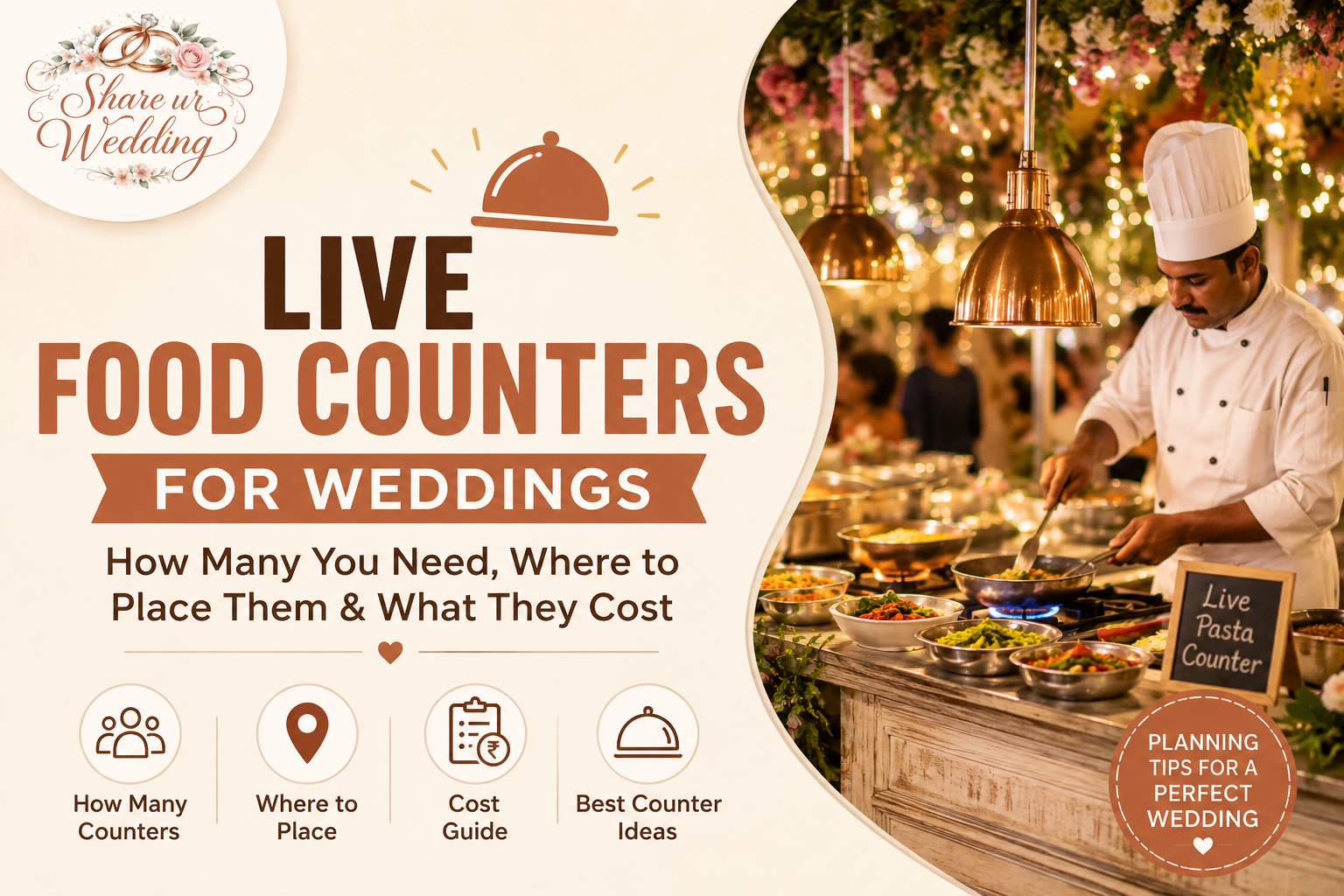
Imagine walking into a wedding reception where the aroma of freshly made dosas fills the air, a chef is tossing pasta in a sizzling pan, and guests are happily gathered around a colourful chaat counter. Instead of waiting for buffet trays to be refilled, everyone is enjoying food that’s prepared fresh right in front of them.
That’s exactly why live food counters have become one of the biggest wedding catering trends in India.
They’re more than just food stations—they create an experience. Guests love watching chefs cook, customizing their plates, and enjoying dishes that are served piping hot. Whether it’s a grand reception, an intimate wedding, or a lively sangeet night, live counters add excitement that a traditional buffet simply can’t match.
But here’s something many couples realize only after the wedding…
Having more live counters doesn’t always make the dining experience better.
Poor planning can lead to long queues, cold food, overcrowded corners, and unnecessary catering expenses. In many weddings, couples spend thousands on fancy counters that barely get any visitors, while a single pani puri or dosa counter ends up with a line stretching across the venue.
The secret isn’t adding more counters.
It’s choosing the right counters, placing them in the right locations, and ensuring they’re staffed properly.
This guide will help you do exactly that.
You’ll learn:
- How many live food counters you actually need based on your guest list.
- The most popular live counter ideas for Indian weddings.
- Where to place each counter for smooth guest movement.
- What live counters usually cost and what affects the price.
- Common planning mistakes that couples often overlook.
- Expert tips to reduce waiting time and make your guests happy.
Whether you’re planning a wedding for 150 guests or 1,000 guests, this guide will help you make smarter catering decisions and get the most value from your budget.
Quick Answer: A good rule is to have one live food counter for every 60–80 guests if live cooking is one of the main attractions at your wedding. Instead of adding lots of different counters, consider duplicating your most popular ones—such as chaat or pani puri—to reduce waiting time and improve the overall dining experience.
Live Food Counter vs Live Food Station: What’s the Difference?
These two terms are often used interchangeably, but they don’t always mean the same thing. Understanding the difference can help you avoid confusion when comparing catering packages.
Live Food Counters at a Glance
Planning your wedding menu? Here’s a quick guide to help you estimate how many live food counters you’ll need based on your guest count.
| Guest Count | Recommended Live Food Counters |
|---|---|
| 100–150 Guests | 2–3 Counters |
| 150–300 Guests | 3–4 Counters |
| 300–500 Guests | 5–7 Counters |
| 500–800 Guests | 7–9 Counters |
| 800+ Guests | 9–12 Counters |
Pro Tip: These are planning guidelines. Your ideal number may vary depending on your venue layout, dinner duration, and menu selection.
What is a Live Food Counter?
A live food counter focuses on preparing one type of dish or cuisine in front of your guests.
Some popular examples include:
- Live Dosa Counter
- Chaat Counter
- Pasta Counter
- Jalebi Counter
- Shawarma Counter
Each counter usually has its own chef, cooking equipment, and serving area.
What is a Live Food Station?
A live food station is a larger themed section that includes multiple dishes within the same cuisine.
For example, a South Indian station might include:
- Live Dosa
- Mini Idli
- Medu Vada
- Uttapam
- Different chutneys and sambar
Although guests see it as one area, several dishes may be prepared simultaneously.
Why This Difference Matters
Many couples receive catering quotations mentioning “5 Live Counters” without asking what that actually includes.
Sometimes it means:
- Five individual chefs working at five separate counters.
Other times it simply means:
- One large station offering five menu items with only two chefs preparing everything.
That difference can affect:
- Waiting time
- Food quality
- Guest experience
- Overall catering cost
Before finalising your caterer, always ask:
- How many separate cooking setups are included?
- How many chefs will be serving each counter?
- Will every counter remain operational throughout dinner?
Getting these details in writing helps avoid surprises on your wedding day.
How Many Live Food Counters Do You Actually Need?
This is probably the biggest question couples ask while planning their wedding menu.
The natural instinct is to add more counters because they look impressive.
Unfortunately, that’s often where things go wrong.
Too many counters usually mean:
- Higher catering costs
- More chefs to manage
- Longer setup times
- Smaller crowds at each counter
- Popular counters becoming overcrowded while others remain empty
Instead of focusing on quantity, think about capacity.
A well-managed wedding with six busy counters often creates a much better guest experience than another wedding with twelve poorly planned counters.
Recommended Number of Live Food Counters
| Number of Guests | Recommended Live Counters |
|---|---|
| Up to 150 guests | 2–3 counters |
| 150–300 guests | 3–4 counters |
| 300–500 guests | 5–7 counters |
| 500–800 guests | 7–9 counters |
| 800+ guests | 9–12 counters (with duplicate popular counters) |
These numbers are general planning guidelines. The final count depends on factors such as:
- Reception or cocktail event
- Indoor or outdoor venue
- Buffet size
- Dining duration
- Guest preferences
- Regional cuisine
One Simple Trick That Makes a Huge Difference
If you’re expecting more than 400 guests, don’t spend your budget adding unusual cuisines that only a handful of people will try.
Instead…
Duplicate your most popular counters.
For most Indian weddings, the busiest counters are:
- Chaat
- Pani Puri
- Dosa
- Jalebi with Rabri
Having two chaat counters on opposite sides of the venue is far more effective than adding a sushi counter that only a small group of guests will visit.
Less waiting means happier guests—and happier guests remember the food long after the wedding.
Think Beyond the Menu—Think About Serving Speed
Every live counter has a maximum number of plates it can serve in an hour.
A dosa chef cannot make hundreds of dosas instantly.
Fresh pasta takes time to cook.
Even pani puri requires assembling each serving one plate at a time.
That’s why one question can save you from long queues:
“How many guests can this counter serve per hour with the current staff?”
An experienced caterer should be able to answer immediately.
If the numbers don’t comfortably cover your guest count during the dinner service, the solution isn’t another menu item—it’s adding another chef or a second counter for that popular dish.
Remember, guests rarely complain because there weren’t enough menu options.
They complain because they spent too much time waiting for their food.
Where Should You Place Live Food Counters?
Choosing the right menu is only half the job. Where you place your live food counters can make or break your guests’ dining experience.
We’ve all attended weddings where everyone is squeezed into one corner because all the food stations are lined up together. Guests wait in long queues, people struggle to move around, and some counters remain completely unnoticed.
With a little planning, you can avoid all of this.
Here are a few simple strategies that professional wedding planners follow.
1. Spread the Counters Across the Venue
One of the biggest mistakes couples make is placing every live counter side by side.
It may look organised, but it creates one large crowd while leaving the rest of the venue empty.
Instead, spread your counters throughout the reception area.
For example:
- Place the chaat counter near the welcome drinks.
- Keep the pasta or grill station close to the main buffet.
- Set up the dessert counter near the dining area.
- Reserve tea, coffee, or late-night snacks near the exit or dance floor.
This encourages guests to explore the venue naturally while preventing unnecessary crowding.
2. Create a Natural Food Journey
Think of your wedding menu like a story.
Guests shouldn’t jump from spicy chaat straight to ice cream and then back to biryani.
Arrange your counters in a logical sequence.
A simple flow works well:
Welcome Drinks → Starters → Chaat → Main Course → Live Specials → Desserts → Paan & Beverages
This makes the dining experience feel more organized and enjoyable.
3. Leave Enough Space Around Every Counter
Even the most popular food counter becomes frustrating if guests have nowhere to stand.
Every live counter should have enough space for:
- Waiting guests
- People collecting food
- Guests enjoying their plates
- Staff moving safely
Avoid placing counters:
- Near venue entrances
- Beside staircases
- In narrow walkways
- Close to the wedding stage
- Near emergency exits
Good spacing keeps the entire reception flowing smoothly.
4. Match the Counter to the Event
Not every live counter suits every wedding function.
Choose counters based on the atmosphere of the event.
Engagement or Cocktail Party
Guests are usually standing and socialising.
Great choices include:
- Chaat
- Mocktails
- Pasta
- Grills
- Shawarma
- Coffee Bar
Wedding Reception
Guests expect a complete meal.
Popular options include:
- Dosa Counter
- Chaat
- Live Grill
- Pasta
- Jalebi with Rabri
- Kulfi
- Paan Counter
Sangeet Night
Since guests spend more time dancing than eating, quick snacks work best.
Consider:
- Fries
- Burgers
- Tacos
- Pizza
- Maggi
- Milkshakes
- Ice Cream
How Much Do Live Food Counters Cost?
One of the first questions couples ask is:
“How much extra will live counters cost?”
The honest answer is:
It depends.
There isn’t one fixed price because costs vary based on:
- Your city
- Wedding season
- Guest count
- Menu selection
- Caterer
- Venue requirements
However, understanding what affects the price helps you compare quotations more confidently.
1. The Chef
Every live counter needs skilled staff.
Unlike buffet dishes that are prepared in advance, live counters require chefs to cook continuously throughout the event.
More chefs usually mean:
- Faster service
- Better food quality
- Shorter waiting times
They’re also one of the biggest reasons live counters cost more.
2. Equipment
Different counters require different equipment.
For example:
- Dosa Counter → Large Griddle
- Pasta Station → Gas Burner
- Jalebi Counter → Fryer
- Coffee Bar → Espresso Machine
- Nitrogen Ice Cream → Special Equipment
Some caterers include equipment in the package.
Others charge separately.
Always ask.
3. Ingredients
Not every live counter costs the same.
A simple pani puri station is much cheaper than:
- Sushi
- Imported cheese pasta
- Premium grills
- Seafood counters
- Barista coffee stations
Luxury ingredients naturally increase your catering budget.
4. Decoration
Many couples forget this part.
Beautiful counters often include:
- Wooden stalls
- Floral decorations
- Menu boards
- Name signs
- Decorative lighting
- Theme styling
Sometimes your decorator charges separately for these.
Check before finalising your budget.
Hidden Costs Couples Often Miss
Ask your caterer these questions before signing the agreement.
✔ Is the price charged per plate or per counter?
✔ How many chefs will operate each station?
✔ Is gas included?
✔ Is electricity included?
✔ Does the venue charge extra for power usage?
✔ Who provides extension cables and backup equipment?
✔ What happens if the event runs longer than planned?
✔ Will every counter remain open until dinner ends?
These questions can save you from unexpected expenses later.
Is It Better to Have More Counters?
Surprisingly…
No.
Quality always beats quantity.
Imagine two different weddings.
Wedding A
- 12 live counters
- One chef at each
- Long queues
- Half the counters empty
- Food served slowly
Guests remember waiting.
Wedding B
- 6 carefully selected counters
- Two chefs at busy stations
- Quick service
- Fresh food
- No long lines
Guests remember the amazing food.
Which wedding would you rather attend?
Most people choose the second.
Pro Tip from Wedding Planners
Instead of spending your budget on unusual cuisines, invest in improving the counters guests already love.
For example:
Instead of adding:
- Mexican Counter
- Lebanese Counter
- Sushi Counter
Consider:
- Two Chaat Counters
- Two Dosa Counters
- Two Dessert Stations
This small change dramatically reduces queues and improves guest satisfaction.
Best Live Food Counter Ideas for Indian Weddings (That Guests Actually Love)
Choosing live food counters isn’t about adding as many cuisines as possible. It’s about creating memorable food experiences that people will still be talking about after the wedding.
The best live counters have three things in common:
- Freshly prepared food
- Fast service
- Interactive cooking
If you’re wondering where to spend your catering budget, these are the live counters that consistently impress guests at Indian weddings.
Popular Live Food Counters Compared
Not sure which live food counters are worth including in your wedding menu? Here’s a quick comparison to help you choose based on your budget, event type, and guest preferences.
| Live Food Counter | Best For | Popularity | Budget |
|---|---|---|---|
| Chaat Counter | Reception & Welcome Snacks | ⭐⭐⭐⭐⭐ | ₹ |
| Live Dosa Counter | Traditional Weddings | ⭐⭐⭐⭐⭐ | ₹₹ |
| Pasta Station | Cocktail & Sangeet | ⭐⭐⭐⭐☆ | ₹₹ |
| Grill & BBQ | Evening Reception | ⭐⭐⭐⭐⭐ | ₹₹₹ |
| Jalebi with Rabri | Dessert Section | ⭐⭐⭐⭐⭐ | ₹₹ |
| Coffee & Tea Bar | Late-Night Snacks | ⭐⭐⭐⭐☆ | ₹₹ |
Quick Tip: If your budget is limited, prioritize Chaat, Dosa, and Jalebi counters. They offer the best value and are consistently popular with guests of all ages.
1. Chaat Counter – The Crowd Favourite
If you only have the budget for one live food counter, make it a chaat counter.
It appeals to almost every age group. Kids love pani puri, adults enjoy dahi puri and papdi chaat, while older guests appreciate familiar Indian flavours.
A colourful chaat station instantly attracts attention because guests can see ingredients being mixed fresh in front of them.
Popular Chaat Menu
- Pani Puri (Golgappa)
- Dahi Puri
- Sev Puri
- Papdi Chaat
- Raj Kachori
- Palak Patta Chaat
- Aloo Tikki Chaat
- Ragda Patties
Pro Tip: If you’re expecting more than 400 guests, have two pani puri counters instead of one. It’s almost always the busiest station.
2. Live Dosa Counter
Few things smell better at a wedding than fresh dosa being made on a hot griddle.
Guests love watching chefs spread the batter, add butter, sprinkle masala, and serve crispy dosas within minutes.
Unlike buffet dosas that quickly become soggy, live dosas stay fresh and crispy.
Popular options include:
- Plain Dosa
- Masala Dosa
- Cheese Dosa
- Paneer Dosa
- Mysore Dosa
- Podi Dosa
Pair them with:
- Coconut Chutney
- Tomato Chutney
- Peanut Chutney
- Sambar
For South Indian weddings, this counter is almost always a must-have.
3. Live Grill & BBQ Counter
Nothing grabs attention like the aroma of freshly grilled kebabs and vegetables.
A live grill station works especially well during:
- Cocktail parties
- Sangeet
- Reception evenings
- Outdoor lawn weddings
Popular items include:
Vegetarian
- Paneer Tikka
- Mushroom Skewers
- Tandoori Broccoli
- Stuffed Potatoes
- Corn on the Cob
Non-Vegetarian
- Chicken Tikka
- Fish Tikka
- Seekh Kebab
- Prawns
- Mutton Kebabs
Guests enjoy watching food cook over open flames, making this one of the most interactive counters.
4. Pasta Counter
Pasta remains one of the most popular international wedding counters because guests can customise everything.
The chef prepares each serving fresh, allowing guests to choose:
Pasta Types
- Penne
- Fusilli
- Spaghetti
Sauces
- White Sauce
- Red Sauce
- Pink Sauce
- Pesto
Add-ons
- Mushrooms
- Sweet Corn
- Olives
- Jalapeños
- Cheese
- Herbs
Children and young adults especially enjoy this station.
Planning Tip: Pasta takes time to cook, so make sure enough chefs are available to avoid long queues.
5. Pizza Station
Live pizza counters have become increasingly popular for destination weddings and cocktail parties.
Watching pizzas being baked in front of guests adds excitement.
Mini pizzas are especially convenient because they’re easy to carry while socialising.
Popular toppings include:
- Margherita
- Farm Fresh
- Paneer Tikka
- Mushroom
- Corn & Cheese
- Pepperoni (where applicable)
6. Street Food Corner
Regional street food adds a personal touch to your wedding menu.
Depending on your location, consider serving local favourites.
North India
- Chole Bhature
- Amritsari Kulcha
- Aloo Tikki
Mumbai
- Vada Pav
- Pav Bhaji
- Misal Pav
Hyderabad
- Irani Chai
- Osmania Biscuits
- Haleem (seasonal)
Gujarat
- Dhokla
- Khaman
- Fafda
- Khandvi
Guests love trying authentic regional flavours prepared fresh.
7. Asian Food Counter
Perfect for modern weddings where younger guests enjoy international cuisine.
Popular dishes include:
- Hakka Noodles
- Fried Rice
- Momos
- Spring Rolls
- Dim Sums
- Thai Curry
- Stir-Fried Vegetables
Live wok cooking also creates an entertaining visual experience.
8. Mexican & Fusion Counters
Fusion food is becoming increasingly popular in luxury weddings.
Instead of traditional menus, couples are adding:
- Tacos
- Burritos
- Quesadillas
- Nachos
- Loaded Fries
- Korean Corn Dogs
- Bao Buns
- Indo-Chinese Fusion
These counters are ideal for cocktail parties and younger crowds.
9. Dessert Counters Everyone Waits For
Guests almost always save room for dessert.
Instead of serving sweets from buffet trays, consider freshly prepared desserts.
Popular options include:
Traditional
- Jalebi with Rabri
- Malpua
- Gulab Jamun
- Moong Dal Halwa
Modern
- Waffles
- Pancakes
- Brownies
- Chocolate Fountain
Summer Weddings
- Kulfi
- Ice Cream Rolls
- Nitrogen Ice Cream
- Fruit Popsicles
A live dessert counter often becomes one of the most photographed areas of the reception.
10. Coffee & Beverage Bars
After dinner, many guests look for something warm or refreshing.
A dedicated beverage station works beautifully.
Serve:
- Fresh Coffee
- Cappuccino
- Latte
- Masala Tea
- Green Tea
- Hot Chocolate
Alongside:
- Mocktails
- Fresh Fruit Juices
- Lemonades
- Mojitos
- Coconut Water
These counters also encourage guests to stay longer and continue socialising.
11. Paan Counter
No traditional Indian wedding feels complete without paan.
Modern paan counters now offer much more than classic meetha paan.
Popular varieties include:
- Meetha Paan
- Chocolate Paan
- Ice Paan
- Fire Paan
- Silver-Coated Paan
Because guests usually visit this counter after dinner, place it near the exit or seating lounge.
12. Late-Night Snack Counter (The One Guests Remember Most)
Here’s something many couples overlook.
Indian weddings often continue late into the night.
After hours of dancing, photography, and celebrations, guests become hungry again.
That’s when a simple snack counter becomes the highlight of the evening.
Popular midnight snacks include:
- Maggi
- Mini Dosas
- Idli
- French Fries
- Sandwiches
- Tea
- Coffee
- Hot Chocolate
- Biryani Cups
- Popcorn
Many guests remember these comforting late-night snacks more fondly than expensive gourmet counters.
Trending Live Food Counter Ideas for 2026
If you want your wedding menu to feel modern, consider adding one or two trending concepts.
Some of the hottest live food stations this year include:
- DIY Taco Bars
- Gourmet Popcorn Stations
- Bubble Tea Counters
- Korean Street Food
- Artisan Coffee Bars
- Fresh Juice Labs
- Live Mocktail Mixing
- Healthy Salad Bars
- Mediterranean Wrap Stations
- Millet-Based Indian Snacks
The key is balance. Combine timeless Indian favourites with one or two trendy counters to satisfy guests of all ages.
Expert Recommendation
If you’re planning a wedding for 400–600 guests, a balanced live food setup could look like this:
- Chaat Counter (x2)
- Live Dosa Counter
- Grill & BBQ Station
- Pasta Counter
- Jalebi with Rabri
- Coffee & Tea Bar
- Paan Counter
This combination offers variety, keeps queues manageable, and caters to both traditional and modern tastes without overwhelming your catering budget.
7 Common Live Food Counter Mistakes Couples Make (And How to Avoid Them)
Live food counters can be one of the biggest highlights of your wedding—but only if they’re planned well. Over the years, caterers and wedding planners have noticed the same mistakes happening again and again.
The good news? They’re all easy to avoid.
1. Booking Too Many Live Counters
It might seem like having 12 or 15 live counters will impress your guests, but in reality, it often creates the opposite effect.
More counters mean:
- Higher catering costs
- More chefs required
- Smaller crowds at each station
- Food wastage
- Longer setup time
Instead of offering every cuisine imaginable, focus on a smaller number of well-managed counters that guests genuinely enjoy.
Remember: Quality always beats quantity.
2. Having Only One Counter for the Most Popular Food
Imagine inviting 600 guests and setting up just one pani puri counter.
The result?
A queue that never seems to end.
Some guests may even skip it because they don’t want to wait.
The same applies to:
- Chaat
- Dosa
- Jalebi
- Coffee
If you know a counter will be popular, don’t hesitate to duplicate it.
Two smaller counters usually work much better than one large counter.
3. Placing Every Counter in One Corner
Many venues line up all food counters along one wall because it’s easier to organise.
Unfortunately, this creates a traffic jam.
Guests struggle to move around, children run between queues, and people carrying plates have difficulty finding space.
Instead, spread counters across different sections of the venue.
This keeps the crowd moving naturally and makes the venue feel more spacious.
4. Ignoring Signage
You’ve spent thousands on beautiful food stations.
But if guests can’t tell what’s being served, many simply walk past.
Simple menu boards can make a huge difference.
Include:
- Counter name
- Main dishes
- Vegetarian or non-vegetarian symbol
- Jain-friendly option (if available)
- Spice level (optional)
Clear signs help guests make quicker decisions and reduce unnecessary questions for the staff.
5. Forgetting About Electricity and Gas Requirements
Live counters rely on equipment like:
- Griddles
- Fryers
- Ovens
- Coffee machines
- Induction cooktops
- Lighting
Before the wedding, ask your venue:
- Is there enough electrical load?
- Are open flames allowed?
- Are generators available if needed?
Sorting this out in advance avoids last-minute problems.
6. Choosing Fancy Counters Over Popular Ones
A nitrogen ice cream counter might look exciting on Instagram.
But if most of your guests are waiting for hot jalebi or fresh dosa, where should your budget go?
The answer is simple.
Choose counters that people are most likely to eat first.
Add one or two premium stations if your budget allows, but don’t sacrifice crowd favourites.
7. Forgetting Late-Night Food
Indian weddings often continue until midnight or even later.
Guests who danced for hours or travelled long distances usually get hungry again.
A simple late-night snack counter with:
- Tea
- Coffee
- Maggi
- Mini Dosas
- Fries
- Sandwiches
often receives more appreciation than expensive gourmet dishes served earlier.
Sometimes it’s the simplest food that leaves the strongest impression.
Make Every Guest Feel Welcome
One of the biggest advantages of live food counters is flexibility.
Since food is prepared fresh, it’s much easier to accommodate different dietary needs.
A little planning goes a long way in making every guest feel included.
Jain-Friendly Options
If you have Jain guests, speak with your caterer in advance.
Many dishes can be prepared separately without onion, garlic, or root vegetables.
Clearly label these counters so guests don’t have to ask.
Vegan Choices
Vegan guests are becoming more common at weddings.
Simple additions such as:
- Vegan pasta
- Plant-based milk for coffee
- Fresh fruit bowls
- Vegetable wraps
- Dairy-free desserts
show thoughtful planning without adding much extra cost.
Gluten-Free Food
For guests avoiding gluten, include naturally gluten-free dishes like:
- Grilled vegetables
- Rice-based dishes
- Fresh salads
- Millet recipes
- Corn chaat
Avoid placing gluten-free food next to bread or pasta stations to reduce cross-contamination.
Food Allergy Awareness
Food allergies should never be taken lightly.
Encourage your caterer to:
- Use separate serving spoons
- Clearly identify common allergens
- Brief chefs about ingredients
- Keep ingredient lists available if requested
Guests appreciate the extra care.
Small Details That Make a Big Difference
Sometimes it’s not the menu that guests remember.
It’s the overall experience.
Here are a few simple touches that can make your live counters even better.
Keep Counters Well Lit
Guests love taking photos of food.
Good lighting also helps chefs work more efficiently.
Refill Ingredients Before They Run Out
Nothing disappoints guests more than reaching a counter only to hear:
“Sorry, we’ve run out.”
Ask your caterer to monitor ingredient levels throughout the evening.
Maintain Cleanliness
Live cooking naturally creates spills and waste.
Assign staff to clean counters regularly so they always look fresh and inviting.
Train Staff to Smile
The food may be excellent, but a friendly chef who chats with guests makes the experience even more memorable.
Simple greetings and positive interactions leave a lasting impression.
Offer Small Portions
Guests usually want to sample several dishes.
Serving smaller portions encourages them to try more counters and reduces food waste.
Wedding Planner’s Checklist Before the Event
Before your big day, run through this quick checklist:
✅ Finalise the number of live counters
✅ Confirm chef allocation for each station
✅ Verify electricity and gas requirements
✅ Arrange clear menu signage
✅ Plan queue space around popular counters
✅ Include vegetarian, Jain, vegan, and allergy-friendly options
✅ Confirm ingredient refills
✅ Schedule late-night snacks if the event runs late
✅ Conduct a final venue walkthrough with the caterer
Completing this checklist can prevent many of the problems couples face on their wedding day.
Frequently Asked Questions About Live Food Counters
How many live food counters do I need for 500 guests?
For a wedding with around 500 guests, having 5 to 7 live food counters is usually enough. Instead of adding lots of different cuisines, consider duplicating popular counters like chaat or dosa to reduce waiting time. The ideal number also depends on your venue size, dining duration, and overall menu.
Are live food counters more expensive than a buffet?
Yes, in most cases. Live food counters require dedicated chefs, cooking equipment, fresh ingredients, and continuous service throughout the event. While they cost more than standard buffet dishes, they also provide a better dining experience and fresher food, making them a worthwhile investment for many couples.
Which live food counter is the most popular at Indian weddings?
The chaat counter remains the most popular choice at Indian weddings. Pani puri, papdi chaat, dahi puri, and raj kachori are favourites among guests of all ages. Other crowd-pleasers include live dosa stations, pasta counters, grill stations, and jalebi with rabri.
How can I avoid long queues at live food counters?
The easiest way is to duplicate your busiest counters instead of adding new cuisines. Also, ensure each counter has enough chefs, spread the counters across the venue, and ask your caterer how many guests each station can comfortably serve per hour.
Which live counters work best for small weddings?
For intimate weddings with fewer than 200 guests, you don’t need a large number of counters. A combination like chaat, live dosa, and one dessert station offers enough variety without increasing your catering budget unnecessarily.
Can live food counters accommodate Jain, vegan, or gluten-free guests?
Absolutely. Since dishes are prepared fresh, live counters make it easier to customise meals. Speak to your caterer in advance and request separate cooking utensils, clearly labelled counters, and dedicated preparation areas to avoid cross-contamination.
What are the best live dessert counters?
Some of the most loved dessert stations include:
- Live Jalebi with Rabri
- Malpua
- Kulfi Cart
- Waffle Station
- Ice Cream Rolls
- Nitrogen Ice Cream
- Chocolate Fountain
- Brownie Counter
Choose desserts based on the season and your guest preferences.
Is a late-night snack counter really necessary?
If your wedding celebrations continue past 10 PM, the answer is yes. Guests who have been dancing, travelling, or attending multiple ceremonies often appreciate simple comfort food like Maggi, mini dosas, tea, coffee, fries, or biryani cups more than elaborate gourmet dishes.
Final Thoughts
A wedding isn’t remembered because it had the biggest menu or the highest number of food counters.
It’s remembered because guests enjoyed every part of the experience.
Freshly prepared food, friendly chefs, shorter waiting times, and thoughtful planning leave a lasting impression long after the celebrations end.
When planning your live food counters, don’t focus on offering every possible cuisine. Instead, choose dishes your guests genuinely love, place each counter strategically, and make sure they’re well staffed throughout the event.
Sometimes, a perfectly organised chaat counter with no waiting line creates happier memories than ten luxury counters with long queues.
At the end of the day, great wedding food isn’t about serving more—it’s about serving better.
If you keep your guests comfortable, your food fresh, and your layout practical, your wedding menu will become one of the highlights everyone talks about long after the last dance.
Related reading on Share Ur Wedding