

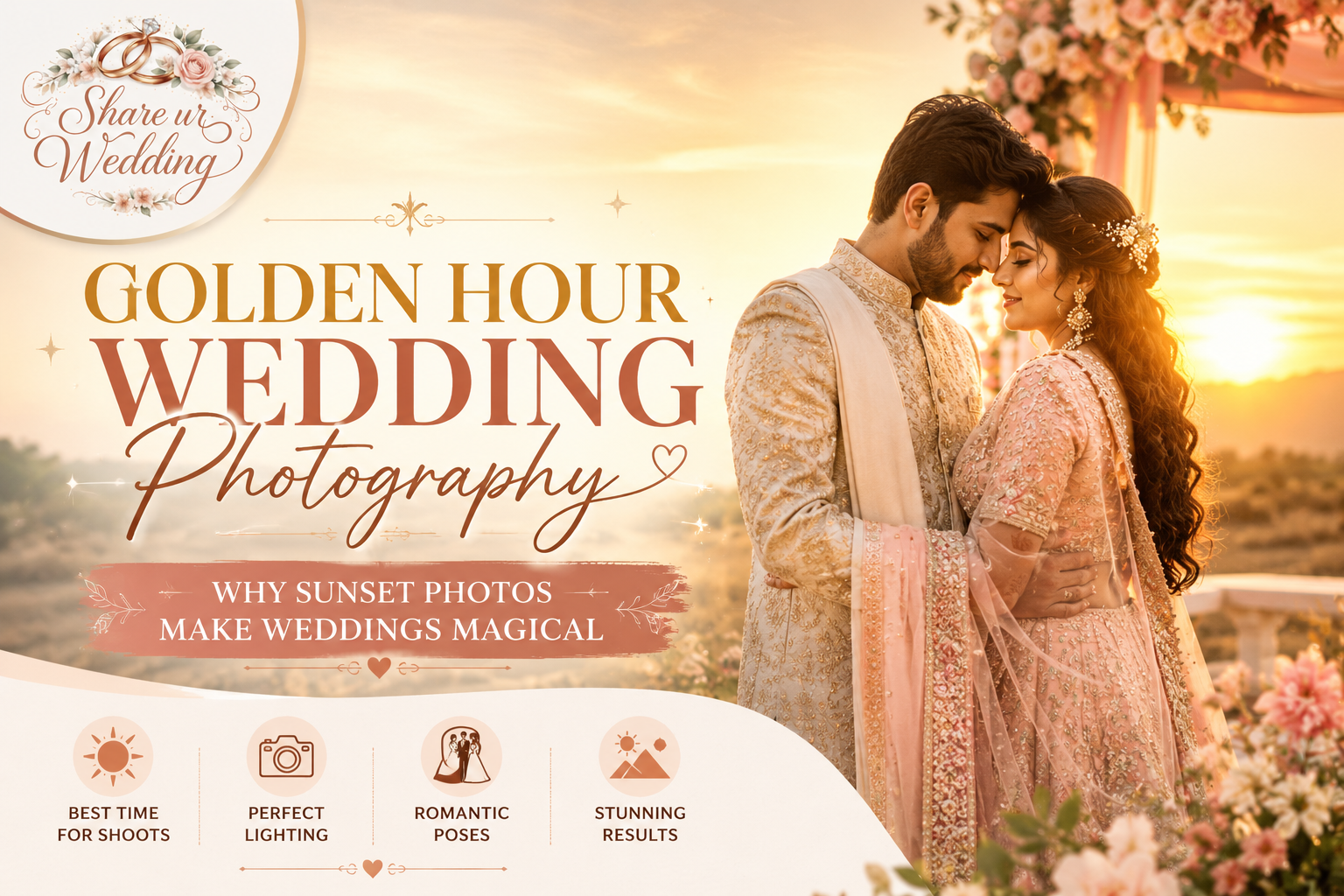
There is a precise moment during an Indian wedding when the frantic energy of the day suddenly softens. The dhol beats pause for a brief intermission, the relatives are busy finding their seats, and the sun begins its slow, majestic descent toward the horizon. If you step outside at this exact minute, you will witness something entirely magical. The air turns a deep, syrupy amber. A soft, honeyed glow kisses the intricate zari work of the bride’s lehenga, making every gold thread glimmer with an almost ethereal fire. As the groom looks at his bride, the harsh lines of the afternoon melt away, replaced by a radiant, romantic warmth that no studio lighting could ever replicate.
This is the magic hour—the definitive holy grail of wedding portraiture. For couples planning their big day, incorporating golden hour wedding photography India into their celebration is not just about catching a pretty sunset; it is about capturing the raw, emotional heartbeat of your love story wrapped in nature’s most flattering filter.
What Exactly Is Golden Hour? (Science + Timing Explained Simply)
To understand why this time of day is so deeply revered, we have to look past the romance for just a moment and understand the simple science behind it. In the photography world, the golden hour—often referred to as the magic hour—is the short window of time just before the sun sets and just after it rises.
When the sun is low on the horizon, its rays must travel through a thicker layer of the Earth’s atmosphere. This atmospheric journey acts like a massive, natural softbox. It scatters the harsh, cool blue light waves and allows the warm, long red and yellow wavelengths to pass through unhindered.
But here is the catch that many couples learn the hard way: it is rarely a full sixty minutes. In India, because of our geographical proximity to the equator, the sun dips below the horizon remarkably fast. Depending on the time of year and the specific region, your actual window of prime, golden light might only last between 20 to 40 minutes. It is a fleeting, precious interval where the light changes by the second, shifting from a bright marigold yellow to a deep, burnt copper, before finally cooling down into the twilight of the blue hour.
Why Golden Hour Is Every Wedding Photographer’s Favourite Time
Ask any visual artist, and they will tell you that midday sun is the ultimate nemesis of beautiful portraiture. When the sun is directly overhead at 1:00 PM, it casts deep, unflattering shadows under the eyes, exaggerates fine lines, and forces everyone to squint uncomfortably.
Golden hour flips this script entirely. Because the light source is hitting you from the side rather than from above, it creates a multidimensional depth that makes sunset wedding photography look incredibly cinematic.
-
Zero Squinting, Pure Comfort: The light is gentle enough that you can look directly toward it without watering eyes or strained expressions. Your smiles feel genuine because you are physically comfortable.
-
The Ultimate Skin Beautifier: The warm color temperature naturally complements Indian skin tones, adding a luminous, radiant quality that makes brides look like they are glowing from within.
-
Natural Dimensionality: Side-lighting wraps beautifully around your features, creating soft, gradual shadows that define jawlines, accentuate the drape of a heavy dupatta, and give a three-dimensional depth to the entire frame.
-
Creative Flare and Backlighting: This is the only time of day where your photographer can position the sun directly behind you to achieve that dreamy, hazy lens flare or create a dramatic, striking silhouette that isolates your outlines against a fiery sky.
Golden Hour Timing by Indian City
Because India features vastly different terrains and geographical spans, sunset times vary dramatically between regions. A wedding in the high-desert plains of Rajasthan will experience a completely different light quality and timeline than a coastal celebration in Chennai.
To help you map out your wedding photography schedule India, here is a breakdown of the average times when the magic hour begins across key Indian cities across different seasons.
| Indian City | Winter Sunset (Nov–Feb) | Winter Golden Hour Window | Summer/Monsoon Sunset (May–Aug) | Summer Golden Hour Window |
| Mumbai | 6:05 PM – 6:30 PM | 5:35 PM – 6:15 PM | 7:00 PM – 7:15 PM | 6:25 PM – 7:00 PM |
| Delhi | 5:25 PM – 5:45 PM | 4:55 PM – 5:30 PM | 7:05 PM – 7:25 PM | 6:30 PM – 7:05 PM |
| Jaipur | 5:35 PM – 6:00 PM | 5:05 PM – 5:45 PM | 7:10 PM – 7:25 PM | 6:35 PM – 7:10 PM |
| Hyderabad | 5:40 PM – 6:05 PM | 5:10 PM – 5:50 PM | 6:35 PM – 6:50 PM | 6:00 PM – 6:35 PM |
| Chennai | 5:45 PM – 6:10 PM | 5:15 PM – 5:55 PM | 6:30 PM – 6:45 PM | 5:55 PM – 6:30 PM |
Note: These are seasonal averages. Always consult your photographer and check a precise local weather application for your exact wedding date to pinpoint the exact minutes the sun will dip.
How to Build Golden Hour Into Your Wedding Day Schedule
Let us get completely honest for a moment: Indian weddings are notorious for running behind schedule. If the makeup artist takes an extra thirty minutes to secure your safety pins, or if the baraat moves at a glacial pace because your maternal uncle is dominating the dance floor, your portrait session is usually the very first thing that gets cut short.
I remember a wedding I covered in Udaipur where the couple had planned an extensive lakeside portrait session. Because the milni ceremony ran late, by the time the bride and groom stepped out, the sun had already slipped behind the Aravalli hills. The glorious golden glow they wanted was gone, replaced by a gray twilight. They were heartbroken.
To avoid this, you must treat your bridal portraits golden hour session as a non-negotiable, sacred appointment in your itinerary. Here is a realistic snippet of how to structure your late afternoon schedule during a typical winter wedding:
-
3:30 PM – 4:15 PM: Touch-ups for the bride and groom. Make sure your makeup artist stays on hand to blot away any mid-day shine.
-
4:15 PM: Photographer checks the outdoor location and sets up lighting test shots with assistants.
-
4:30 PM – 5:10 PM: The Golden Window. Dedicated, uninterrupted couple portrait session outdoors.
-
5:10 PM – 5:30 PM: Transitional shots as the light softens into the blue hour.
-
5:45 PM: Pheras begin or guests begin entering the main reception lawn.
By blocking out this specific time frame, you give yourselves a buffer. Even if the day runs 20 minutes late, you still capture at least twenty minutes of breathtaking, warm imagery.
Best Outdoor Venues in India for Golden Hour Shots
Your environment plays a massive role in how the setting light behaves. To truly leverage the magic of outdoor wedding photography tips, you need spaces where the light is unobstructed or interacts beautifully with architectural elements.
Royal Heritage Forts and Palaces
There is a reason Rajasthan remains the ultimate destination for grand Indian weddings. The pink sandstone of Jaipur, the yellow stone of Jaisalmer, and the pristine white marble of Udaipur act as incredible natural reflectors. When the setting sun hits a heritage property like the Suryagarh Jaisalmer or Fairmont Jaipur, the architecture itself begins to glow, bathing your magic hour wedding photos in an unmatched regal opulence.
Serene Coastal Backdrops
If you are tying the knot in Goa, Mahabalipuram, or Alibaug, the open sea offers an endless, flat horizon. This allows you to utilize the absolute last seconds of the sun’s rays. The light reflects off the wet sand and the crashing waves, surrounding you with a dual illumination that feels incredibly poetic and breezy.
Elevated Terraces and Rooftops
For urban weddings in sprawling metropolises like Mumbai or Delhi, ground-level views are often blocked by towering high-rises. Look for venues with open rooftop terraces or beautifully manicured lawns flanked by low-level greenery. A rooftop sunset session over a glittering cityscape provides a wonderful blend of traditional romance and contemporary edge.
10 Golden Hour Poses That Look Stunning in Photographs
When the light is this spectacular, you do not want overly stiff, formal poses. You want fluid, natural movements that let the illumination interact with your silhouettes. Here are ten timeless golden hour poses bride groom look phenomenal doing:
1. The Gentle Stroll
Walk slowly hand-in-hand toward the camera, looking at each other rather than the lens. Let the low sun catch the back of your clothes, creating a soft halo effect around your frames.
2. The Veil Floating Symphony
If you are wearing a long, sheer head dupatta or a sheer veil, have an assistant lift it and let it drop as the photographer shoots directly into the sun. The light will illuminate the delicate embroidery and net fabric, making it look translucent and dreamlike.
3. The Silhouette Embrace
Position yourselves directly between the camera and the setting sun. Bring your foreheads together with your eyes closed. The result is a striking, dramatic image where your expressions melt into a beautifully defined silhouette.
4. The Half-Hidden Sun Peek
Stand close together, with the groom wrapping his arms around the bride from behind. Position yourselves so the sun is peeking out just slightly from behind his shoulder, creating a gorgeous starburst flare in the image.
5. The Whispering Laugh
The groom gently leans in to whisper something funny or sweet into the bride’s ear. As she laughs, the side-lighting will perfectly trace the contours of her face and highlight the joyful expression.
[Photographer Position] ------> [Bride & Groom Facing Each Other] <------ [Low Sun Angle]
                               (Sun creates a glowing outline/rim light)
6. The Twirl of the Lehenga
Hold one hand and let the bride gently twirl. The low sun will pick up every single sequin, crystal, and metallic thread on the skirt, creating a dazzling display of micro-flares that look like stardust.
7. The Forehead Kiss
A quiet, intimate moment where the groom kisses the bride’s forehead while she closes her eyes. This works exceptionally well with tight close-up shots, where the warm light softens the skin textures beautifully.
8. Looking Out Together
Both of you stand side-by-side, looking out toward the horizon where the sun is setting. This symbolic pose represents looking toward your shared future and bathes your entire front profile in rich, amber light.
9. The Royal Promenade
For heritage locations, walk along a corridor or a series of arches where the setting sun cuts through the pillars, creating a rhythmic pattern of light and shadow across your path.
10. The Seated Intimacy
Sit down on an outdoor bench, stone step, or a beautifully decorated diwan. Lean into each other with relaxed posture. The golden rays at this height hit at a completely horizontal angle, lighting up your eyes with beautiful catchlights.
What to Wear for Golden Hour Portraits
Your attire plays a surprisingly large role in how well your images turn out. Certain textures and hues absorb the warm light beautifully, while others can end up looking muddy or washed out under the heavy amber tones of the late afternoon.
Colours That Truly Glow
-
Ivory, Cream, and Champagne: These neutral shades act like a blank canvas. They absorb the warm golden hues perfectly, turning into shades of rich butter and soft honey.
-
Classic Reds and Deep Crimson: The warm light enhances the inherent richness of red bridal wear, making it look vibrantly royal rather than harsh.
-
Pastel Pinks and Peach: These tones blend harmoniously with the changing colors of the sky, creating a very soft, romantic, and ethereal aesthetic.
Colours That Disappear or Clash
-
Flat, Heavy Black or Dark Navy: Dark, non-reflective colors tend to lose all their detail when backlit, turning into large, solid shapes devoid of texture.
-
Neon Shades: High-visibility pinks or neon greens fight against the natural warmth of the sun, creating an unnatural, jarring color balance in the final edits.
Fabrics Matter
Always opt for fabrics that offer a bit of translucency or high texture. Chiffon, organza, georgette, and fine net catch the backlighting beautifully, allowing the light to pass through them. On the flip side, heavy, matte velvets tend to absorb the light entirely, losing their intricate details in the shadows.
Golden Hour for Pre-Wedding Shoots vs. Wedding Day Portraits
While the light is structurally identical, how you approach a pre-wedding shoot versus your actual wedding day portraits differs immensely.
+-----------------------------------+-----------------------------------+
| Pre-Wedding Shoots                | Wedding Day Portraits             |
+-----------------------------------+-----------------------------------+
| • Complete control over location  | • Bound to the chosen venue       |
| • Unlimited time to chase light   | • Rigid 30-minute window maximum  |
| • Multiple outfit changes allowed | • Single, heavy traditional look  |
| • Relaxed, casual environment     | • High-stakes, high-emotion rush  |
+-----------------------------------+-----------------------------------+
During a pre-wedding shoot, you have the luxury of flexibility. If you miss the light on one hillside, you can quickly drive to another spot. You can run through fields, change clothes, and wait for the perfect minute.
On the actual wedding day, you are operating within a high-stakes, tightly packed machine. You cannot easily move locations because your heavy jewelry, pinned drapes, and hundreds of waiting guests keep you grounded. Therefore, your wedding day strategy must be focused on efficiency. Every single minute counts, requiring clear coordination with your media team before the sun begins to dip.
What If the Weather Doesn’t Cooperate? Backup Plans
No matter how meticulously you plan, you cannot control the weather. Overcast skies, sudden unseasonal monsoons, or dense winter smog in northern India can easily obscure the sun entirely, leaving you with a flat, gray sky instead of a glorious golden masterpiece.
First, do not panic. An experienced photography team will always carry creative solutions in their kit. If the natural sun fails to show up, they can place a speedlight or an off-camera flash with a warm orange gel behind you. This artificial setup mimics the direction and warm color temperature of a natural sunset, giving you those dreamy, backlit flares even on a cloudy day.
Furthermore, an overcast sky acts like a massive, natural diffuser. While you might miss out on the dramatic silhouettes and golden rim lighting, a cloudy sky offers incredibly soft, shadowless, and flattering light that makes colors pop beautifully. Embrace the moodiness of the weather—some of the most emotionally raw and intimate portraits are captured against a dramatic, stormy sky.
How to Brief Your Photographer About Golden Hour
Do not assume your creative team automatically knows exactly what you want out of your portrait session. While most seasoned professionals recognize the value of good lighting, you need to clearly align your visual expectations with them during your pre-wedding consultations.
-
Share a Visual Mood Board: Send them a collection of images that resonate with you. Specify whether you prefer clean, brightly lit sunset portraits or dramatic, high-contrast silhouettes.
-
Inquire About Logistics: Ask them directly: “Based on our venue layout, where do you recommend we stand when the sun begins to set?” A true professional will often scout the location beforehand to identify structures that might block the light.
-
Coordinate with the Makeup Artist: Ensure your photographer and makeup artist are on the same page. Your makeup artist needs to know that you will be shooting in warm light, so they can avoid using heavy, flashback-prone base products that look chalky under the sun.
FAQs
Q1: What if my wedding is entirely indoors — can I still get golden hour shots?
Yes, you absolutely can, provided your indoor venue features large architectural openings, massive floor-to-ceiling glass windows, or open balconies. Your photographer can position you right where the streams of low-angled afternoon light slice through the windows, creating a highly dramatic, editorial look with bold patterns of light and deep shadow. If your venue is completely windowless, your photography team can easily simulate this look by placing high-powered artificial lights fitted with warm orange gels outside the entrance doors to project a faux-sunset glow into the space.
Q2: How long does golden hour last?
In India, the golden hour is surprisingly brief and typically lasts for only about 20 to 40 minutes depending on the season and your specific geographic location. Because of our closer proximity to the equator, the sun descends at a much steeper, faster angle compared to European or North American countries. This means the transition from bright afternoon light to sunset and subsequent darkness happens very rapidly, making it absolutely vital that you are dressed, ready, and on-location before the window officially begins.
Q3: Is golden hour the same as blue hour?
No, they are distinct, consecutive phases of twilight that offer completely opposite visual aesthetics. Golden hour occurs while the sun is still just above the horizon, filling the sky with warm red, orange, and golden tones. Blue hour occurs immediately after the sun has completely dipped below the horizon, where the sky transitions into a deep, cool royal blue and violet hue. Both periods are incredibly beautiful; many couples love using the golden hour for romantic, warm couple portraits and the blue hour for dramatic, moody fashion-forward shots.
Q4: Do I need to pay extra for a golden hour session?
Generally speaking, a golden hour session is included as a standard part of your comprehensive wedding photography package, provided it falls within the contracted hours of your wedding day schedule. However, if you are planning a completely separate pre-wedding shoot at a remote outdoor location that requires the crew to travel and set up specifically for sunrise or sunset times, there may be additional charges for travel, permit fees, or extended crew hours. It is always best to clarify these details clearly during your initial booking process.
Q5: What camera settings work best for golden hour?
While your professional photographer will handle all the technical nuances, golden hour imagery generally relies on a wide-open aperture like $f/1.4$ or $f/1.8$ to create a soft, creamy background blur that makes you stand out. The white balance is typically set to ‘Shade’ or ‘Cloudy’ or adjusted manually to a warmer Kelvin temperature around $6000K – 6500K$ to enhance the rich amber tones. Additionally, photographers will often deliberately underexpose the image slightly to preserve the beautiful colors of the sky and prevent the bright highlights from clipping.
Embracing the Magic
When your wedding day arrives, the hours will seem to blur together in a beautiful whirlwind of laughter, blessings, and emotional rituals. But when that late afternoon sun begins to lower itself over the horizon, take a deep breath, step away from the crowd, and walk out into the warm, honeyed air with your partner. Treat those precious thirty minutes not as another item on your wedding checklist, but as a quiet, sacred sanctuary. As you stand together wrapped in that fleeting, timeless glow, the photographs you capture will do much more than just document your outfits—they will forever preserve the exact warmth of the day your forever began.