

Of all the decisions an Indian bride makes about her wedding, jewellery is the one most likely to involve the largest number of strongly-held opinions from the largest number of people. Your mother has pieces she has been saving for this day. Your mother-in-law wants to gift something meaningful. Your best friend thinks you should buy your own set that belongs to you alone. And somewhere in the middle of all of this, you are trying to figure out what you actually want to wear, what works with your outfit, and how much you are realistically willing to spend.
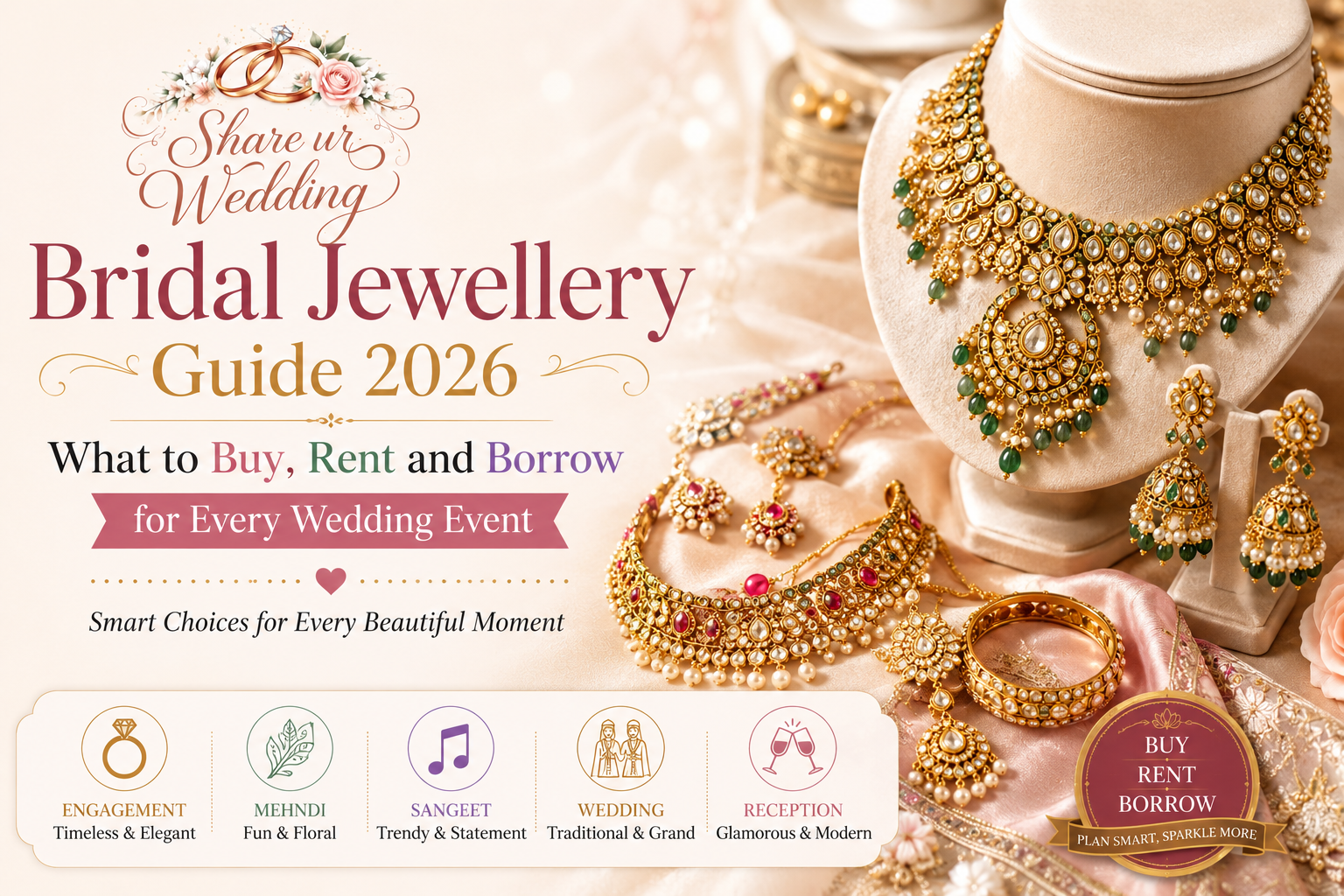
Indian bridal jewellery in 2026 is navigating a fascinating tension between tradition and restraint. On one side: the grand bridal sets — layered necklaces, chandelier earrings, heavy bangles, maang tikka, nath, kamarband, haath phool — that have defined Indian bridal jewellery for generations. On the other side: a growing number of brides who are choosing one statement piece and keeping everything else minimal, arguing that the outfit and the face should have the freedom to be the stars.
This guide helps you navigate both directions. It covers what to wear at every wedding event, how to match jewellery to your outfit and skin tone, the honest case for buying vs renting vs borrowing, and the specific pieces that matter most for each ceremony.
Understanding Indian Bridal Jewellery — The Key Pieces
Before you shop, rent, or borrow, you need to understand what each piece of Indian bridal jewellery is, what it means, and when it is worn. Many brides accumulate a large collection of pieces without understanding why — and then feel overwhelmed trying to wear everything at once. The most elegant bridal jewellery is almost always the most curated.
The non-negotiables — pieces with cultural and ritual significance
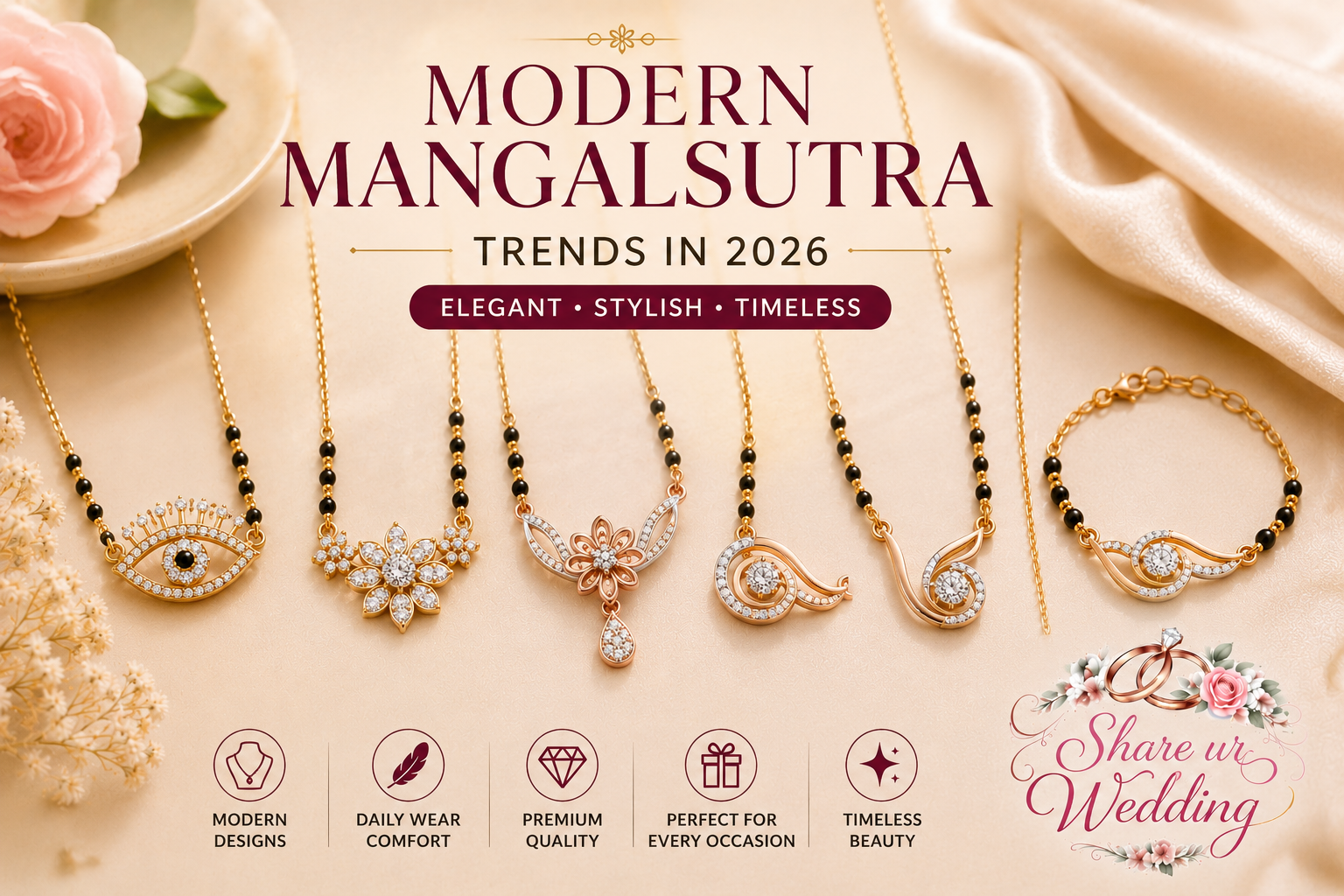
- Mangalsutra: The most sacred piece of married Hindu woman’s jewellery. Given by the groom during the thaali tying or mangalsutra ceremony. This is not an aesthetic choice — it is a ritual one. Choose something you will genuinely wear in your daily life as a married woman, not something so elaborate it lives in a box.
- Sindoor (the ornament, not the powder): Many North Indian bridal sets include a sindoor dani (container) as part of the gift jewellery. South Indian brides typically do not wear this as an ornament.
- Bangles: In most Indian traditions, bangles — particularly glass or gold bangles — are worn during and after the ceremony as symbols of marital status. The colour and material vary by region: green glass for some North Indian traditions, gold for South Indian, red and white for Bengali brides.
The aesthetic pieces — chosen for beauty and coordination
- Maang tikka: A pendant ornament worn on the forehead at the parting of the hair. One of the most photographically impactful pieces in the bridal jewellery set — it appears in almost every photograph. Choose one that is proportionate to your face size and complementary to your hairstyle.
- Nath (nose ring): The bridal nath is a larger, decorated nose ring worn specifically for the wedding ceremony. Connected to the hair or ear by a chain. Not worn in daily life — purely ceremonial. For brides who do not have a nose piercing, clip-on naths are widely available.
- Necklace/s: The centrepiece of the bridal jewellery set. Options range from a single statement necklace to a layered set of 2 to 3 necklaces of different lengths. South Indian brides traditionally wear a long chain with coin pendants (gold coins or goddess coins), a shorter necklace, and a choker.
- Earrings: Jhumkas (bell-shaped), chandbalis (moon-shaped), or chandelier earrings. Should be proportionate to the necklace — very heavy earrings with a very heavy necklace creates visual competition rather than harmony.
- Haath phool: A hand ornament that connects a bracelet on the wrist to rings on multiple fingers via chains. Beautiful, distinctive, and specifically Indian. Works best with lehengas — can be awkward with sarees depending on the draping style.
- Kamarband: A waist belt worn over the saree or lehenga. More common with lehengas than sarees. Adds a vertical visual element that can be very flattering. Not all brides choose to wear this — it is aesthetic, not traditional in most communities.
Event-by-Event Bridal Jewellery Guide
| Wedding Event | Recommended Jewellery | What to Avoid | Tone |
|---|---|---|---|
| Mehndi | Glass bangles, small studs or jhumkas, a simple kada. Keep it minimal — the mehndi is the decoration. | Heavy necklaces, anything that competes with the mehndi design. Avoid pieces that are difficult to remove. | Simple and festive |
| Haldi | Nothing valuable or new. Haldi paste stains permanently. Wear pieces you are comfortable sacrificing if needed. | Any jewellery you care about. Haldi has destroyed more pieces than any other wedding event. | Practical |
| Sangeet | Fashion jewellery in the event's colour palette. Colourful stone pieces, oxidised silver, beaded sets. Match the energy of the event. | Heavy traditional gold that constrains your ability to dance. Heavy earrings that tangle in hair. | Festive and fun |
| Wedding ceremony | Your most significant pieces. Full traditional set (necklaces, maang tikka, nath, earrings, bangles, haath phool) or one statement piece with minimal supporting pieces. | Rushing this decision. The ceremony jewellery appears in every formal photograph. | Traditional or statement |
| Reception | Contemporary pieces, a second set in a different aesthetic, or lighter versions of ceremony jewellery. Many brides use this event to show a different side of their style. | Repeating exactly the ceremony set if you want your reception photographs to look distinct. Though there is nothing wrong with wearing the same set. | Contemporary or elegant |
Should You Buy, Rent, or Borrow Your Bridal Jewellery?
This is one of the most financially significant decisions in the entire wedding — and one that most families navigate on instinct rather than strategy. Here is an honest framework.
When buying makes sense
Buying bridal jewellery makes sense when: you are purchasing pieces that you will wear in your daily life as a married woman (mangalsutra, a diamond earring, a gold chain), when you are investing in heirloom-quality pieces that will be passed to the next generation, or when your family has a tradition of gifting jewellery as part of the wedding arrangements. Gold jewellery in particular holds its value and can be considered an investment rather than a pure expense.
What does not make sense to buy: elaborate ceremonial pieces that you will wear once — the heavy nath, the decorative haath phool, the chandelier earrings that do not suit your everyday style. These are the pieces to rent.
When renting is the smarter choice
Bridal jewellery rental services have matured significantly in India’s major cities in 2026. High-quality rental pieces — including polki sets, kundan sets, and elaborate gold-plated ceremonial jewellery — are available at 3 to 5 per cent of their purchase price for a 3 to 5 day rental period. A kundan bridal set worth ₹3,00,000 to purchase can be rented for ₹9,000 to ₹15,000.
The pieces most worth renting: heavy necklace sets you would never wear again, elaborate bridal naths, haath phool, kamarband, and heavy chandelier earrings. These add significant visual impact to the ceremony photographs and represent almost zero ongoing value if purchased.
Rental Checklist: When renting: inspect every piece in person before signing the agreement. Photograph any existing damage. Confirm exactly which pieces are included. Understand the damage deposit and the liability for any additional damage. Test all clasps and chains. Confirm the collection and return timeline aligns with your wedding schedule.
When borrowing is the most meaningful choice
An heirloom piece borrowed from a grandmother, mother, or mother-in-law carries a kind of meaning that no purchased or rented piece can replicate. The pair of jhumkas that your mother wore at her wedding, borrowed and worn at yours, appears in a completely different light in the photographs — weighted with family history in a way that is visible in ways difficult to articulate.
If a family member has pieces with this kind of history, the only question to ask is whether the pieces complement your outfit and suit the ceremony. If they do, wear them. The conversation about their value — sentimental and monetary — matters less than the act of wearing something that connects your wedding to the weddings that came before it.
Jewellery by Outfit Type — What Works Together
| Bridal Outfit | Jewellery Approach | Best Necklace Style | Best Earring Style |
|---|---|---|---|
| Red silk lehenga | Gold traditional set — heavy and layered. The outfit and jewellery both have maximum impact. | Layered gold kundan or polki set | Long jhumkas or chandelier |
| Pastel georgette lehenga | Lighter jewellery — delicate diamonds or pearls. Heavy gold overwhelms the lightness of the fabric. | Single statement diamond or pearl necklace | Delicate drop earrings |
| Ivory/off-white lehenga | Either go full antique gold for warmth OR full diamonds for contrast. Avoid mixing gold tones. | Antique gold with uncut diamonds (polki) or full diamond solitaire set | Match the necklace choice |
| Kanjivaram silk saree | Temple jewellery in yellow gold — this is the most authentic pairing for the most authentic saree | Long gold coin chain (addige) with shorter necklace layered | Heavy gold jhumkas |
| Banarasi silk saree | Kundan or polki with deep-set stones. Rich jewellery for a rich fabric. | Kundan necklace with intricate setting | Chandbali or chandelier |
| Organza/Chanderi saree | Minimal jewellery — let the fabric breathe. One statement piece maximum. | Single elegant necklace in diamonds or uncut diamonds | Simple drop earrings |
Gold, Diamond, or Artificial? Understanding Your Options in 2026
The question of gold versus diamond versus artificial jewellery is largely a budget and taste decision — but there are a few things worth understanding clearly before you make purchases.
- 22-karat gold: The traditional choice for Indian bridal jewellery. Warm yellow tone, retains value, can be resized and remade. Heavy and can be uncomfortable over long events. Buy from BIS hallmarked jewellers only.
- 18-karat gold: More durable than 22-karat, slightly lighter in colour. Preferred for settings with diamonds or precious stones, as the harder alloy holds stones more securely. Less yellow than 22-karat.
- Diamond jewellery: IJ-SI quality diamonds in yellow gold settings are the most popular entry point for everyday-wearable bridal pieces. GIA certified diamonds for significant purchases. Lab-grown diamonds have become widely available in 2026 at 50 to 70 per cent of natural diamond prices — a legitimate option worth considering.
- Polki and Kundan: Uncut diamonds (polki) or glass stones (kundan) set in gold foil — this is some of India’s most extraordinary jewellery work. Cannot be resized or easily modified but creates unmatched visual impact.
- High-quality gold-plated artificial: For pieces you will wear once — haath phool, heavy nath, elaborate sets for the reception — high-quality gold-plated pieces from reputed artificial jewellery brands are indistinguishable from the real thing in photographs. Save your budget for pieces you will wear repeatedly.
Bridal Jewellery Budget Guide 2026
| Budget | What You Can Achieve | Recommended Strategy |
|---|---|---|
| Under ₹50,000 | Good gold-plated pieces, basic gold chain and earrings, rental for ceremony set | Rent the heavy ceremony set. Buy a simple mangalsutra and gold earrings. |
| ₹50,000 – ₹2,00,000 | A good 22-karat gold set (necklace and earrings), one diamond piece, rental for remaining heavy pieces | Buy gold necklace and earrings you will wear again. Rent haath phool and nath. |
| ₹2,00,000 – ₹5,00,000 | A complete polki or kundan bridal set, one IJ-SI diamond necklace, bangles | Buy a full polki set if you love the aesthetic. Add one contemporary diamond piece. |
| ₹5,00,000 – ₹15,00,000 | Premium diamond set, heirloom-quality gold pieces, matching sets for multiple events | Invest in pieces you will wear as part of your life. The ceremony set should be genuinely beautiful. |
| Above ₹15,00,000 | Fine jewellery, significant diamonds, bespoke commissioned pieces | Commission from an established jeweller. Take your time. This is a lifetime investment. |
Frequently Asked Questions
What jewellery should an Indian bride wear for her wedding ceremony?
For the wedding ceremony, an Indian bride typically wears her most significant jewellery — usually a complete set including a necklace (or layered necklaces), earrings (jhumkas or chandelier style), maang tikka, bangles, and in many traditions, a nath (nose ring) and haath phool. South Indian brides traditionally add a long gold coin chain (addige) and temple-style jewellery. The most important consideration is that the jewellery complements the outfit colour and does not compete with it. Heavy jewellery with a heavily embroidered lehenga can create visual chaos — in this case, slightly lighter jewellery that allows the outfit to be seen is often the better choice.
Is it worth renting bridal jewellery for an Indian wedding?
Yes — for pieces that you will wear only on the wedding day, renting is almost always the more financially sensible choice. High-quality bridal jewellery rental services in Indian cities offer polki sets, kundan sets, and elaborate ceremonial pieces at 3 to 5 per cent of their purchase price. A set worth ₹3,00,000 to buy can be rented for ₹9,000 to ₹15,000. The money saved can be invested in pieces with ongoing wearability — your mangalsutra, a diamond earring, or a gold bangle you will wear daily. Always inspect rental pieces in person before signing.
How do I match bridal jewellery to my outfit colour?
The key principle is metal tone and stone colour, not just the jewellery weight. Warm-toned outfits (red, orange, rust, warm pink) pair naturally with yellow gold and warm stones. Cool-toned outfits (blue, emerald green, silver-grey) look cleaner with white gold, diamonds, or polki/kundan with cool stone accents. Ivory and off-white work with either full yellow gold for warmth or full diamonds for modern contrast. Avoid mixing warm and cool metal tones in the same look — yellow gold earrings with a white gold necklace creates visual dissonance.
How much should an Indian bride budget for wedding jewellery?
Indian bridal jewellery budgets range enormously — from ₹50,000 for a combination of good gold-plated and one basic gold piece, to ₹5,00,000 for a genuine polki or kundan ceremony set plus everyday-wearable diamond pieces. A realistic mid-range budget for a couple who wants quality gold pieces for the ceremony and some everyday-wearable diamonds is ₹2,00,000 to ₹4,00,000. Renting the heavy ceremonial pieces and buying only what you will wear again is always the most financially intelligent approach.
Can I wear family heirloom jewellery at my Indian wedding?
Absolutely — and in most cases, this is one of the most meaningful choices a bride can make. Heirloom pieces from your grandmother or mother carry family history that no purchased piece can replicate, and they appear in your wedding photographs with a weight and significance that guests often sense without being told. The only consideration is whether the heirloom complements your outfit and is in good condition. A jeweller can clean, re-string, and restore heirloom pieces before the wedding. Some brides combine an heirloom piece as the centrepiece of their look with contemporary purchased or rented pieces for the supporting elements.
Final Thought
The most beautiful bridal jewellery is not always the most expensive, the heaviest, or the most traditionally complete. It is the jewellery that makes you feel completely yourself — whether that is a full layered set that honours your family’s tradition or a single extraordinary piece that feels like you chose it rather than being expected to wear it.
Buy what you will wear. Rent what you will only wear once. Borrow what has a story. That framework will serve you better than any amount of shopping.