
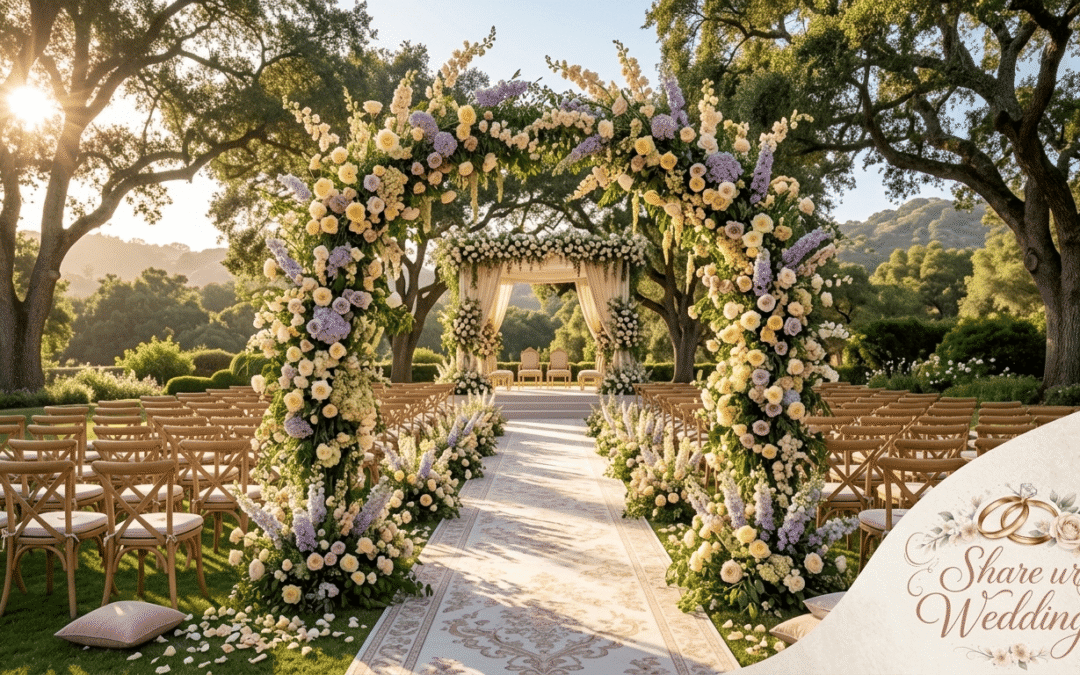
Something has shifted in Indian weddings. And if you have attended one recently, you have probably felt it — even if you could not quite name it.
It is not that weddings are smaller, or less beautiful, or that couples have stopped caring about the big moments. It is almost the opposite. Couples are caring more — just about different things. They are asking questions that couples did not always ask. Does this feel like us? Will our guests actually enjoy this, or just endure it politely? Are we planning a wedding we want, or a wedding we think we are supposed to want?
The answers to those questions are shaping the most interesting wedding trends of 2026 — and they are genuinely exciting. Whether you are in the middle of planning your own wedding, curious about what is changing in the industry, or simply love keeping up with how Indian celebrations are evolving, this guide is for you.
Here are the biggest wedding trends of 2026, explained honestly, with everything you need to know to decide what actually works for you.
Trend 1: Weddings That Feel Like You — The Personalisation Revolution
If there is one trend that defines 2026 more than any other, it is this: couples are done planning weddings that could belong to anyone.
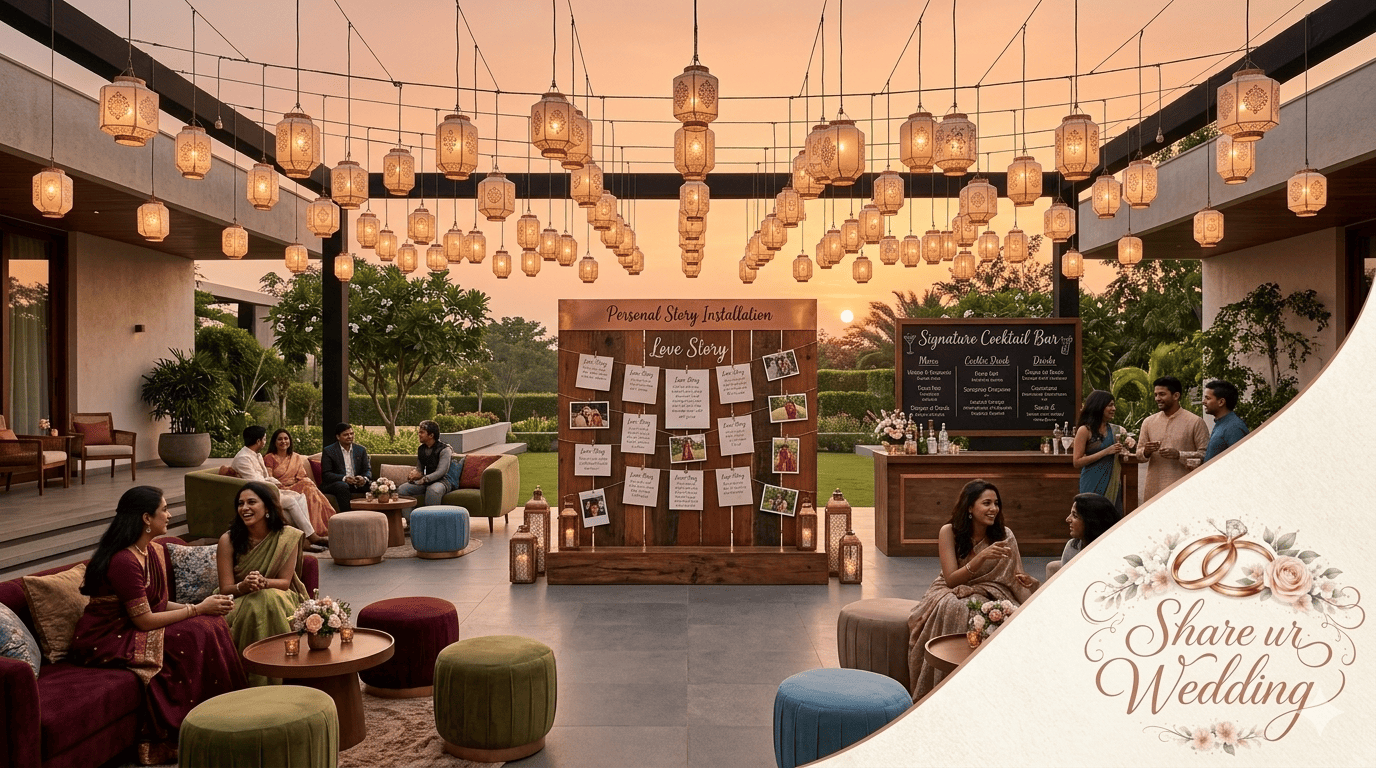
For years, Indian weddings followed a recognisable template. The colours, the rituals, the decoration style, even the food — there was a certain version of what a wedding was supposed to look like, and most families, consciously or not, aimed for it. Social media made this worse in some ways, turning weddings into aesthetic competitions rather than personal celebrations.
In 2026, that template is being thrown out. Couples are building weddings around their own stories instead.
Instead of asking ‘what’s popular?’, couples are asking ‘what feels like us?’
What does personalisation actually look like in practice? It looks like a lot of different things, depending on the couple. Some are commissioning custom illustrations of how they met, printed on their invitation cards. Some are creating welcome boards that tell the story of their families’ first meeting. Others are asking for a playlist night where guests submit song requests instead of a standard DJ set, or choosing decor inspired by a place that is meaningful to them — the city where they got engaged, a childhood neighbourhood, a favourite travel destination.
The common thread is meaning. Every element is chosen because it reflects something real about the couple, not because it is expected or impressive. Guests notice this. They feel it. And it makes for a very different kind of celebration — one that guests describe not as a spectacular event they attended, but as a wedding they were genuinely part of.
How to do this: Pick three to five details that are uniquely yours — your love story, your shared interests, your families’ heritage. Build your decor, invitations, and menu around those elements rather than around a generic theme. Even one deeply personal touch makes the whole wedding feel intentional.
Trend 2: Intimate Destination Weddings at Meaningful Indian Locations
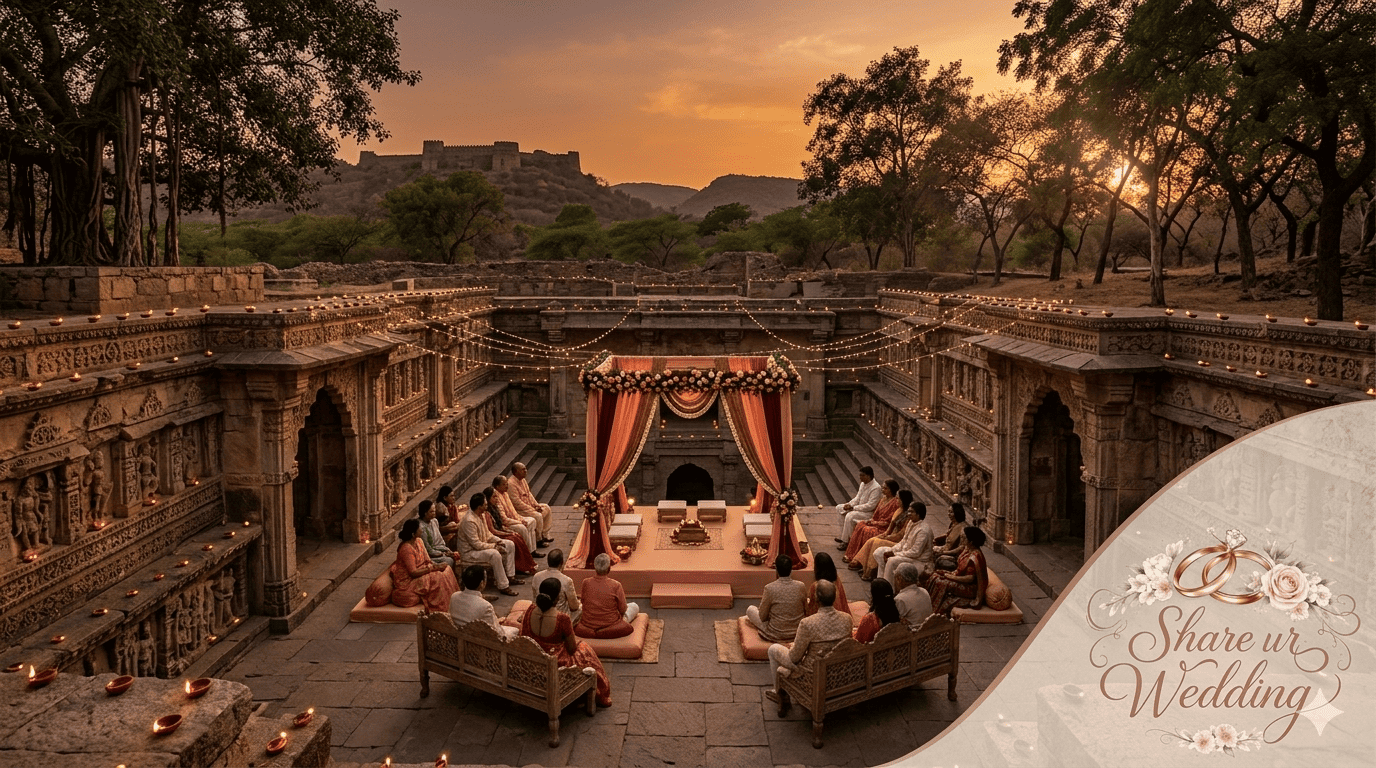
Destination weddings are not new. What is new in 2026 is where couples are going — and why.
The previous generation of destination weddings was largely about status signalling. Couples chose Bangkok or Bali or a five-star Maldives resort because it communicated wealth, aspiration, and the ability to pull off something extraordinary. The destination itself was the point.
In 2026, the destination is a backdrop for the experience — not the experience itself. And increasingly, couples are discovering that the most meaningful backdrops are much closer to home.
| Destination | Why Couples Are Choosing It | Best For |
|---|---|---|
| Udaipur, Rajasthan | Palace venues, lakes, royal aesthetic — India's most photogenic destination | Grand intimate weddings, heritage themes, lehenga lovers |
| Goa | Beaches, colonial charm, relaxed multi-day celebration vibe | Sundowner pheras, sangeet on the beach, destination + vacation hybrid |
| Rishikesh | River, mountains, spiritual energy — peaceful and scenic | Small intimate weddings, nature-loving couples, yoga + wellness themes |
| Coorg, Karnataka | Lush coffee estates, colonial bungalows, misty hills | Garden weddings, South Indian couples, heirloom saree brides |
| Orchha, Madhya Pradesh | Underrated heritage temples and palaces — less crowded than Rajasthan | Authentic heritage lovers who want something different |
| Andaman Islands | Beach + forest + clear water — spectacular and increasingly accessible | Small guest lists, adventure-loving couples, coastal wedding aesthetic |
The shift is toward smaller, more curated guest lists at locations that have personal meaning — places the couple has visited together, or places that connect to their cultural heritage. A couple from Hyderabad choosing Hampi over Bali is not making a budget decision. They are making a values decision. And that, in 2026, is considered the cooler choice.
Booking Alert: The best heritage properties and boutique resorts for weddings are booking 12 to 18 months in advance in 2026. If you have a destination wedding in mind, begin enquiring immediately — even if your date is not finalised. Availability is genuinely tight at the most sought-after properties.
Trend 3: Sustainable Weddings — Celebrating Responsibly Without Compromising Beauty
A few years ago, sustainable weddings felt like a niche preference. Today they are becoming the mainstream expectation — especially among couples in their 20s and 30s who grew up watching documentaries about climate change and have strong feelings about environmental responsibility.
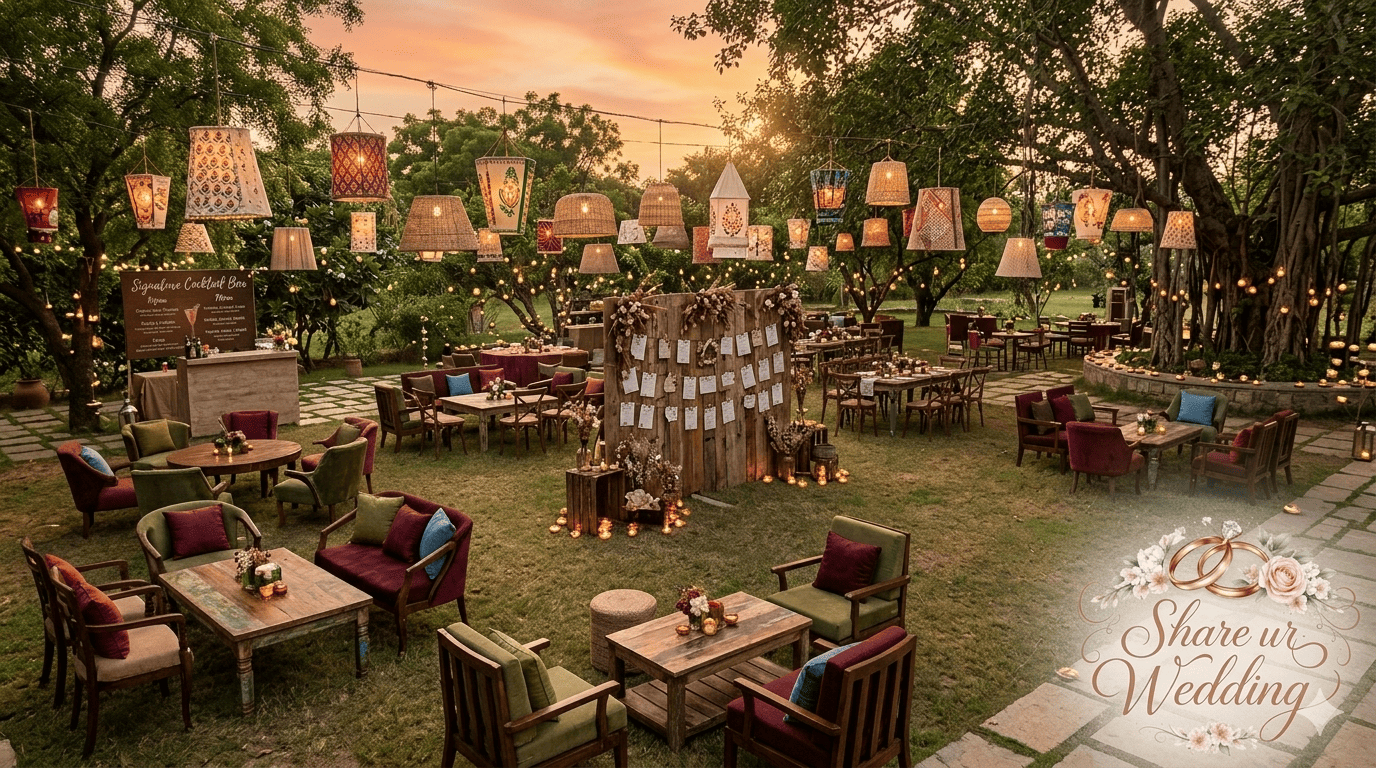
The good news is that sustainable wedding planning in India has matured significantly. It is no longer about making do with less beautiful options. It is about making better choices — and often those choices are genuinely more beautiful than the alternatives.
What sustainable Indian weddings actually look like in 2026
- Biodegradable mandap structures — bamboo, cane, and driftwood replacing synthetic materials. These look stunning and photograph beautifully, often better than their plastic counterparts.
- Potted plants instead of cut flowers as the primary decor element — plants go home with guests or are donated to parks and schools after the wedding. Some couples are gifting potted plants as return favours.
- Seed paper invitations — invitation cards embedded with wildflower seeds that guests plant after reading. A beautiful concept that has become increasingly mainstream.
- Digital invitations for extended guest lists — widely accepted in 2026 and an easy way to reduce paper waste and cost simultaneously.
- Live cooking stations instead of large buffets — dramatically reduces food waste while also creating a better guest experience.
- Local and seasonal flower sourcing — supporting regional flower farmers and reducing the carbon footprint of imported flowers. Jasmine, marigolds, tuberose, and lotus — all deeply Indian, all available locally, and all breathtakingly beautiful.
- Rental outfits and outfit exchange programs — some couples are choosing to rent their wedding outfits, or buy second-hand designer pieces, reducing the fast fashion impact of the wedding industry.
Perhaps the most impactful sustainable choice couples are making in 2026 is the simplest: a smaller guest list. A 150-guest wedding produces roughly 40 per cent less carbon than a 400-guest celebration. No decor swap, no biodegradable material choice comes close to this in environmental impact.
Worth Knowing: A sustainable mandap using bamboo and locally sourced florals can cost exactly the same as — or even less than — a traditional heavily synthetic mandap. The difference is not budget. It is planning and the right vendor connections. Ask your decorator specifically about eco-conscious options.
Trend 4: The Mandap Has Become a Work of Art
If you want to understand how dramatically Indian wedding decor has evolved in 2026, look at the mandap.
For decades, the mandap was beautiful but predictable — marigold garlands, red and gold fabric, brass lamps. These elements were auspicious and meaningful, and they still are. What has changed is the creative ambition around them.
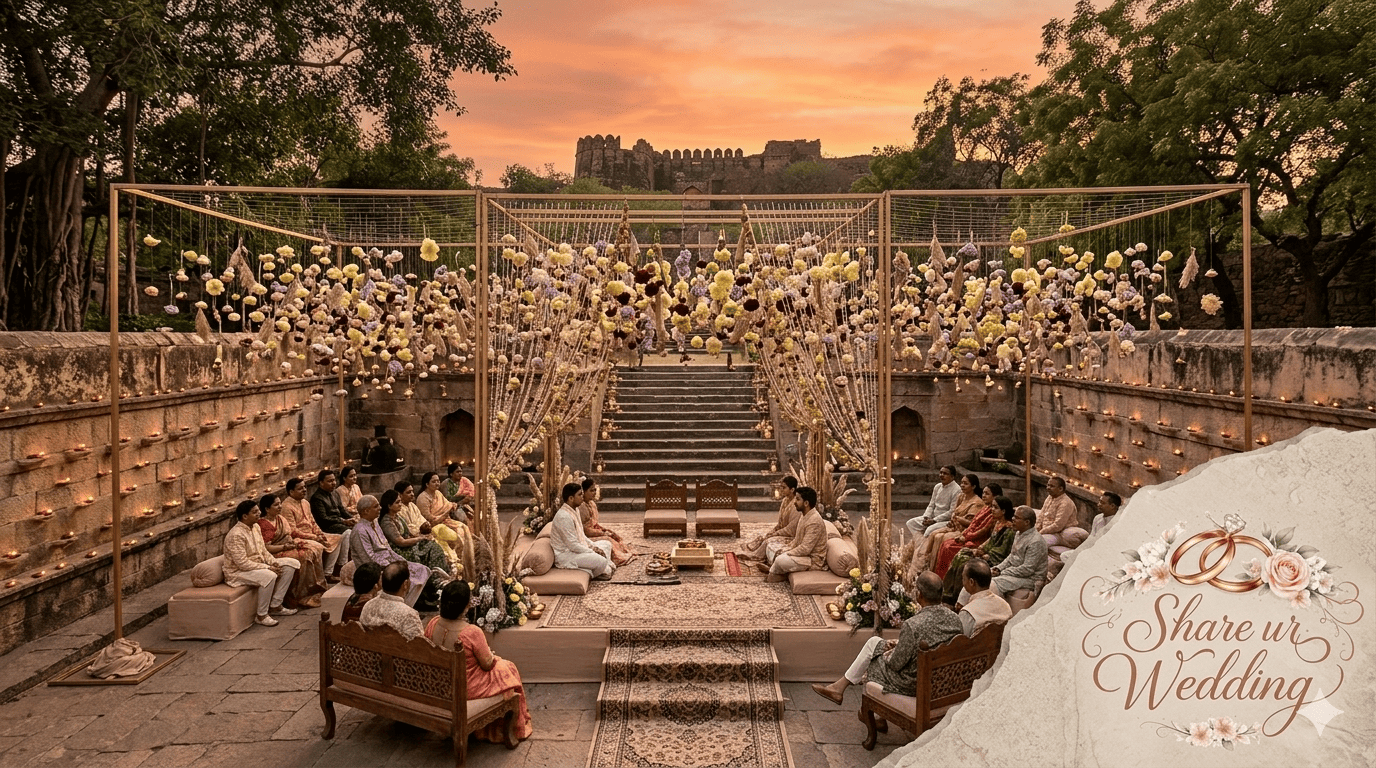
In 2026, the mandap is being reimagined as an architectural installation. Designers are creating suspended floral chandeliers that hang from the ceiling above the ceremony space. Others are using transparent acrylic structures that let the surrounding venue light pass through in extraordinary ways. Some are building floating water mandaps, with the structure appearing to rise from a shallow pool. Forest-inspired canopies of real vines and moss are replacing fabric draping entirely.
The through-line in all of these designs is an aspiration toward the organic, the unexpected, and the visually immersive. Guests walk under these mandaps and feel genuinely moved by them — not because they are expensive, but because they are beautiful in an unusual way.
| Mandap Style | Key Elements | Mood It Creates | Venue Type |
|---|---|---|---|
| Botanical / Living Mandap | Real trees, trailing vines, moss walls, ferns | Garden sanctuary — peaceful and organic | Outdoor lawns, heritage gardens, farmhouses |
| Suspended Floral Chandelier | Hanging floral installations from above the ceremony | Grand, romantic, theatrical | Ballrooms, heritage halls with high ceilings |
| Acrylic / Crystal Structure | Transparent framing with minimal fabric, light passes through | Modern, light-filled, ethereal | Contemporary venues, terrace weddings |
| Floating Water Mandap | Mandap set on a shallow platform above a water feature | Dramatic, unique, highly photogenic | Palace venues, resort pools, garden ponds |
| Temple Heritage Revival | Hand-carved wood, temple motifs, brass lamps, jasmine | Deeply traditional but artistically elevated | South Indian weddings, heritage properties |
| Minimalist Arch Mandap | Simple clean arch in white or gold, statement florals only | Contemporary luxury — quiet and refined | Modern hotels, destination venues, urban weddings |
Trend 5: Colour Palettes — Soft at Receptions, Rich at Ceremonies
The colour trends for 2026 Indian weddings are more nuanced than a simple list of shades. The direction depends entirely on which event you are talking about.
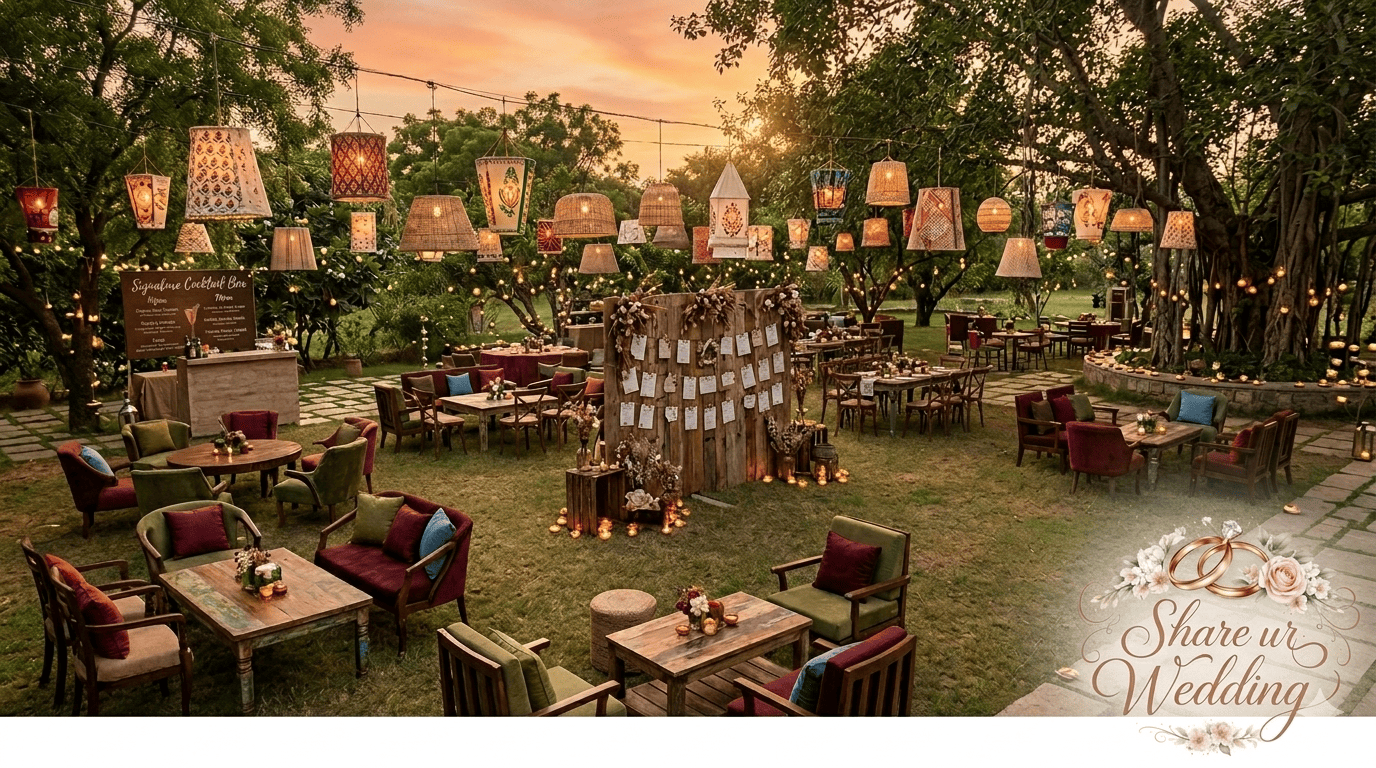
For wedding ceremonies, rich and deep colours remain the dominant choice. Deep reds, emerald greens, royal blues, and burgundy are as popular as ever. These colours carry cultural and symbolic weight for Indian weddings — they photograph beautifully against mandap florals and temple architecture, and they complement the gold jewellery and embroidered textiles that define Indian bridal fashion.
But at receptions, something interesting is happening. Couples are moving toward softer, more refined palettes — champagne, sage green, dusty pink, almond, and warm ivory. These softer tones feel more contemporary, more versatile, and more aligned with the 2026 desire for understated elegance over theatrical excess. They also photograph exceptionally well in evening light and against candlelit dinner tables.
The loud jewel tones are still loved for ceremonies. But receptions are turning softer. These colours let flowers, textiles, and light breathe.
For couples trying to decide on colour direction: choose your ceremony colours based on your cultural tradition and the richness of your outfit. Choose your reception colours based on the atmosphere you want to create for your guests — and what will make the venue feel like a sophisticated dinner party rather than a continuation of the ceremony.
The most popular 2026 wedding colour combinations
- Deep ceremonial red with champagne reception — classic ceremony, sophisticated evening
- Emerald green mandap with sage green reception — earthy and cohesive across both events
- Ivory and gold throughout — timelessly elegant, works for all skin tones and all seasons
- Terracotta and warm amber — trending strongly for autumn and winter weddings
- Dusty rose and soft mauve — the most popular pastel direction for 2026 receptions
- Midnight blue with silver — dramatic ceremony, refined reception
Trend 6: Bridal Fashion — Lighter, More Personal, and Genuinely Wearable
Something significant is changing in how Indian brides are thinking about their wedding outfit. The question has shifted from ‘what is the most impressive thing I can wear?’ to ‘what is the most beautiful thing that also feels like me?’
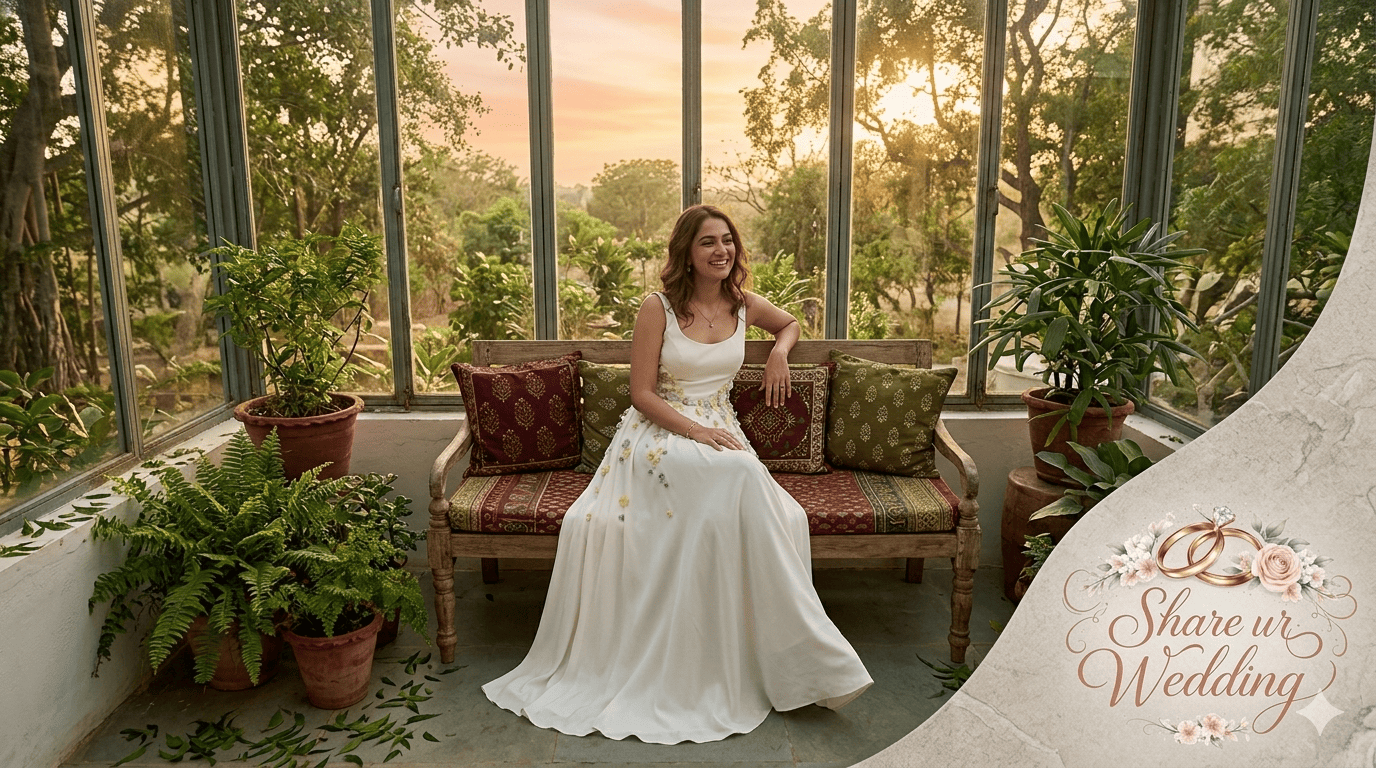
In practice, this means a few clear things.
What bridal fashion actually looks like in 2026
Lighter fabrics are dominating. Heavy velvet and thick silk lehengas — the kind that feel more like a costume than a garment by hour six — are being replaced by georgette, organza, and lighter silk blends that move beautifully and allow the bride to actually dance, eat, and exist comfortably across a 12-hour wedding day. The look is just as rich. The experience is considerably more pleasant.
Non-red bridal colours have genuinely arrived. While red remains the most culturally significant and widely chosen colour for Hindu ceremonies, 2026 is the year in which brides choosing off-white, deep emerald, midnight blue, or blush pink are no longer making an unconventional choice — they are making a personal one that is widely celebrated. The dupatta is the place where many brides are retaining the ceremonial red, while their primary outfit explores a different palette.
Double dupatta styling — one worn traditionally across the shoulder, one styled differently — is one of the most widely photographed and imitated bridal looks of 2026. It layers the outfit beautifully and allows the bride to showcase two elements of embroidery or colour in a single look.
Personalised embroidery details are a quietly significant trend. Brides are asking for their initials, their wedding date, or a small meaningful motif — a flower, a bird, a mangalsutra symbol — embroidered discretely into the hem of the lehenga, the fall of the dupatta, or the back of the blouse. These are details that only the bride knows about for most of the day, and that is entirely the point.
For grooms: this is finally the year of the interesting sherwani
Groom fashion in 2026 is moving away from the safe ivory-cream sherwani worn by approximately 70 per cent of Indian grooms in the previous decade. Younger grooms in particular are choosing richer, more unexpected colours — deep forest green, navy, terracotta — and pairing them with contemporary bandhgalas, Indo-western jackets, and statement footwear. A well-dressed groom who has clearly thought about his outfit is one of the most visible 2026 wedding trends — and it is overdue.
Trend 7: Guest Experience Is Finally Being Treated as a Planning Priority
Here is something that sounds obvious but has historically been neglected in Indian wedding planning: your guests are guests, not an audience.
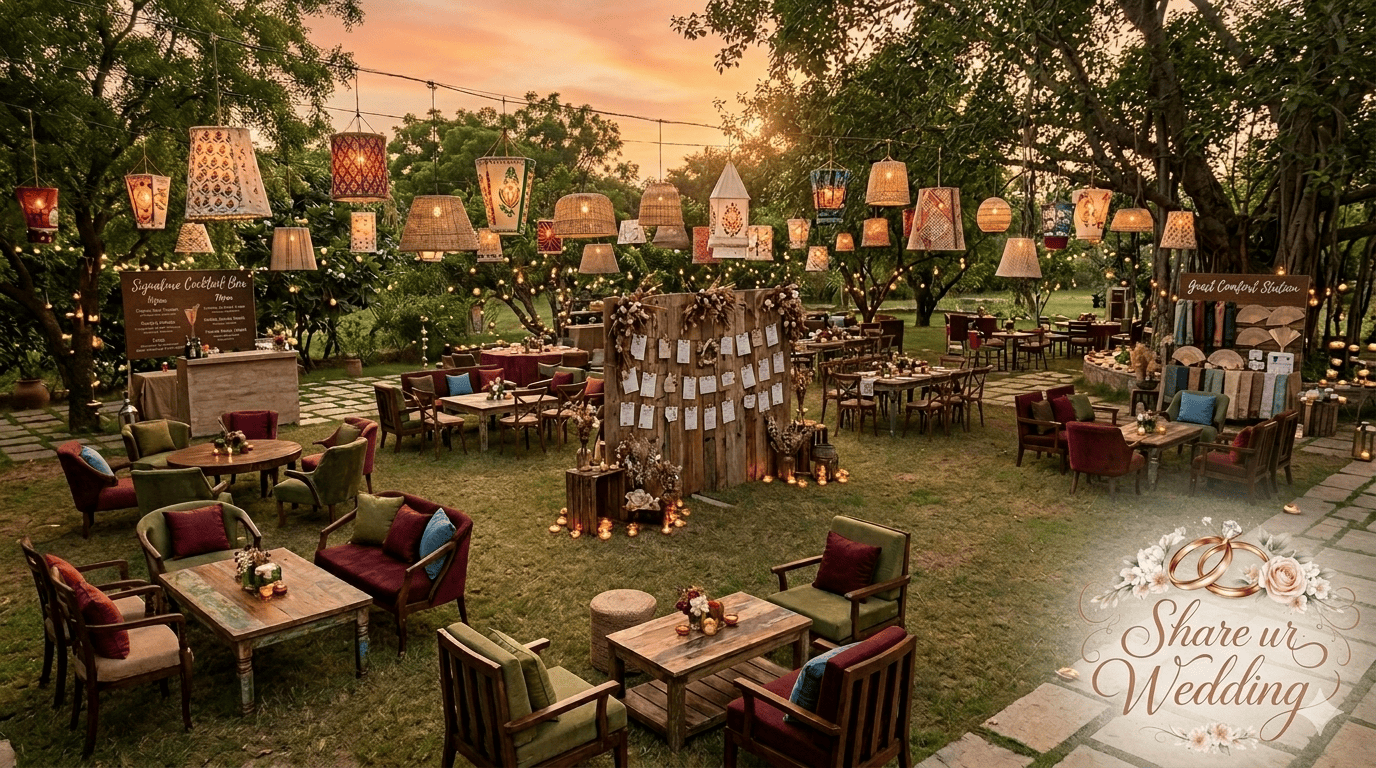
They have travelled, sometimes very far. They have arranged leave from work, found accommodation, bought gifts, gotten dressed up. They are spending an entire day or several days celebrating your love. For most of that time, in the traditional Indian wedding format, they are waiting — waiting for the baraat, waiting for the ceremony to end, waiting for dinner, waiting for the couple to finish photographs.
In 2026, couples are redesigning the guest experience to eliminate the waiting without losing the tradition.
How smart couples are improving the guest experience in 2026
- Welcome hampers at the venue or hotel room — a small bag with refreshments, a thank-you card with the couple’s personalised note, and a brief itinerary of the events. Guests feel immediately seen and valued.
- Live interactive food counters during the cocktail or pre-dinner period — guests actually watch their food being made. This turns the waiting period before dinner into an experience rather than a queue.
- Thoughtful seating arrangements — placing guests with people they will actually enjoy talking to, rather than simply by family group. This sounds minor and makes an enormous difference to how guests experience the reception.
- Entertainment that creates participation, not passive watching — photo booths with creative props, live caricature artists, or dedicated zones where guests can record video messages for the couple.
- Clear communication before the wedding — a wedding website with venue addresses, parking, accommodation options, and the day’s timeline so guests are never confused about where to be or what is happening next.
The Standard Has Changed: In 2026, guests are comparing your wedding experience to the best event they have attended — not just the best wedding. Corporate conferences have gotten better at guest experience than many Indian weddings. The bar has been raised and the couples who clear it are the ones whose weddings are talked about for years.
Trend 8: Food as an Experience — Not Just a Meal
Indian wedding food has always been important. In 2026, it has become a design element.
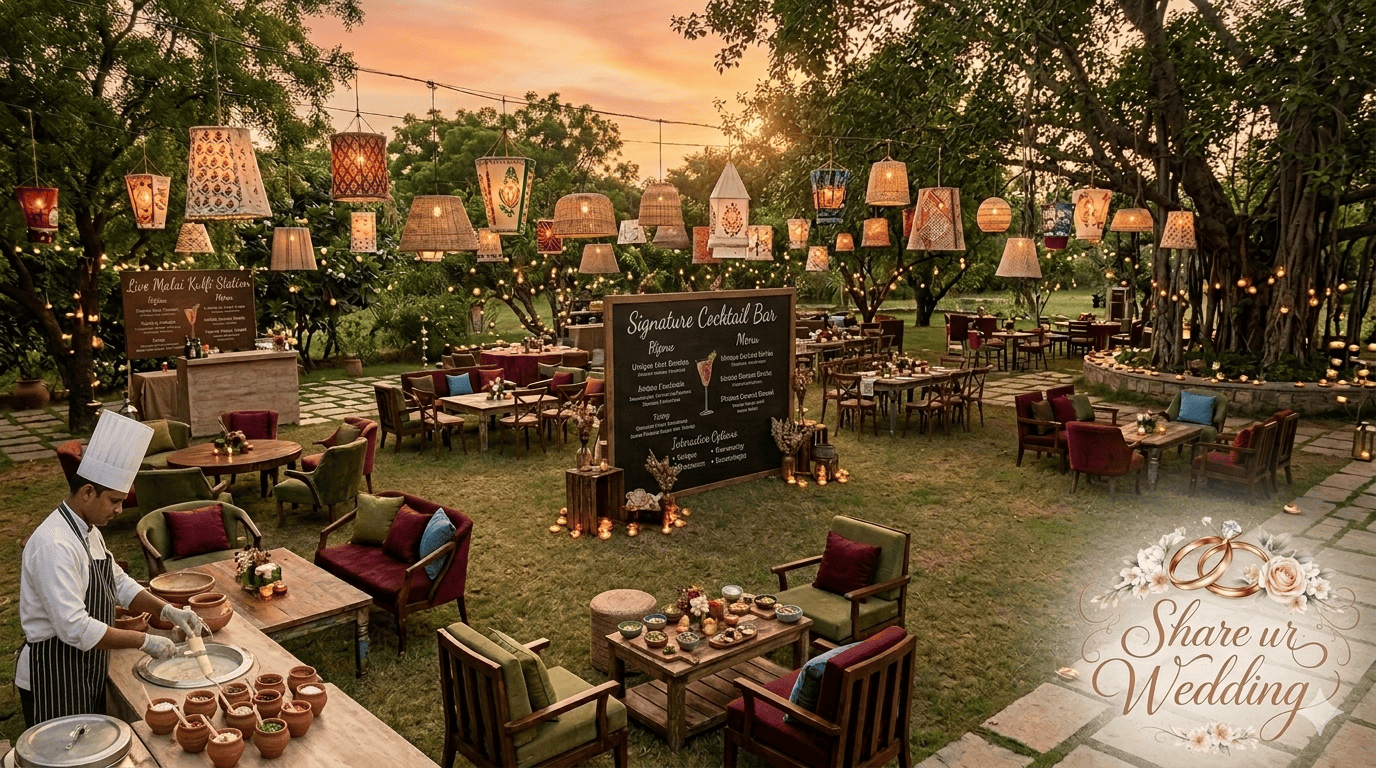
The traditional large buffet — which is simultaneously wasteful, crowded, and impersonal — is quietly being replaced by a more thoughtful approach. Not everywhere, not at every price point. But among couples who are paying attention to detail, food is being treated as an experience to design rather than a quantity to maximise.
The food trends shaping Indian weddings in 2026
- Live cooking stations are replacing static buffet lines. Watching food prepared fresh — a tawa counter, a live dosa station, a chaat corner — creates infinitely more engagement than a row of chafing dishes. Guests congregate around them, chat, and genuinely enjoy the process. Food waste drops dramatically because guests take what they actually want.
- Regional menu curation is growing significantly. Rather than trying to cover every cuisine, couples are focusing on the food traditions of their families — a Hyderabadi biryani counter for a Telugu wedding, a Punjabi langar-style service for a North Indian celebration, a full South Indian sadya for a Kerala couple. This feels personal and creates genuinely excellent food rather than broadly adequate food.
- Grazing tables styled as art installations — long tables with cascading fruits, artisanal items, and local flowers arranged according to the wedding’s colour palette — are a spectacular visual trend that photographs beautifully and invites guests to linger rather than queue.
- Mocktail and signature drink stations — personalised non-alcoholic drinks named after the couple, served in beautiful glassware, have become one of the most universally loved additions to the wedding reception bar in 2026.
- Dessert experiences rather than dessert counters — a single spectacular dessert installation (a tower of laddoos, a mithai wall arranged by colour, a live jalebi counter) rather than a dozen dessert options laid out on a table.
The underlying principle is the same as the broader 2026 wedding philosophy: quality and intention beat quantity and coverage. A wedding where guests genuinely rave about the food for weeks is not the one that served the most dishes. It is the one that served the right ones, prepared with real care.
Trend 9: Cinematic Wedding Films Have Replaced Traditional Video
The traditional Indian wedding videographer — two cameras, one mounted, one handheld, a team in matching polo shirts capturing everything that moves — is not gone. But at the higher end of the market, they have been replaced by something completely different: the wedding film.
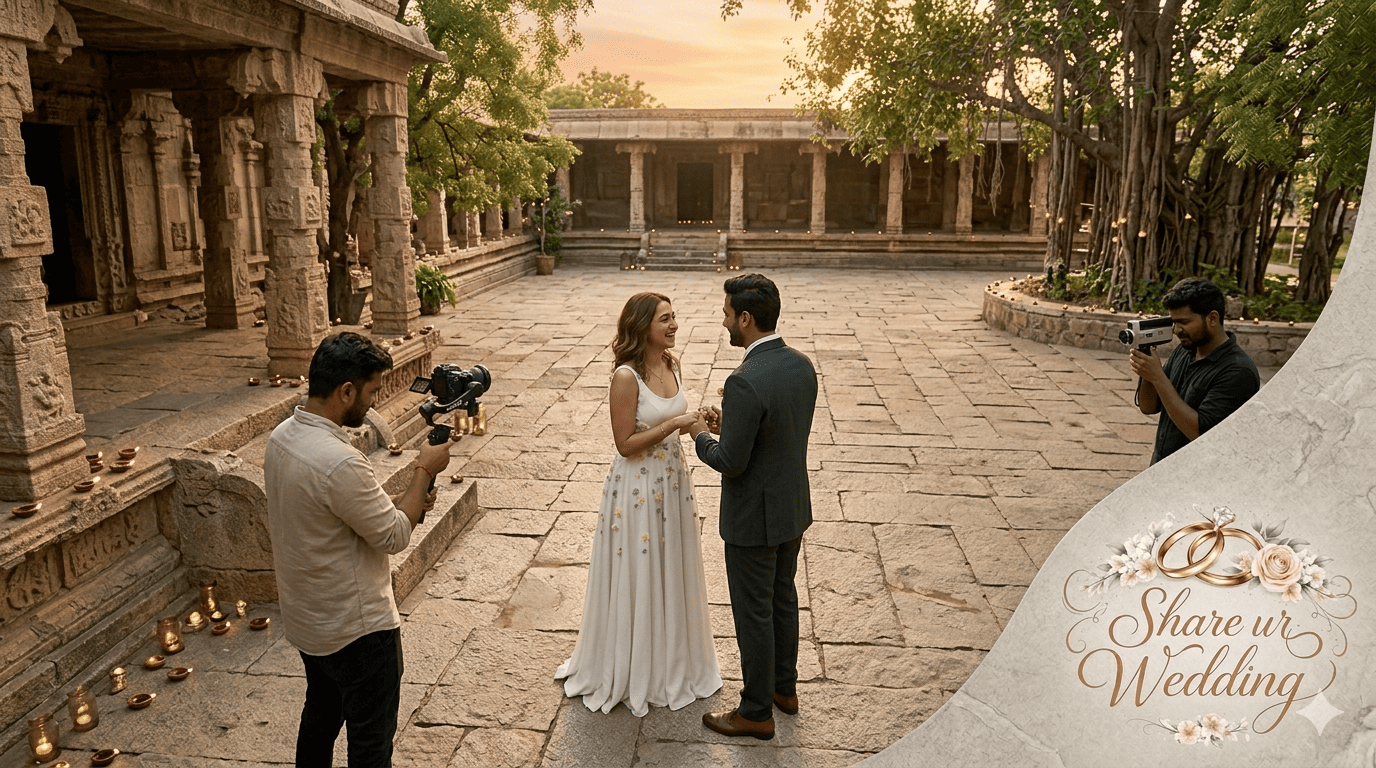
A wedding film is not a recording of your wedding. It is a curated, narratively structured short film about your wedding — typically 5 to 15 minutes long, with a beginning, middle, and end, scored to music that the couple chooses, and constructed to evoke an emotion rather than simply document events.
These films are being made with cinema-grade techniques: drone aerial shots of the venue and baraat procession, slow-motion captures of the varmala exchange and the sindoor moment, interview clips of the couple and their families shot in the getting-ready suite, candid footage of the mandap interspersed with close-up ritual details.
Couples are watching these films at one-month anniversaries, at one-year anniversaries, in the presence of family who could not attend. They are playing them at family gatherings for years. The investment in a talented wedding filmmaker is increasingly seen as one of the highest-return decisions in wedding planning — because unlike the flowers and food, the film lasts forever.
For Your Budget: A quality wedding film typically costs between 20 per cent and 35 per cent more than traditional wedding videography from a comparable vendor. If you are considering where to allocate additional budget, this is one of the most consistently validated decisions couples make. The regret rate for couples who skipped professional wedding films is significantly higher than those who invested in one.
Trend 10: The First Look Moment — Private, Emotional, and Going Mainstream
The first look is a concept that has been growing in Indian weddings for several years, but 2026 is the year it has genuinely gone mainstream — even in traditionally conservative communities.
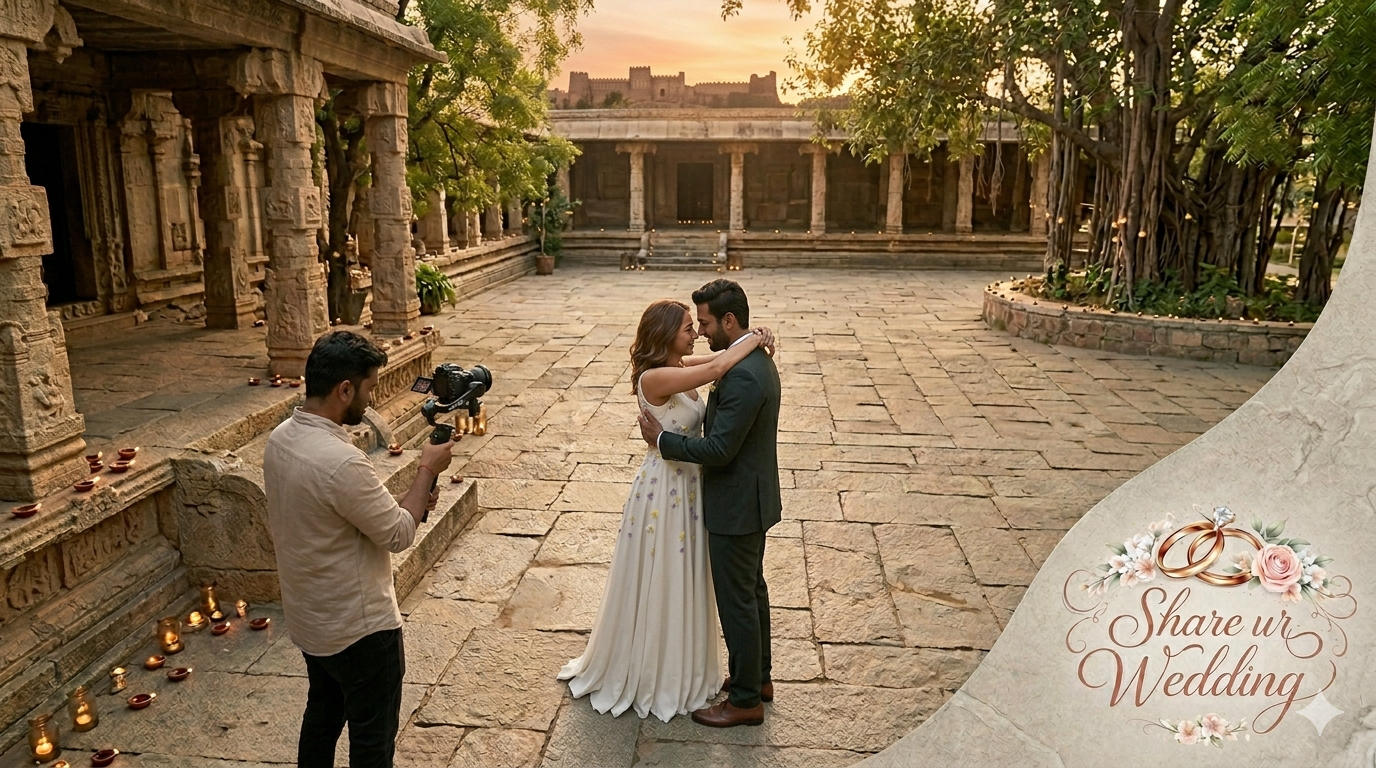
The setup is simple: before the ceremony begins, the bride and groom meet privately — just the two of them, plus a photographer — to see each other in their wedding outfits for the first time. The photographer captures the groom’s face as he turns and sees the bride. The reactions that follow — the sharp intake of breath, the overwhelmed smile, the quiet tears — are entirely unguarded and entirely real.
The first look gives you a moment that is just yours, before the day belongs to everyone else. Many couples say it is the most treasured photograph in their entire album.
Beyond the emotional value, the first look has significant practical benefits for the wedding day. Because the couple has already had their private emotional moment together, they walk into the ceremony more grounded and present. They are not meeting for the first time in front of 300 people. They have already processed the enormity of the day together, privately.
For couples who are unsure — particularly those from families who consider it inauspicious to see each other before the ceremony — an alternative is gaining traction: a hand-hold first look, where the couple stands on either side of a wall or door, holds hands, and speaks to each other without yet seeing each other. The photographer captures both faces. It is equally emotional and sidesteps the traditional concern about pre-ceremony visibility.
Trend 11: Sangeet Nights Are Becoming Full Productions
The sangeet has always been the most energetic night of the Indian wedding. In 2026, couples are investing in it as a full creative production — not just a family dance night, but a curated show with narrative structure, professional choreography, themed sets, and an audience experience that rivals a live concert.
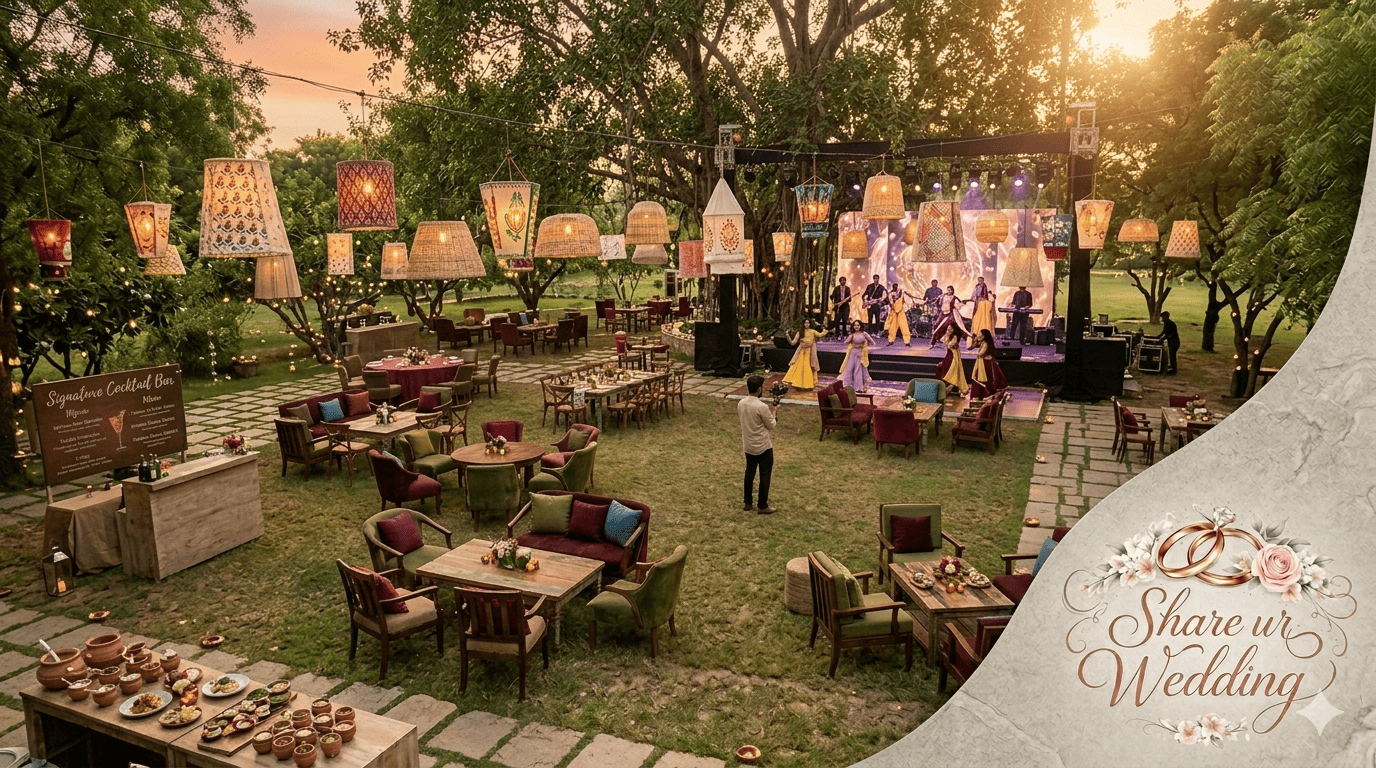
The trend that is defining sangeet planning in 2026 is storytelling through dance. Instead of disconnected group performances, families and friends are collaborating on sequences that tell the story of the couple — beginning with how they met, moving through their relationship, and ending at the wedding itself. Each segment has its own costume, its own music, its own emotional tone. By the end, the audience has been taken on a complete journey.
Live music integrations — a dhol player joining the DJ mid-set, a tabla player improvising during a classical segment, a singer performing live with backing tracks — are adding unexpected depth to reception and sangeet entertainment. These moments are genuinely moving in a way that pre-recorded music cannot be.
Not every couple has the budget or inclination for a full sangeet production. But even modest investments in this direction — hiring a choreographer for one family group performance, adding one live musician to the evening — dramatically elevate the experience for everyone in the room.
What Is Falling Out of Fashion in 2026
Trend articles that only celebrate what is rising are doing you a disservice. Here is what is genuinely fading:
- The generic flower wall as a decor element — it was everywhere for five years and it has lost its impact. A flower wall in 2026 is the backdrop equivalent of saying you like sunsets. Move toward dimensional, architectural decor installations instead.
- Heavy, over-embellished bridal outfits designed to impress from a distance — comfort and personal expression have definitively won this argument.
- Enormous buffets with 50 dishes of indifferent quality — replaced, gradually, by curated menus of genuinely excellent food.
- Excessively staged and formulaic wedding photography — the stiff stand-and-smile portraits that look identical across thousands of wedding albums. Couples and photographers are both moving toward documentary, editorial, and movement-based approaches.
- Over-filtered and heavily edited wedding photographs and videos — the authentic, true-to-colour aesthetic has replaced dramatic processing in virtually every conversation about what couples actually want from their wedding photography.
- The idea that bigger is automatically better — this one is the most significant cultural shift, and it is real and lasting.
How to Use These Trends Without Losing Yourself
A note before you close this guide and open a new Pinterest board: trends are starting points, not instructions.
The most important thing about 2026 wedding trends is the underlying value they all share: intention. Every trend on this list — personalisation, sustainability, the first look, meaningful destinations, lighter fashion, guest experience — is fundamentally about making deliberate choices that reflect who you actually are as a couple, rather than choices made by default or social pressure.
That principle applies even when a specific trend does not apply to you. You do not need a floating water mandap. You do not need to rent your bridal lehenga. You do not need a cinematic film crew. But you do need to ask, at every point in your planning: Is this us? Does this feel true? Is this for our guests, or for a photograph?
The couples who walk away from their weddings most deeply satisfied are not the ones who followed every trend on this list. They are the ones who built a day that was unmistakably, honestly, completely them.
That is the real trend of 2026.
| The best 2026 wedding trend is a simple one: planning a celebration that actually feels like you. |
Frequently Asked Questions
What are the biggest wedding trends for Indian couples in 2026?
The biggest trends shaping Indian weddings in 2026 are hyper-personalisation (couples building weddings around their own stories rather than templates), intimate destination weddings at meaningful Indian locations like Udaipur, Goa, and Rishikesh, sustainable and eco-conscious celebrations, living botanical mandaps, lighter and more wearable bridal fashion, cinematic wedding films, the first look moment, and a strong focus on guest experience and food as a designed element rather than a logistical one.
Are big fat Indian weddings still popular in 2026?
Grand Indian weddings are absolutely still happening in 2026 — but the definition of ‘grand’ is changing. Couples are choosing meaningful grandeur over scale for its own sake. A beautifully curated 150-person wedding at a heritage property is considered as much a grand celebration as a 500-person banquet — sometimes more so. The shift is from quantity of guests and spectacle to quality of experience and personal meaning. Large guest lists are not disappearing, but they are no longer the default or aspirational choice they once were.
What colours are trending for Indian weddings in 2026?
Colour trends in 2026 differ by event. For wedding ceremonies, deep rich colours remain dominant — reds, emerald greens, burgundy, and royal blue. For receptions, softer and more refined palettes are trending strongly: champagne, sage green, dusty pink, almond, and warm ivory. These softer tones photograph beautifully in evening light and create a sophisticated dinner-party atmosphere rather than a continuation of the ceremonial aesthetic. For bridal fashion specifically, off-white, pastel, and deep jewel-tone lehengas are all gaining ground alongside the traditional red.
What is the first look moment in Indian weddings?
The first look is a planned private moment — before the wedding ceremony begins — where the bride and groom see each other in their wedding outfits for the first time. A photographer captures the groom’s reaction as he turns and sees the bride. The resulting photographs are among the most emotionally raw and authentic in any wedding album. Beyond the photography, couples who do a first look report feeling significantly more calm and present during the ceremony itself, because they have already shared the emotional weight of the moment privately. A hand-hold first look — where the couple speaks through a door or wall without seeing each other — is an alternative for those with traditional concerns about pre-ceremony visibility.
How do I plan a sustainable Indian wedding?
Start with the single most impactful decision: guest list size. A smaller guest list reduces food waste, decor requirements, transport, and overall carbon footprint more than any other single choice. Beyond that: choose a venue with green credentials, use locally sourced and seasonal flowers, opt for potted plants and biodegradable decor elements, send digital invitations to extended guests, plan live cooking stations instead of large buffets to reduce food waste, and consider renting or buying pre-owned bridal outfits. Many of these choices save money as well as reducing environmental impact.
A Final Thought
Every year, someone writes a list of wedding trends and calls certain things ‘in’ and other things ‘out.’ That framing is useful for a quick orientation — but it can also make planning feel like a test you might fail if you choose wrong.
The truth is that the Indian wedding at its best has always been an expression of the people celebrating it — their families, their traditions, their personalities, their love. That has not changed in 2026. If anything, the broader trend is simply toward honouring that truth more deliberately.
So read the trends, take what resonates, leave what does not. And then plan the wedding that is actually yours.