

Your wedding photos are all that will remain from one of the most special days of your life. The flowers will eventually die, the cake will be finished, and the music will stop playing. But the photos – the ones that catch a genuine smile, a tearful moment, or the way your partner gazed at you during the ceremony – those will stay with you forever, reminding you of the joy and love you felt on that day. They’re a way to hold onto the memories, to relive the happiness and excitement of your wedding day, and to cherish the love you share with your partner.
For Indian couples, wedding photography is uniquely challenging and uniquely rewarding. An Indian wedding spans multiple events across several days, involves hundreds of guests, dozens of rituals, and more photographic opportunities than any other wedding tradition in the world. But that richness can also be overwhelming — both for the couple and for the photographer — if there is no plan.
This wedding photography guide is packed with 50 amazing poses, covering every part of your special day, from the mehndi ceremony to the reception night. What’s really helpful is that each pose comes with clear directions on how to communicate with your photographer, a breakdown of why it works so well in photos, and suggestions on which occasion it’s perfect for. You can use this guide as a shot list, share it with your photographer, and feel confident that you’ll get the exact photos you want on your wedding day. Whether you’re looking for romantic, fun, or traditional poses, this guide has got you covered, and by sharing it with your photographer, you can ensure that your wedding photos turn out exactly as you’ve always imagined.
Before You Start: What Makes a Wedding Pose Work in 2026
In 2026, the best wedding photography is moving decisively away from stiff, staged portraits toward something more honest and alive. Couples are choosing photographers who direct rather than pose — who give you something to do or feel rather than telling you exactly where to place your hands. The results are images that look like you, not like a stock photo template.
Before you review these 50 poses, keep these principles in mind:
-
Direction beats instruction. Tell your photographer the emotion you want captured, not just the physical position. ‘We want to look completely in love and slightly surprised by it’ gives a photographer more to work with than ‘stand here and hold hands.’
-
Movement creates life. The best wedding photographs often happen during transitions — as you walk, turn, laugh, or lean in. Plan a few ‘movement prompts’ with your photographer: walk toward the camera, spin the bride, have the groom whisper something that makes her laugh.
-
Golden hour is non-negotiable. Schedule 20–30 minutes with just the two of you during golden hour — the hour after sunrise or before sunset. The light is warmer, softer, and more forgiving than any studio lighting.
-
Less is more for formal shots. Plan 10–15 must-have formal poses, not 50. You want to spend the majority of your photography time in natural, candid moments — not standing in 30 different positions while your guests wait.
-
Brief your photographer in advance. Share this guide with your photographer at least two weeks before the wedding. Discuss which poses you definitely want, which you are open to, and any ritual moments that must be captured.
| Event | Recommended Session Length | Priority Shots |
|---|---|---|
| Getting ready (Bride) | 30–45 minutes | Detail shots, solo bridal portrait, mehndi close-up |
| Getting ready (Groom) | 15–20 minutes | Sherwani detail, sehra tying, candid with family |
| Mehndi ceremony | 1–2 hours candid | Mehndi application close-up, group laughs, emotion |
| Haldi ceremony | 30–60 minutes candid | Haldi application, family expressions, joyful chaos |
| Varmala / ceremony | Full ceremony coverage | Garland exchange, pheras, ritual moments, close-ups |
| Couple portraits | 20–30 min golden hour | Romantic poses, movement shots, silhouettes |
| Reception | 2–3 hours candid + couple | First dance, family, fun candids, couple portrait |
Bridal Solo Portrait Poses — Poses 1 to 8
Solo bridal portraits are among the most treasured photographs from any Indian wedding — images where the bride is completely herself, radiantly dressed, and captured before the day’s chaos begins. Schedule 15–20 minutes specifically for solo bridal portraits, ideally in your getting-ready suite while the light is still beautiful.
1.The Dupatta Veil Overhead [ BRIDAL SOLO ]:
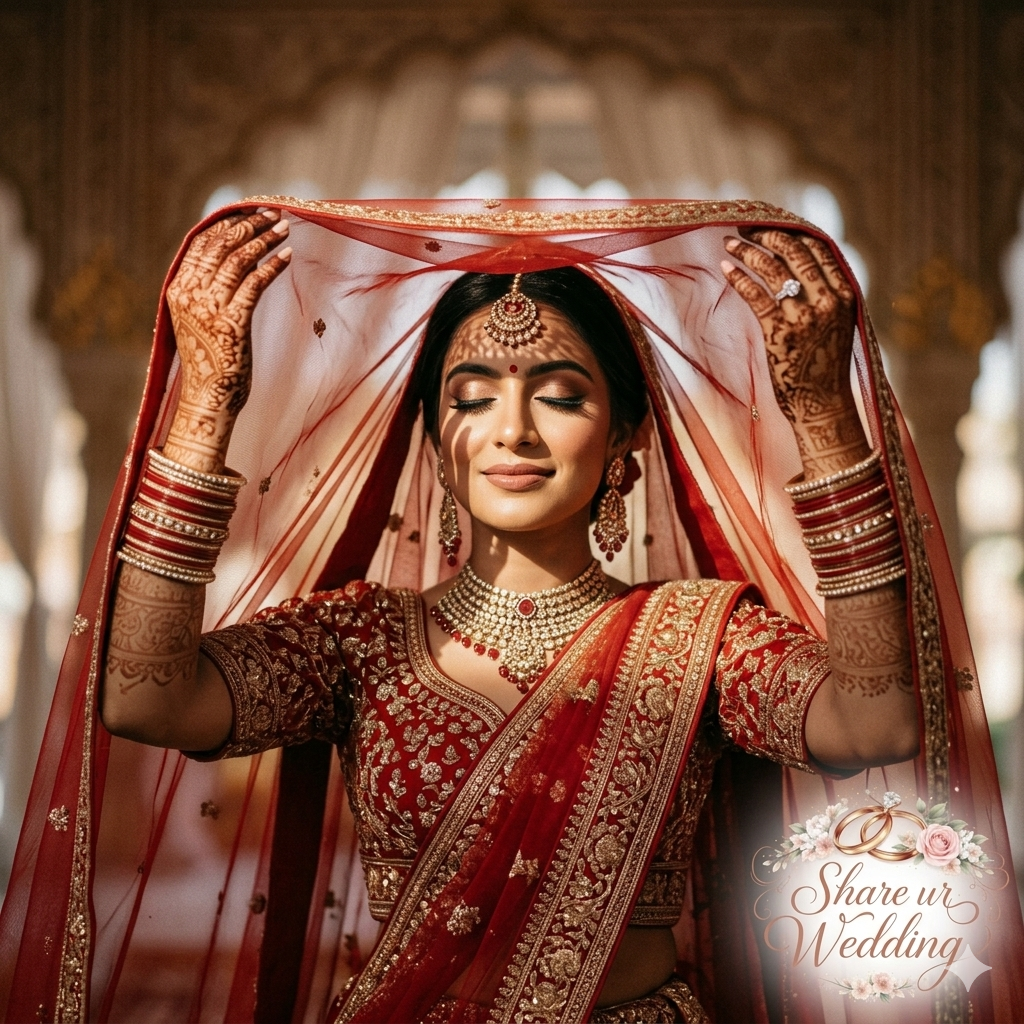
Direction: Ask your photographer to stand slightly below you and shoot upward. Hold your dupatta above your head with both hands extended, backlit against a window or the sky. Look up or slightly away.
Why it works: Backlighting through the fabric creates a luminous, ethereal effect. The upward angle is universally flattering.
Best for: Window light in getting-ready suite, outdoor morning light, golden hour.
2.The Mehndi Hand Close-Up [ DETAIL SHOT ]:
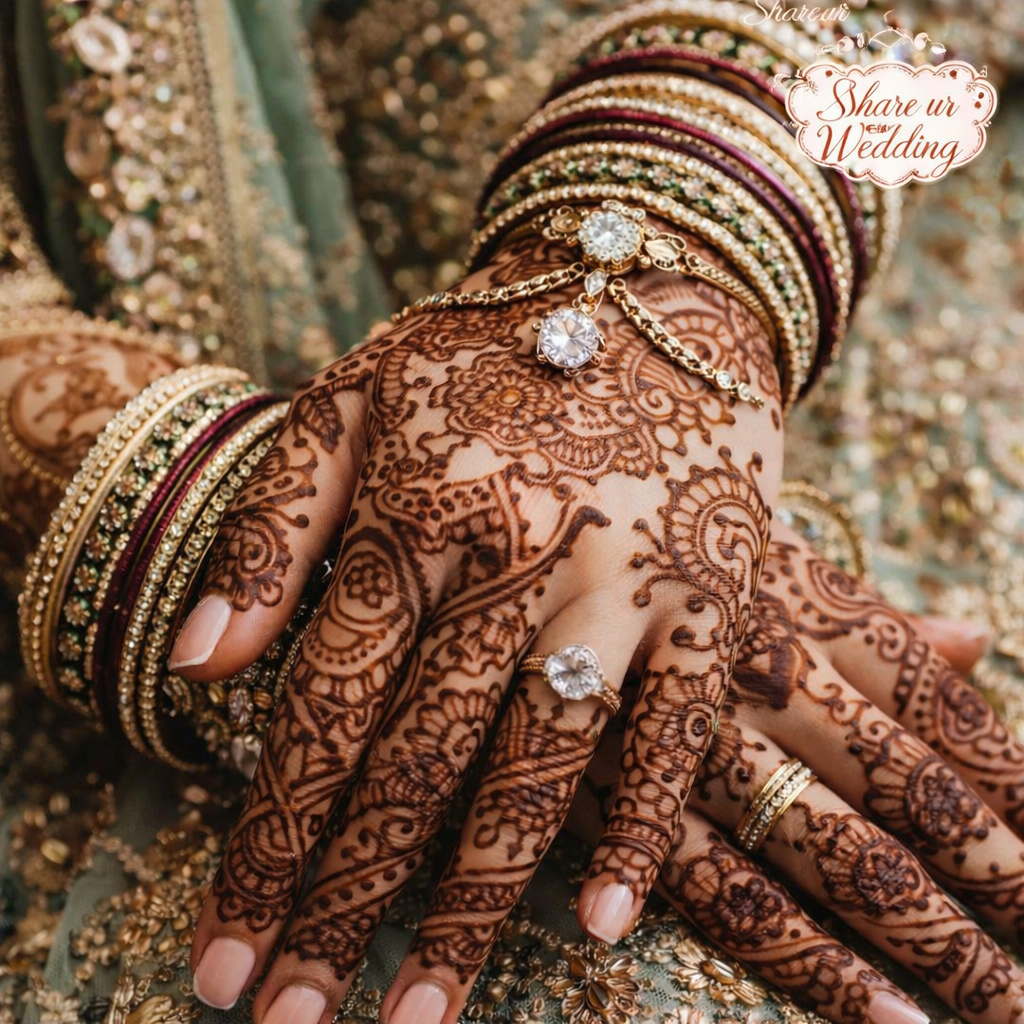
Direction: Hold your hands in front of you at a slight angle, showcasing the mehndi design. Photographer shoots with a macro or portrait lens, blurring the background.
Why it works: Captures an element that will be completely gone within days.
Best for: Bright natural light, post-mehndi session, morning of wedding.
3.The Lehenga Twirl [ MOVEMENT ]:
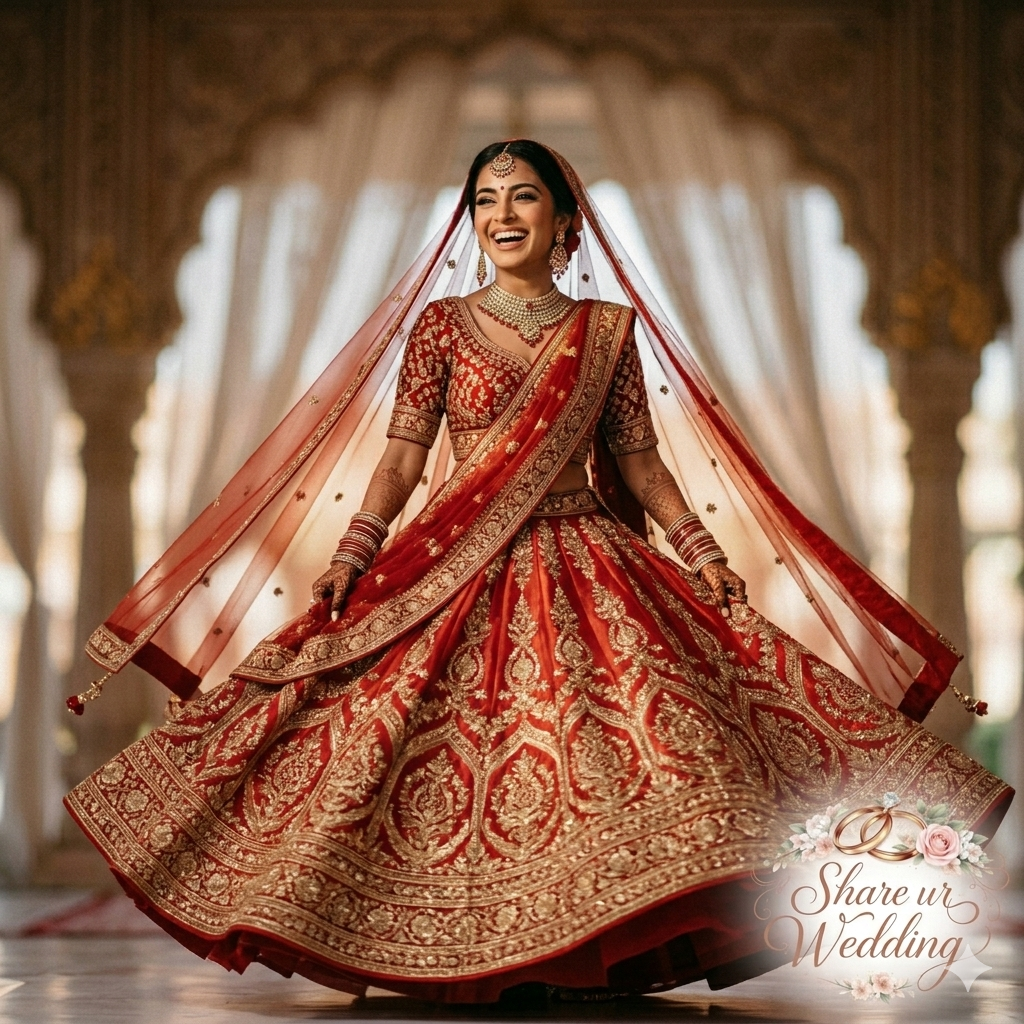
Direction: Stand in an open space and spin slowly. Your photographer captures this in burst mode.
Why it works: The circular motion creates a spectacular sweep of fabric.
Best for: Open floor space, outdoor lawn, hotel corridor.
4.The Window Light Portrait [ PORTRAIT ]:
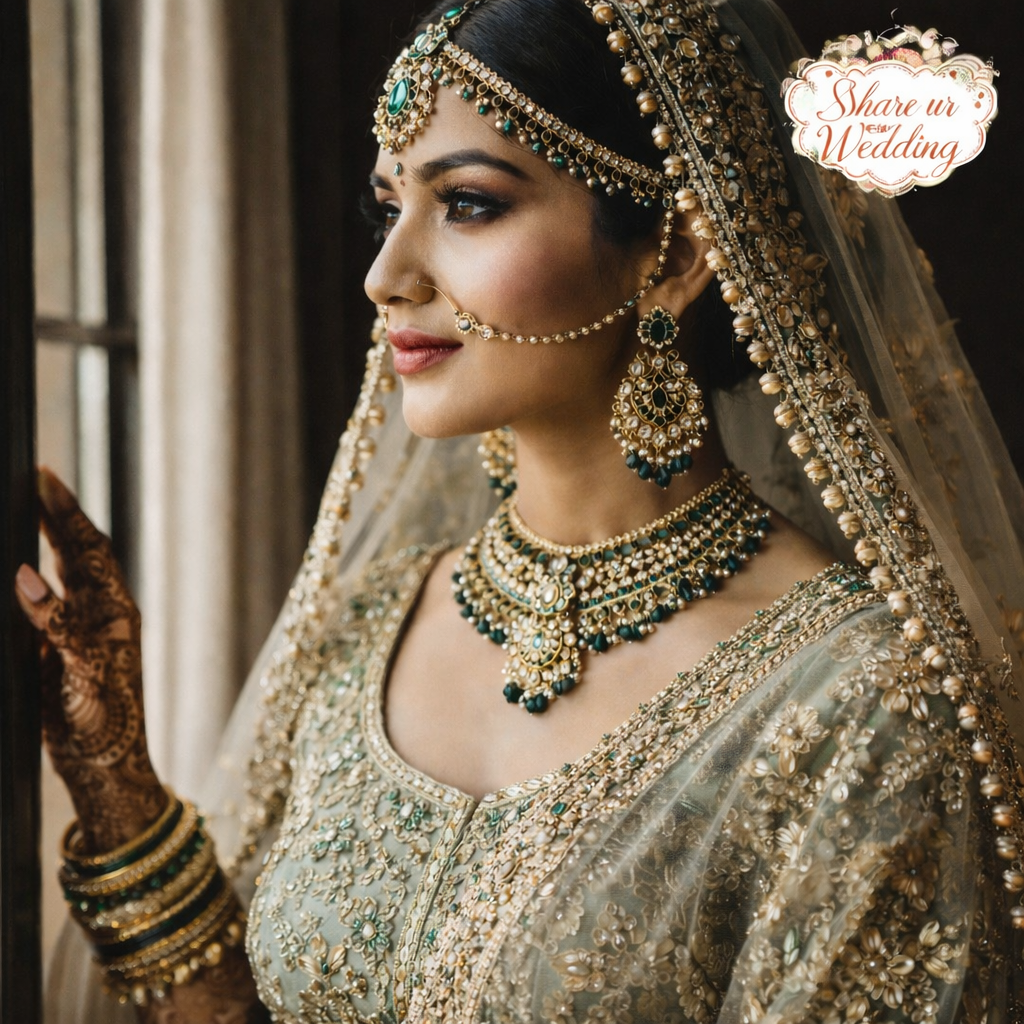
Direction: Stand close to a large window with natural light falling on your face from one side. Look slightly toward the light.
Why it works: Side window light creates natural shadows that make the face look sculpted.
Best for: Getting-ready suite, hotel room, venue dressing room.
5.The Over-the-Shoulder Look [ BRIDAL SOLO ]:
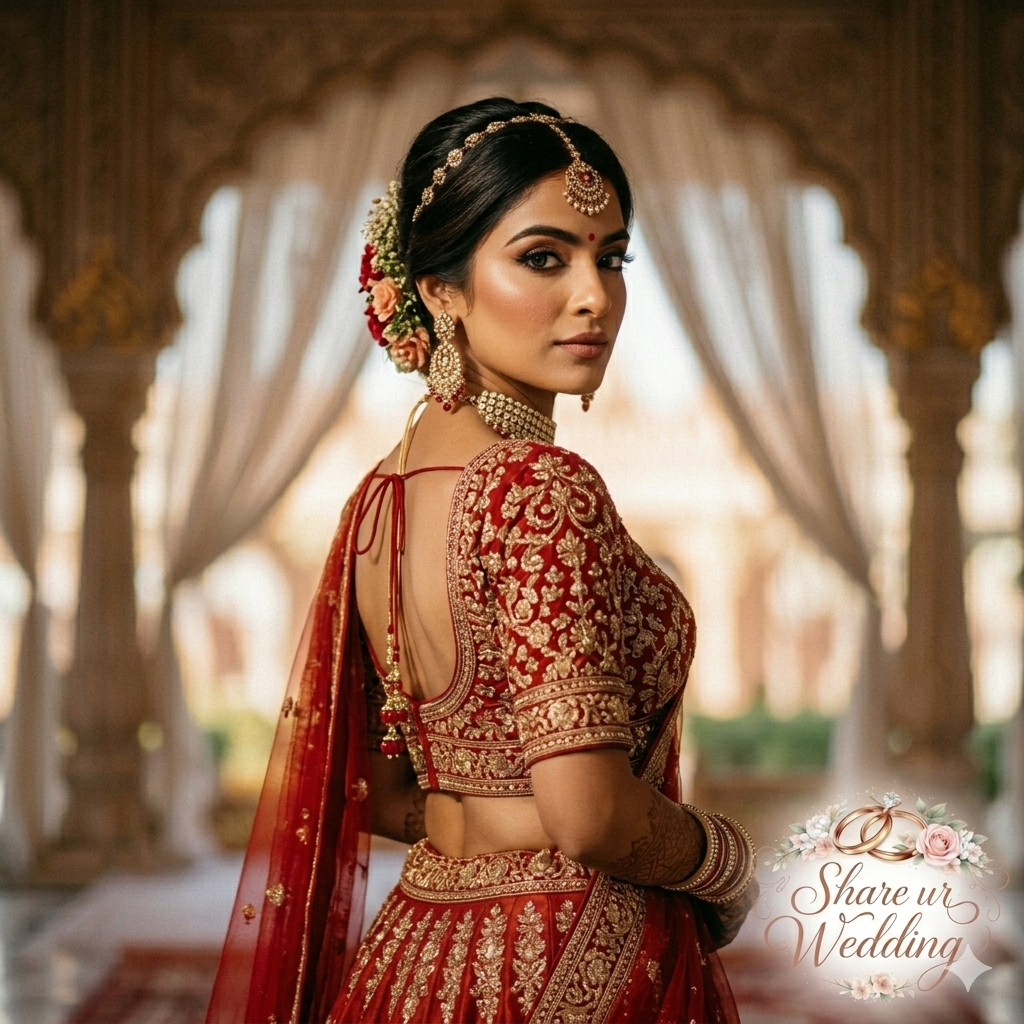
Direction: Stand with your back three-quarters turned to the camera. Turn your head back over your shoulder and look into the lens.
Why it works: Shows the back of the bridal blouse while keeping the face in frame.
Best for: Any background; essential for deep-back blouse designs.
6.The Jewellery Detail Portrait [ DETAIL SHOT ]:
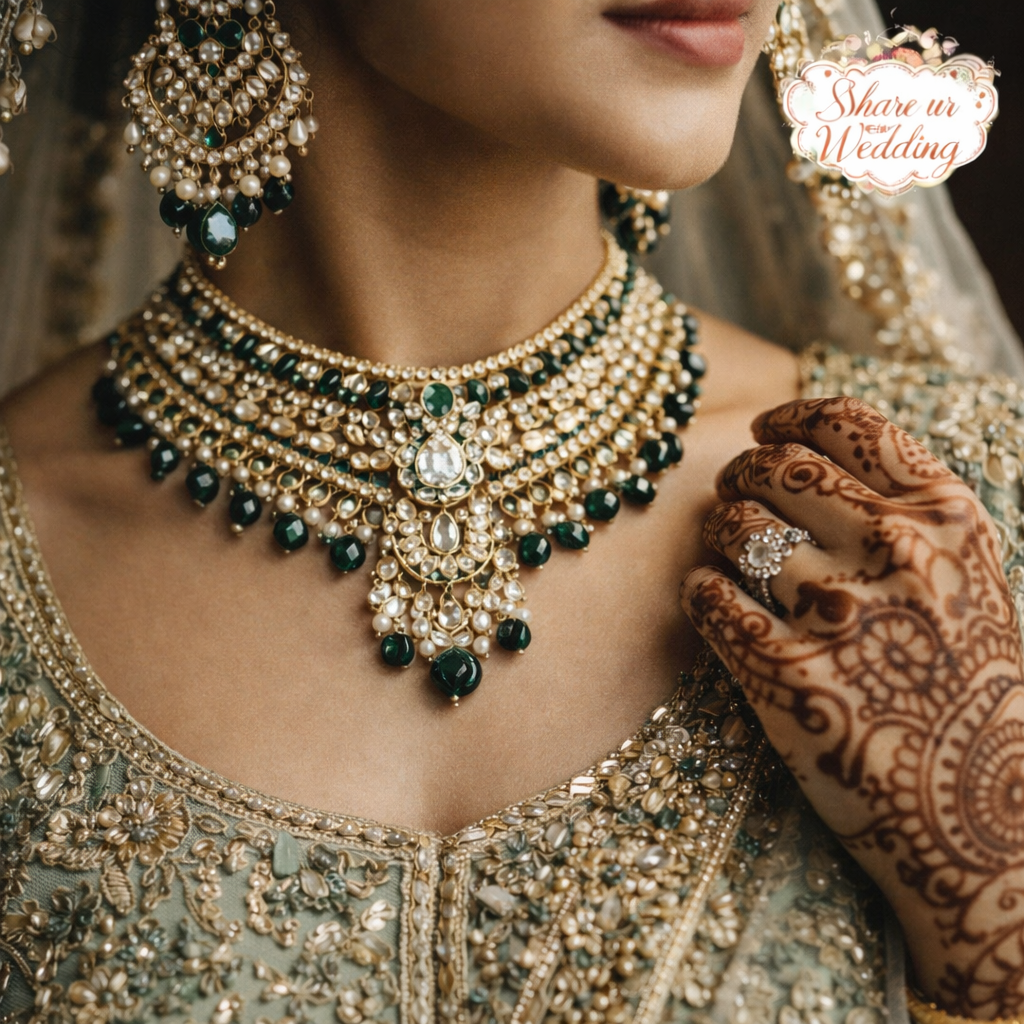
Direction: Hold your hand up near your face, directing attention to the jewellery. Photographer shoots tight on face and jewellery together.
Why it works: Captures investment pieces like maang tikka, nath, and jhumkas in context.
Best for: Close to a window or soft natural light.
7.The Sitting Relaxed Portrait [ PORTRAIT ]:
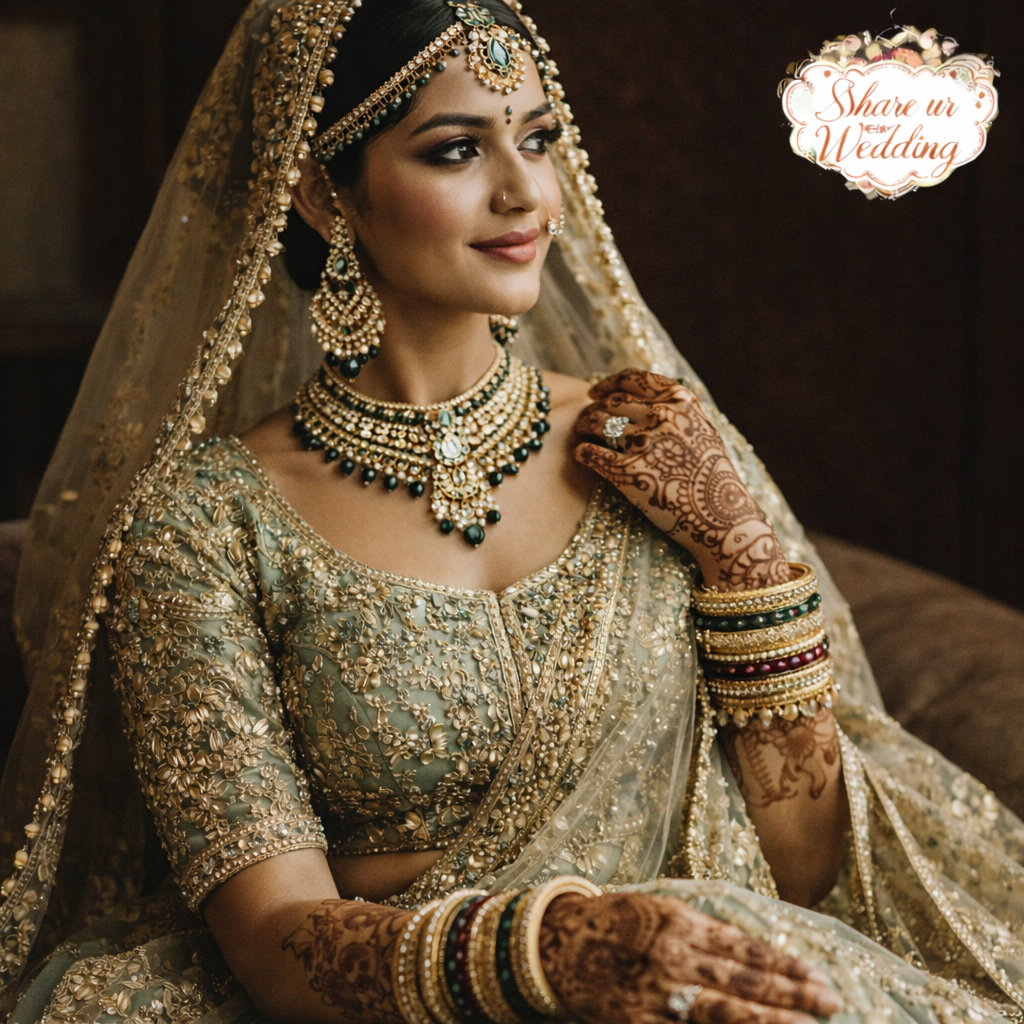
Direction: Sit on a chair or step. Let your posture be natural, lehenga arranged around you.
Why it works: Seated poses reduce self-consciousness and allow the lehenga volume to spread.
Best for: Dressing room, outdoor steps, mandap steps.
8.The Getting-Ready Candid [ CANDID ]:
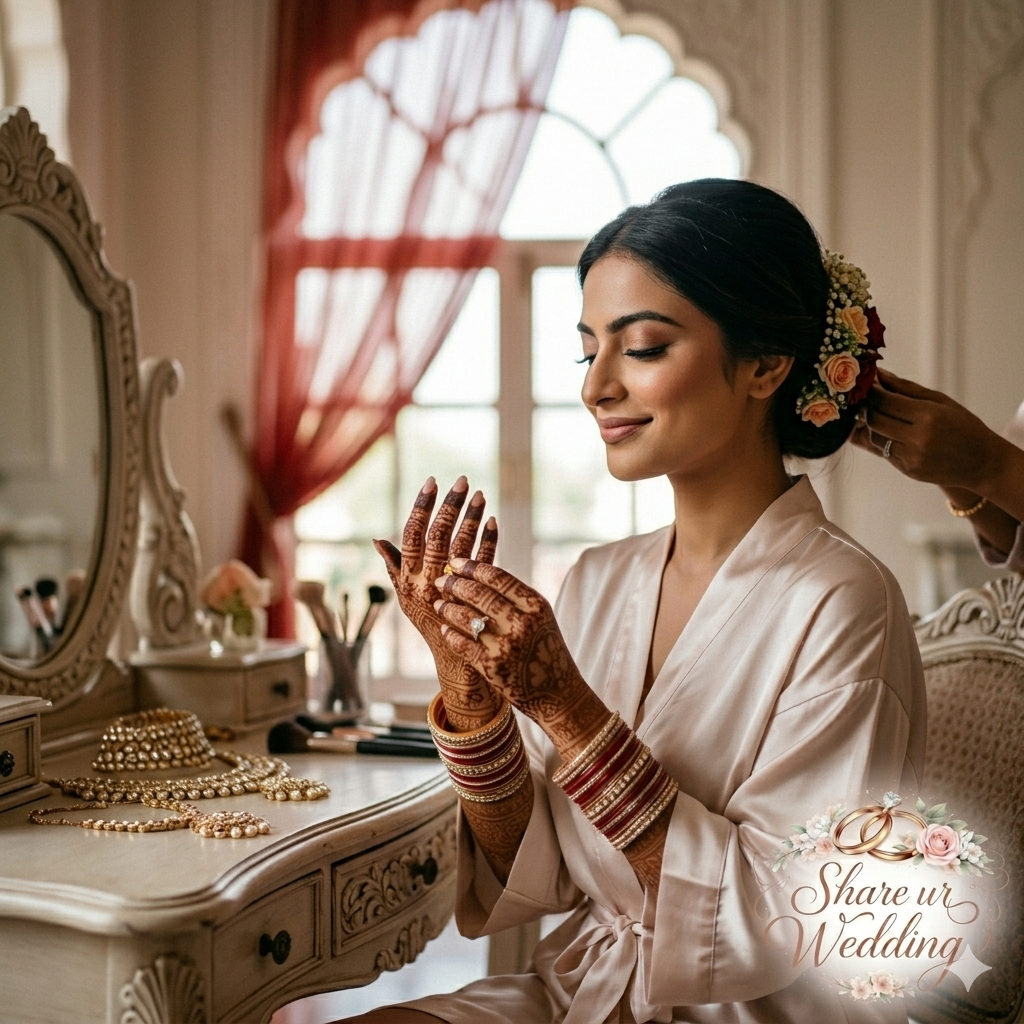
Direction: Continue getting ready as normal. The photographer documents without direction.
Why it works: Captures the emotional transformation authentically.
Best for: Getting-ready suite.
Groom Solo Portrait Poses — Poses 9 to 14
Groom portraits are the most consistently under-photographed element of Indian weddings. In a culture where bridal photography dominates, the groom’s individual portraits are often limited to a few rushed shots before the baraat. Schedule dedicated time for groom portraits — 15 minutes is enough to create lasting images.
9.The Sherwani Detail Portrait [GROOM SOLO ]
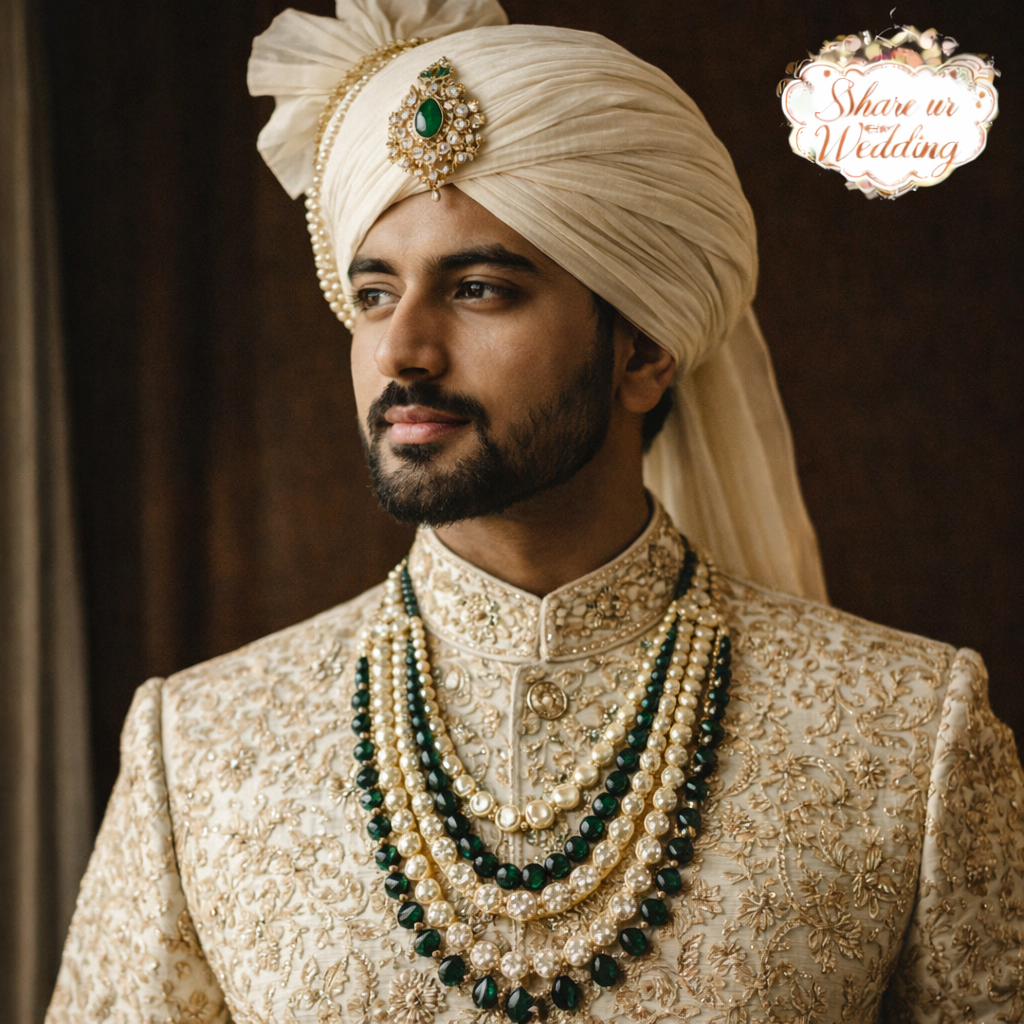
Direction: Stand tall with your sherwani fully buttoned. The photographer shoots from slightly below, capturing the full length of the outfit — from the brooch at the collar down to the embroidery at the hem. Direct, confident eye contact.
Why it works: The sherwani, like the bridal lehenga, is a significant garment that deserves its own photographic moment. A full-length, confident groom portrait establishes presence and dignifies the outfit choice.
Best for: Clean or architectural background —venue wall, corridor, garden hedge
10. The Sehra Portrait [GROOM SOLO]
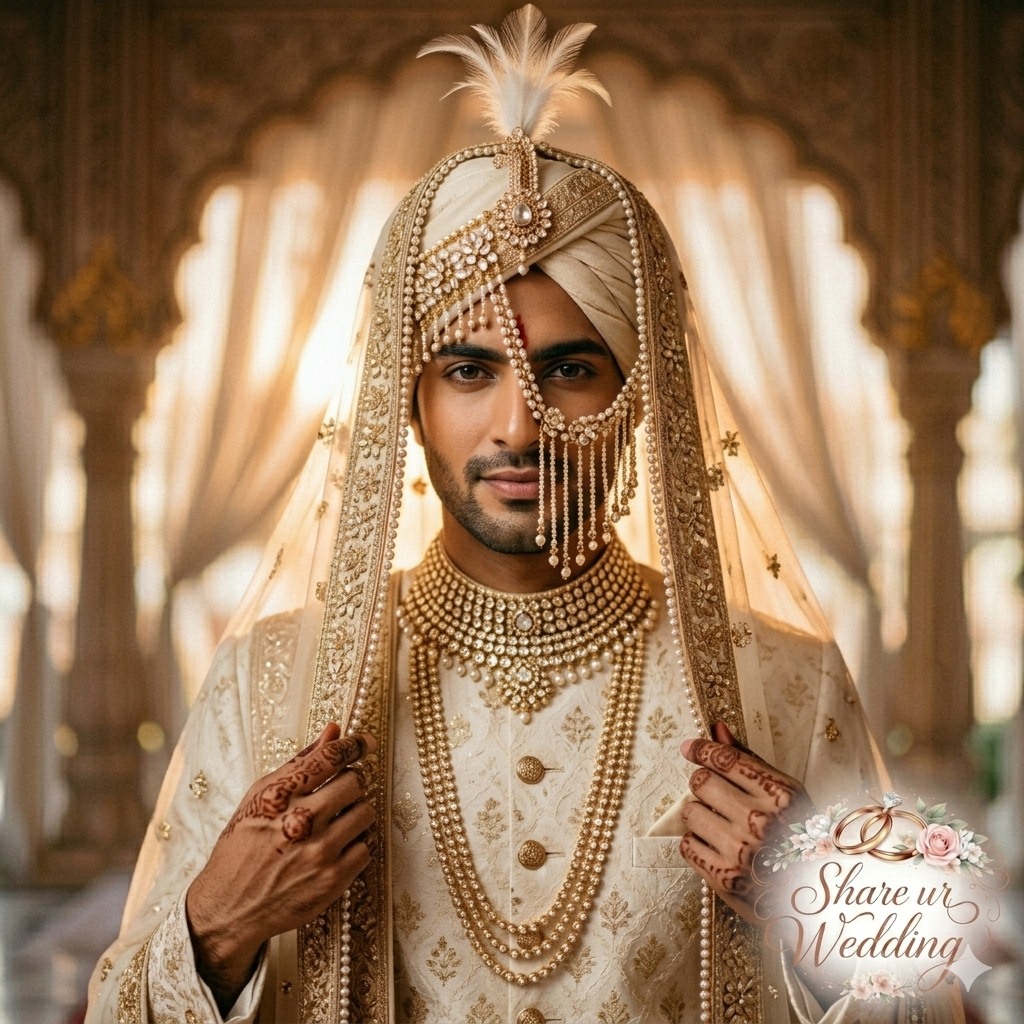
Direction: Face the camera directly. The sehra (flower veil) is arranged to fall naturally. The photographer shoots a close-up portrait that captures the sehra’s texture, the groom’s expression beneath it, and the traditional elegance of this moment.
Why it works: The sehra is worn for a short window before the baraat — it is one of the most time-sensitive shots of the entire wedding. Once the baraat is over, the sehra is typically removed. Capture it when it is freshest.
Best for: Before the baraat begins. Natural or soft indoor light.
11.The Candid Moment with Family [CANDID]
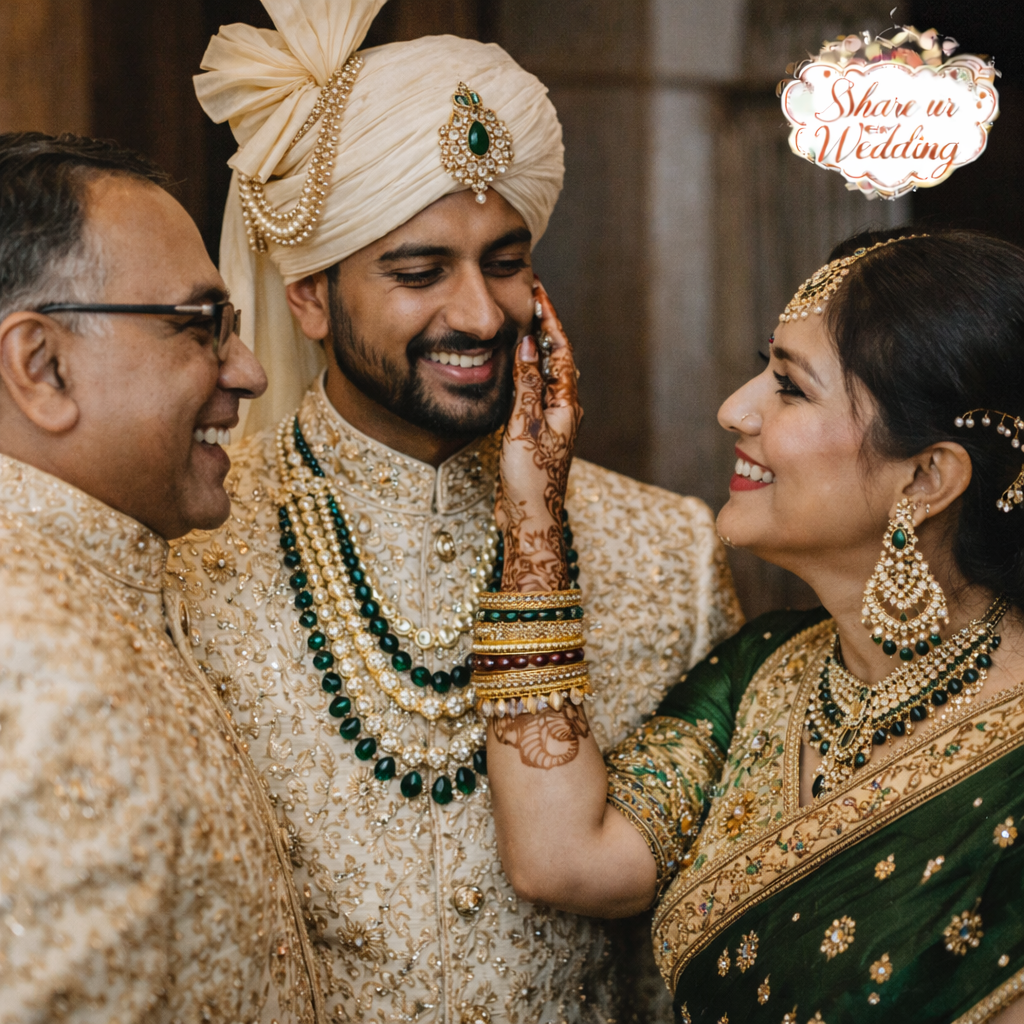
Direction: The photographer documents the groom with his father, mother, or brothers — during a quiet moment of conversation, laughter, or help with the turban tying. No direction — pure observation.
Why it works: Some of the most emotionally powerful images in a wedding album are of the groom with his family before the wedding begins. These are raw, unguarded moments that can never be recreated.
Best for: Getting-ready suite or venue — wherever the family is naturally gathered
12.The Walking Confident Shot [MOVEMENT]
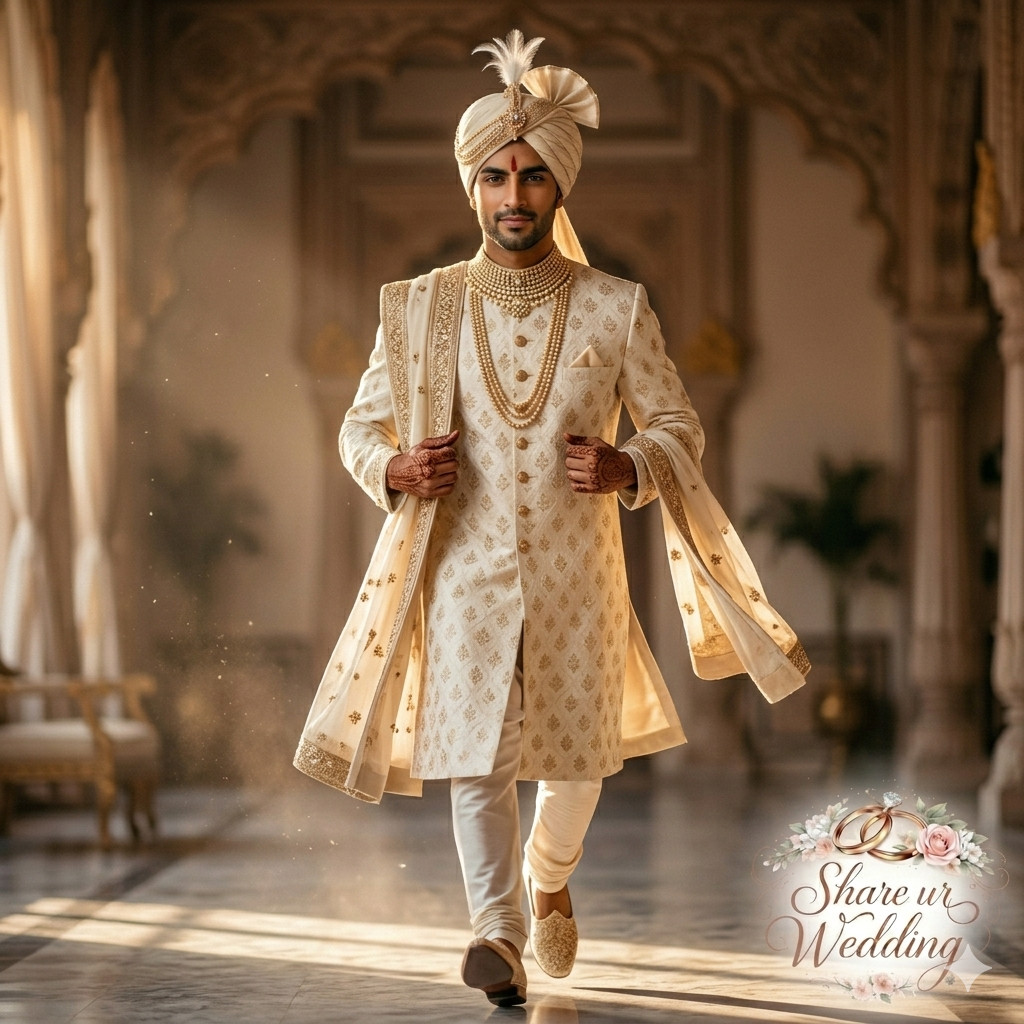
Direction: Walk directly toward the camera with a natural, confident stride. The photographer shoots from slightly below with a wide aperture, blurring the background. Maintain steady, direct eye contact throughout.
Why it works: Movement creates energy. A walking shot of the groom in full sherwani and turban has an editorial, cinematic quality that a static pose cannot achieve. This is particularly effective during the baraat approach.
Best for: Outdoor venue approach, garden path, corridor, baraat entry
13.The Baraat Candid [CANDID]
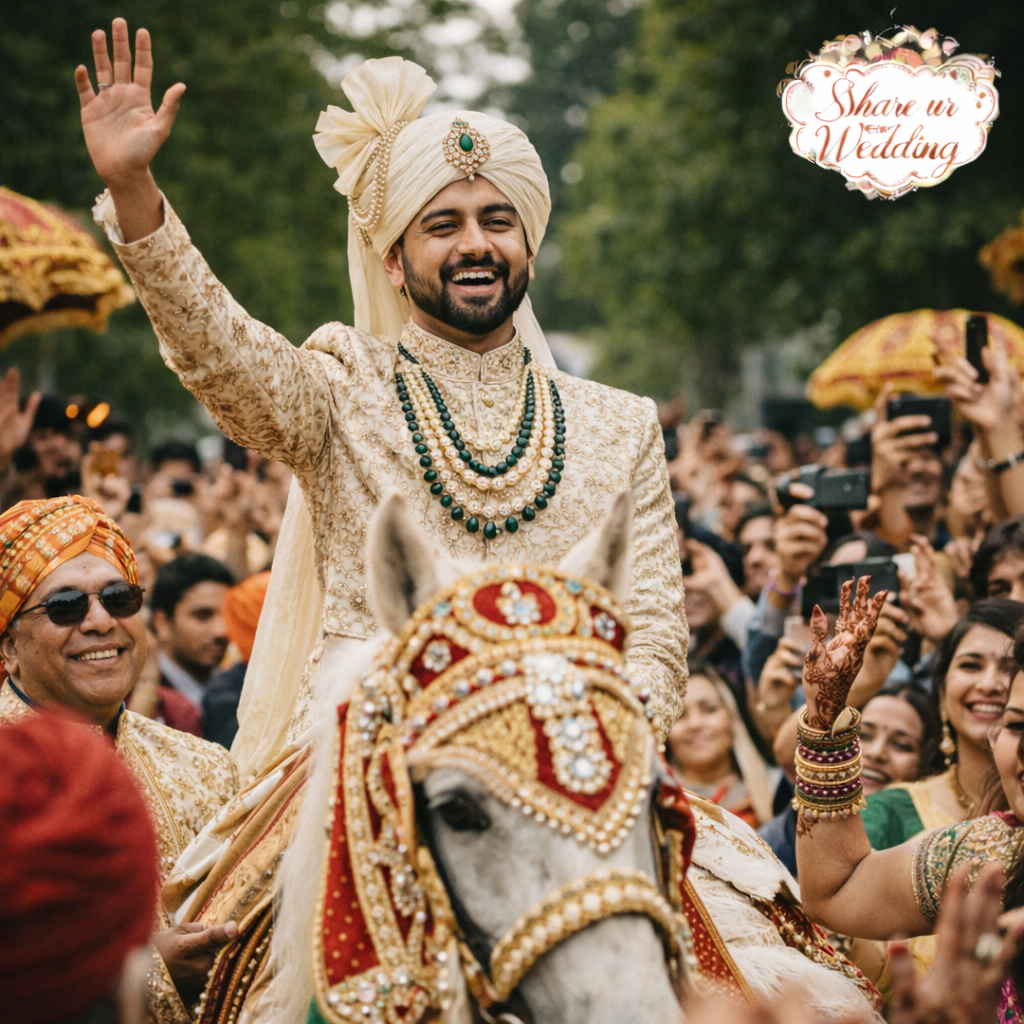
Direction: The photographer documents the groom during the baraat — dancing, laughing, riding the decorated horse or car — without direction. Burst mode captures the best expressions mid-movement.
Why it works: Baraat photography is pure candid gold. The energy, colour, and joy of the baraat procession create naturally spectacular photographs without any posing. The groom simply lives the moment.
Best for: The baraat procession — outdoor venue approach, street, hotel entrance
14.The Groom Detail Shots [DETAIL SHOT]
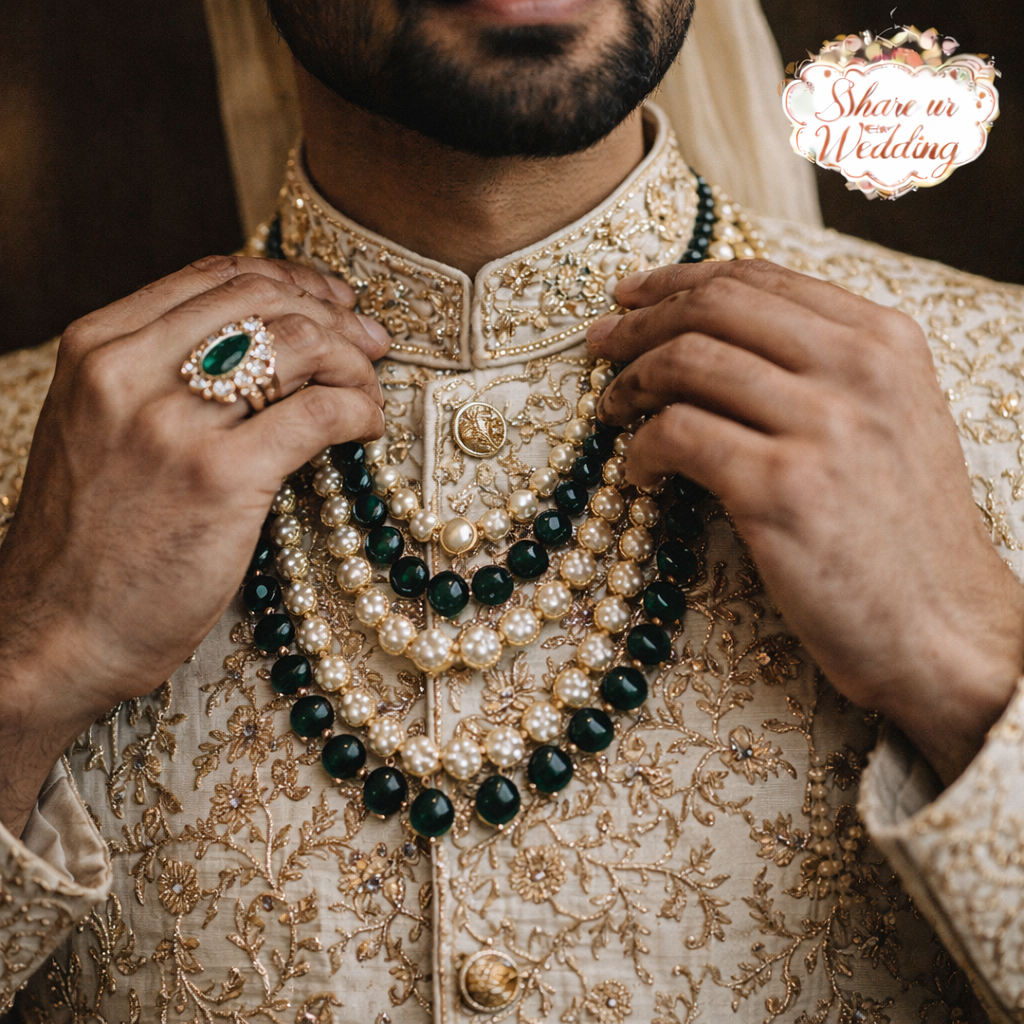
Direction: The photographer captures individual detail shots: the embroidery on the sherwani, the kalgi (turban ornament), the watch or kara on the wrist, the shoes. No direction needed — the photographer simply moves around the groom documenting these details.
Why it works: Detail shots of the groom’s accessories and outfit create beautiful album pages and are frequently used in the opening sequences of wedding albums. They are quick to capture and highly impactful.
Best for: Any well-lit space — natural light preferred
Mandap and Wedding Ceremony Poses — Poses 15 to 22
The wedding ceremony is the most photographically rich and emotionally significant part of the day. For Indian weddings, the mandap offers extraordinary visual opportunities — fire, flowers, ritual, family, and two people beginning their life together. Most ceremony shots should be candid, but these specific moments should always be on your shot list.
Photographer Briefing Note: Share this section with your photographer before the wedding. They need to know the sequence of your ceremony rituals in advance to position correctly for each moment. A photographer who arrives without knowing the ceremony order will miss the sindoor, mangalsutra, and phera moments — and these cannot be restaged.
15.The Varmala (Garland Exchange) Action Shot [CEREMONY CANDID]
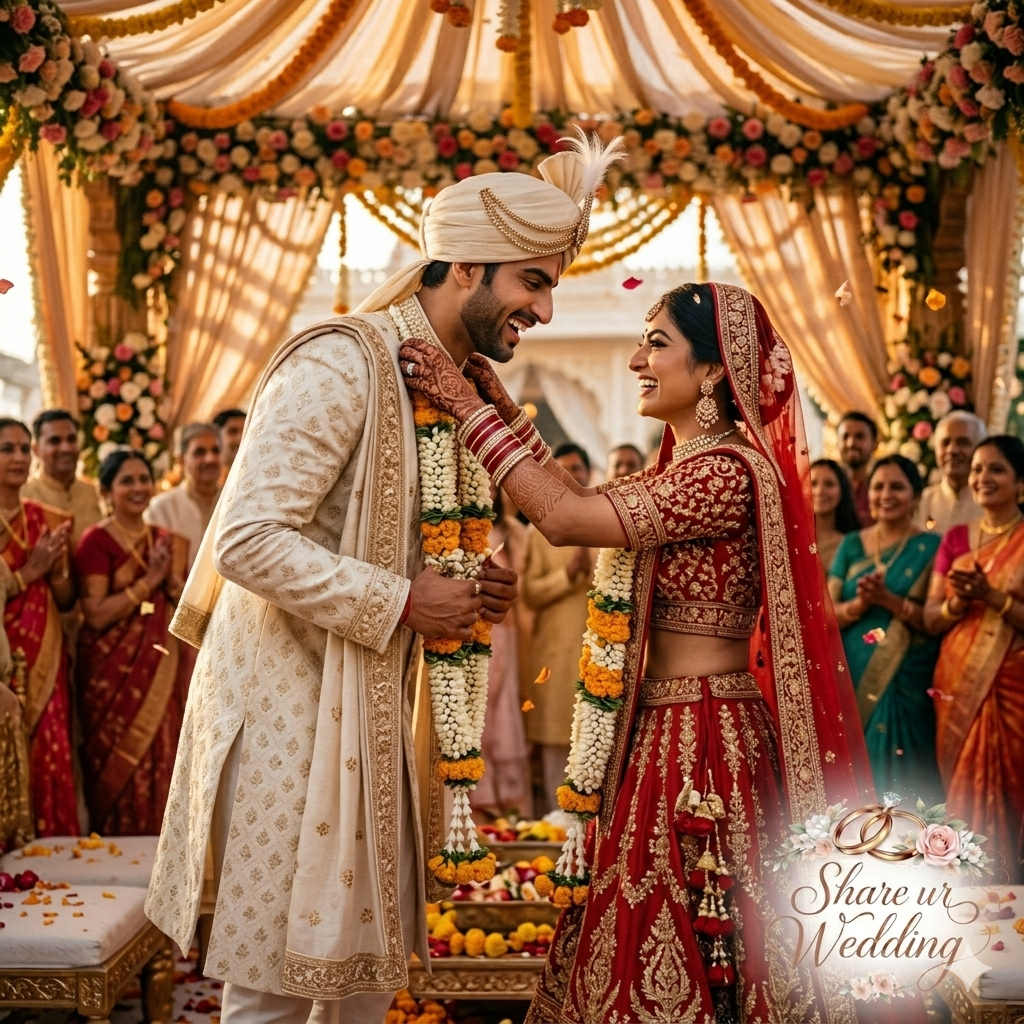
Direction: The photographer shoots in burst mode during the varmala exchange. No direction — let the moment unfold naturally. The best varmala shots capture mid-action: the garland in motion, laughter breaking through, family cheering in the background.
Why it works: The varmala exchange is typically one of the most joyful and visually dynamic moments of the entire ceremony. The garlands in motion, the expressions of surprise and laughter, and the surrounding family create a naturally beautiful composition.
Best for: During the varmala ritual — photographer positions at slightly above eye level
16.The Phera Walking Shot [CEREMONY RITUAL]
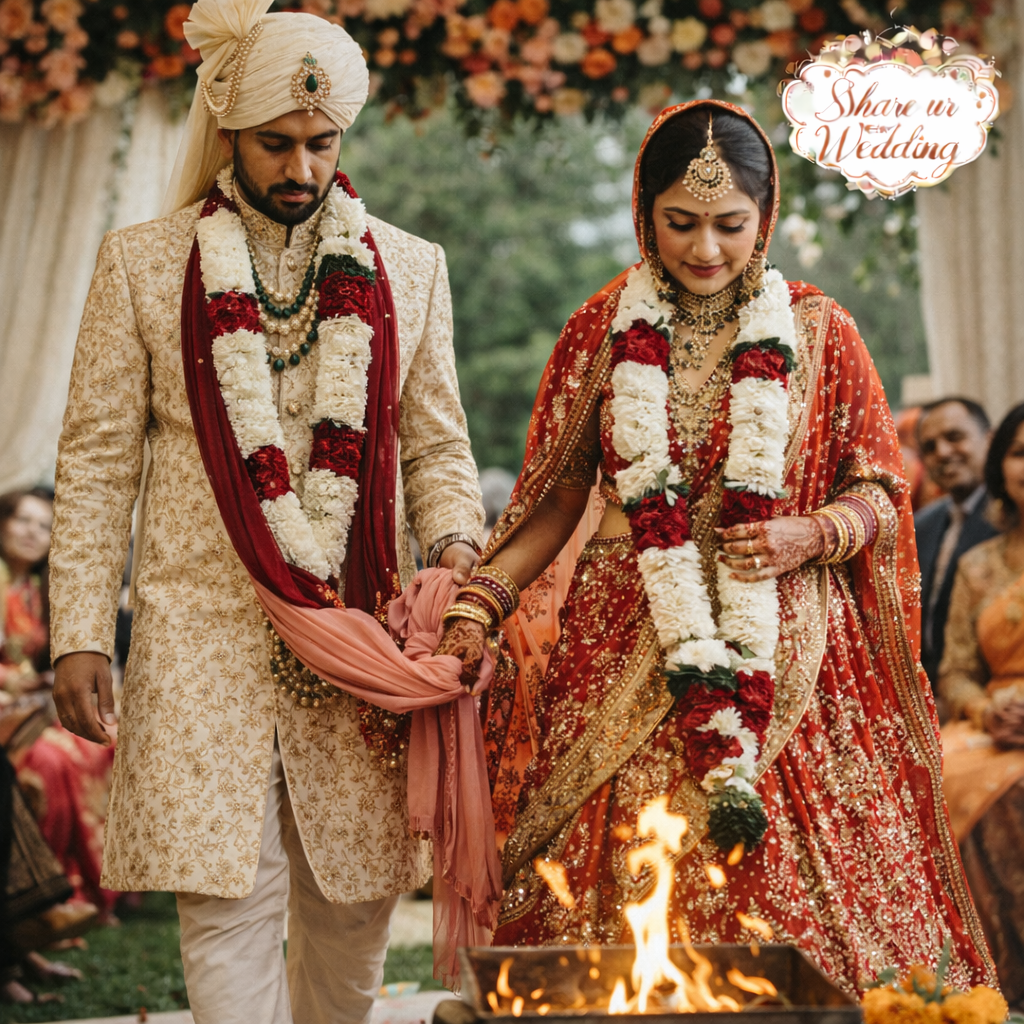
Direction: The photographer captures the couple walking around the sacred fire during the pheras. Shoot from a slightly elevated position to show both the couple and the fire in the same frame. No direction — these are ritual moments.
Why it works: The pheras are the most sacred ritual of a Hindu wedding ceremony. Photographs that capture the couple walking together around the fire, with the sacred flame visible in the frame, carry profound symbolic and emotional weight.
Best for: During the phera ritual. Photographer must be briefed on when pheras begin.
17.The Sindoor Moment [CEREMONY RITUAL]
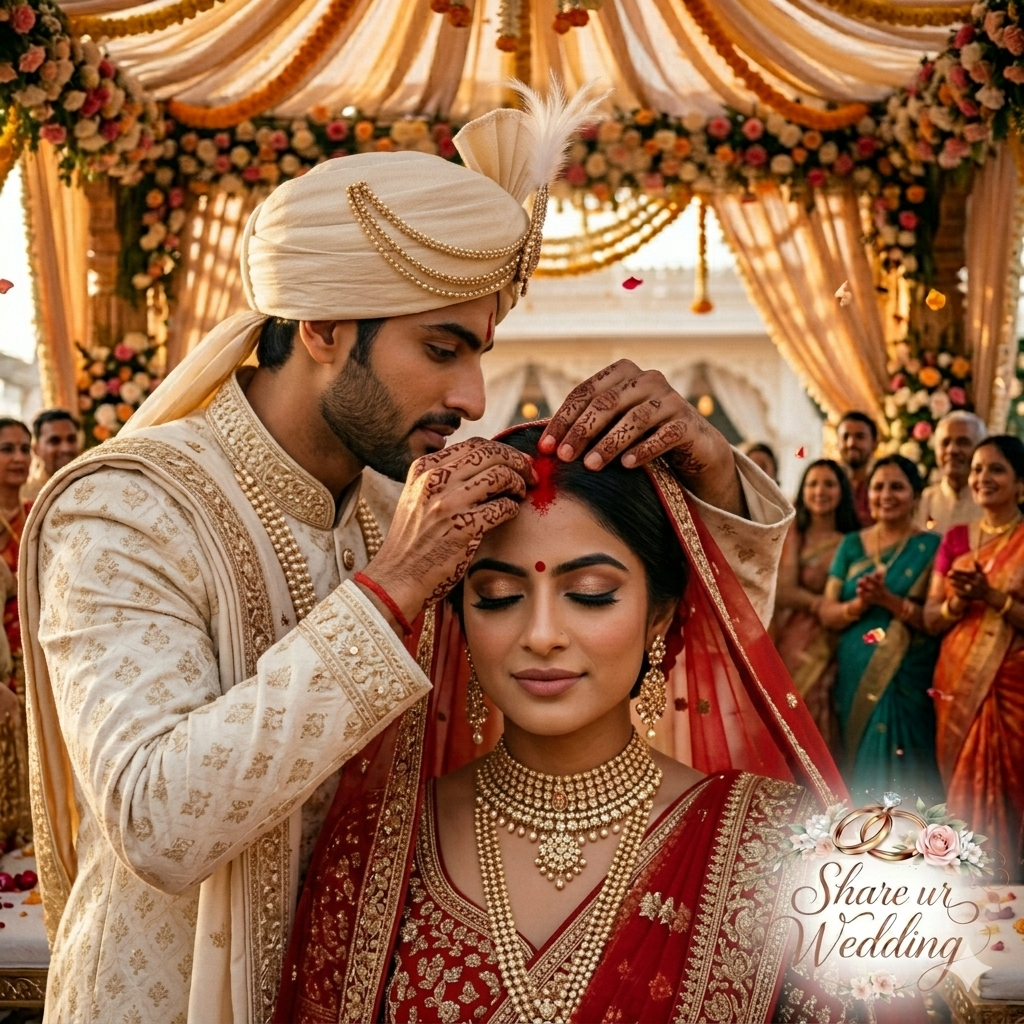
Direction: The photographer moves close and shoots at the exact moment of sindoor application. A slightly elevated angle shows both the groom’s hand and the bride’s expression simultaneously. This is a time-sensitive shot that cannot be repeated.
Why it works: The sindoor application is one of the most significant ritual moments in a Hindu wedding. The close-up capture of this moment — the red against the parting of the bride’s hair, the groom’s face, the concentration and emotion — creates one of the most powerful photographs in the album.
Best for: During the sindoor ritual — photographer must be in position in advance
18. The Mangalsutra Tying Close-Up [CEREMONY RITUAL]
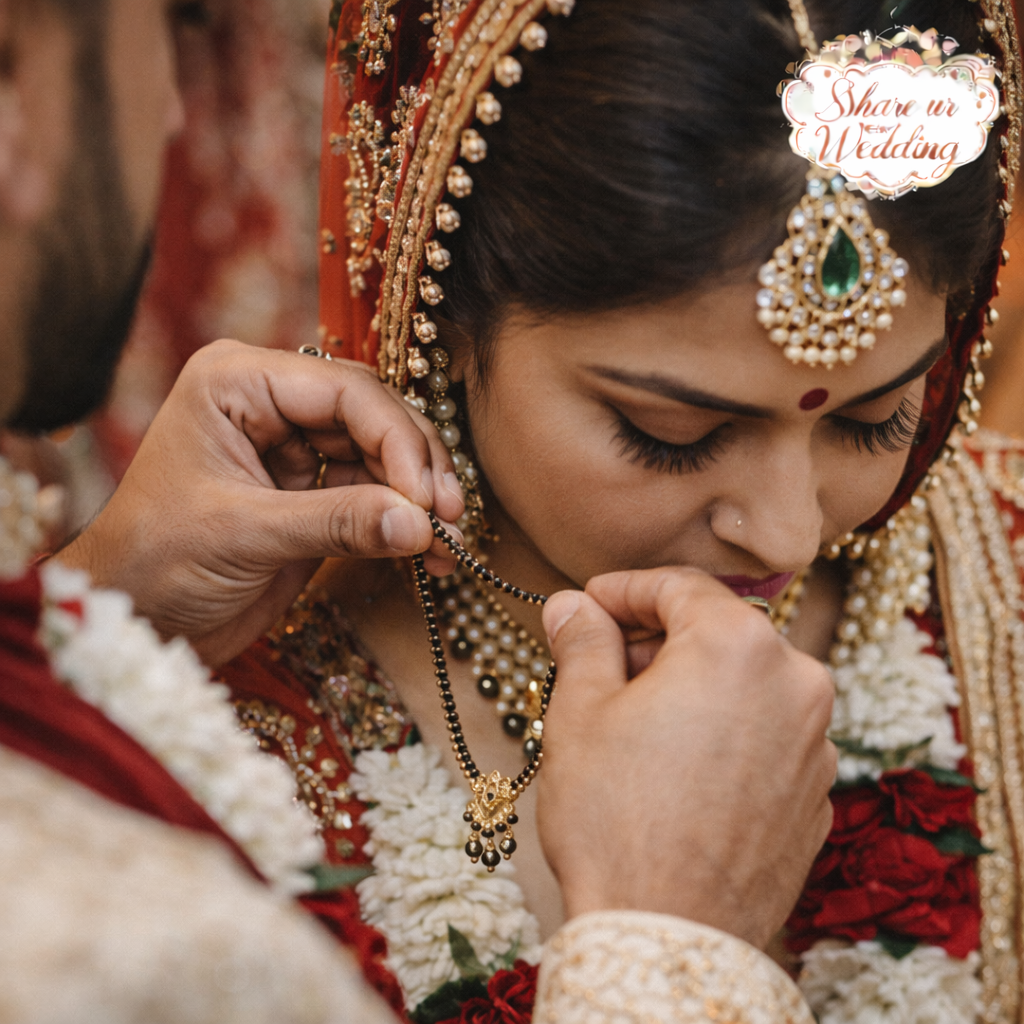
Direction: The photographer positions close and captures the groom tying the mangalsutra around the bride’s neck. Shoot both the detail of the mangalsutra and the expressions of both partners simultaneously.
Why it works: The mangalsutra is one of the most visually distinctive elements of an Indian wedding. The moment of its placement carries profound cultural and emotional significance. A well-timed close-up of this moment is an album centrepiece.
Best for: During the mangalsutra ritual — coordinate photographer position in advance
19.The Seated Mandap Portrait [CEREMONY PORTRAIT]
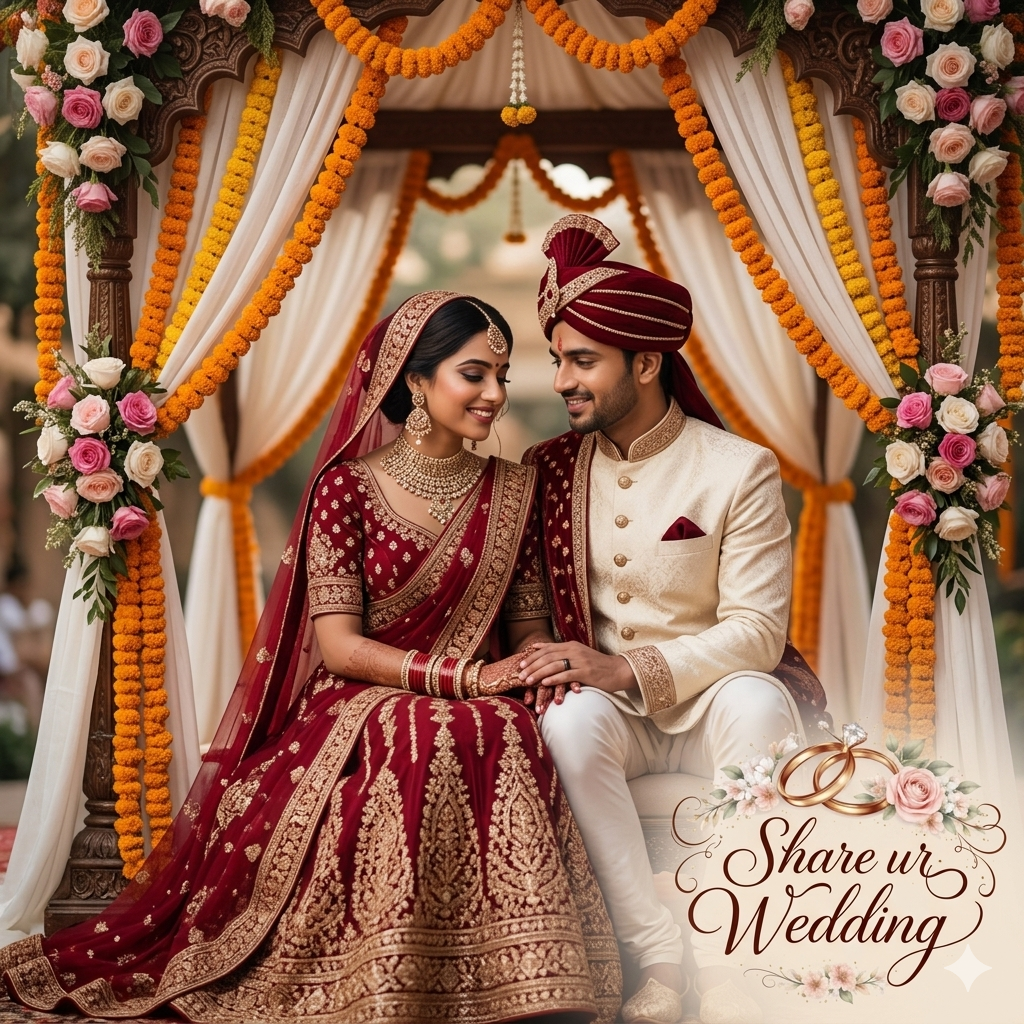
Direction: After a key ritual sequence, ask the photographer to capture a posed portrait of the couple seated together at the mandap — framed symmetrically by the mandap pillars, flowers, and sacred fire. One moment of calm amidst the ceremony.
Why it works: A symmetrical seated portrait at the mandap — with the couple centred, the floral mandap framing them, and the sacred fire visible — creates a formal, timeless image that works beautifully as a large-format print.
Best for: During a natural pause between rituals — coordinate with your pandit in advance
20.The Elder Blessing Candid [FAMILY CANDID]
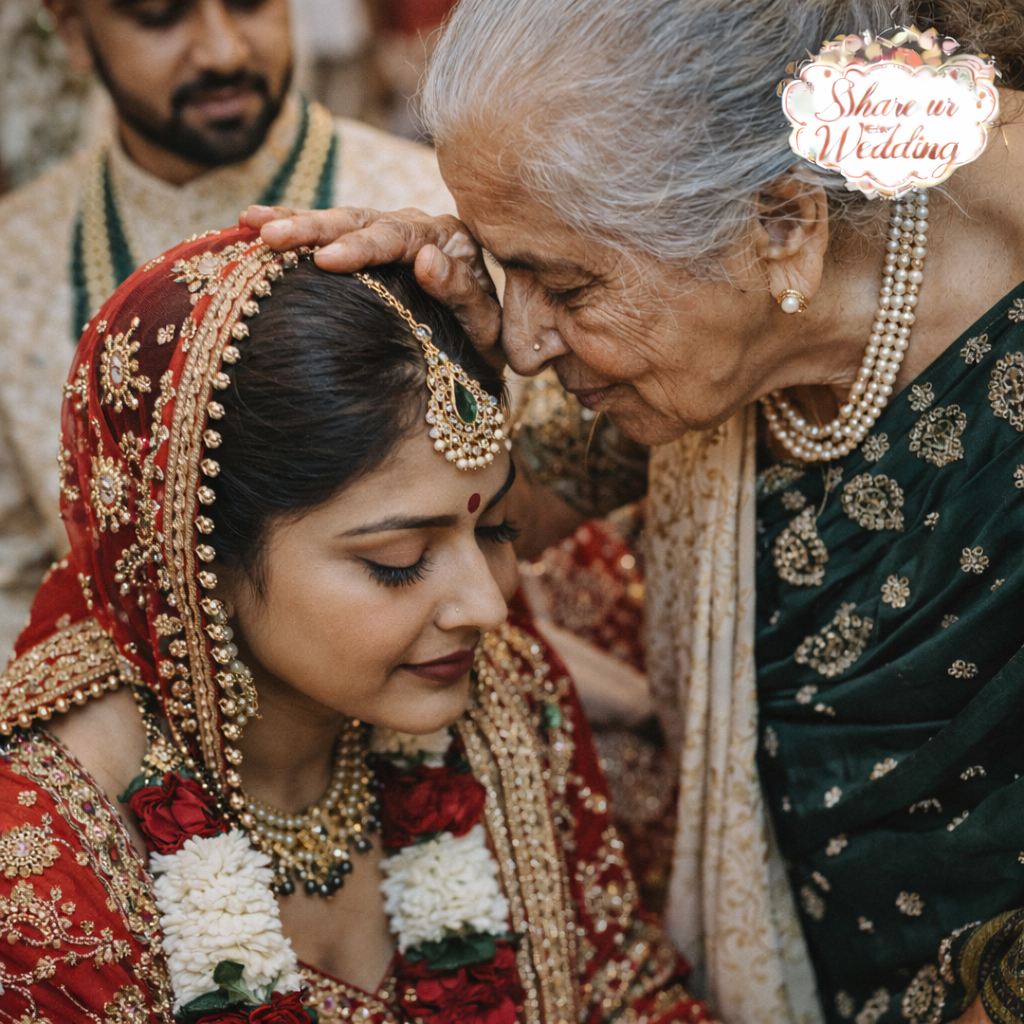
Direction: The photographer documents the moments when elders — grandparents, parents — bless the couple after the ceremony. Pure documentation, no direction. The emotion on the faces of parents and grandparents is often the most powerful in the entire album.
Why it works: These candid blessing photographs capture the intergenerational heart of an Indian wedding — the joy of parents who have waited for this day, the emotion of grandparents witnessing the continuation of the family. These are irreplaceable moments.
Best for: Immediately after the wedding rituals conclude — photographer must stay close
21.The Post-Ceremony Couple Portrait at the Mandap [COUPLE PORTRAIT]
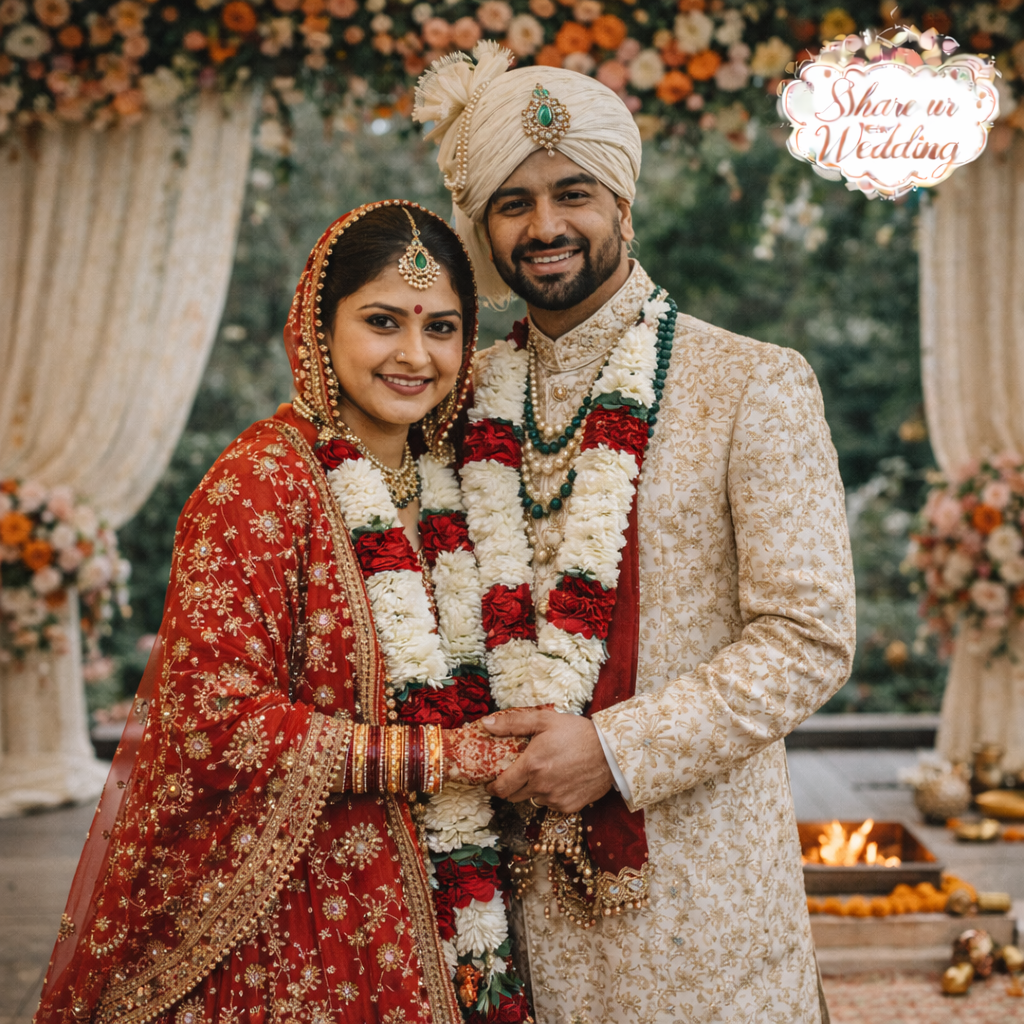
Direction: After the ceremony concludes and before guests crowd in, spend 2–3 minutes at the mandap for a formal couple portrait. Stand together, facing slightly toward each other, with the mandap’s full floral decoration in the background.
Why it works: The mandap is the most beautifully decorated setting of the entire wedding day. Capturing a formal couple portrait here — while the decoration is still pristine and before it is dismantled — creates a photograph that contextualises the entire day.
Best for: Immediately after the ceremony ends — schedule this with photographer and mandap team
22.The Antarpat Reveal (Saptapadi Entrance) [CEREMONY CANDID]
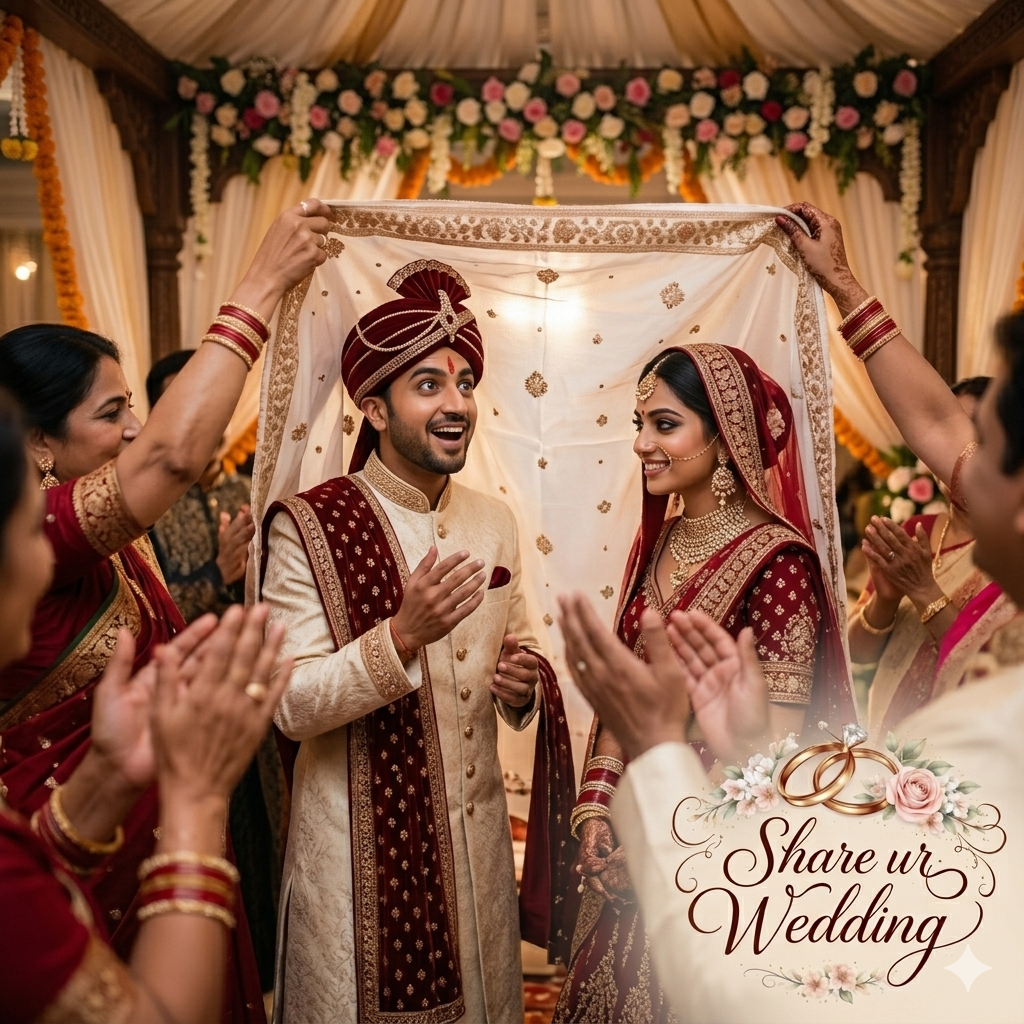
Direction: If your ceremony includes the antarpat ritual — where a cloth separates the couple before they first see each other — the photographer captures the moment the cloth is removed and the couple sees each other for the first time during the ceremony.
Why it works: The moment of first sight during the antarpat removal is one of the most emotionally raw moments in any Indian wedding. The expressions at the exact instant of seeing each other — surprise, joy, love — are completely authentic and entirely unrepeatable.
Best for: During the antarpat ritual — photographer must be in position before the cloth drops
Romantic Couple Portrait Poses — Poses 23 to 32
The couple portrait session — typically scheduled during golden hour between the ceremony and reception — is your opportunity to create the photographs you will frame on your wall. is the time for direction, for trying different poses, and for being fully present with each other while a photographer documents what that feels like.
Golden Hour Tip: Schedule exactly 25–30 minutes for your golden hour couple session. Tell your coordinator, your family, and your photographer that this time is protected — no interruptions. The photographs from this session are typically the most used in your wedding album and the most likely to become prints on your walls.
23. The Forehead Touch [ROMANTIC]
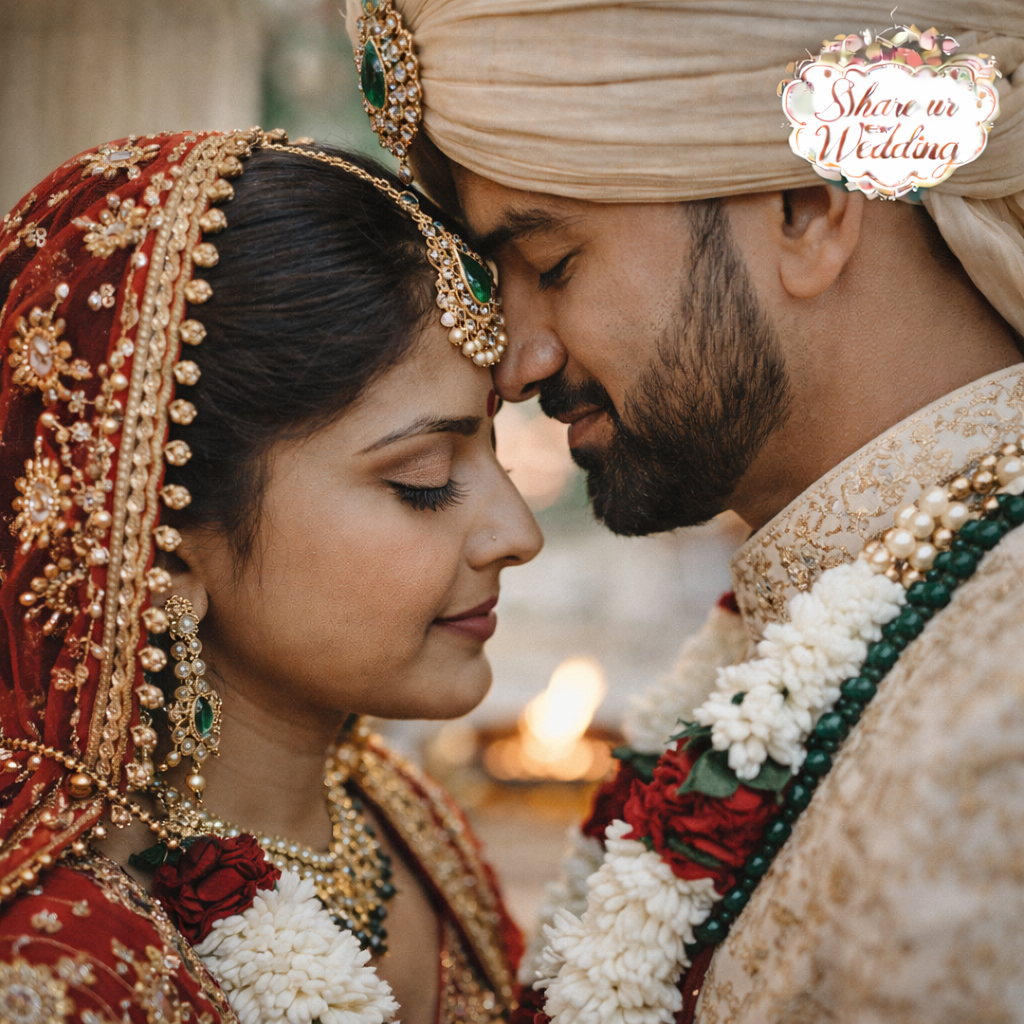
Direction: Stand face to face, very close. Gently touch foreheads. Close your eyes or look softly at each other. The photographer shoots from slightly above or eye level, keeping the composition tight on both faces.
Why it works: Universally the most emotionally powerful couple pose in wedding photography. The physical closeness and closed or softened eyes create an image of complete intimacy and trust. Works in any lighting, any background, and for any couple.
Best for: Golden hour, post-ceremony, any quiet moment — most versatile pose in this guide.
24. The Golden Hour Silhouette [GOLDEN HOUR]
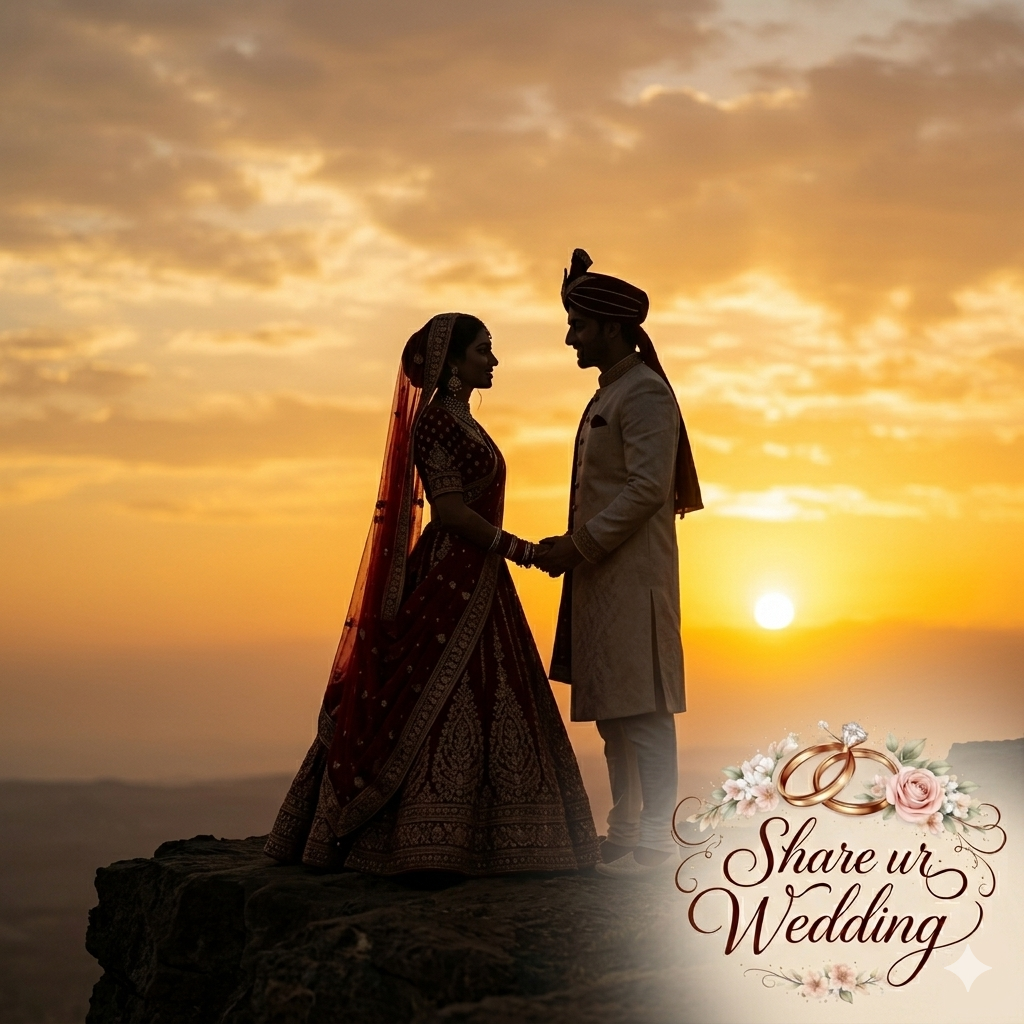
Direction: Stand facing each other in front of the setting sun — backlit, with the photographer shooting directly toward the light. The couple becomes a silhouette against the warm sky. Hold hands, touch foreheads, or embrace — any contact works.
Why it works: Silhouette wedding photographs are among the most widely shared images in Indian wedding photography on Instagram. The dramatic contrast between the dark couple and the glowing sky creates a visually spectacular image that feels cinematic.
Best for: Golden hour — 30 minutes before sunset. Requires an open sky background.
25. The Walking Hand-in-Hand Shot [MOVEMENT]
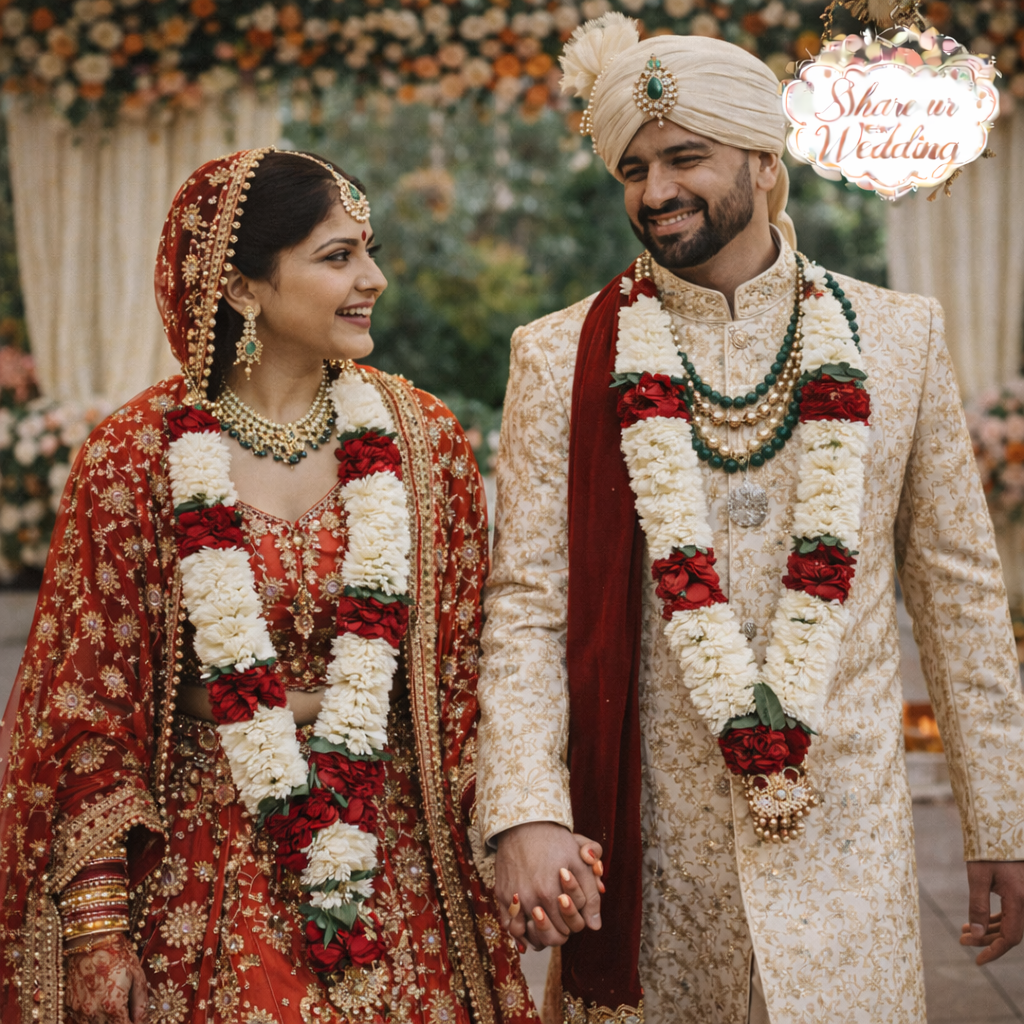
Direction: Walk together slowly toward the camera — or away from it. Look at each other and talk naturally. The photographer shoots from in front or behind, capturing natural movement, posture, and expression without interrupting the conversation.
Why it works: Walking shots eliminate the self-consciousness of standing still while being photographed. Natural movement creates natural expression. The resulting photographs feel alive and spontaneous rather than arranged.
Best for: Open outdoor space — lawn, corridor, garden path, heritage location.
26.The Groom Twirling the Bride [MOVEMENT]
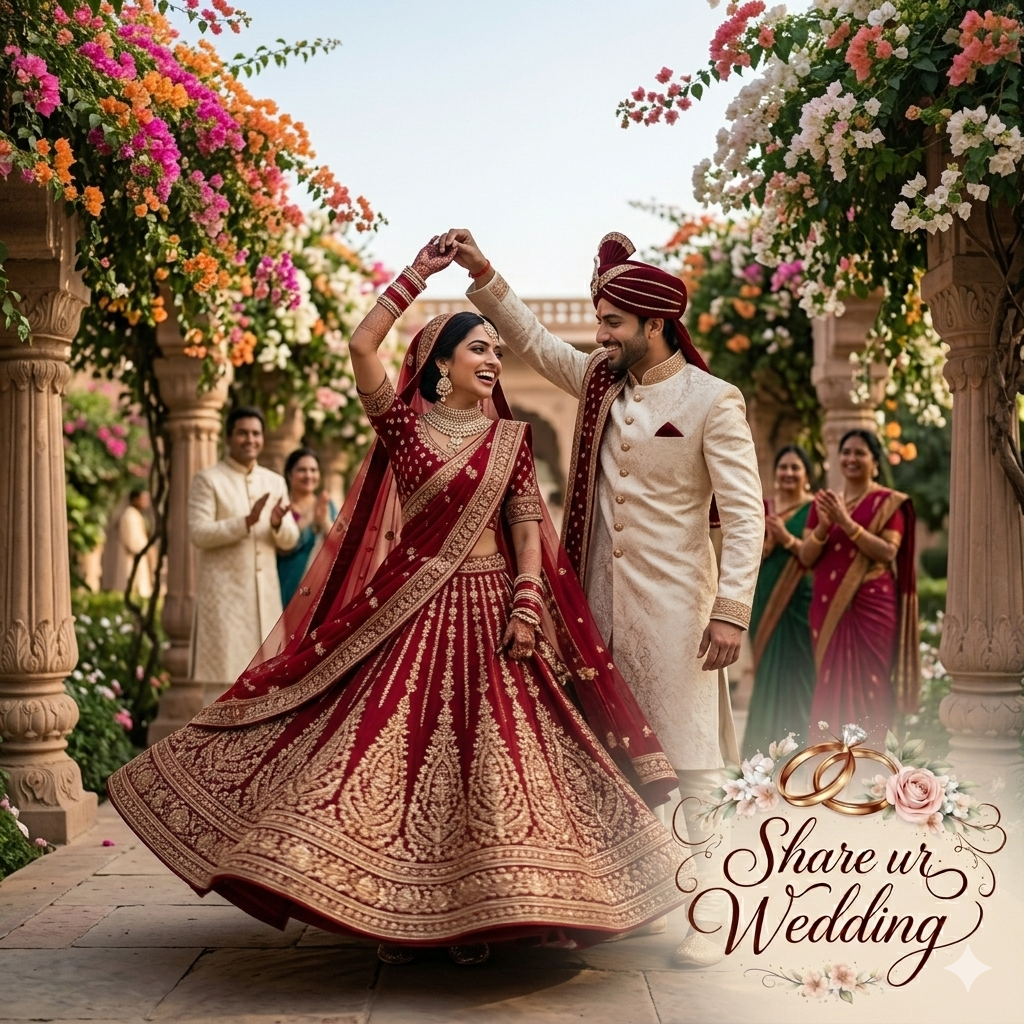
Direction: The groom holds the bride’s hand and gently spins her once. The photographer shoots in burst mode to capture the full arc of the spin — the lehenga in motion, the bride’s expression mid-spin, the groom’s watching face.
Why it works: The lehenga twirl with a partner is one of the most photographically spectacular moments in Indian wedding photography. The movement of the fabric, the joy of the moment, and the visual contrast between the two outfits creates a dynamic, beautiful image.
Best for: Open outdoor space. Works best at golden hour for maximum warmth.
27. The Dupatta Wrap Together [ROMANTIC — INDIA SPECIFIC]
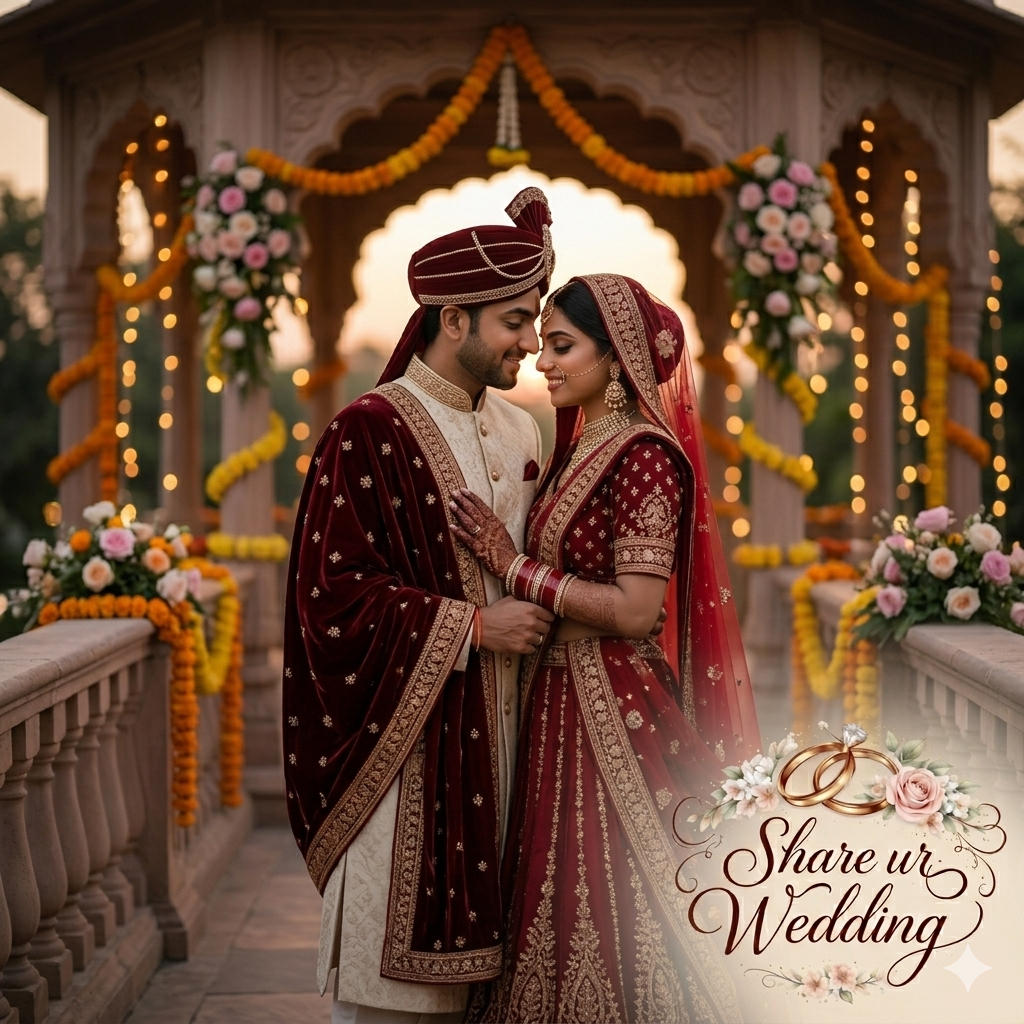
Direction: The bride holds her dupatta out to one side while the groom steps beside her and they both hold one end together — or the dupatta is gently draped across both their shoulders. The photographer captures from slightly above.
Why it works: This pose is unique to Indian wedding photography — it incorporates the dupatta as a visual element that connects the couple while showcasing one of the bridal outfit’s most beautiful components. It creates an image that is distinctly Indian and deeply romantic.
Best for: Works best with a colourful or embroidered dupatta against a simple or natural background.
28. The Nose-to-Nose Close-Up [ROMANTIC]
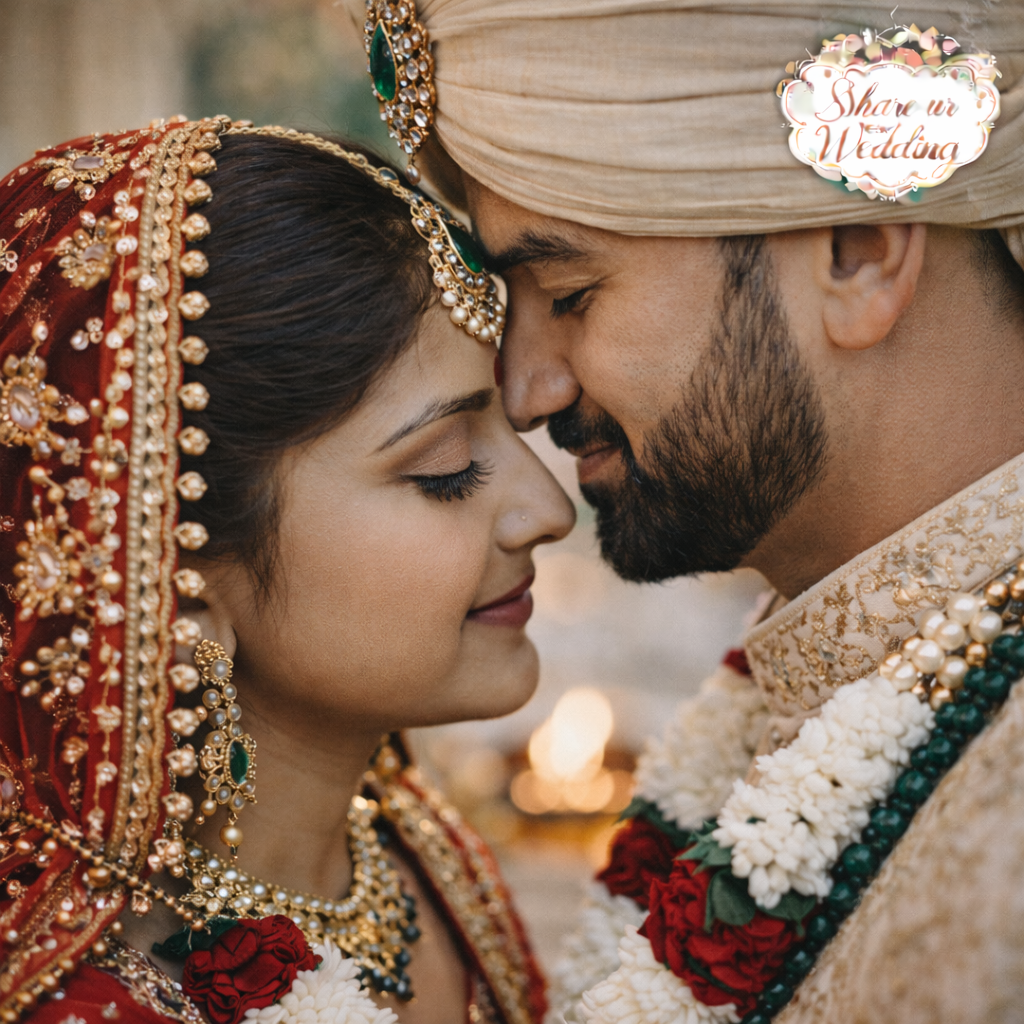
Direction: Stand very close, nose almost touching nose, eyes looking at each other. The photographer shoots tight, blurring everything outside the couple’s faces. Speak softly to each other during this shot.
Why it works: Extreme proximity creates extreme intimacy in photographs. When couples speak naturally to each other — rather than standing in silence — their expressions become genuine and beautiful. This pose consistently produces the most emotionally resonant couple portraits.
Best for: Any well-lit setting. Golden hour light makes this especially beautiful.
29. The Back-to-Back Lean [EDITORIAL]
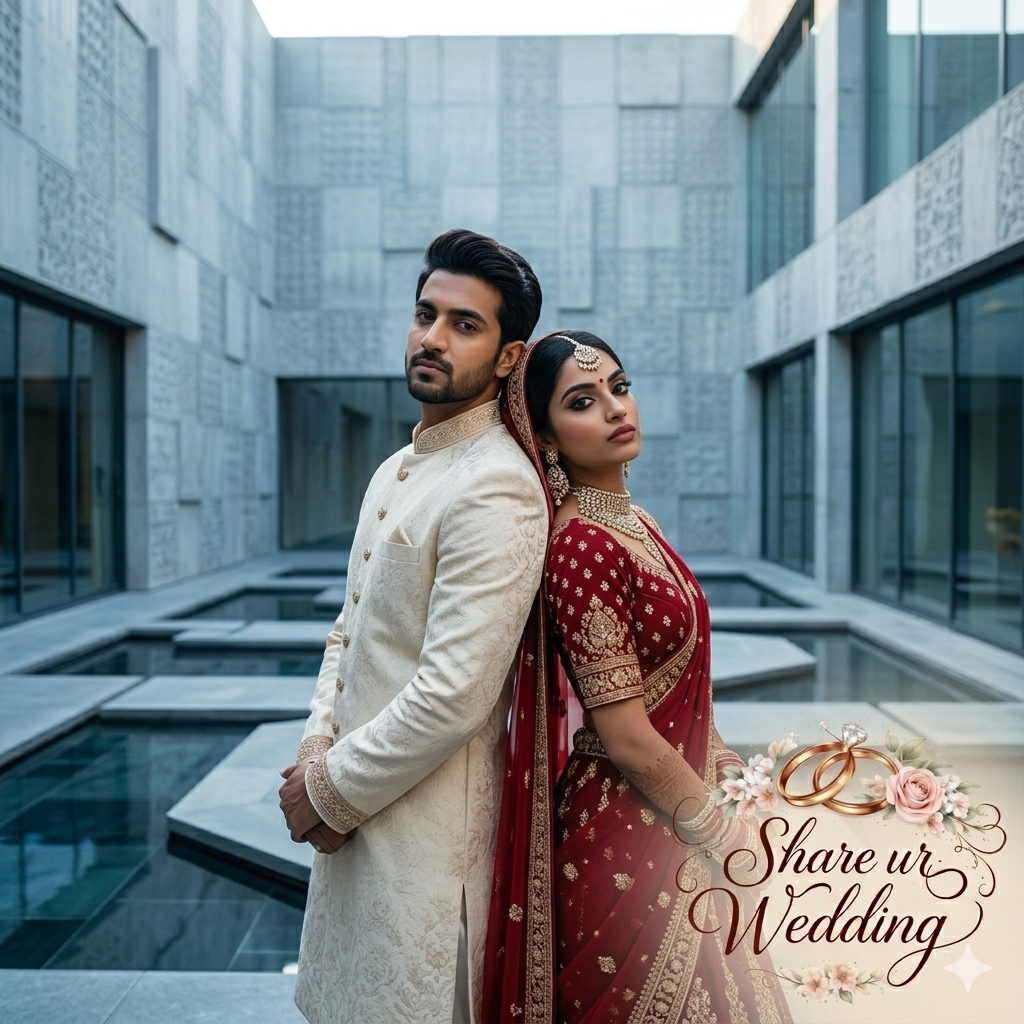
Direction: Stand back-to-back, leaning gently against each other. Both look slightly away from the camera in different directions, or both look directly at the lens. The photographer shoots from the side to capture both profiles simultaneously.
Why it works: Back-to-back poses create a graphic, editorial quality that differs completely from face-to-face portraits. They showcase both outfits simultaneously and create a sense of two individuals who are also deeply connected.
Best for: Clean architectural background — wall, archway, or doorway. Good editorial lighting.
30. The Groom Looking at the Bride [COUPLE PORTRAIT]
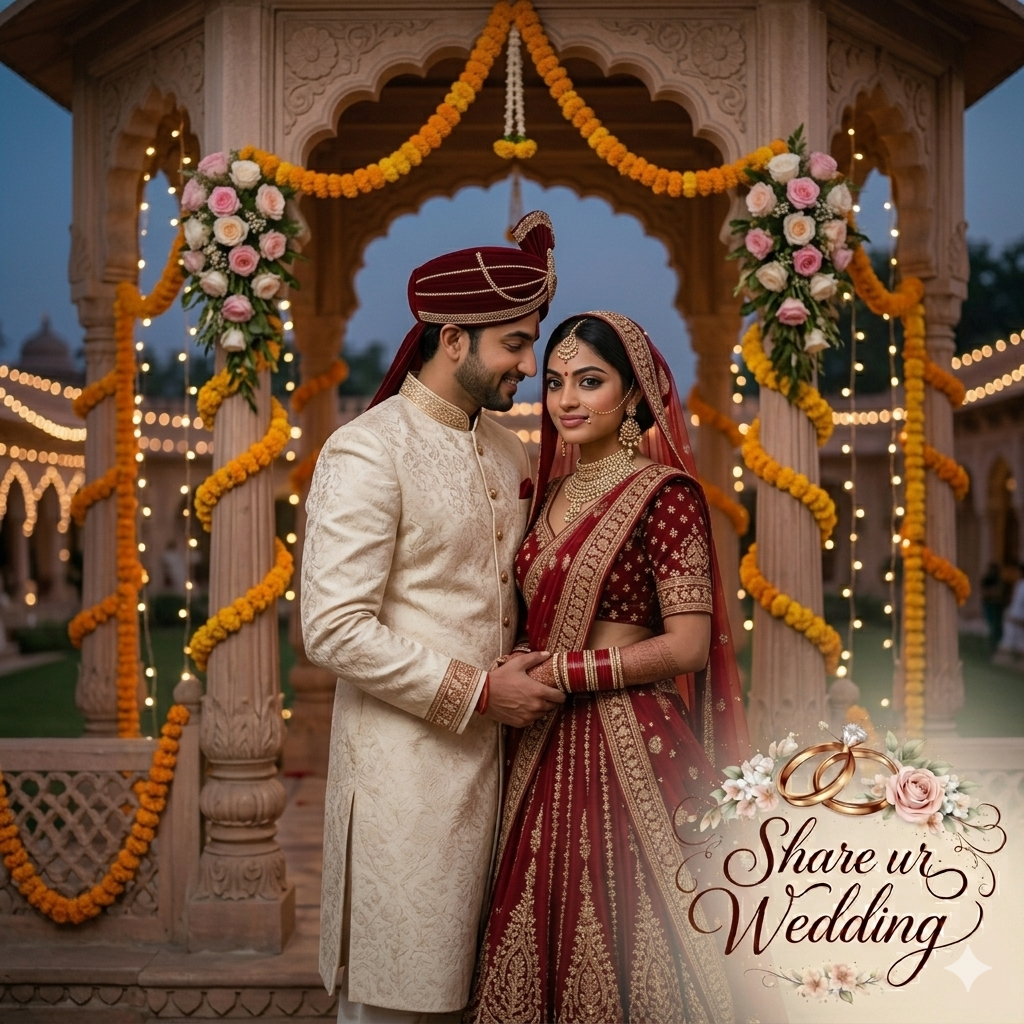
Direction: The bride looks directly into the camera. The groom looks at the bride. The photographer captures both — one subject looking out, one looking in. The disparity in gaze direction creates natural visual tension.
Why it works: This asymmetric gaze pose is one of the most elegant in couple photography. The bride is confident and present; the groom is entirely focused on her. The resulting image captures the dynamic of the relationship in a single frame.
Best for: Any setting — particularly effective against architectural or natural backgrounds.
31. The Embrace from Behind [ROMANTIC]
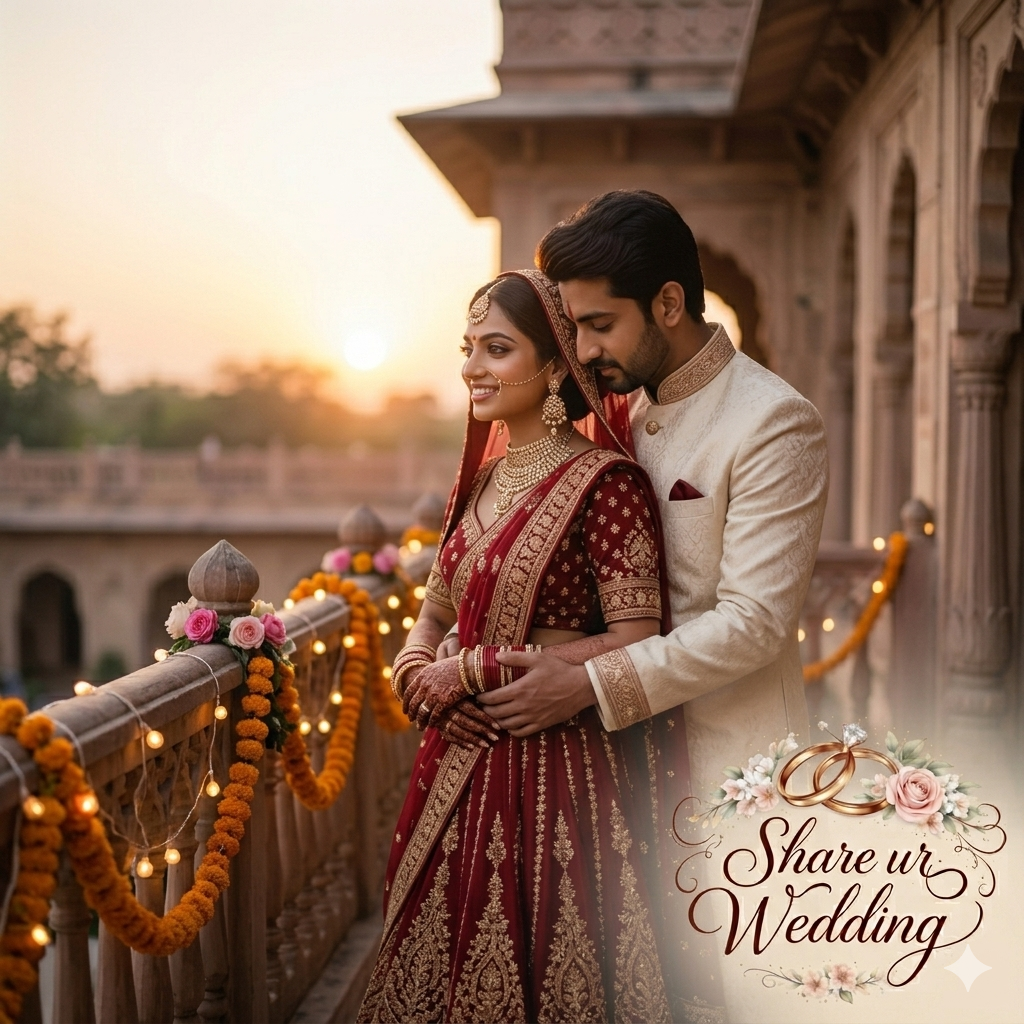
Direction: The groom stands behind the bride with his arms gently around her. Both face the camera — or the bride tilts her head back toward him while he looks at the camera. A natural, unhurried embrace.
Why it works: The embrace from behind is one of the most protective and tender poses in couple photography. It works especially well for showcasing the bridal front — the full face, jewellery, and blouse neckline — while the groom’s presence frames the image.
Best for: Garden or outdoor setting. Golden hour backlight especially beautiful.
32. The Couple Sitting Together [ROMANTIC]
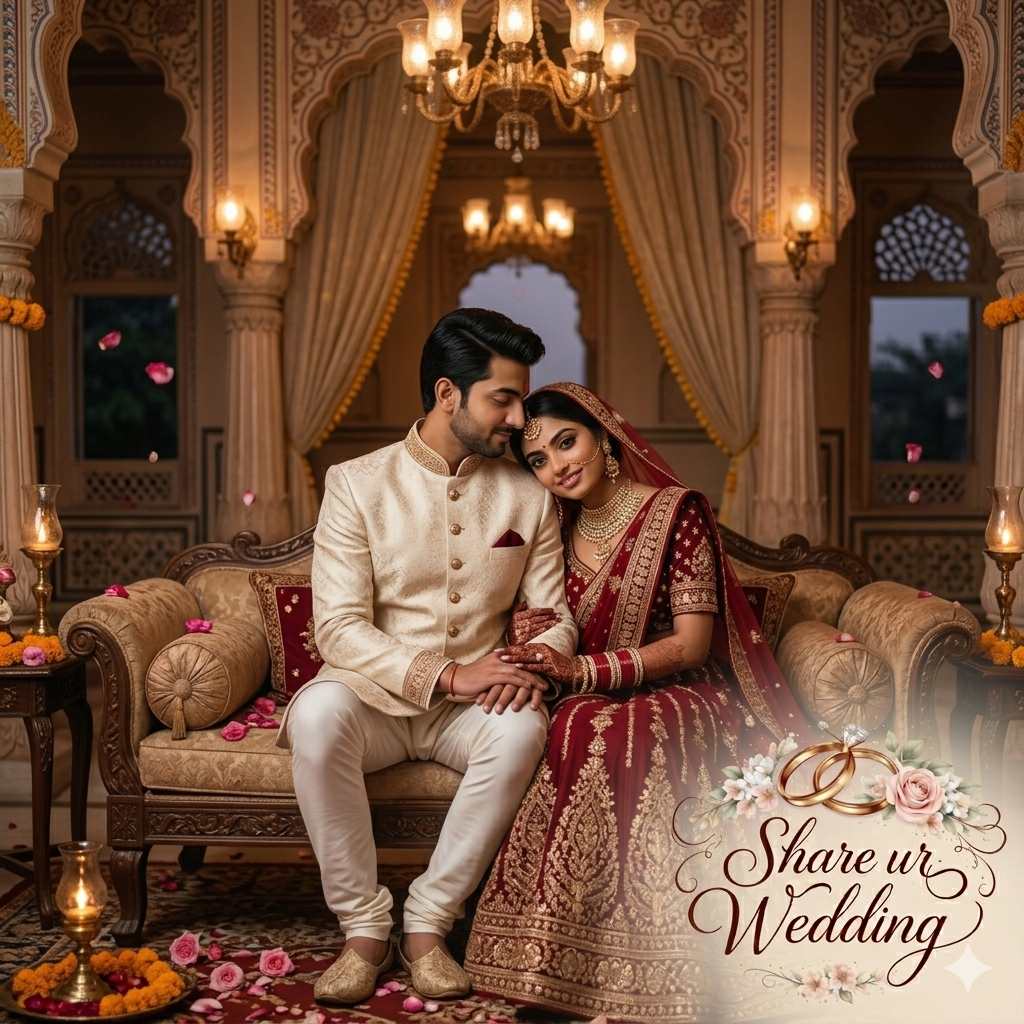
Direction: Sit together on a step, low wall, or the ground — the groom’s arm around the bride, both relaxed and natural. The photographer shoots from eye level or slightly above. Let the conversation flow naturally.
Why it works: Seated couple portraits have a different energy from standing ones — more relaxed, more intimate, more like how couples actually spend time together. The resulting photographs feel candid even when gently directed.
Best for: Steps of the venue, garden bench, mandap steps, outdoor low wall.
Fun and Candid Couple Poses — Poses 33 to 40
The most memorable wedding photographs are rarely the formal ones. They are the images of uncontrolled laughter, the moments of playful mischief, and the cultural traditions that are so joyfully specific to Indian weddings. These 8 ideas require your photographer to stay alert and ready — these moments cannot be recreated.
33.The Genuine Laugh Shot [CANDID]
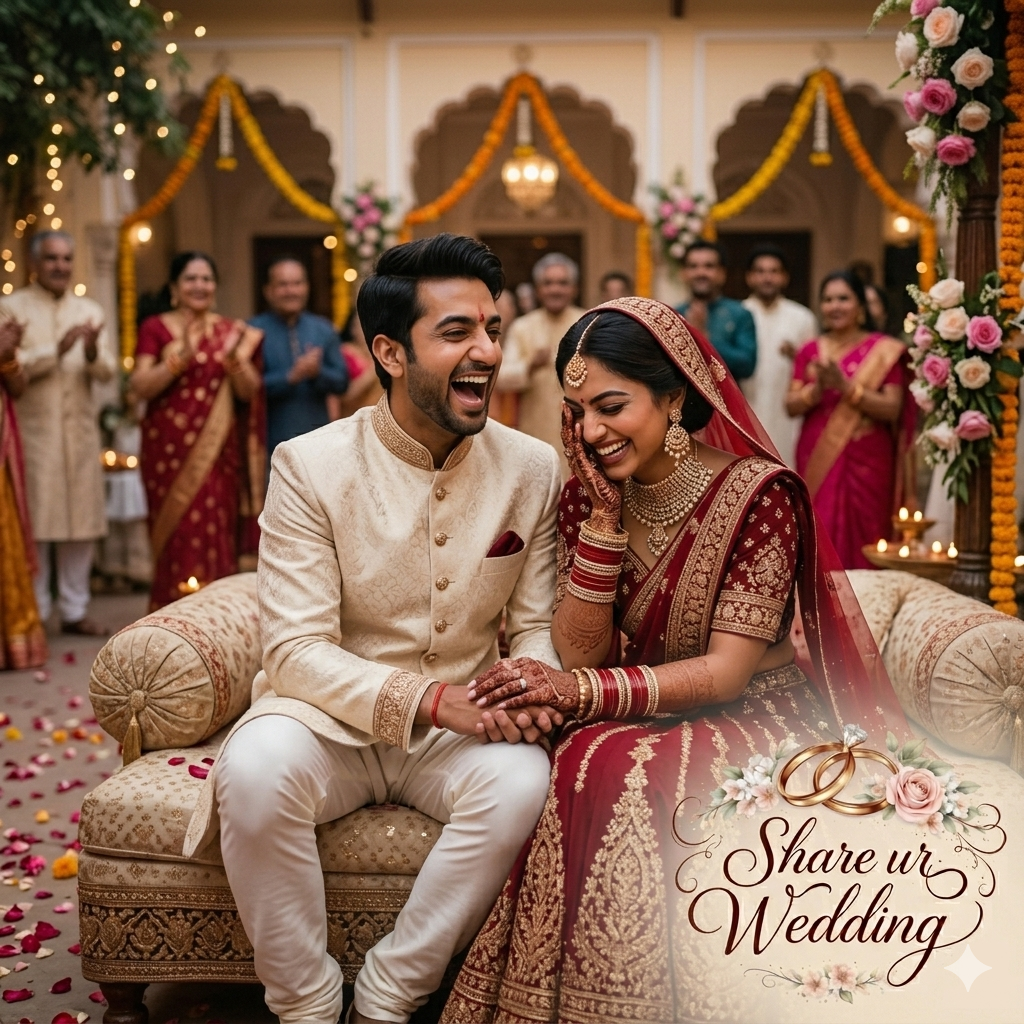
Direction: The photographer prompts something that genuinely makes you both laugh — a private joke, a ridiculous question, or simply by making a fool of themselves. Shoots continuously during the laughter without direction.
Why it works: Genuine laughter is unpredictable, unrepeatable, and photographically beautiful. Couples who laugh naturally together in their wedding photographs have albums that feel like them — joyful, unguarded, and alive. This cannot be faked.
Best for: Any moment — throughout the day whenever genuine laughter occurs.
34. The Piggyback [FUN]
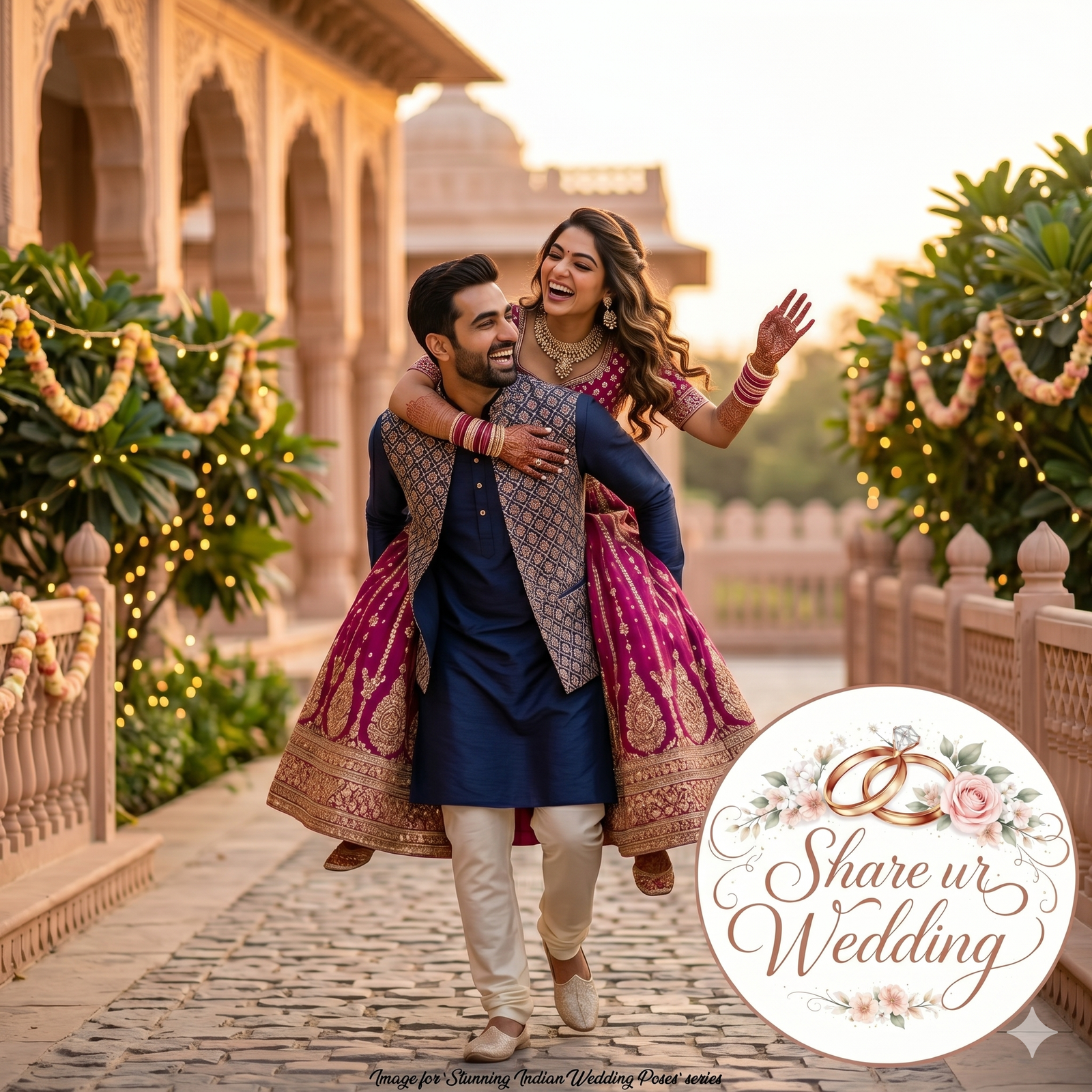
Direction: The bride climbs onto the groom’s back. Both look at the camera with genuine expressions — or the bride leans into the groom’s neck while he looks at the camera. The photographer captures from the front or slightly side-on.
Why it works: Playful physical interaction produces photographs with a completely different energy from romantic poses — lighter, more joyful, and often surprisingly beautiful. The height difference also creates an interesting compositional dynamic.
Best for: Open outdoor space. Works brilliantly at golden hour.
35. The Joota Chupai (Shoe Stealing) Action Shot [CANDID — INDIA SPECIFIC]
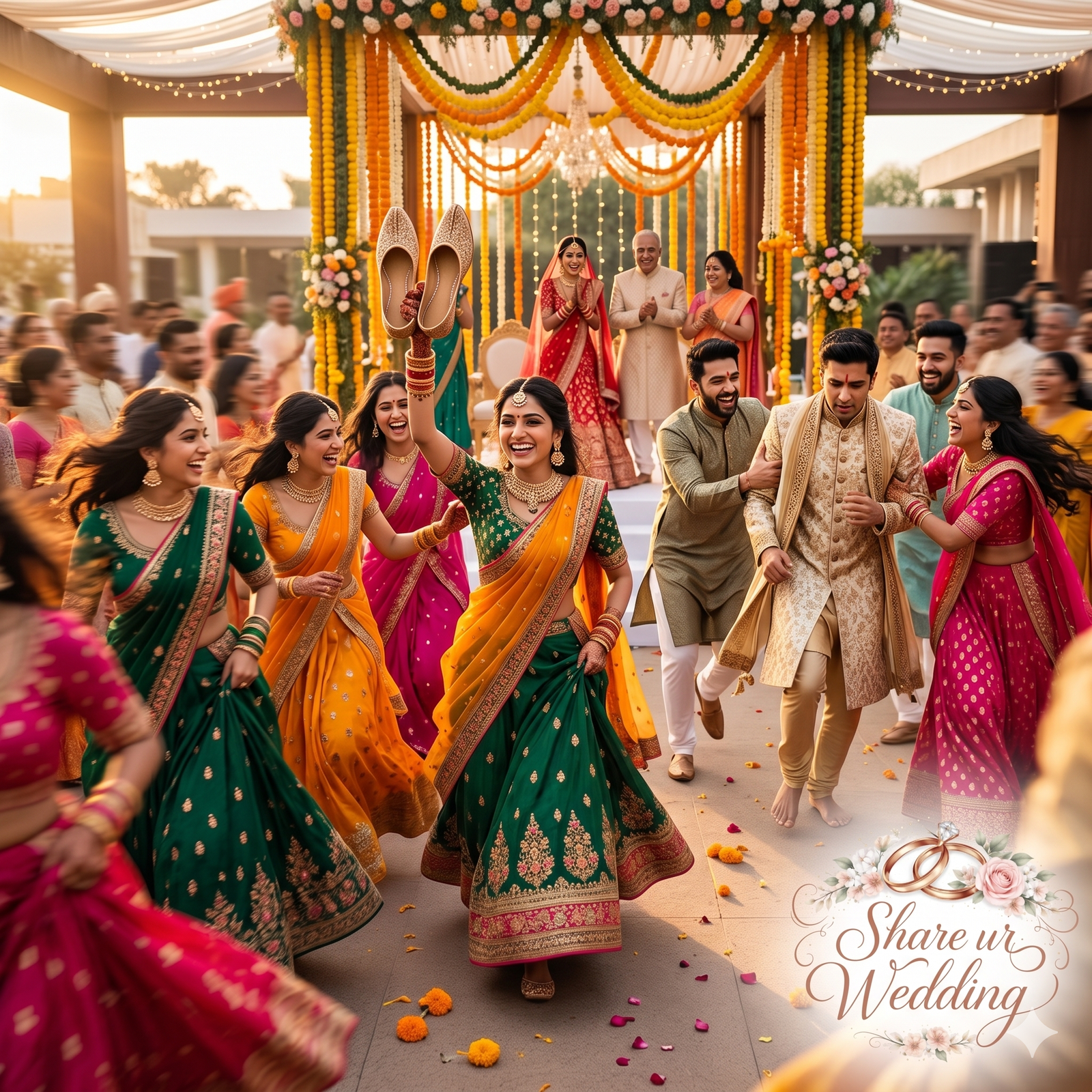
Direction: The photographer documents the classic North Indian wedding tradition — the bride’s sisters and female relatives stealing the groom’s shoes during the ceremony, while the groom and his friends try to prevent it. Pure action, burst mode.
Why it works: The joota chupai is one of the most joyfully chaotic traditions in Indian weddings — and it creates some of the most authentically fun photographs of the day. The laughter, scrambling, and negotiations are entirely natural.
Best for: During the ceremony — traditionally when the groom removes shoes to perform rituals.
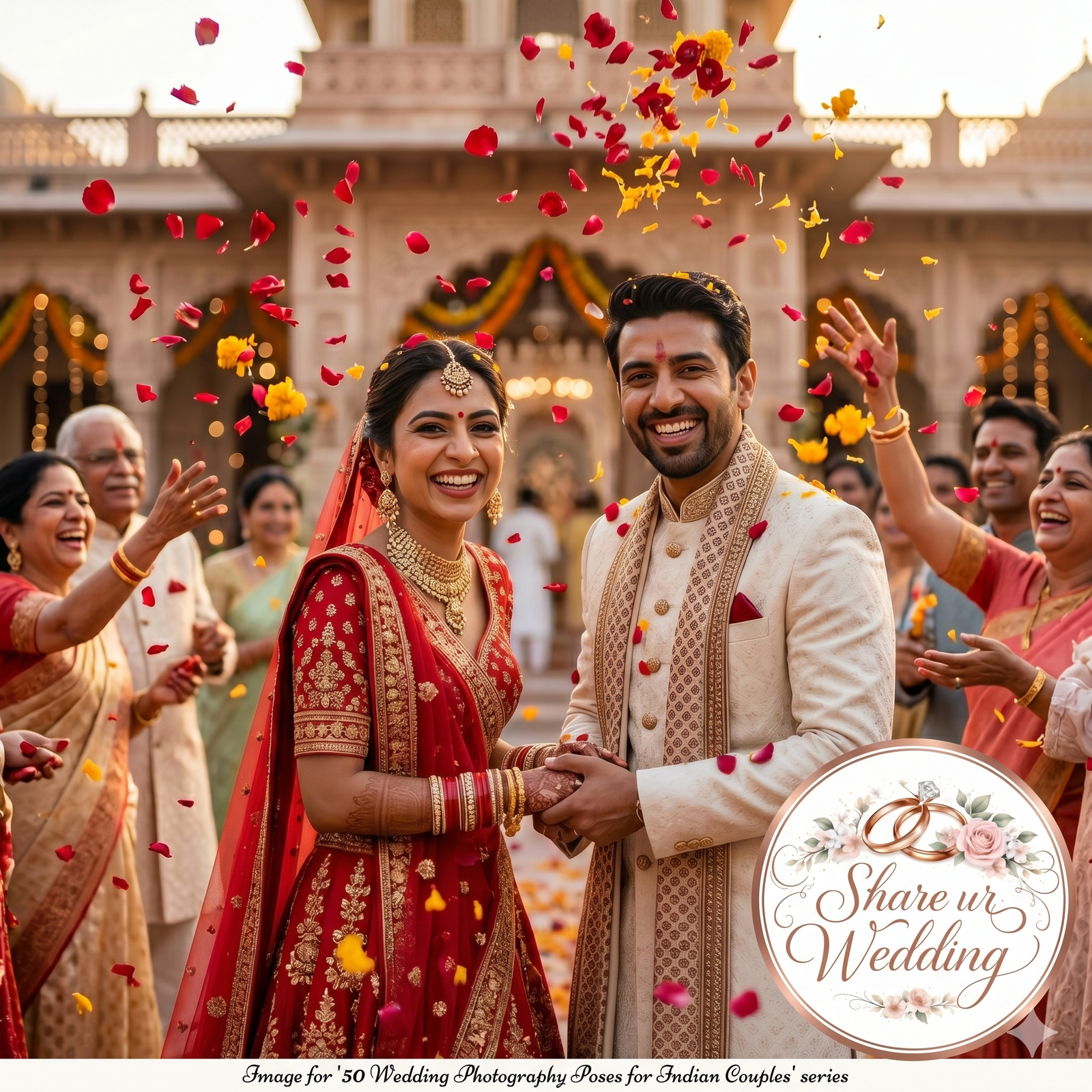
36. The Flower Petal Shower [CELEBRATION]
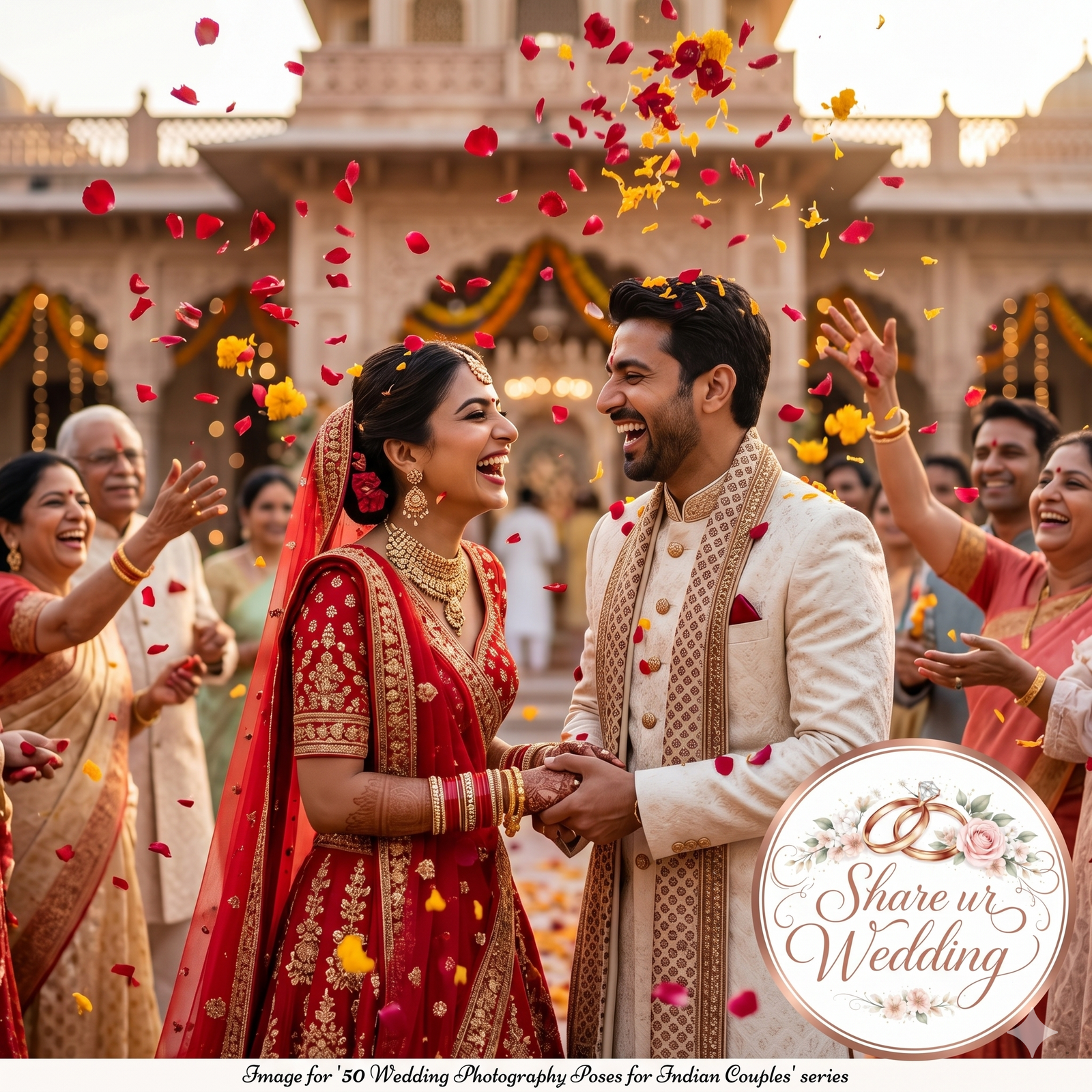
Direction: Ask family and friends to shower the couple with flower petals while the photographer captures the moment from slightly above in burst mode. The couple looks at each other or upward into the shower of petals.
Why it works: Photographs taken during a petal shower have a magical quality — the couple surrounded by colour and movement, framed by the expressions of the people who love them most. These are among the most visually spectacular wedding photographs possible.
Best for: Post-ceremony — coordinate with family or wedding coordinator in advance.
37. The Walking Away Hand-in-Hand [MOVEMENT]
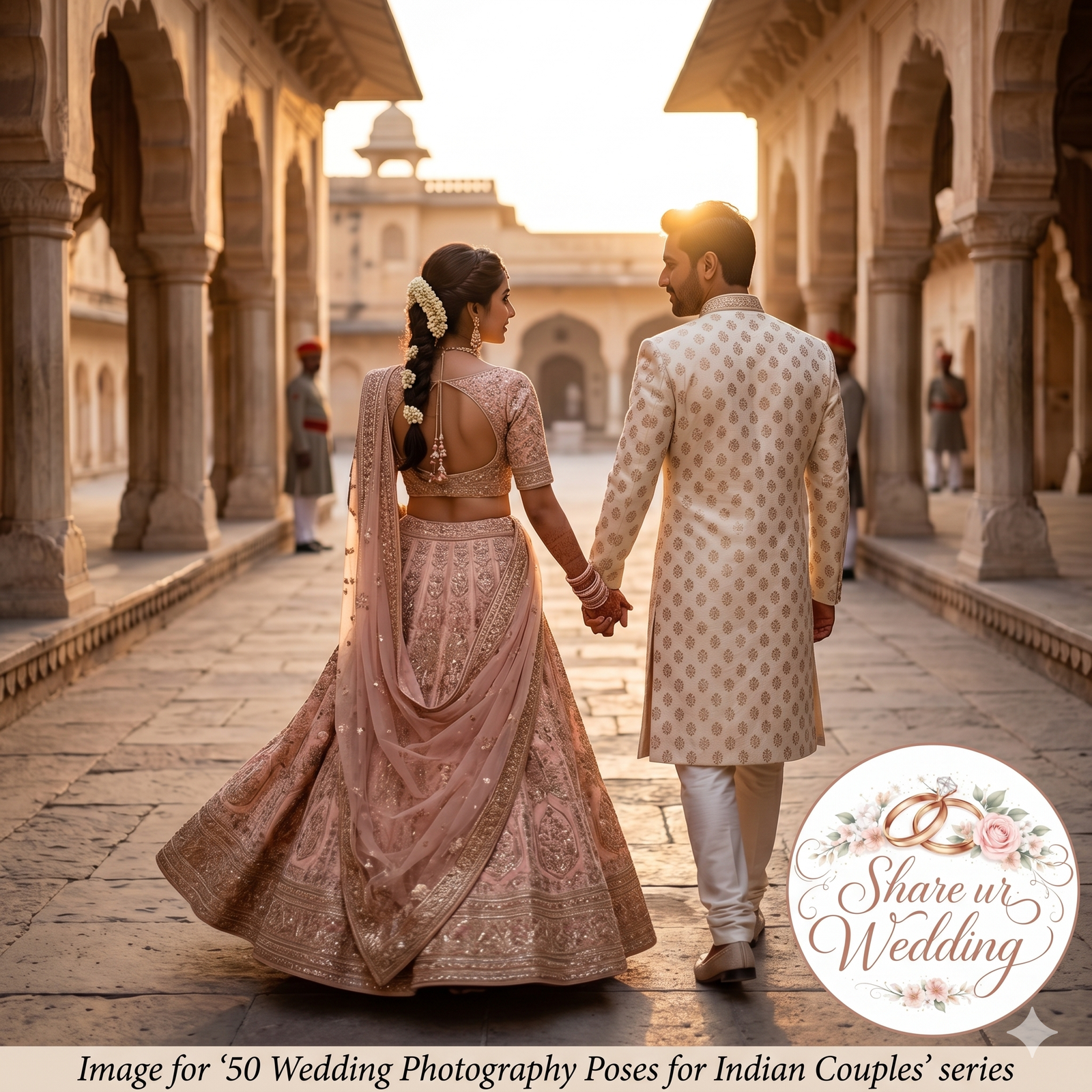
Direction: Walk away from the camera together — hand in hand — into an open landscape, down a path, or toward the venue. The photographer shoots from behind, capturing the back of both outfits and the vista ahead.
Why it works: Walking-away shots create a sense of narrative — the couple moving toward their future together. The back-of-outfit view also showcases the bridal blouse and the full length of the groom’s sherwani in a way that face-toward-camera shots cannot.
Best for: Open landscape, garden path, heritage venue courtyard.
38. The Look at Your Photographer’s Camera Together [2026 TREND]
Direction: Ask the photographer to let you both hold and look at the back of the camera at your own photographs. Capture the couple’s genuine reactions — surprise, joy, laughter — as they see themselves together.
Why it works: This 2026 trend — couples photographing each other with the professional’s camera — produces completely authentic, unguarded expressions. The resulting images of two people genuinely delighted by their own photographs are deeply touching.
Best for: During the couple portrait session — works as a lighthearted mid-session reset.
39. The Nose Scrunch Laugh [CANDID]
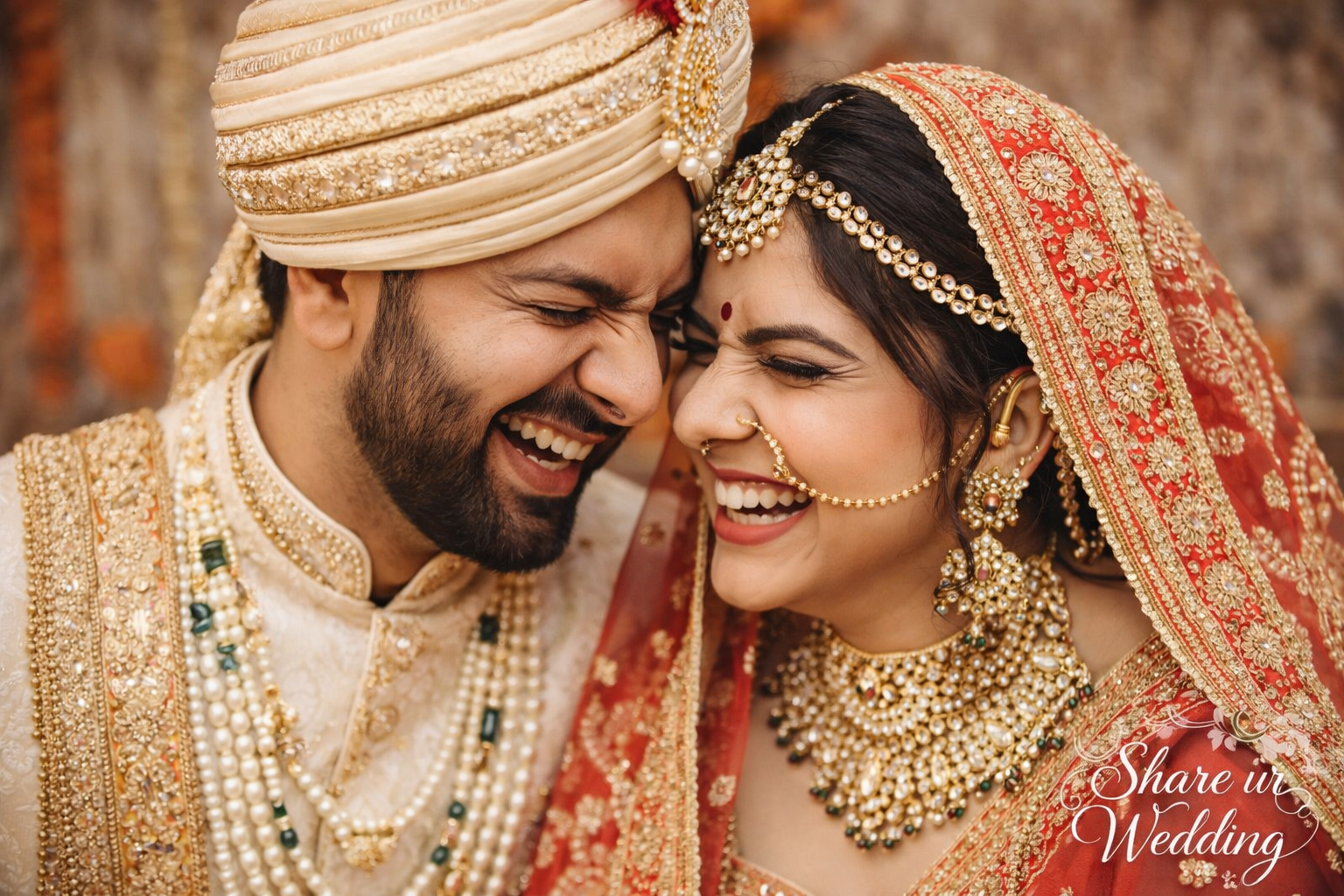
Direction: The photographer watches for and captures the involuntary nose-scrunch expression that appears during genuine, uninhibited laughter. No direction — simply creates conditions for real laughter and watches carefully.
Why it works: The nose-scrunch laugh is one of the most loved expressions in Indian wedding photography — completely authentic, completely personal, and impossible to fake. Couples who have these photographs in their albums consistently say they are their favourites.
Best for: Throughout the day — requires a photographer who observes quietly.
40. The First Look Reaction [EMOTIONAL CANDID]
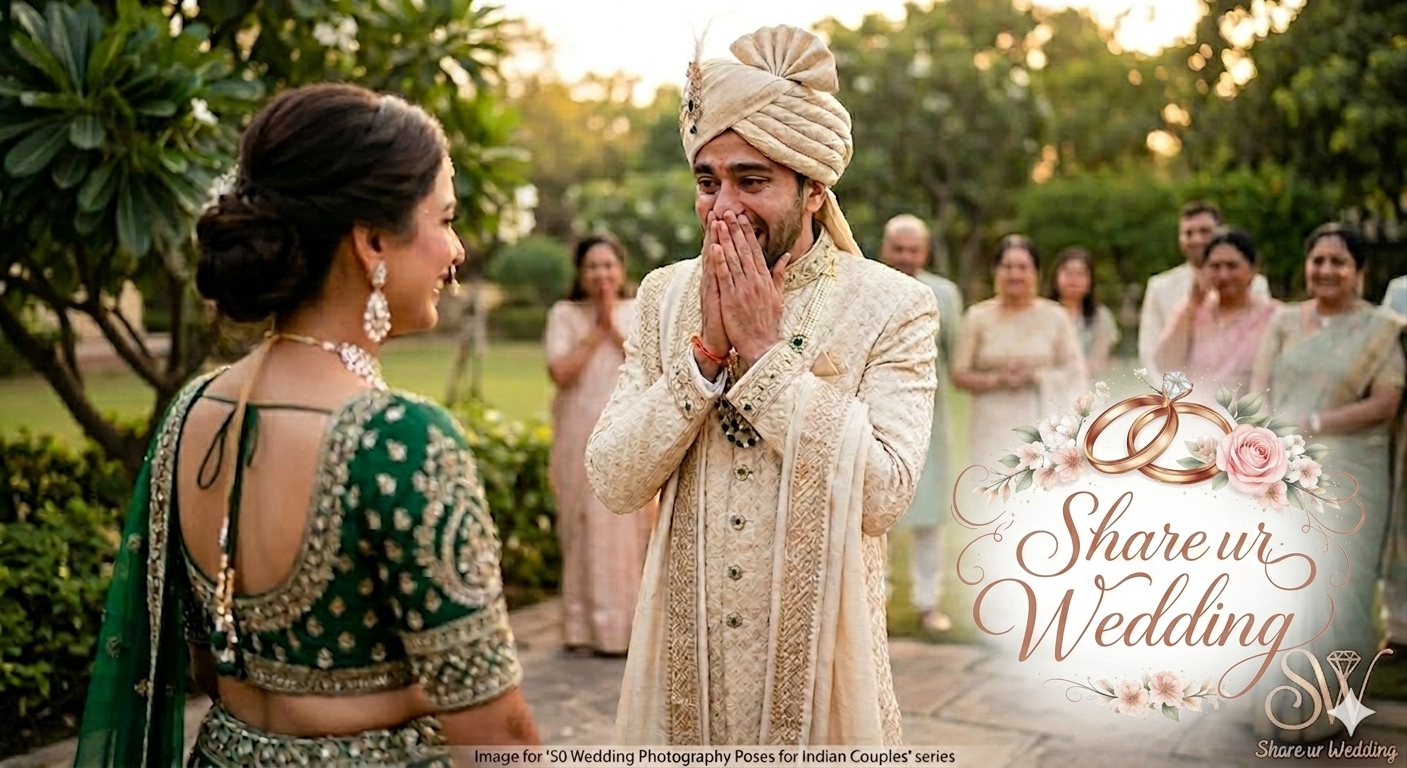
Direction: If you choose to do a first look before the ceremony — the groom waiting while the bride approaches from behind — the photographer captures the groom’s face at the exact moment he turns and sees the bride for the first time.
Why it works: First look photographs capture one of the rawest, most unguarded emotional moments of the entire wedding day — the groom seeing the bride for the first time in her wedding outfit. These photographs are consistently described by couples as among their absolute favourites.
Best for: Pre-ceremony, quiet location. Requires planning with photographer and coordinator.
Pre-Wedding and Engagement Photoshoot Poses — Poses 41 to 46
The pre-wedding shoot is your opportunity to get comfortable in front of the camera before your actual wedding day. Use this session to try poses and styles you are unsure about, to discover what feels natural, and to build a working relationship with your photographer before the pressure of the wedding day itself.
41. The Heritage Location Exploration [PRE-WEDDING]
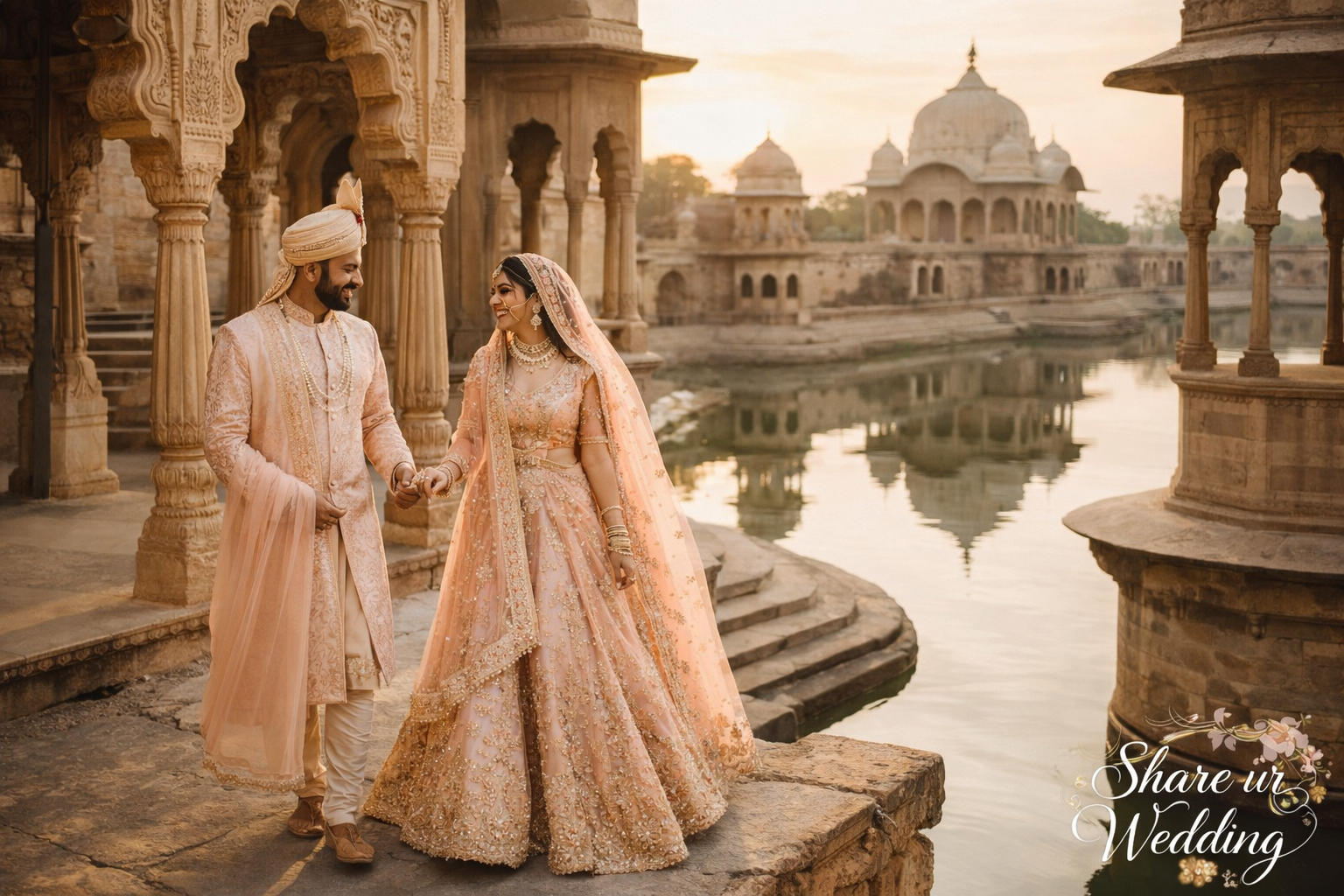
Direction: Walk through a heritage location — a fort, palace, old haveli, or botanical garden — naturally, as though exploring. The photographer follows and documents without direction. Turn toward each other when something catches your attention.
Why it works: Heritage location photographs have the editorial quality of a fashion magazine spread. The combination of contemporary outfits or contemporary Western clothing with historic architecture creates a visual contrast that photographs spectacularly.
Best for: Heritage sites, forts, palaces, gardens — plan well in advance for location permits.
42.The Sitting on Steps Together [PRE-WEDDING]
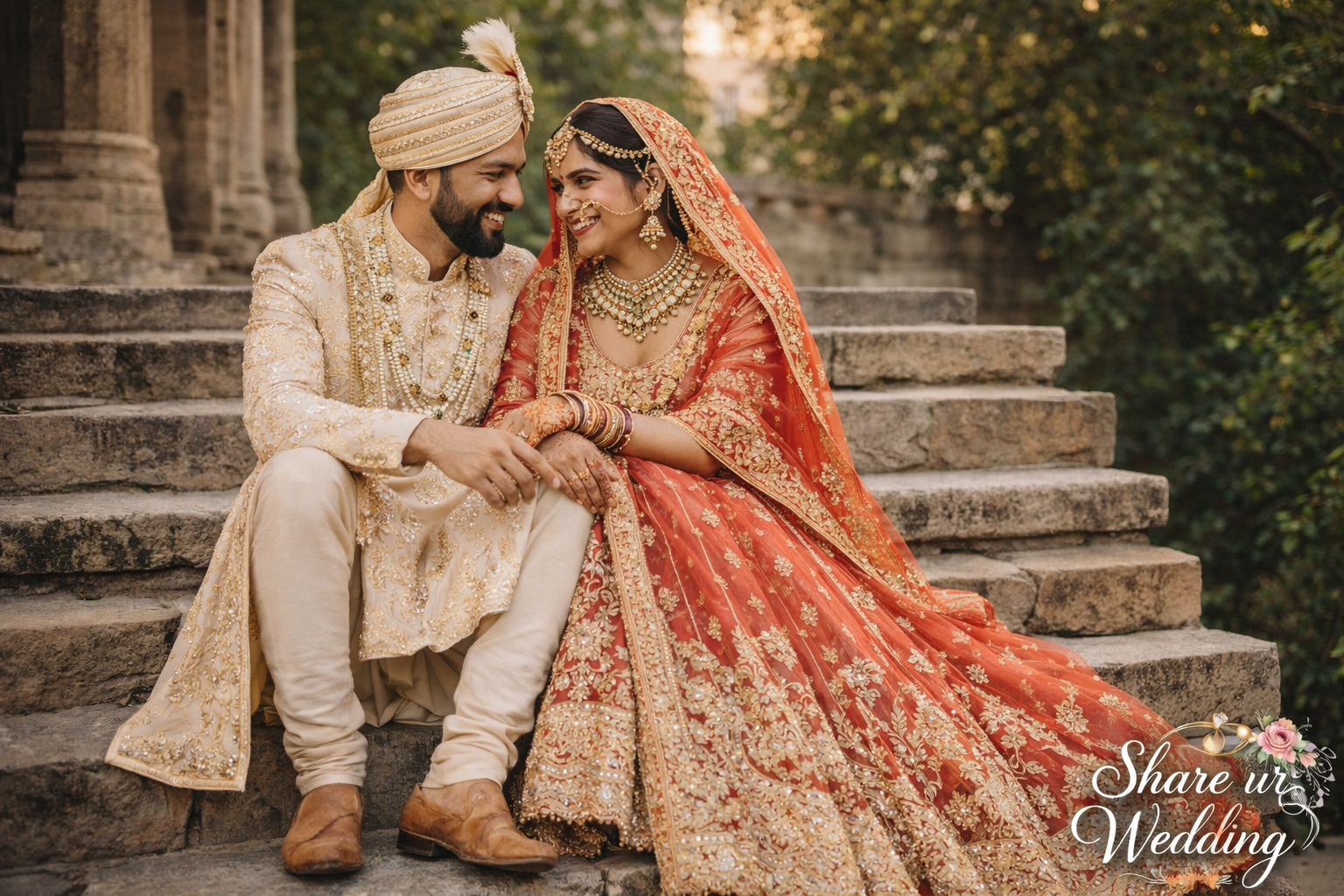
Direction: Find a beautiful staircase — in a heritage location, hotel, or venue. Sit together on the steps, bodies angled toward each other, hands naturally touching. The photographer shoots from above, straight on, or from below.
Why it works: Staircases provide natural compositional structure. The diagonal line of the steps creates visual dynamism, and the varying heights they create between partners add natural variety to portraits.
Best for: Heritage buildings, hotel grand staircases, outdoor amphitheatres.
43. The Meaningful Location Personal Portrait [PRE-WEDDING]
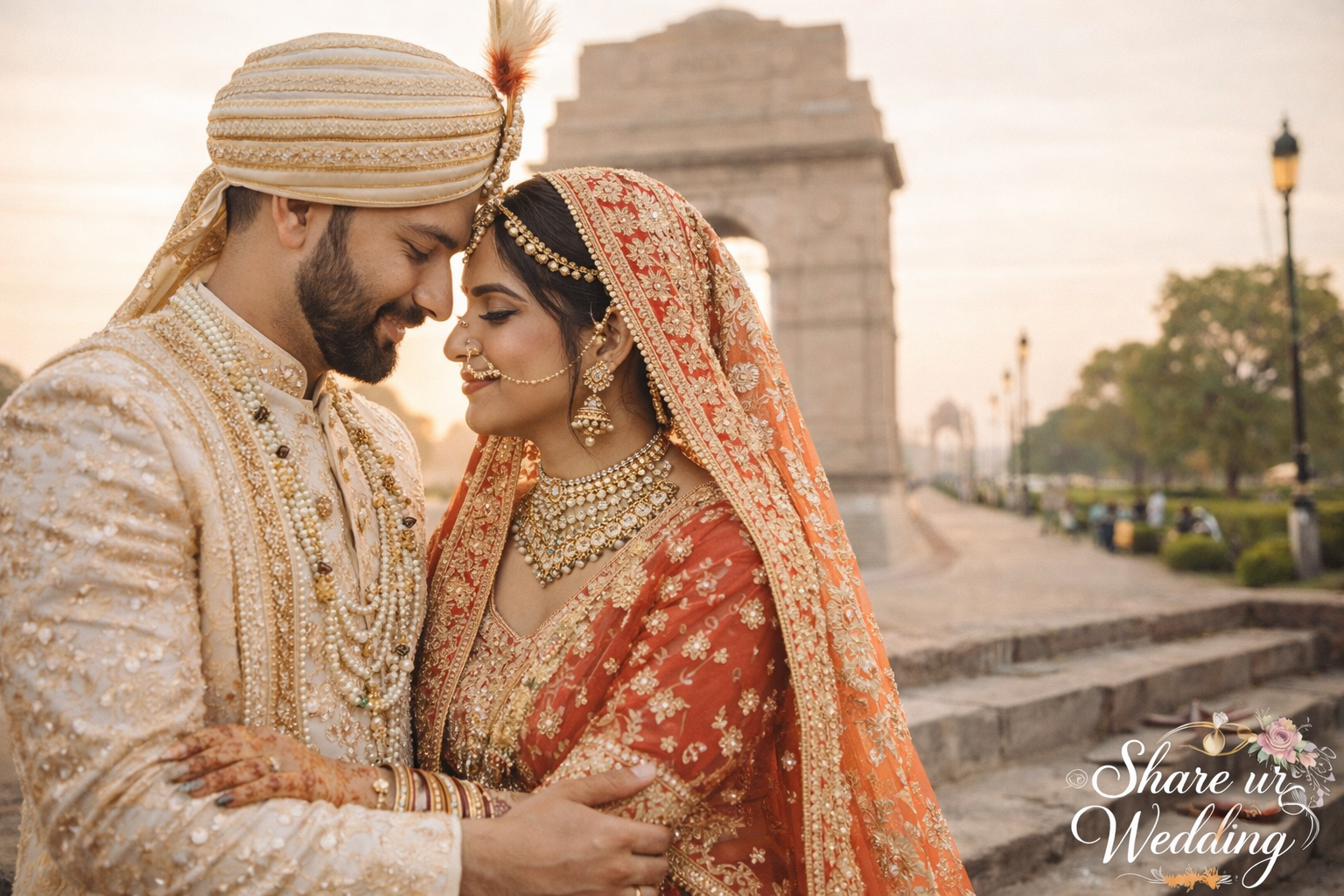
Direction: Choose a location that has personal meaning — the place you met, your favourite restaurant, a park you walk in. The photographs here will carry a private significance that generic location shoots cannot replicate.
Why it works: Personal location shoots create photographs with a depth of meaning that goes beyond visual beauty. The story behind the location adds emotional weight that the couple — and eventually their children — will value for decades.
Best for: Any location that means something specific to your relationship.
44. The Looking at Each Other Against Architecture [PRE-WEDDING EDITORIAL]
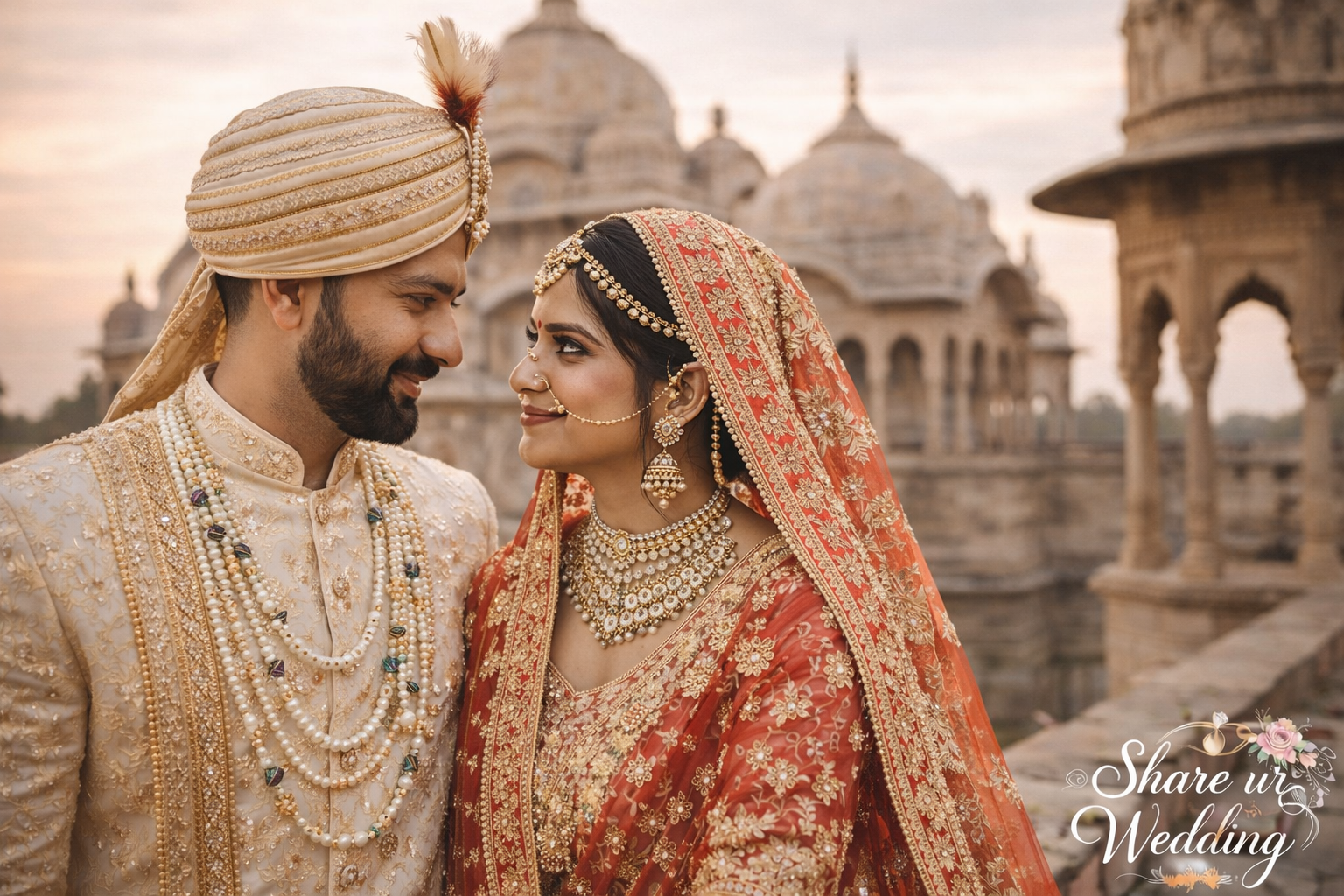
Direction: Stand facing each other with a dramatic architectural backdrop — arch, doorway, long corridor. The photographer shoots from a distance with a longer lens, compressing the background against the couple.
Why it works: Architectural framing creates natural compositional structure. The longer lens compresses depth and makes the background appear to wrap around the couple. This is a classic editorial technique that translates beautifully to wedding photography.
Best for: Arched doorways, long corridors, colonnades, heritage gateways.
45. The Candid Conversation Walk [CANDID]
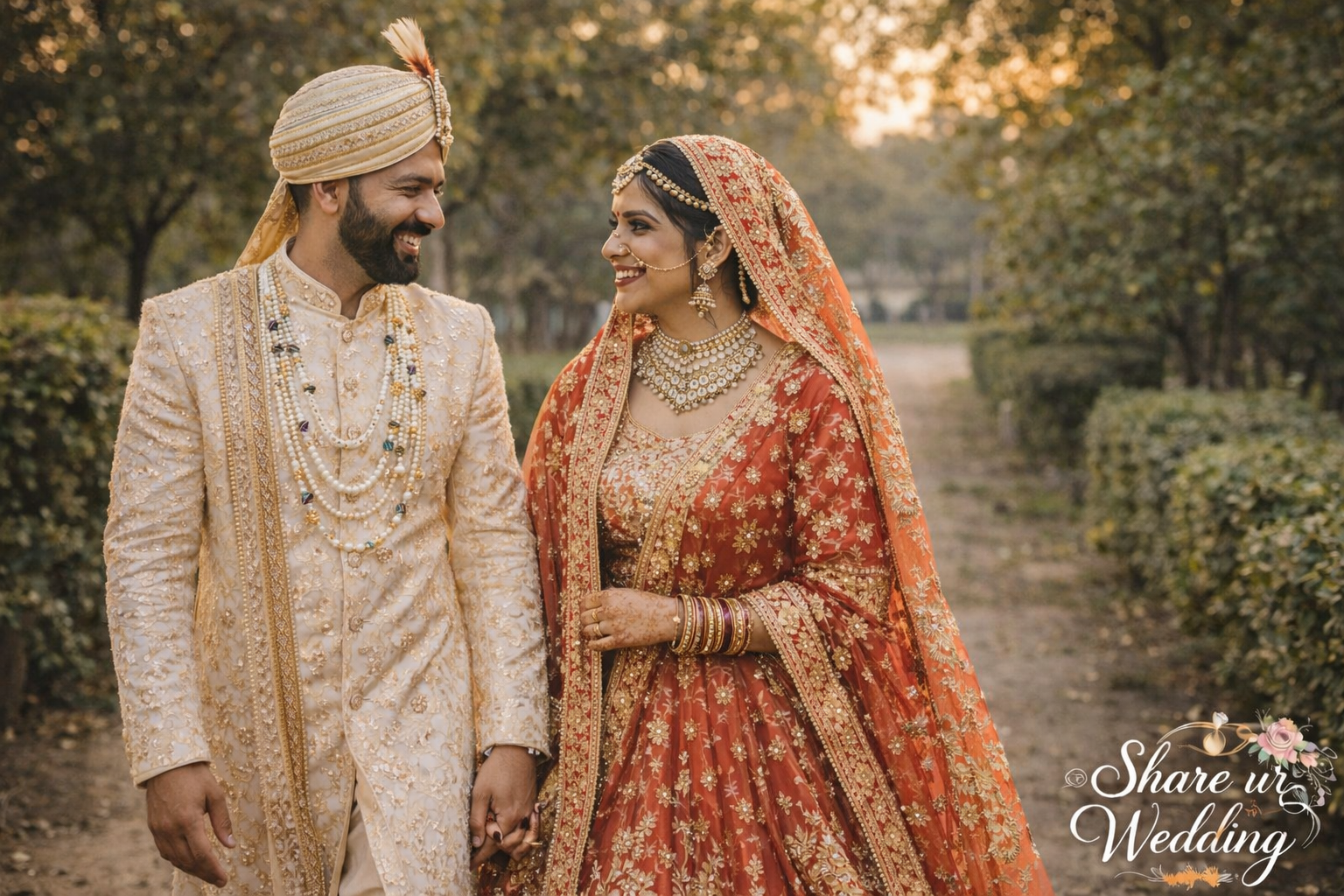
Direction: Walk together naturally while having a real conversation. The photographer stays 10–15 metres ahead, shooting with a longer lens. Do not look at the camera — simply talk and walk as you normally would.
Why it works: Candid conversation walks produce photographs that look genuinely unposed — because they are. The natural hand gestures, head positions, and expressions of real conversation cannot be replicated through direction. These photographs show how the couple actually relates to each other.
Best for: Any outdoor location with open walking space.
46.The Close-Up Detail Portrait [DETAIL]
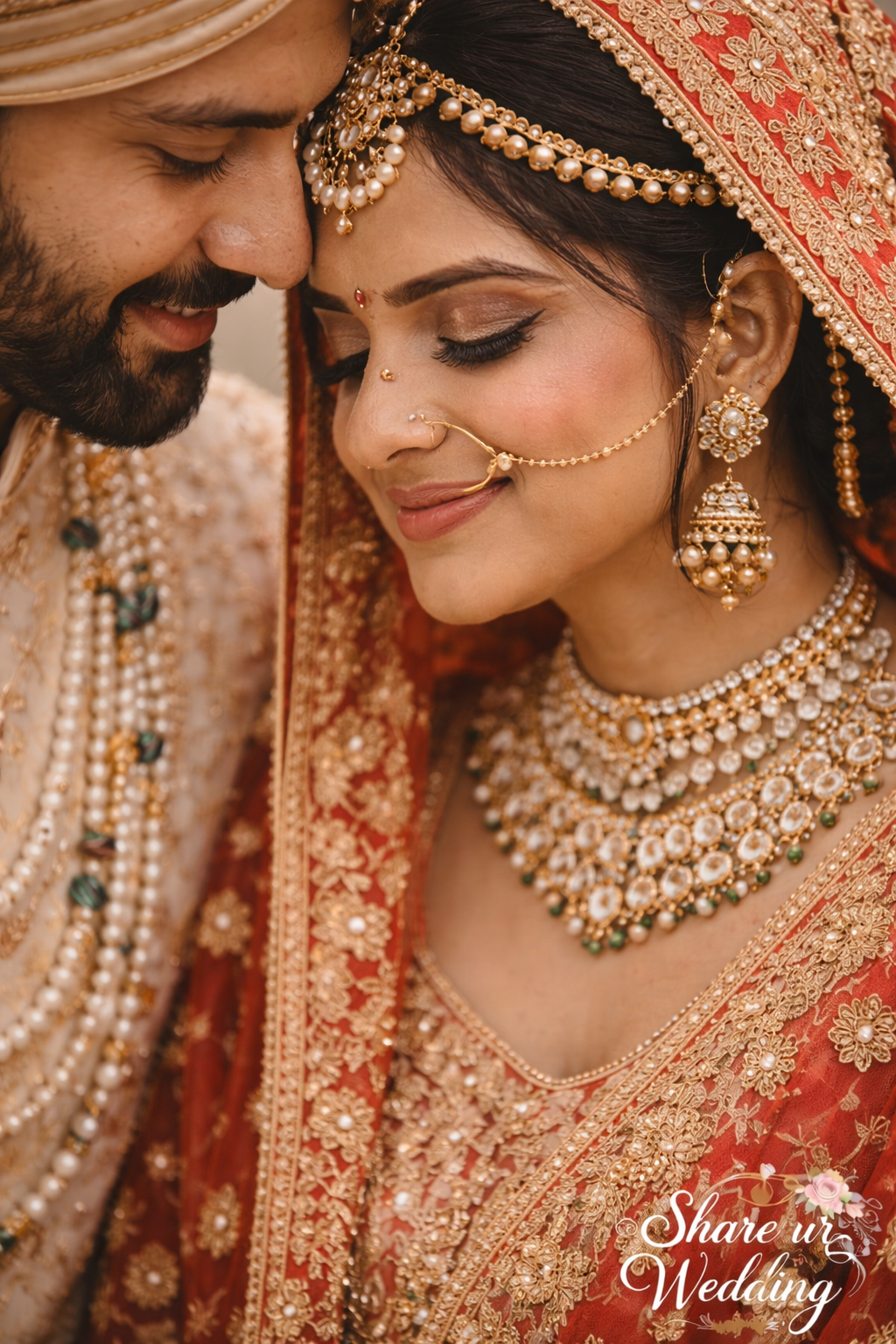
Direction: The photographer captures extreme close-ups: intertwined hands, the engagement ring, mehndi details, the groom’s watch beside the bride’s bangles, eyes, or jewellery against fabric. No direction — pure documentation.
Why it works: Close-up detail shots in a pre-wedding session create beautiful standalone images and provide the album designer with a variety of tight frames to balance against wider landscape shots.
Best for: Any well-lit location — these work in natural light anywhere.
Reception and Evening Event Poses — Poses 47 to 50
Reception photography has its own distinct character — warmer light, higher energy, more relaxed couples, and the full cast of the wedding’s guests gathered together for celebration. These four moments should always be on your reception photography shot list.
47.The First Dance Portrait [RECEPTION]
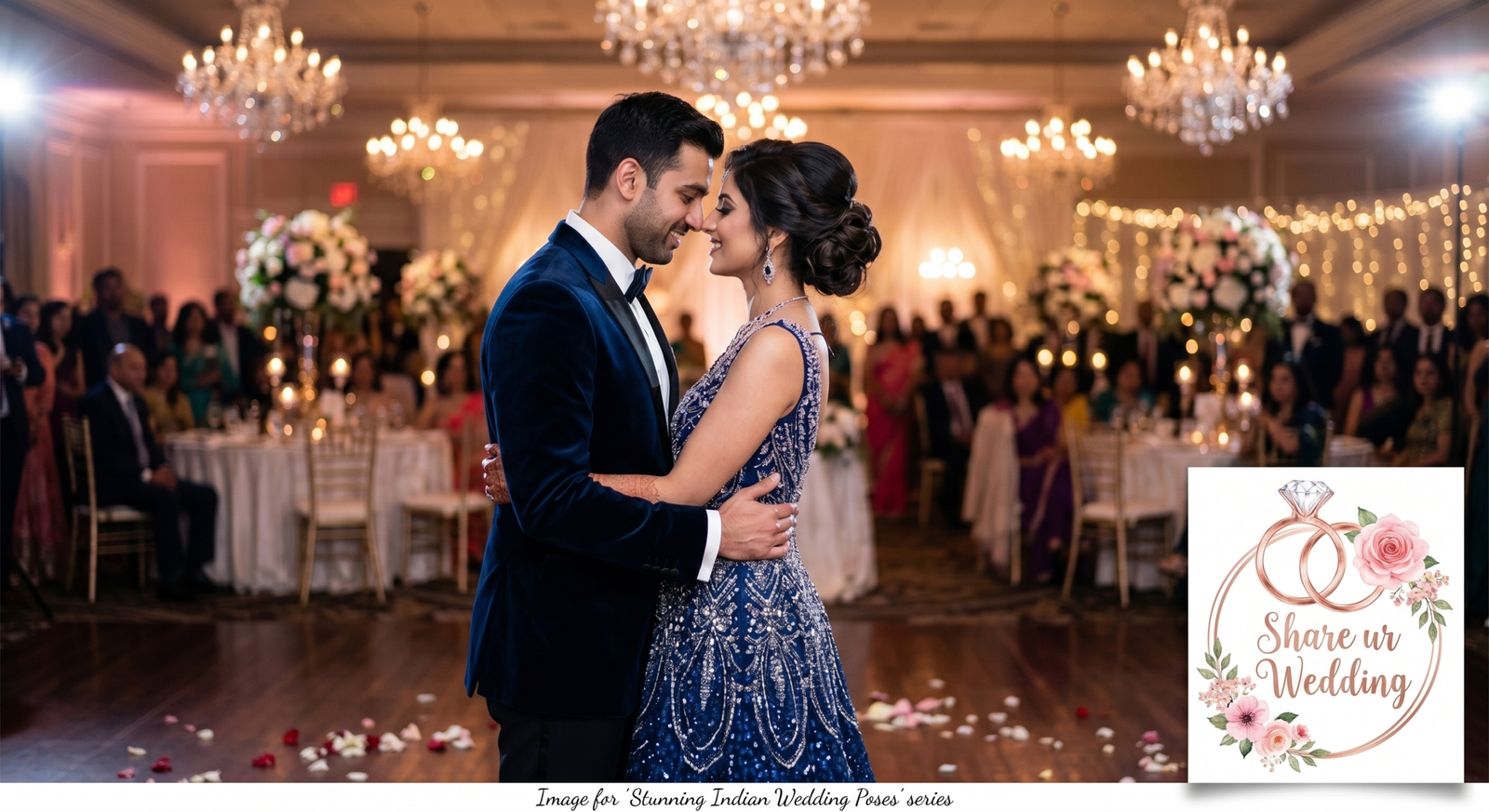
Direction: The photographer captures the first dance from multiple angles — close for the expressions, wide for the full dance floor context, and from a slightly elevated position for a cinematic overview. Slow shutter speed can be used selectively for motion blur.
Why it works: The first dance is one of the most consistently emotional moments of the reception — just the two of you, in a room full of the people you love, fully present with each other. Photographs from the first dance are among the most used in wedding albums.
Best for: During the first dance — plan the lighting with your venue and photographer in advance.
48. The Direct Flash Party Energy Shot [2026 TREND]
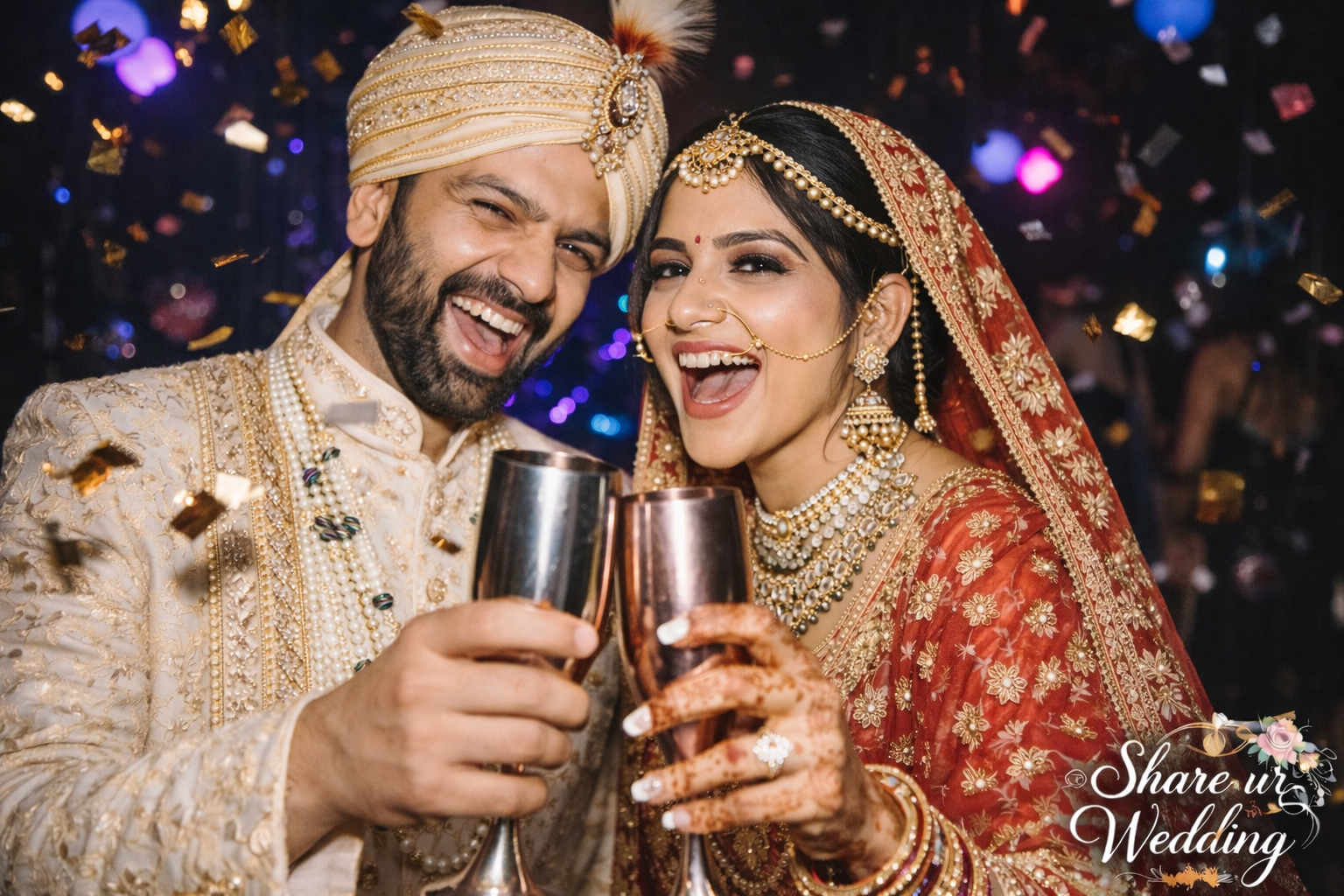
Direction: During dancing, toasts, or celebrations — the photographer uses direct on-camera flash to freeze high-energy moments: raised glasses, mid-dance laughter, group celebrations. High-contrast, bold, and full of energy.
Why it works: Direct flash reception photography is a deliberate 2026 trend — inspired by 1990s paparazzi and editorial photography. The bold, high-contrast results look deliberately stylistic and capture the energy of celebration better than ambient light alone.
Best for: Dance floor, toast moments, group celebrations — evening reception.
49. The Reception Couple Portrait [COUPLE PORTRAIT]
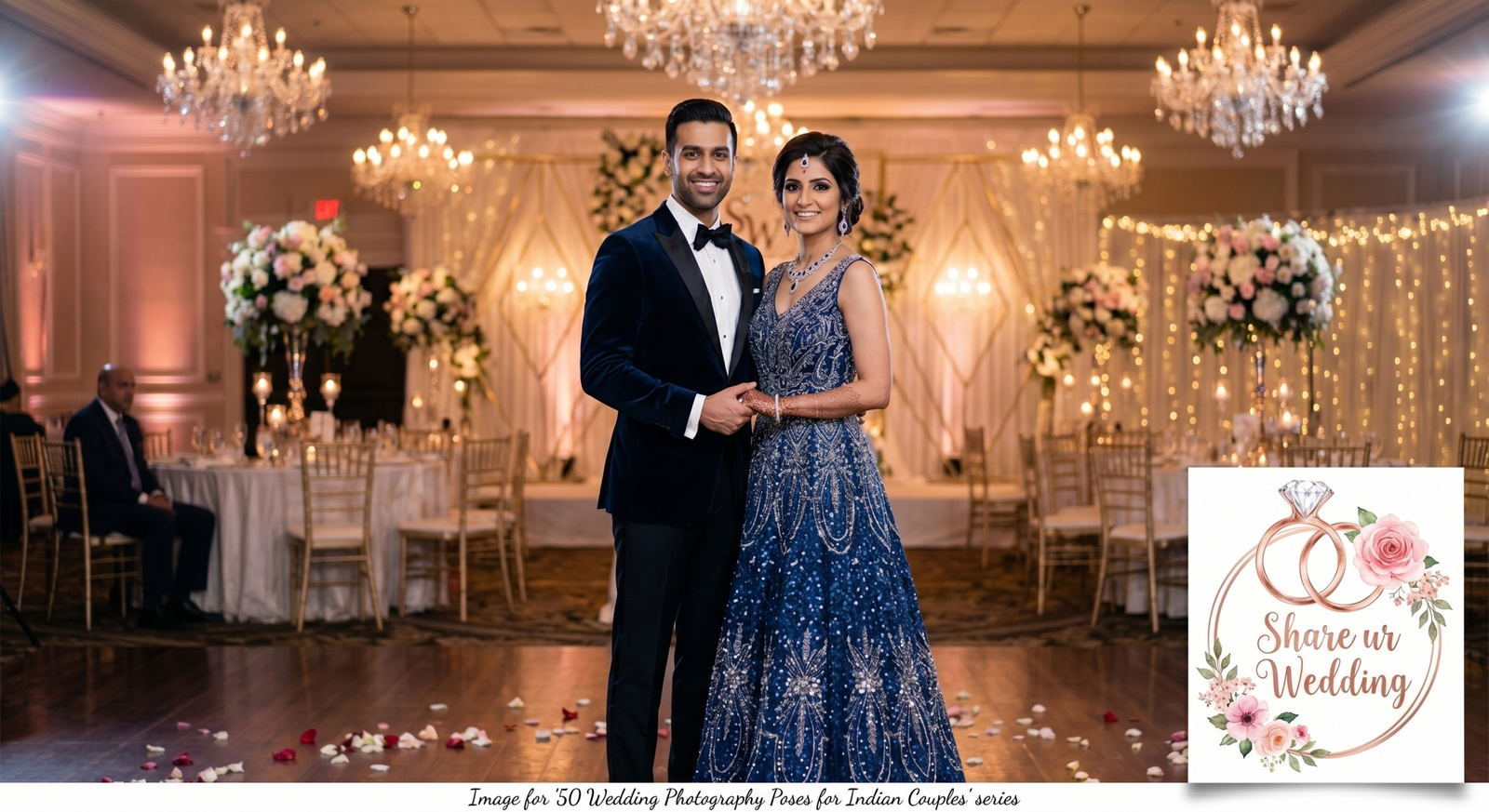
Direction: Step away from the reception for 10 minutes with your photographer for a final couple portrait — now in your reception outfit, with the venue lit in the evening light. A quiet, intimate portrait after the energy of the day.
Why it works: A reception couple portrait gives you photographs in your second outfit (if you changed) and in the unique evening light of the venue. These photographs have a different quality from golden hour shots — warmer, more intimate, and deeply post-celebration.
Best for: Venue exterior or quiet indoor spot — 30 minutes after the reception begins.
50. The Venue Wide Shot with Couple [VENUE]
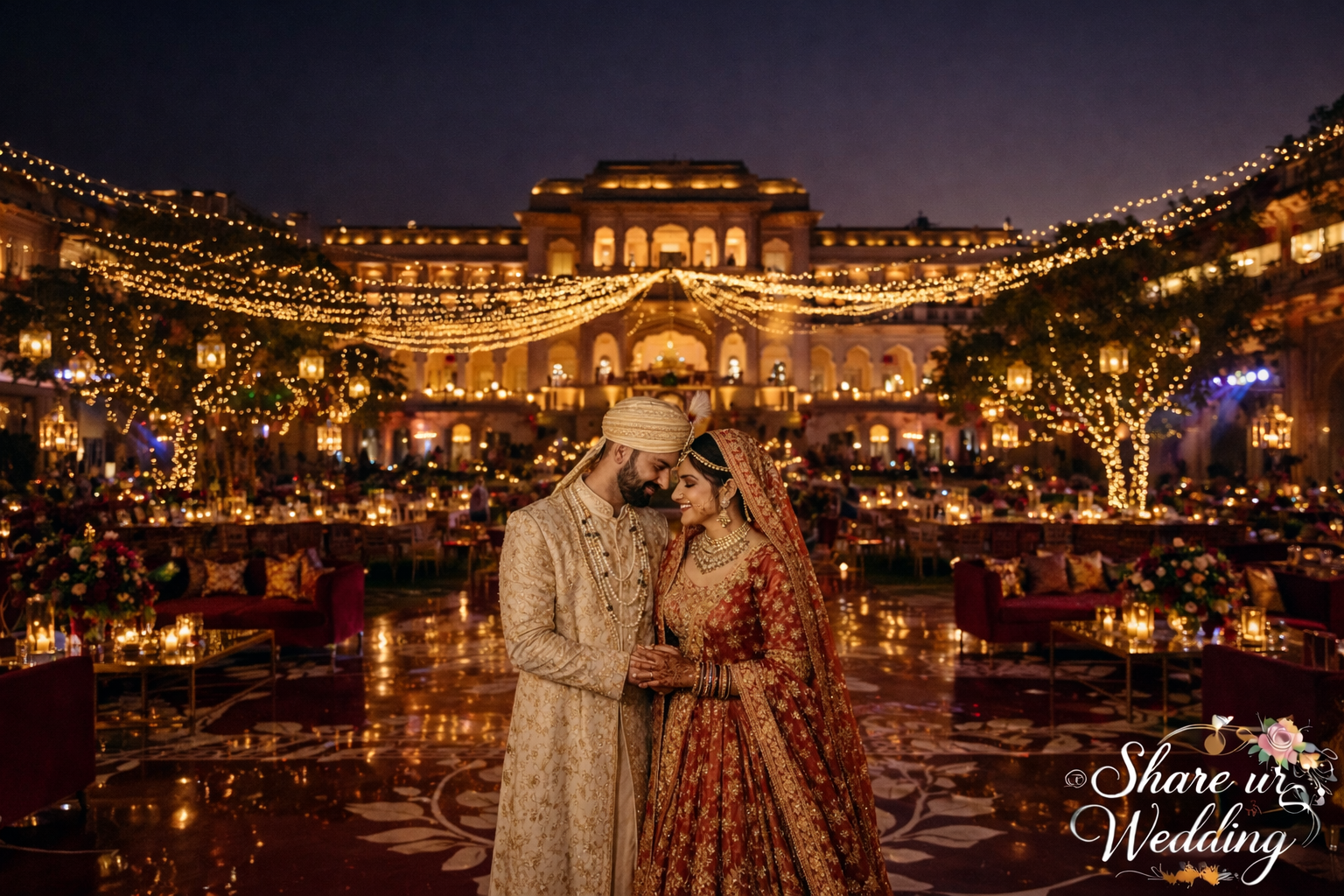
Direction: A final wide-angle shot of the full reception venue — with the couple as the focal point in the middle distance, surrounded by the full decoration, lighting, and atmosphere of the celebration. Shot from an elevated angle if possible.
Why it works: This photograph contextualises the entire reception — the scale of the event, the quality of the decoration, and the atmosphere of the evening — all in a single frame. It is a photograph that documents the wedding as a production, not just a moment.
Best for: Elevated position — balcony, staircase, or photographer’s ladder. Best at peak reception energy.
Your 25-Pose Must-Have Shot List to Share with Your Photographer
Print this list, circle your must-haves, and share it with your photographer at least two weeks before the wedding. Most photographers welcome a clear shot list — it helps them plan their positions throughout the day and ensures nothing important is missed.
| Priority | Pose | Event | Notes |
|---|---|---|---|
| Must-have | Dupatta veil overhead (Pose 1) | Getting ready | Need window light or outdoor morning light |
| Must-have | Mehndi hand close-up (Pose 2) | Post-mehndi / getting ready | Macro lens preferred |
| Must-have | Lehenga twirl (Pose 3) | Getting ready / couple session | Need open space for full rotation |
| Must-have | Sehra portrait (Pose 10) | Pre-baraat | Time-sensitive — before baraat begins |
| Must-have | Varmala action shot (Pose 15) | Ceremony | Burst mode. Photographer must be positioned in advance |
| Must-have | Sindoor moment (Pose 17) | Ceremony | Most time-sensitive shot of the day |
| Must-have | Phera walking shot (Pose 16) | Ceremony | Elevated angle to show fire in frame |
| Must-have | Seated mandap portrait (Pose 19) | Ceremony pause | Coordinate timing with pandit |
| Must-have | Elder blessing candid (Pose 20) | Post-ceremony | Photographer stays close after ceremony |
| Must-have | Golden hour silhouette (Pose 24) | Couple session | Need open sky — 30 mins before sunset |
| Must-have | Forehead touch (Pose 23) | Couple session | Tight composition — both faces in frame |
| Must-have | Groom twirling bride (Pose 26) | Couple session | Burst mode. Open outdoor space needed |
| Must-have | Genuine laugh shot (Pose 33) | Throughout day | Photographer creates conditions, not the laugh |
| Must-have | First dance portrait (Pose 47) | Reception | Multiple angles — discuss with venue on lighting |
| Want | Window light portrait (Pose 4) | Getting ready | Large window in bride's suite |
| Want | Post-ceremony couple at mandap (Pose 21) | Post-ceremony | Before guests crowd in |
| Want | Dupatta wrap together (Pose 27) | Couple session | India-specific — showcase dupatta |
| Want | Walking hand-in-hand away (Pose 37) | Couple session | Open landscape preferred |
| Want | Flower petal shower (Pose 36) | Post-ceremony | Coordinate with family/coordinator |
| Want | Joota chupai action (Pose 35) | During ceremony | Candid — photographer must know it's happening |
| Want | Baraat candid (Pose 13) | Baraat | Pure candid — burst mode throughout baraat |
| Want | Reception couple portrait (Pose 49) | Reception | 10 minutes away from reception — plan this break |
| Optional | Back-to-back lean (Pose 29) | Couple session | Good for editorial style lovers |
| Optional | Direct flash party shot (Pose 48) | Reception | Discuss style with photographer — deliberate aesthetic |
| Optional | Venue wide shot (Pose 50) | Reception | Need elevated position — check venue logistics |
Frequently Asked Questions
What are the best poses for Indian wedding photography?
The most essential Indian wedding photography poses are the varmala (garland exchange) action shot, the sindoor application close-up, the phera walking shot around the sacred fire, the dupatta veil overhead solo bridal portrait, the golden hour silhouette, and the forehead touch couple portrait. For Indian-specific shots, also ensure you capture the sehra portrait of the groom before the baraat, the joota chupai (shoe stealing) candid, and the elder blessing moment after the ceremony.
How do I pose for wedding photos if I am camera shy?
The best approach for camera-shy couples is to focus on doing rather than posing. Walk together, have a real conversation, laugh at something genuine — let the photographer capture you in motion and interaction rather than standing still. Discuss your camera shyness with your photographer before the wedding. Good photographers are skilled at making nervous couples feel natural. Also consider a pre-wedding photoshoot — spending time in front of the camera before the wedding day significantly reduces self-consciousness on the day itself.
What poses are good for Indian wedding photography in particular?
Indian wedding photography has pose opportunities that are completely unique to the culture. The dupatta veil shot, dupatta wrap together pose, varmala garland exchange, phera walking shot around the sacred fire, sindoor application close-up, joota chupai (shoe-stealing) candid, sehra portrait, and mandap couple portrait are all distinctly Indian. For South Indian weddings, the thaali-tying moment and maalai exchange are equivalent must-captures. Many of these ritual moments are time-sensitive and cannot be recreated — your photographer must be briefed on the ceremony sequence in advance.
How many poses should I plan for my wedding shoot?
Plan a must-have list of 10–15 specific poses and share it with your photographer. Beyond that, let your photographer work candidly. Trying to achieve 50 different poses creates pressure and produces stiff, formal photographs. The goal is to document real moments, not perform a series of positions. The 15-pose shot list covers your essential bases while leaving the majority of the day free for candid, authentic photography. Schedule one dedicated 25–30 minute golden hour couple session for your portrait work.
What is the best time of day for wedding couple photos?
Golden hour — the 30–60 minutes before sunset — is universally the best time for outdoor couple portraits. The light is warm, soft, and directional, making skin tones look beautiful and creating natural depth in photographs. Early morning light (within the first hour after sunrise) is equally beautiful but less practical for most wedding day schedules. Avoid midday outdoor photography if possible — the harsh overhead light creates unflattering shadows and causes couples to squint. For indoor photography, large-window natural light at any time of day produces beautiful results.
Final Thoughts: The Photographs That Last
The 50 poses in this guide are just the beginning, not a set of rules to follow. You see, the most amazing wedding photos – the ones that people love and treasure for years to come, and even pass down to their kids – aren’t the ones where everything is perfect and staged. They’re the ones where something genuine and special is happening, where the couple is being themselves and enjoying the moment.
To make the most of your special moments, create a list of must-have shots and share it with your photographer. This way, you can be sure they know what’s important to you. But on the big day, put the list aside and just enjoy the moment. The best photos are often the ones taken when you’re not even thinking about the camera, like when you’re laughing or lost in the moment. These candid shots can be truly magical, and they’re often the ones that capture the real essence of your celebration. So, let your photographer do their thing, and just be present – the results will be well worth it.
Your wedding photographs will be the way you remember this day in twenty years. Make sure they look like you.
The best wedding photograph is the one where you look at it twenty years later and say: ‘That is exactly how it felt.’