

Your bridal lehenga is not just an outfit. It is the single most photographed garment you will ever wear, the piece your partner will see when you walk down the aisle, and the heirloom your daughter may wear one day. Choosing the right bridal lehenga design is one of the most personal, most meaningful decisions in all of wedding planning.
In 2026, bridal lehenga design is at a fascinating crossroads. Traditional craftsmanship — zardozi, kundan embroidery, gota patti, and banarasi weaves — is being reimagined with contemporary silhouettes, unexpected colour choices, and lighter, more wearable fabrics.
This guide covers 40 bridal lehenga designs across every style, body type, budget, and regional tradition — so you can walk into your first bridal shopping appointment knowing exactly what to look for.
Most Trending Bridal Lehenga Designs of 2026
These are the designs dominating bridal collections, social media feeds, and real wedding photography in 2026. Each one has been chosen for its staying power — these are not one-season trends but styles that will look as beautiful in photographs ten years from now.
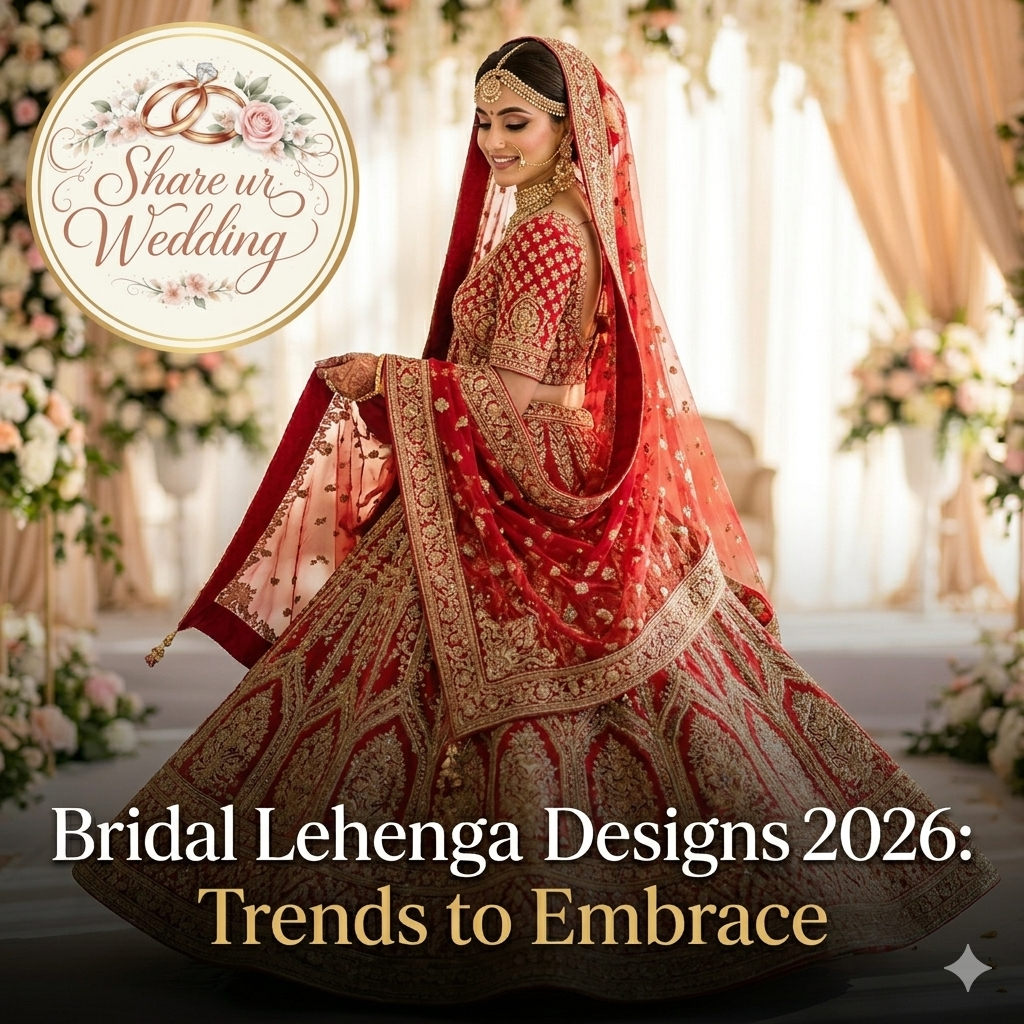
1. Classic Red Bridal Lehenga with Zardozi Work
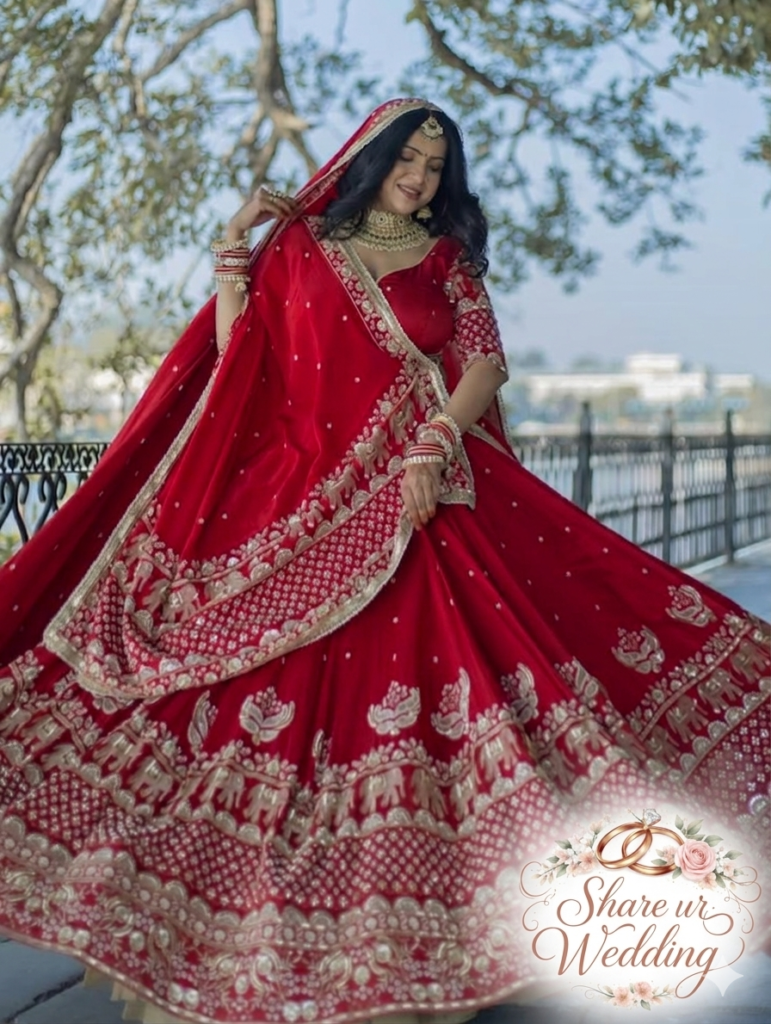
The red bridal lehenga is the most iconic choice in Indian wedding fashion and it shows no signs of fading. In 2026, the classic red is being updated with lighter fabrics — georgette and soft net replacing heavy silk bases — while keeping the intricate gold zardozi threadwork that makes it timeless. Look for lehengas where the zardozi work is hand-stitched, not machine-printed, for authenticity and value.
-
Best for: Traditional Hindu ceremonies, North Indian weddings, all body types.
-
Colors: Red, deep crimson, ruby, scarlet.
-
Fabric: Georgette, soft net, raw silk.
2. Pastel Ombre Bridal Lehenga
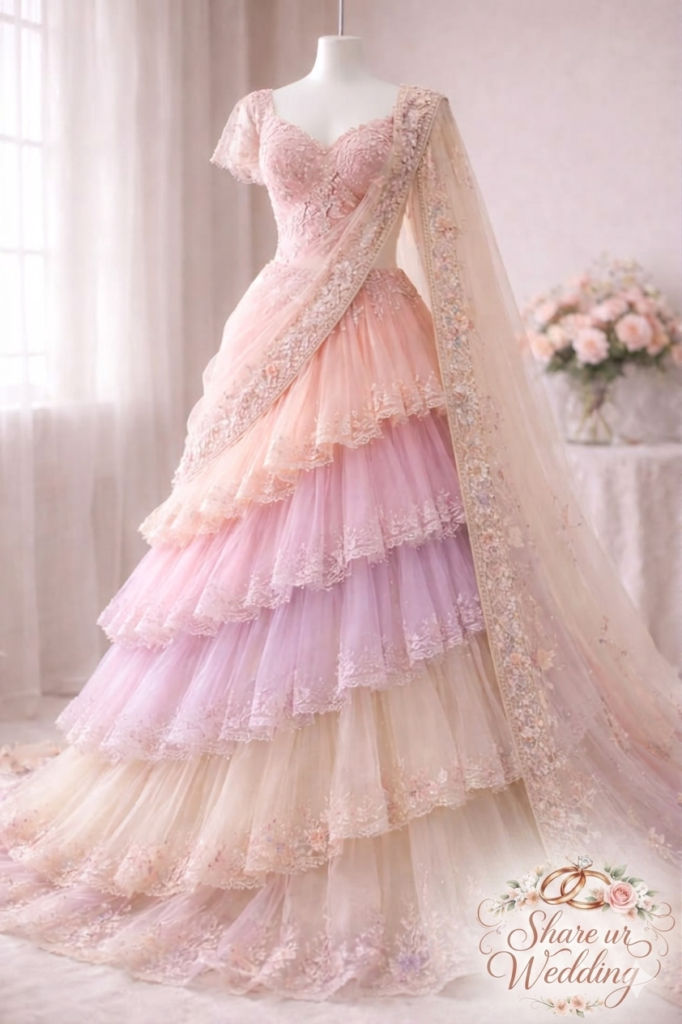
Ombre bridal lehengas — where the skirt transitions from one colour to another from hem to waist — are one of the defining bridal trends of 2026. Brides are choosing gentle fades from blush to ivory, lilac to white, or peach to gold. This style photographs beautifully and works across a wide range of ceremony settings. The key to an ombre lehenga that looks luxurious rather than costume-like is the quality of the dye gradient — look for a seamless blend, not visible bands of colour.
-
Best for: Outdoor and garden weddings, contemporary brides, photography-focused couples.
-
Colors: Blush to ivory, lilac to white, peach to champagne, mint to sage.
-
Fabric: Georgette, organza, soft tulle.
3. Minimalist Off-White Bridal Lehenga
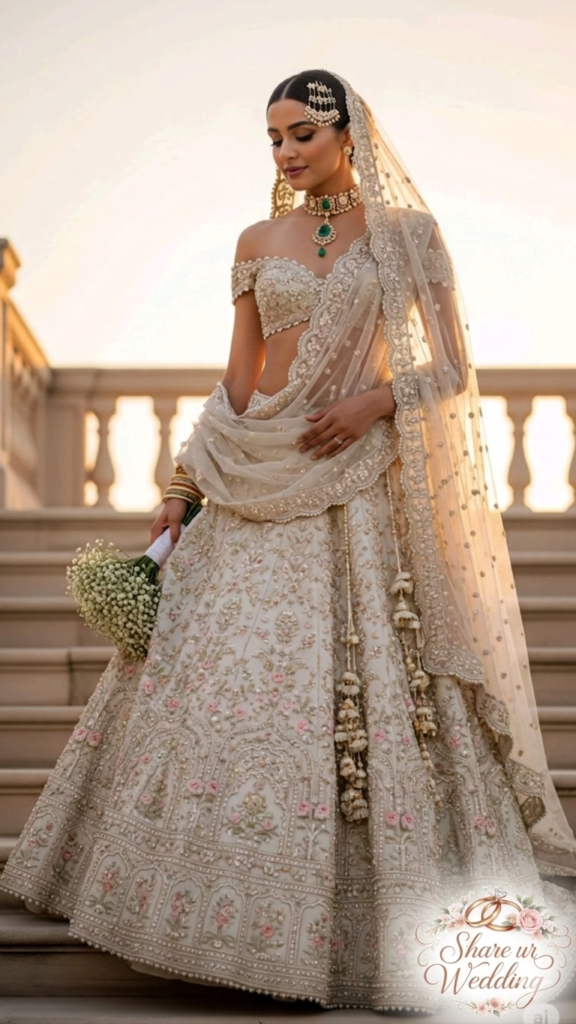
The off-white bridal lehenga has arrived in India with full force in 2026. What was once considered unconventional is now a sophisticated, confident choice for the modern Indian bride who wants something that feels personal and refined rather than prescribed by tradition. These lehengas rely on subtle tonal embroidery — ivory thread on ivory fabric, or soft silver mukaish work — rather than heavy decoration. The result is effortlessly elegant.
-
Best for: Modern urban brides, minimalist aesthetics, reception and cocktail events.
-
Colors: Off-white, ivory, cream, champagne, antique white.
-
Fabric: Raw silk, organza, chiffon, light brocade.
4. Deep Jewel Tone Lehenga (Emerald, Sapphire, Burgundy)
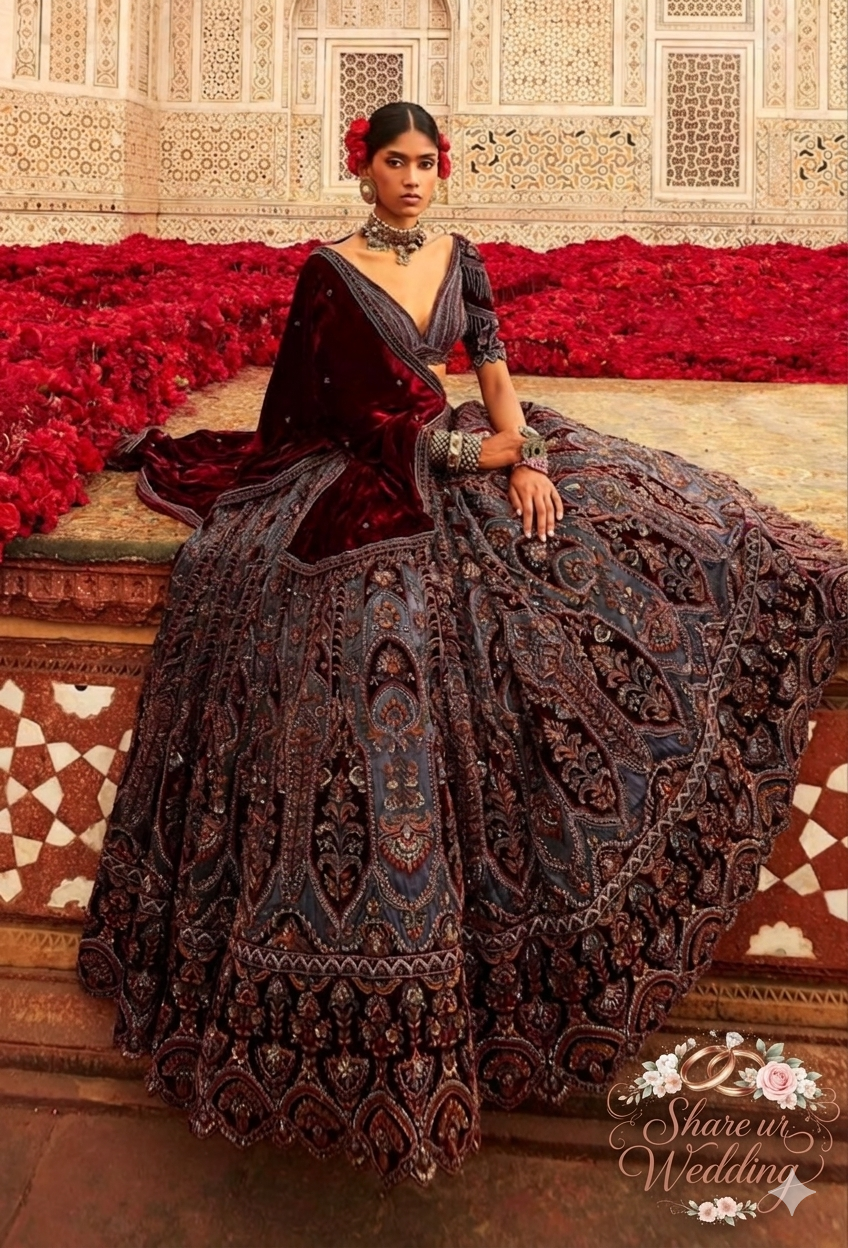
Deep, rich colours are a powerful bridal statement. Emerald green, sapphire blue, wine, and deep teal are all trending strongly in 2026 bridal collections — particularly for winter weddings and evening receptions. These colours pair magnificently with gold jewellery and photograph beautifully in both natural and artificial light. For brides with warm undertones, emerald and burgundy are particularly flattering. For cool undertones, sapphire and teal are striking choices.
-
Best for: Winter weddings, evening ceremonies, reception wear, bold and confident brides.
-
Colors: Emerald, sapphire blue, deep teal, burgundy, wine, forest green.
-
Fabric: Velvet, silk, heavy georgette, brocade
5. Banarasi Silk Bridal Lehenga
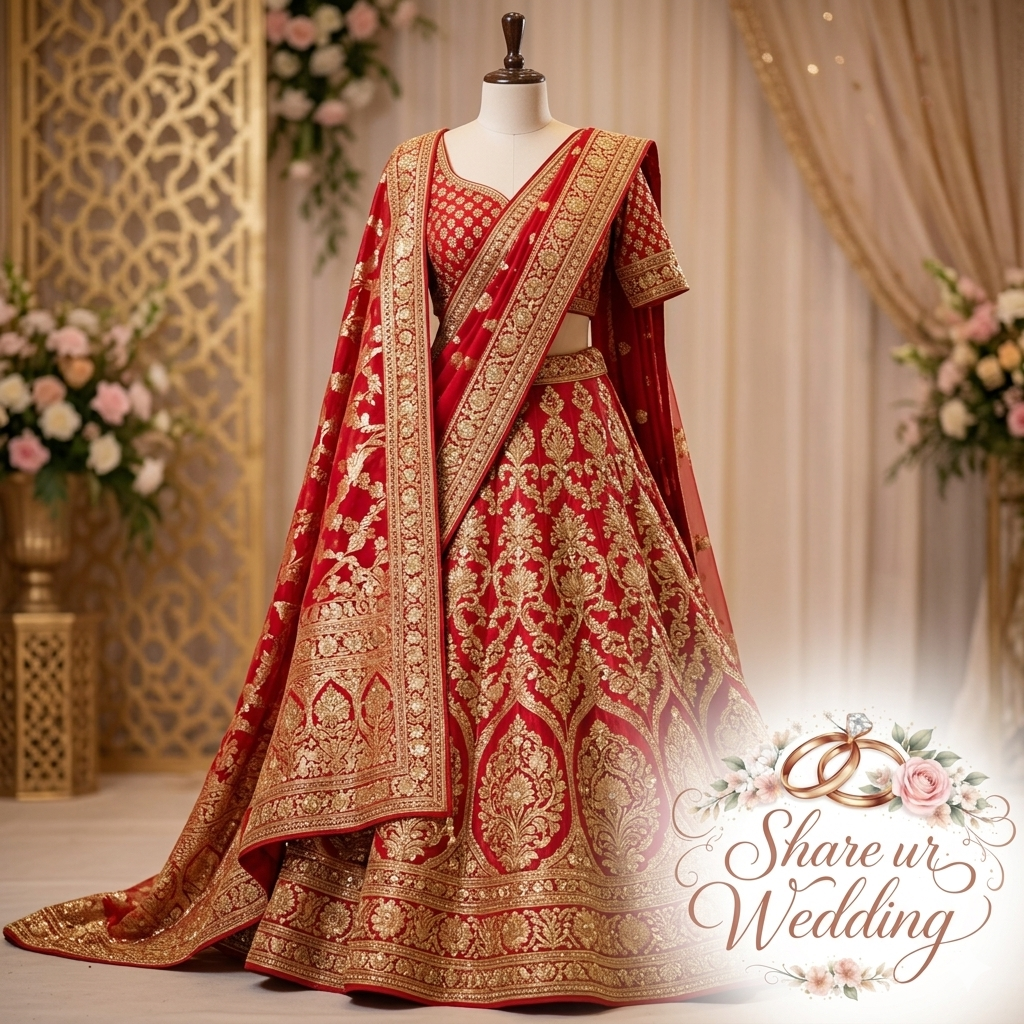
For brides who want to honour their cultural heritage in the most luxurious way possible, a Banarasi silk lehenga is unmatched. The Banarasi weave — characterised by its intricate brocade patterns woven directly into the silk using gold and silver zari threads — represents one of India’s greatest craft traditions. In 2026, designers are crafting Banarasi lehengas in non-traditional colourways: deep plum with gold zari, midnight blue with silver brocade, and forest green with antique gold work.
-
Best for: Traditional ceremonies, heritage-loving brides, formal events, winter weddings.
-
Colors: Red-gold, deep plum, midnight blue, forest green, ivory-gold.
-
Fabric: Pure Banarasi silk, katan silk, tissue silk.
6. 3D Floral Embroidered Lehenga
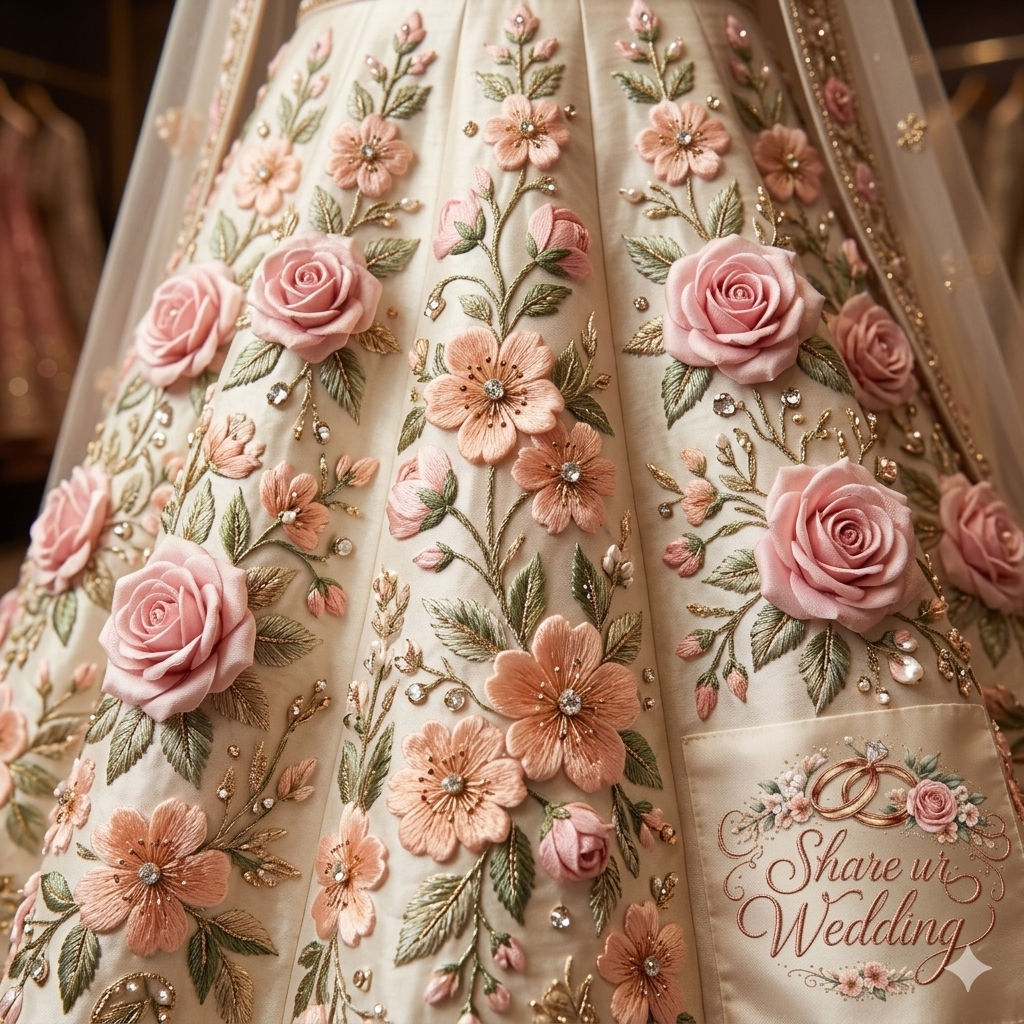
Three-dimensional floral embroidery — where embroidered flowers appear to stand out from the fabric — is one of the most visually spectacular bridal trends of 2026. Using techniques like knotwork, cutwork, and layered thread application, artisans create roses, jasmine, marigolds, and lotus motifs that seem to bloom directly from the fabric. These lehengas are showstoppers that command attention. They work best in lighter base colours — ivory, blush, and pale gold — where the texture of the embroidery can be fully appreciated.
-
Best for: Photo-forward brides, outdoor ceremonies, daytime weddings.
-
Colors: Ivory, blush, pale gold, mint, light coral.
-
Fabric: Net, organza, georgette base with layered embroidery.
Indian weddings span multiple events — each with its own dress code, atmosphere, and photographic context. The right bridal lehenga for your wedding ceremony may be completely wrong for your sangeet or reception. Here is how to approach each event.
| Wedding Event | Recommended Style | Key Considerations |
| Wedding Ceremony |
Classic red, deep jewel tones, or rich embroidered designs.
|
Prioritise craftsmanship over novelty. This will be in every formal photograph.
|
| Reception |
Pastel ombre, off-white, or lighter embroidered pieces.
|
You will wear this for 4–6 hours. Comfort and movement matter.
|
| Sangeet Night |
Bright, colourful, lighter lehenga.
|
Choose something you can move freely in. Avoid very heavy skirts.
|
| Mehndi Ceremony |
Yellow, green, or floral printed lehenga.
|
Typically lighter and more informal. Keep jewellery minimal.
|
| Cocktail / Pre-wedding |
Contemporary crop-top lehenga or shimmer base.
|
Experiment with modern silhouettes here. Save tradition for the ceremony.
|
Styling Tip: Many brides now plan two looks — a traditional heavy lehenga for the ceremony and a lighter, more contemporary piece for the reception. This is a growing trend in 2026 and it allows you to fully commit to both tradition and personal expression.
Best Bridal Lehenga Designs for Every Body Type
The most beautiful bridal lehenga is the one that makes you feel magnificent in your own skin. Understanding which silhouettes, waist placements, and embroidery distributions work for your body type is not about limiting your choices — it is about knowing which styles will photograph best and feel most comfortable across a 12-hour wedding day.
For petite brides (under 5’3″)
- Choose high-waist lehengas — they create the illusion of a longer torso and elongate the silhouette
- Vertical embroidery patterns on the skirt draw the eye downward and add perceived height
- Avoid very wide, heavily flared skirts which can visually overwhelm a petite frame
- A-line silhouettes are more flattering than circular lehengas for petite builds
- Opt for lighter fabrics — heavy silk and velvet can add bulk
For tall brides (above 5’7″)
- Fully circular (ghera) lehengas look spectacular — tall brides have the frame to carry the volume
- Wide, dramatic dupattas draped across the shoulder add beautiful proportion
- Bold horizontal embroidery across the hem creates a grounding effect
- All fabric weights work — you can carry heavier silks and velvets beautifully
- Experiment with dramatic sleeve details and deep-cut blouses
For curvy brides
- Empire-waist lehengas with an A-line skirt are universally flattering — they cinch at the narrowest point and flow outward
- Darker colours on the skirt with embellished blouses draw focus upward
- Avoid very tight, fitted blouses — a structured blouse with side boning is both comfortable and elegant
- Choose embroidery concentrated at the hem and blouse rather than allover patterns that add visual weight
- Net and georgette fabrics drape beautifully on curvy figures without clinging
For athletic and lean builds
- Heavy embroidery and embellishments add beautiful dimension
- Layered skirts with multiple tiers create the appearance of curves
- Off-shoulder or sweetheart necklines are particularly flattering
- Bold jewel tones and rich fabrics like velvet and silk add volume and warmth
- You can carry almost any silhouette — experiment confidently
Bridal Lehenga Designs by Regional Indian Tradition
India’s bridal fashion is as diverse as its cultures. A bridal lehenga in Rajasthan looks very different from one in Bengal, Karnataka, or Punjab. Here is a guide to regional bridal lehenga traditions and how they are being reimagined in 2026.
| Region | Traditional Style | 2026 Interpretation | Key Craft Technique |
| Rajasthan | Bright colours — red, orange, pink. Heavy mirror and gota patti work. | Same vibrant colours with lighter base fabrics and cleaner silhouettes. | Gota patti, mirror work, leheriya print |
| Punjab | Red and pink heavy silk lehengas with phulkari embroidery. | Contemporary blouses with phulkari dupatta, brighter colour blocking. | Phulkari, zardozi, heavy embroidery |
| Bengal | Red-and-white Benarasi or Tant silk with gold border. | Modern versions in deep plum and teal with Benarasi weave elements. | Benarasi weave, resham work, zari |
| Gujarat | Chaniya choli with mirror work and vibrant colours. | Contemporary chaniya cholis in silk with geometric mirror patterns. | Mirror work, tie-dye, block print |
| Hyderabad / Deccan | Rich silk with Kalamkari and zardozi. Jewel tones dominate. | Fusion of Kalamkari motifs on contemporary silhouettes. | Zardozi, Kalamkari, cut-dana work |
| South India (Tamil / Kerala) | Silk saree-inspired lehenga in Kanjivaram silk with gold zari. | Kanjivaram-weave lehengas in temple jewellery gold and silk red. | Kanjivaram weave, gold zari, temple motifs |
Bridal Lehenga Fabric Guide — What to Choose and Why
The fabric of your bridal lehenga affects everything: how it photographs, how comfortable it is to wear for 8–12 hours, how it holds embroidery, and how it drapes. Understanding fabrics before you shop is one of the most useful things you can do.
| Fabric | Look & Feel | Best For | Weight | Price Range |
| Pure Silk | Lustrous, rich, structured drape | Traditional ceremonies, heirloom pieces | Heavy | ₹50,000 – ₹3,00,000+ |
| Georgette | Flowing, lightweight, elegant movement | Ombre designs, floral embroidery, comfort | Light–Medium | ₹20,000 – ₹1,20,000 |
| Net / Tulle | Sheer, layered volume, modern feel | Contemporary designs, floral 3D work | Very Light | ₹15,000 – ₹80,000 |
| Organza | Crisp, structured, contemporary sheen | Minimalist lehengas, structured silhouettes | Light | ₹25,000 – ₹1,50,000 |
| Velvet | Rich, deep texture, dramatic colour | Winter weddings, jewel tones, evening events | Heavy | ₹40,000 – ₹2,00,000 |
| Raw Silk | Textured matte finish, modern feel | Contemporary and minimalist brides | Medium | ₹30,000 – ₹1,50,000 |
| Brocade / Banarasi | Woven pattern, structured, heirloom quality | Traditional ceremonies, heritage brides | Heavy | ₹60,000 – ₹5,00,000+ |
Comfort Reminder: You will wear your bridal lehenga for 8 to 14 hours on your wedding day. Always do a sit-down and movement test during your trial fitting. A lehenga that restricts your movement or causes discomfort after 30 minutes will be a significant problem by hour six.
Bridal Lehenga Colour Guide for 2026
Colour is the most emotionally loaded decision in bridal lehenga shopping. It must flatter your skin tone, complement your jewellery, suit your venue’s lighting, and feel genuinely meaningful to you. Here is a practical framework.
Skin tone and colour matching
| Skin Tone | Most Flattering Colours | Colours to Approach Carefully |
| Fair / Light | All reds, deep jewel tones, pastels, ivory, rose gold | Very pale yellows and very light peach can wash out |
| Wheatish / Medium | Red, orange, coral, terracotta, deep pink, gold, teal | Muted pastels can look dull — go brighter or deeper |
| Dusky / Deep | Bright fuchsia, royal blue, deep red, electric green, gold, white | Avoid very dark navy or black which can reduce contrast |
| Olive / Golden | Rust, saffron, deep red, forest green, mustard, burgundy | Cool-toned pastels like lilac and baby blue can clash |
Trending bridal lehenga colour combinations for 2026
- Blush pink with antique gold embroidery — timeless, photographs beautifully in any light
- Ivory and silver mukaish — modern, refined, and increasingly popular for Hindu ceremonies
- Deep red with gold and white threadwork — classic with a contemporary twist
- Sage green with champagne embroidery — earthy, organic, and especially popular for outdoor weddings
- Cobalt blue with silver zari — dramatic, unexpected, and stunning in evening settings
- Terracotta with gold and mirror work — warm, autumnal, trending strongly in 2026
Understanding Bridal Lehenga Embroidery Techniques
The embroidery on a bridal lehenga is often what justifies its price. Knowing the difference between embroidery techniques helps you understand what you are paying for and ensures you are making an informed choice.
| Embroidery Type | Description | Signature Look | Price Indicator |
| Zardozi | Heavy hand embroidery using gold and silver metallic threads, beads, and sequins | Rich, three-dimensional metallic surface | Premium — highest cost |
| Gota Patti | Strips of metallic ribbon appliqued onto fabric in geometric or floral patterns | Structured, clean-edged gold or silver patterns | Mid-range to premium |
| Resham (Thread) Work | Silk or cotton thread embroidery in colourful floral and geometric motifs | Colourful, organic, traditionally Indian | Accessible to premium |
| Kundan / Stone Work | Setting of glass or gemstone kundan pieces into gold foil on fabric | Jewel-like, sparkly surface texture | Premium |
| Mirror Work (Shisha) | Small circular mirrors embedded into embroidery | Reflective, vibrant, celebratory | Mid-range |
| Mukaish / Kamdani | Tiny metal wire coils scattered across sheer fabric | Delicate, subtle shimmer | Mid-range |
| Phulkari | Colourful Punjabi silk thread embroidery over the dupatta | Bold, geometric, deeply cultural | Accessible to mid-range |
Buying Tip: Always ask whether embroidery is hand-done or machine-produced. Machine embroidery on a lehenga priced above ₹50,000 is a red flag. Hand embroidery has slight imperfections that are actually markers of authenticity — look for them.
How to Shop for Your Bridal Lehenga — A Practical Guide
Shopping for a bridal lehenga is an experience — but without preparation, it can also be an overwhelming and expensive one. Here is how to approach it strategically.
When to start shopping
- Custom / bespoke lehenga: Start 6–8 months before your wedding. Multiple fittings are required.
- Designer or boutique lehenga: Start 4–6 months before. Many require 2–3 months for alterations and delivery.
- Ready-to-wear with alterations: 2–3 months before is generally sufficient.
- Renting a lehenga: 1–2 months before, but book popular designs earlier as they have limited availability on wedding dates.
How many shops to visit
- Visit at least 3–5 stores before making any purchase decision. Do not buy from the first store you visit, no matter how much you love what you see.
- Take photos and notes at each store. Bridal lehenga details blur together after multiple visits.
- Bring only 1–2 trusted people with you. Too many opinions create confusion.
- Set a budget range before you walk in and communicate it to the salesperson immediately.
Questions to ask before buying
- Is the embroidery hand-stitched or machine-made?
- What is the fabric content — pure silk, silk blend, or synthetic?
- Does the price include blouse stitching and dupatta? Or are these separate?
- What alterations are included? How many fitting sessions?
- What is the return or exchange policy if alterations affect the fit?
- Can I see the finished embroidery under natural light? (Always check outside the store lighting.)
Important: Never shop for your bridal lehenga on the same day as your wedding jewellery, hair trial, or any other emotionally exhausting appointment. Lehenga shopping requires clear-headed, focused attention. Give it its own dedicated day.
Bridal Lehenga Price Guide for 2026
Bridal lehenga prices vary enormously based on fabric quality, embroidery technique, brand, and customisation level. Here is a realistic price framework for 2026.
| Budget Range | What to Expect | Best Suited For |
| Under ₹15,000 | Machine embroidery on synthetic fabric. Limited customisation. Ready-to-wear. | Very tight budget, casual events, mehndi/sangeet |
| ₹15,000 – ₹40,000 | Mix of hand and machine embroidery. Georgette or semi-silk base. Good local boutiques. | Budget-conscious brides, smaller ceremonies |
| ₹40,000 – ₹1,00,000 | Hand embroidery, quality fabrics, good regional boutiques and mid-tier designers. Solid choices. | Most Indian brides — excellent value range |
| ₹1,00,000 – ₹3,00,000 | Premium hand embroidery, pure fabrics, reputed designers, multiple fitting sessions. | Premium market — strong craftsmanship |
| ₹3,00,000 – ₹10,00,000 | Top-tier Indian designers (Manish Malhotra, Sabyasachi-adjacent labels). Heirloom quality. | Luxury market — investment pieces |
| Above ₹10,00,000 | Sabyasachi, Tarun Tahiliani, Anita Dongre, couture houses. Exhibition-worthy pieces. | Ultra-luxury and couture brides |
Smart Spend: The ₹40,000 to ₹1,00,000 range offers the best value in the Indian bridal market. You get genuine hand embroidery, quality fabrics, and personalised alterations without the designer premium. Many regional boutiques in Hyderabad, Surat, Chandni Chowk, and Jaipur operate in this range.
Frequently Asked Questions
Which bridal lehenga design is trending in 2026?
The most trending bridal lehenga designs in 2026 are pastel ombre lehengas, minimalist off-white and ivory lehengas with subtle embroidery, 3D floral embroidered lehengas on organza and net, deep jewel tones (emerald, sapphire, burgundy) with gold zari work, and classic red lehengas on lighter georgette fabrics. The overall direction is toward lighter fabrics, more personal colour choices, and a balance between traditional craftsmanship and contemporary silhouettes.
What is the best colour for a bridal lehenga?
The best colour depends on your skin tone and personal preference. Red is the most traditional and universally flattering choice for Indian brides. For fair skin tones, pastels, jewel tones, and ivory work beautifully. For medium and wheatish tones, deep reds, corals, teals, and gold work best. For dusky and deeper skin tones, bright fuchsia, electric green, royal blue, and white are particularly stunning. In 2026, off-white and pastel choices are increasingly accepted across all ceremonies.
How much does a good bridal lehenga cost in India?
A quality bridal lehenga in India in 2026 typically costs between ₹40,000 and ₹1,00,000 at reputed local boutiques with genuine hand embroidery. Designer labels start at ₹1,00,000 and can exceed ₹10,00,000 for couture houses like Sabyasachi or Tarun Tahiliani. The ₹40,000 to ₹1,00,000 range offers the best value for most brides — pure fabrics, handwork, and personal alterations without the designer premium.
Which fabric is best for a bridal lehenga?
Pure silk offers the richest look and drape for traditional ceremonies but is heavy. Georgette is lighter, flows beautifully, and is ideal for ombre and embroidered designs. Organza creates crisp, structured silhouettes perfect for contemporary styles. Velvet is dramatic and rich for winter weddings. For a comfortable all-day lehenga, georgette and organza are typically the best choices — they drape elegantly without weighing you down across a 10-14 hour wedding day.
When should I start shopping for a bridal lehenga?
Start shopping 6–8 months before your wedding if you want a custom or bespoke lehenga. For designer or boutique lehengas that require alterations, 4–6 months is ideal. Ready-to-wear with minor alterations can be sorted 2–3 months before. If you are renting, book 1–2 months in advance but confirm the lehenga’s availability on your specific wedding date as early as possible.
Final Thoughts: Finding Your Perfect Bridal Lehenga
The perfect bridal lehenga is not the most expensive one, or the most heavily embroidered one, or even the one that is most popular on Instagram this season. It is the one that makes you feel completely, undeniably yourself — the one you will look back at in twenty years and still love.
Use this guide to understand what you are looking at when you walk into a bridal store. Know your fabrics, know your embroidery techniques, know your silhouette, and know your budget. Walk in prepared, take your time, and trust your instincts.
Your lehenga will be in every photograph from one of the most important days of your life. Choose it with care — and enjoy every minute of the search.