

Your wedding day will be over before you know it. The cake gets cut, the first dance ends, and suddenly the venue lights come up. What you have left are memories — and, if you chose wisely, a wedding film that lets you relive every single moment for the rest of your life.
Hiring the right wedding videographer is one of the most important decisions you’ll make during the planning process. Unlike your wedding photos, a video captures the sound of your vows breaking mid-sentence, the roar of laughter during a best man speech, the way your grandmother quietly wiped a tear at the back of the room. No photograph can do that.
But not all videographers are created equal. Style, experience, equipment, and communication vary enormously — and asking the right questions before you sign a contract can save you from a very expensive regret.
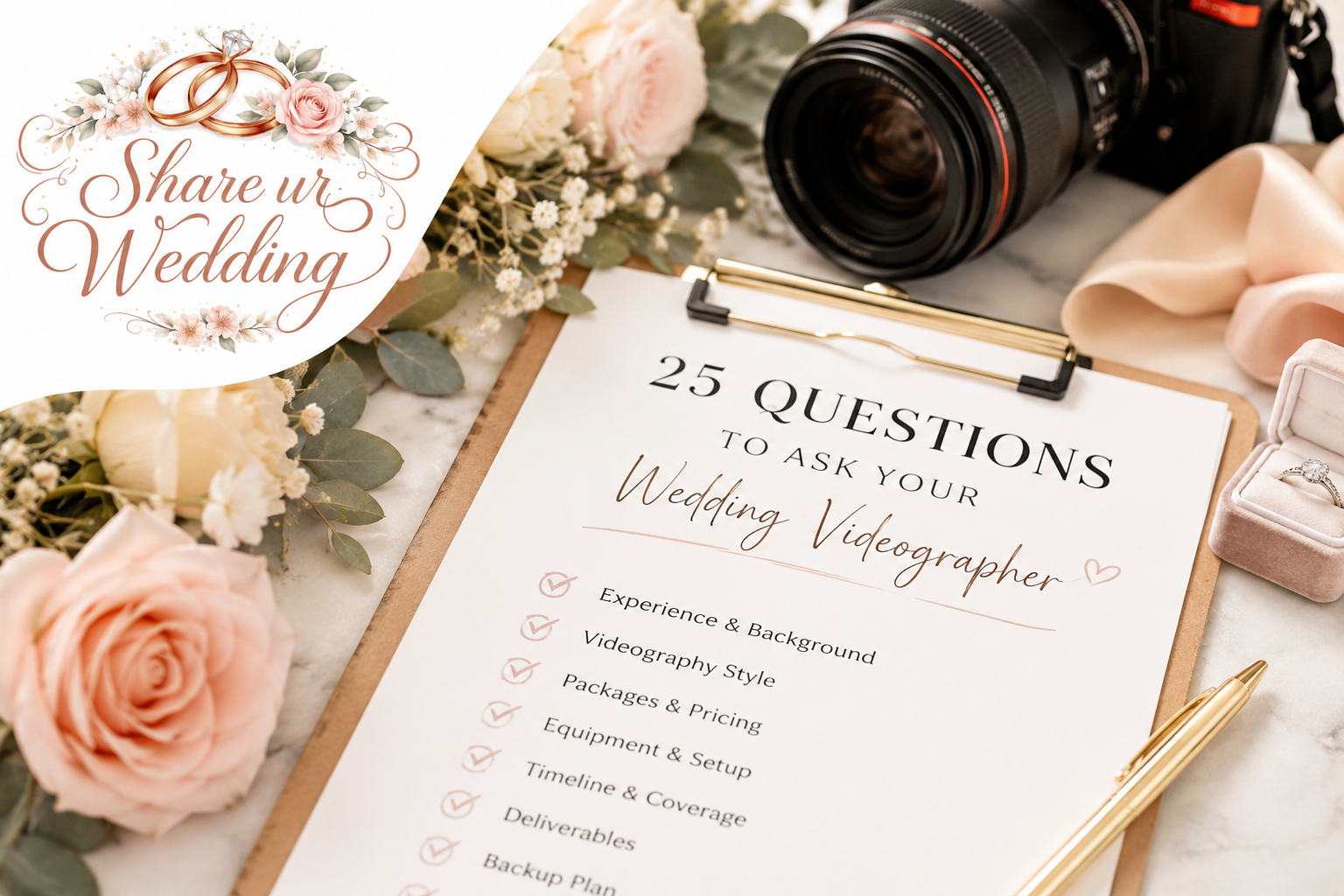
Here are 25 essential questions to ask every wedding videographer you meet with, along with exactly what to listen for in their answers.
Before the Meeting: What to Prepare
Before you pick up the phone or walk into a consultation, gather a few things:
- Your wedding date, venue, and approximate guest count
- A rough idea of the style you want (romantic, documentary, cinematic, fun)
- A budget range you’re comfortable with
- Links to any wedding films you’ve watched and loved — these are worth more than a thousand words
Having these ready means the conversation stays focused, and you’ll quickly see whether the videographer is truly listening to you or just pitching their standard package.
Questions About Experience and Style
1. How long have you been filming weddings?
Experience matters, but it’s not the only thing. A videographer with three years of focused wedding work may outperform someone who’s been doing it for fifteen years while mostly shooting corporate events. What you want to hear is genuine enthusiasm for weddings specifically, and a portfolio that backs it up.
2. Can I see two or three full wedding films — not just highlight reels?
Highlight reels are edited to be impressive. A full-length film tells you whether the videographer can sustain pace, storytelling, and quality across an entire day. Ask to watch films from weddings at similar venues, or with similar vibes to yours.
3. What is your filming style?
The main styles you’ll encounter are:
- Cinematic/Documentary: Artistic, story-driven, minimal direction from the videographer
- Traditional: Full coverage, ceremony start to end, more structured
- Editorial: Fast-paced, music-driven, feels like a film trailer
There’s no wrong answer — only what fits your personality and what you want to remember.
4. Have you filmed at our venue before?
A videographer who knows your venue already understands where the light falls at 4pm, which corridors have echo problems, and where to position themselves during the ceremony. It’s not a dealbreaker if they haven’t been there, but ask how they prepare for new venues.
5. Can we see reviews or speak to past couples?
Testimonials on a website are curated. Ask if you can reach out directly to a couple from a recent wedding. Most reputable videographers are happy to arrange this, and a real conversation reveals things no review can.
Questions About Packages and Pricing
6. What does your pricing include?
Get a detailed breakdown. Some videographers quote a base rate and then charge separately for ceremony coverage, second shooters, drone footage, travel, extra edit time, and rush delivery. You want to understand the full cost before falling in love with someone’s work.
7. What are your different packages, and what’s the difference between them?
Most videographers offer two or three tiers. Understand exactly what changes between them — hours of coverage, number of cameras, edit length, or types of deliverables. Sometimes upgrading one tier adds surprisingly little for a meaningful price jump.
8. Do you offer a highlight film, a full-length film, or both?
A highlight film is typically 3 to 5 minutes and is designed to share. A full-length film captures the complete ceremony, speeches, and first dances — something you’ll treasure privately for decades. Many couples want both; make sure you know which is included.
9. Are engagement shoots included or available?
An engagement shoot isn’t just a lovely set of photos — it’s a chance to get comfortable on camera before your wedding day. If your videographer also offers this, it can genuinely make a difference to how naturally you move and interact on the day.
10. What is your deposit and payment schedule?
Standard in the industry is a booking deposit (typically 20–30%) to secure your date, with the balance due shortly before the wedding. Be cautious of anyone requesting full payment upfront.
Questions About the Day Itself
11. How many videographers will be on the day?
One videographer is fine for smaller, more intimate weddings. For larger weddings, two cameras (one capturing wide shots, one going handheld for close moments) generally produces a richer, more dynamic film. Ask whether a second shooter costs extra.
12. How do you handle the ceremony?
This is often the most emotionally important part of your film. Ask how they position cameras, whether they use a tripod or go handheld, and how they capture audio. A good videographer will have a clear, specific answer — not a vague “we figure it out on the day.”
13. How will you capture audio?
Poor audio can ruin a wedding film. Ask whether they use a radio mic on the groom or officiant, how they handle the vows, and how they capture speeches. A videographer who takes audio seriously will have backup recording methods in place.
14. Do you use a drone?
Drone footage of a countryside venue or coastal ceremony can be breathtaking. But drone use requires CAA certification in the UK and FAA authorization in the US, and is restricted near airports and certain venues. Make sure their drone operation is fully licensed and insured.
15. How do you work alongside the photographer?
A good videographer and photographer are a team. They communicate, give each other space, and don’t compete for the same shot. Ask how they typically handle this — and if you’ve already booked your photographer, it’s worth introducing them via email beforehand.
16. What happens if you’re ill or have an emergency on the day?
This question makes some couples uncomfortable to ask. Ask it anyway. Reputable videographers have a network of trusted colleagues who can step in. If someone can’t give you a clear backup plan, that’s a significant red flag.
Questions About Equipment and Technicalities
17. What cameras do you use?
You don’t need to be a gear expert to have this conversation. The key is asking whether they use professional cinema cameras or consumer-level equipment, and whether their kit is suitable for low-light situations like evening receptions. If they seem reluctant to discuss their equipment, that’s worth noting.
18. How do you handle low light?
Evening receptions, candlelit ceremonies, and dark church interiors are all common challenges. Ask for examples of footage shot in similar conditions. Grainy, blurry footage in low light is one of the most common disappointments couples encounter.
19. Do you have backup equipment?
Professional videographers carry backup cameras, batteries, memory cards, and microphones. Equipment failure is rare but not impossible — you want someone who’s prepared for it.
20. How do you store and back up footage after the wedding?
Your wedding footage is irreplaceable. Ask whether they back up footage to multiple locations immediately after the wedding, and how long they keep your raw footage on file before deleting it.
Questions About Editing and Delivery
21. How long will the editing process take?
Turnaround times in the industry vary from six weeks to six months. Ask for a realistic estimate and whether it’s written into the contract. Peak wedding season (May to September) can mean longer waits, so knowing this upfront helps you manage expectations.
22. Will we have any input on the editing?
Some videographers welcome a music playlist or note about moments you especially want included. Others edit entirely to their own creative vision. Neither approach is wrong — but knowing in advance avoids disappointment.
23. How many revisions are included?
Even with the best communication, you may want a small change after you see the first cut. Ask how many rounds of revisions are included, and what it costs to request additional changes.
24. How will the final film be delivered?
Most videographers now deliver via a private online link (Vimeo or similar), sometimes alongside a USB or hard drive. Confirm the format and resolution — 4K delivery is now standard among premium videographers, but not universal.
25. Do we own the footage, or does the copyright stay with you?
This is one of the most misunderstood areas of wedding videography contracts. In most cases, the videographer retains copyright of the footage but grants you a personal license to watch and share it. If you want full ownership of the raw footage, that may cost significantly more — and many videographers don’t offer it at all. Make sure you’re clear on what you can and can’t do with your film.
Green Flags and Red Flags
After your consultations, take a moment to reflect on how the conversation felt — not just what was said.
Green flags to look for:
- They ask about you — your story, your personalities, your vision
- They’re enthusiastic but not pushy
- They have a clear, detailed contract ready to share
- They can show you full films, not just highlight reels
- They know how to handle challenges (bad weather, difficult lighting, church restrictions)
Red flags to watch for:
- They can’t show you recent work
- Prices seem unusually low with no clear explanation
- They’re vague about backup plans
- They haven’t filmed at a similar venue or scale of wedding
- Communication feels slow or disorganized before you’ve even booked
One More Thing: Trust Your Instincts
Your videographer will be one of the most present people on your wedding day. They’ll be at your shoulder while you put on your dress, inches away during your first kiss, hovering near the top table during speeches. You need to feel comfortable with them.
If someone has an outstanding portfolio but makes you feel uneasy, or if their communication style doesn’t match yours, it’s okay to keep looking. The right videographer is someone whose work you love and whose company you don’t mind for twelve hours straight.
Ready to Start Your Search?
Once you’ve found a few videographers whose work stops you mid-scroll, use this list of 25 questions as your guide. Take notes during each meeting, compare your answers, and trust the combination of head and heart.
Your wedding film will outlive the flowers, the cake, and the DJ’s last song. It’s worth getting right.