


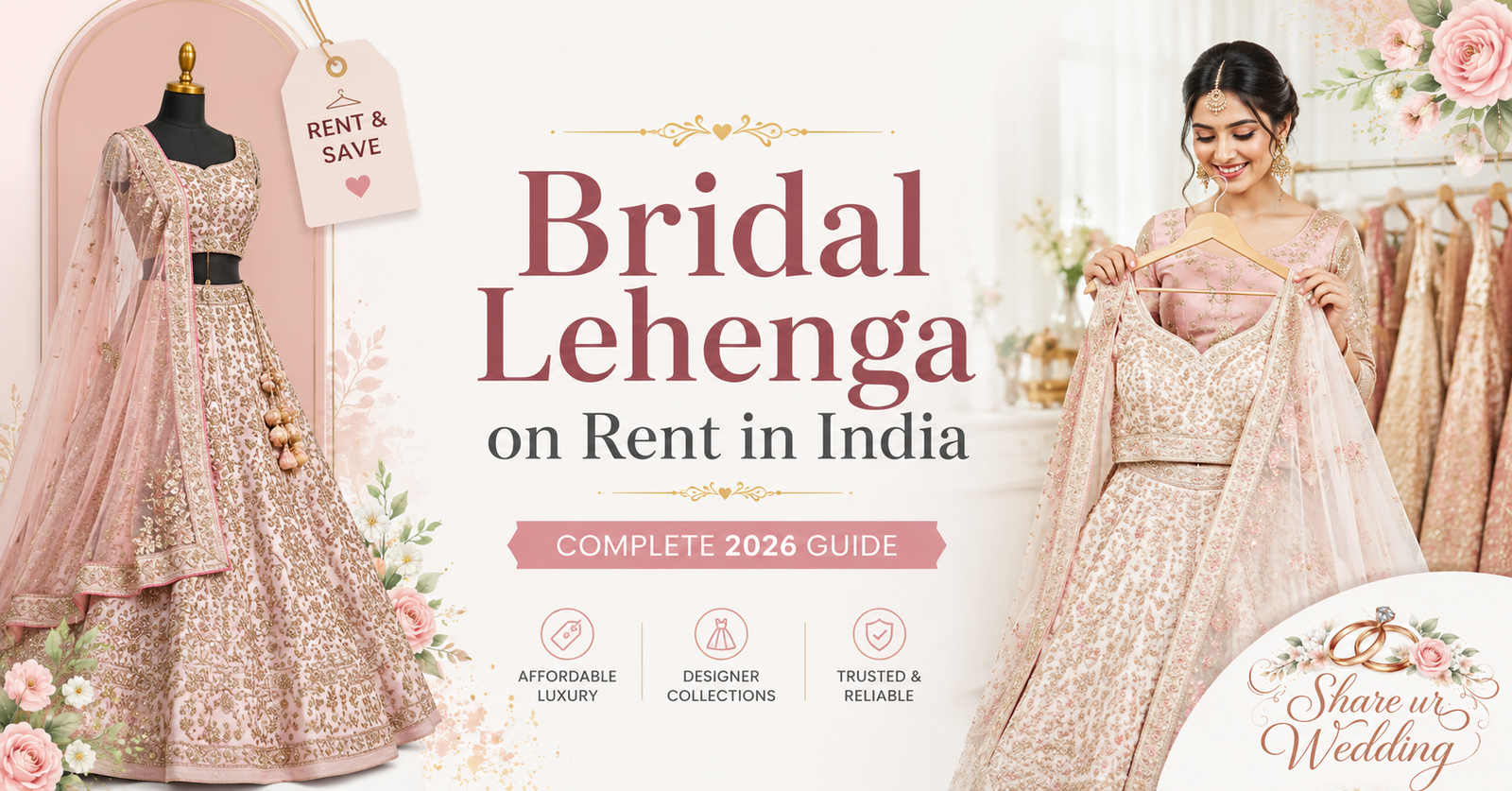
Somewhere between the first dress fitting and the moment you see the final bill, most brides end up doing the exact same mental math. A designer bridal lehenga can easily cost more than the entire honeymoon. You wear it for maybe six or seven hours, take a few hundred photos, and then it spends the next thirty years sitting in a box on top of a wardrobe.
So the thought pops up, quiet and totally reasonable: do I actually need to own this?
Renting a bridal lehenga is something a huge number of Indian brides are choosing now. For the right person, it’s a genuinely smart move that frees up lakhs for things that actually last past the wedding weekend. But let’s be real—it’s not for everyone. Plus, the rental industry loves to advertise the sweet sticker price while staying suspiciously quiet about massive deposits, strict alteration limits, and strict damage clauses.
This is the honest breakdown. No fluff, real numbers, the annoying traps nobody warns you about, and a straightforward way to decide whether you should rent or buy.
The Quick Answer
Renting a bridal lehenga in India usually costs 10% to 30% of its actual retail price for a 2–4 day rental, plus a refundable security deposit.
-
Rent it if: It’s for the sangeet, reception, or pre-wedding shoot—or even the main ceremony if you care way more about wearing a high-end designer label than actually keeping the outfit forever.
-
Buy it if: You need heavy alterations for a specific fit, want a family heirloom to pass down, or just know you’ll feel emotionally sad not owning your main wedding outfit.
How Bridal Lehenga Rental Actually Works
The business model is pretty straightforward, and it basically comes down to three routes:
-
Online Rental Platforms: Sites like Flyrobe (now under Rent It Bae), Date The Ramp, and Rent an Attire have huge catalogs ranging from mid-range labels to big couturiers. You pick your dates online, pay the fee plus a deposit, and the outfit is couriered to your door. Afterwards, you pack it back up for pickup or courier it back. Flyrobe alone carries pieces from names like Sabyasachi, Manish Malhotra, and Anita Dongre across dozens of cities.
-
Local Rental Boutiques: Almost every major city has dedicated bridal rental shops—Lower Parel and Andheri in Mumbai, Lajpat Nagar and Rajouri Garden in Delhi, HSR Layout in Bengaluru, and similar hubs elsewhere. You go in, physically try things on, get quick minor adjustments done, and pick up the outfit. This is usually the safer option for the main wedding day, simply because fit is everything and you can feel the heavy fabric yourself.
-
Peer-to-Peer & Consignment: A newer trend where married women list their own lightly-worn designer lehengas for rent. You can get genuine couture for way cheaper this way, but it’s riskier when it comes to fit, condition, and accountability. Always document these rentals carefully.
The standard rental window is usually 2 to 4 days—timed so the lehenga arrives a day or two before your event and goes back a day or two after. Multi-city shipping or longer holds will usually cost extra.
What It Really Costs: Honest Price Ranges
Here is the part the shiny storefronts like to blur. Every rental involves two separate payments, and you need to budget for both upfront.
1. The Rental Fee
| Outfit Category | Typical Rental Fee (2–4 Days) | What You Get |
|---|---|---|
| Entry / Light Embroidery | ₹1,000 – ₹5,000 | Mehendi, haldi, or guest lehengas |
| Mid-Range Designer Style | ₹5,000 – ₹15,000 | Sangeet, reception, engagement |
| Heavy Bridal Couture | ₹15,000 – ₹50,000+ | Main ceremony outfits, well-known labels |
| Premium Designer (Sabyasachi / Manish Malhotra tier) | ₹30,000 – ₹75,000+ | Statement bridal pieces, top-tier couture |
To give you an idea, renting a high-end couture lehenga from a boutique in Mumbai might run you around ₹35,000 for a 48-hour window (including fitting and pickup), on an outfit that retails for multiple lakhs.
2. The Security Deposit (The Part Nobody Mentions)
Almost every store or platform demands a refundable security deposit. This is completely separate from the rental fee, and it can be hefty—sometimes equal to a flat high amount (like ₹40,000 to ₹1,00,000+), or occasionally near the full value of the piece.
You get it back after returning the outfit safely, but it causes two big issues:
-
Cash Flow: You have to block a massive chunk of cash right in the middle of peak wedding expenses. Sure, it comes back, but you still need to have that money ready to hand over beforehand.
-
Deposit Deductions: Any damage, late returns, or severe stains get deducted straight out of this cash before it’s refunded to you.
💡 Pro Tip: Before handing over a single rupee, get three things confirmed on WhatsApp or in writing:
What is the exact security deposit amount?
How many days after the return will it be refunded?
What specifically counts as chargeable damage versus normal wear?
The Hidden Costs to Watch Out For
A sticker price of “₹12,000” sounds amazing on paper, but extra fees can sneak up on you if you aren’t paying attention.
-
Stains & Minor Damage: Haldi, mehendi, spilled food, sweat rings, pulled zari, or a popped hook happen easily when you’re dancing and hugging guests for eight hours. Ask upfront how they differentiate between basic “wear and tear” and expensive “damage.”
-
Strict Alteration Limits: This is the absolute biggest trap. A rental shop can’t let you hack up or permanently cut a outfit, because they have to return it to its base size for the next bride. Minor tweaks (adjusting blouse hooks, small waist tucks) are fine, but if you need significant taking-in, letting-out, or major length cuts, renting will be a headache.
-
Cleaning Fees: Some places include professional dry-cleaning in the cost; others slap it on as an extra charge at the end. Always ask.
-
Late Return Fines: If your reception goes late into the night and you miss the return window, daily late fees can add up fast.
-
Taxes & Shipping: Express couriers, multi-city delivery, and GST can bump up the final bill. Make sure your quote is tax-inclusive.
Realistically, that “₹12,000 rental” might require ₹12,000 + ₹50,000 blocked deposit + ₹1,500 cleaning/taxes. It’s still drastically cheaper than buying, but you need to budget for the actual cash out of pocket.
Rent vs. Buy: How to Decide
Forget what salespeople tell you. Here is the actual, practical trade-off.
You should RENT if:
-
You want top-tier designer looks without the debt: You want to walk out in a breathtaking label, but can’t justify spending the price of a small car on one outfit.
-
It’s for side functions: Sangeet, reception, engagement, or pre-wedding shoots are ideal candidates. These outfits get worn once, photographed heavily, and then served their purpose.
-
Storage is an issue: You live in a compact apartment, move around often, or just hate clutter.
-
You’re attending as a close relative/guest: Buying super heavy clothes for someone else’s wedding that you’ll never wear again makes zero sense.
-
You want to stay budget-conscious: You’d much rather put those extra lakhs toward the venue, food, honeymoon, or savings.
You should BUY if:
-
You want an emotional keepsake: You love the idea of keeping your main wedding outfit forever, maybe passing it down to a child, or keeping it as a sentimental memory.
-
You need heavy, custom tailoring: If your body type requires major structural alterations or custom length adjustments, buying gives you complete freedom to cut and fit without panic.
-
You legitimately plan to restyle and rewear it: If you pick a lighter bridal piece or versatile blouse, you can re-wear the skirt with a simpler top later, or style the dupatta differently for future family weddings.
-
You want custom colors or design tweaks: Rental catalogs are “what you see is what you get.” If you want custom dyed fabric, specific sleeve lengths, or personalized embroidery, buying is your only real path.
The Smart “Middle Path” Most Brides Take
Instead of picking just one strategy, most brides do a mix-and-match:
-
Buy the main wedding ceremony outfit so you get the exact fit, custom colors, and emotional keepsake.
-
Rent everything else—the sangeet, mehendi, cocktail, and reception wear.
Since pre-wedding and post-wedding outfits are rarely ever re-worn, renting them saves you a massive chunk of money while letting you switch up your style dramatically for every single event.
8 Rules for Renting Without Any Regrets
If you do decide to rent, follow this step-by-step checklist to protect your wallet:
-
Book well in advance: The prettiest designer pieces get booked out months ahead, especially during peak wedding season (November to February).
-
Try it on in person whenever possible: Photos can be deceiving. Fabric weight, flare, and how the waist sits vary wildly once it’s on your actual body.
-
Get alteration limits confirmed in writing: Ask point-blank: “How much can this blouse/skirt be adjusted without penalty?”
-
Document everything the second it arrives: The moment you open the delivery box, take clear, detailed photos and videos of the entire outfit in good lighting. Capture existing loose threads, faint marks, or worn embroidery with time-stamped proof. If a store tries to charge you for pre-existing damage later, this video is your only defense.
-
Double-check the deposit terms: Know exact numbers, how long it takes to process the refund, and what constitutes a deduction.
-
Have a strategy for high-risk events: Don’t wear your heavy rented lehenga to the main haldi session unless you enjoy losing your security deposit to turmeric stains. Wear a cheap, basic outfit for messier rituals, and save the rental for the clean photo moments.
-
Set a reminder for the return time: Late fees add up fast. Coordinate the courier or return trip beforehand so you aren’t stressing about it mid-wedding hangover.
-
Save every receipt and chat history: Keep all rental agreements, WhatsApp conversations, and deposit receipts saved in a single folder until your deposit is safely back in your bank account.
Final Thoughts
A wedding is a long list of things you pay full price for and only use once. Your outfits don’t have to break the bank.
Renting gives you access to dream designer wear at a fraction of the price, leaving your money free for the stuff that actually matters after the wedding day is over. Rent for the look and savings; buy for the heirloom and perfect fit. Just read the fine print, take your inspection photos, and enjoy the party!
Related reading on Share Ur Wedding
- Bridal Lehenga vs Saree: Which is Right for Your Wedding?
- Bridal Blouse Designs 2026: 50 Styles for Every Neckline & Body Type
- Bridal Jewellery Guide 2026: What to Buy, Rent and Borrow
- How to Create a Wedding Budget: Template + Cost Breakdown
- How to Plan a Dream Wedding Under ₹5 Lakhs
Disclaimer: Rental prices, deposit amounts, and policies vary widely by store, platform, city, and outfit, and change over time. The figures here are general 2026 market ranges for guidance only — always confirm current terms directly with the rental provider before booking.