

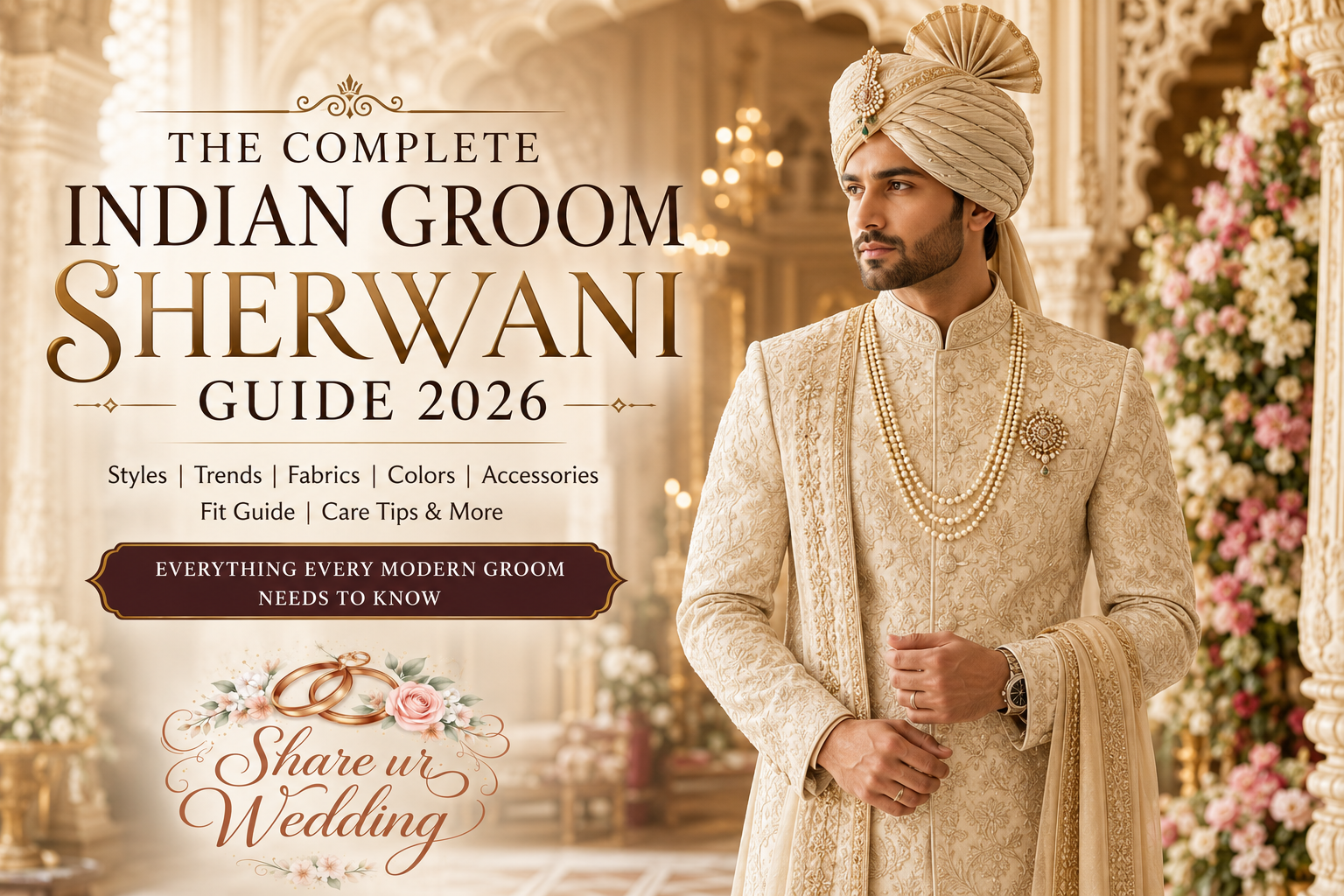
There is a specific moment during wedding planning that almost every Indian groom goes through. You are sitting on a plush velvet sofa in a high-end boutique, surrounded by options, while a well-meaning designer holds up five slightly different shades of ivory fabric. To your eyes, they look exactly the same. Meanwhile, your mother is subtly pointing toward a heavily embroidered gold piece, and your partner is across the room sending you a look that clearly says, “If you choose that bright red collar, we might need to rethink this whole event.” It is easy to feel a bit overwhelmed when navigating your options. For decades, the wedding industry has focused heavily on the bridal lehenga, leaving the groom attire Indian wedding choices as almost an afterthought.
But things are changing fast. If you are preparing for your big day, you need a reliable roadmap to navigate the modern style landscape. This comprehensive Indian groom sherwani guide 2026 is designed to help you understand your choices, find the right fit, and select a look that makes you feel genuinely confident when walking toward the mandap. Let us break down everything you need to know about fabrics, cuts, styles, and budgeting to find the ideal look for your celebration.
Sherwani vs Jodhpuri vs Bandhgala vs Achkan — What Is the Difference?
Before you step into a boutique or browse online stores, it helps to understand the basic terminology. Many people use these terms interchangeably, but they have distinct differences in history, cut, and structure. Choosing the right style depends on your personal preference and how formal you want your wedding outfit India look to be.
The Classic Sherwani
The traditional sherwani is the most formal option available. It features a structured silhouette, a definitive mandarin collar, and a full front button opening that extends below the knee. It is typically crafted from heavier fabrics to provide a regal look. If you want a traditional appearance for the main pheras or an elegant nikah ceremony, this is your go-to option.
The Achkan
The achkan is often confused with the classic sherwani, but it has a few distinct differences. It is generally shorter, hitting just above the knee, and is made from lighter, more fluid fabrics. The silhouette is closer to the body, offering a sleek look. It features a side-opening pattern rather than a straight central button line, making it a great choice for grooms who want a classic aesthetic with a slightly lighter feel.
The Bandhgala
Literally translating to “closed neck,” the bandhgala is essentially a structured Indian suit jacket. It ends around the hips, just like a Western suit jacket, but retains the classic high collar. It provides a highly versatile silhouette that works beautifully for formal receptions or high-profile sangeet nights where you want a clean, tailored appearance.
The Jodhpuri Suit
When evaluating a jodhpuri suit vs sherwani, the main difference lies in the complete ensemble structure. A Jodhpuri suit pairs a structured bandhgala jacket with tailored trousers, often featuring a distinct royal Rajasthani cut with riding-inspired breeches or slim trousers. It is an excellent choice for pre-wedding events or a modern reception look if you want to move away from longer tunics.
Fabric Guide: Finding the Right Weight and Texture
The fabric you choose dictates how comfortable you will be during a long ceremony. Sitting by a holy fire for hours or standing under heavy stage lights can get warm quickly. Selecting the right sherwani fabric types depends on your wedding season and regional climate.
Raw Silk and Benarasi Silk
-
The Look: Rich, subtly textured, and naturally lustrous.
-
Pros: Holds a structured silhouette perfectly and photographs beautifully under any lighting.
-
Cons: Can feel stiff if it is not lined properly with high-quality cotton or satin.
-
Best For: Autumn and winter weddings across India.
Brocade
-
The Look: Regal, raised woven patterns featuring gold or silver zari threads.
-
Pros: Needs very little additional embroidery because the fabric itself is decorative.
-
Cons: It is heavy and can feel warm during a summer event.
-
Best For: Grand evening pheras or traditional royal-themed weddings.
Velvet
-
The Look: Deep, matte texture with an undeniably luxurious feel.
-
Pros: Drapes elegantly and gives a rich depth to jewel tones like emerald and navy.
-
Cons: Heavy and completely unsuitable for warm weather.
-
Best For: December to February winter weddings in Northern India.
Modern Linen and Georgette Blends
-
The Look: Lightweight, matte, and fluid.
-
Pros: Highly breathable, allowing for easy movement and comfort.
-
Cons: Lacks the rigid structural look of heavy silk or brocade.
-
Best For: Destination beach weddings in Goa or summer day ceremonies.
| Fabric Type | Ideal Season | Regional Suitability | Breathability Rating |
| Raw Silk | Autumn / Winter | Pan-India | Medium |
| Brocade | Winter Evening | North & Western India | Low |
| Velvet | Peak Winter | Northern Plains | Low |
| Linen Blends | Summer / Spring | Coastal & Southern India | High |
Sherwani Colour Trends for Indian Grooms in 2026
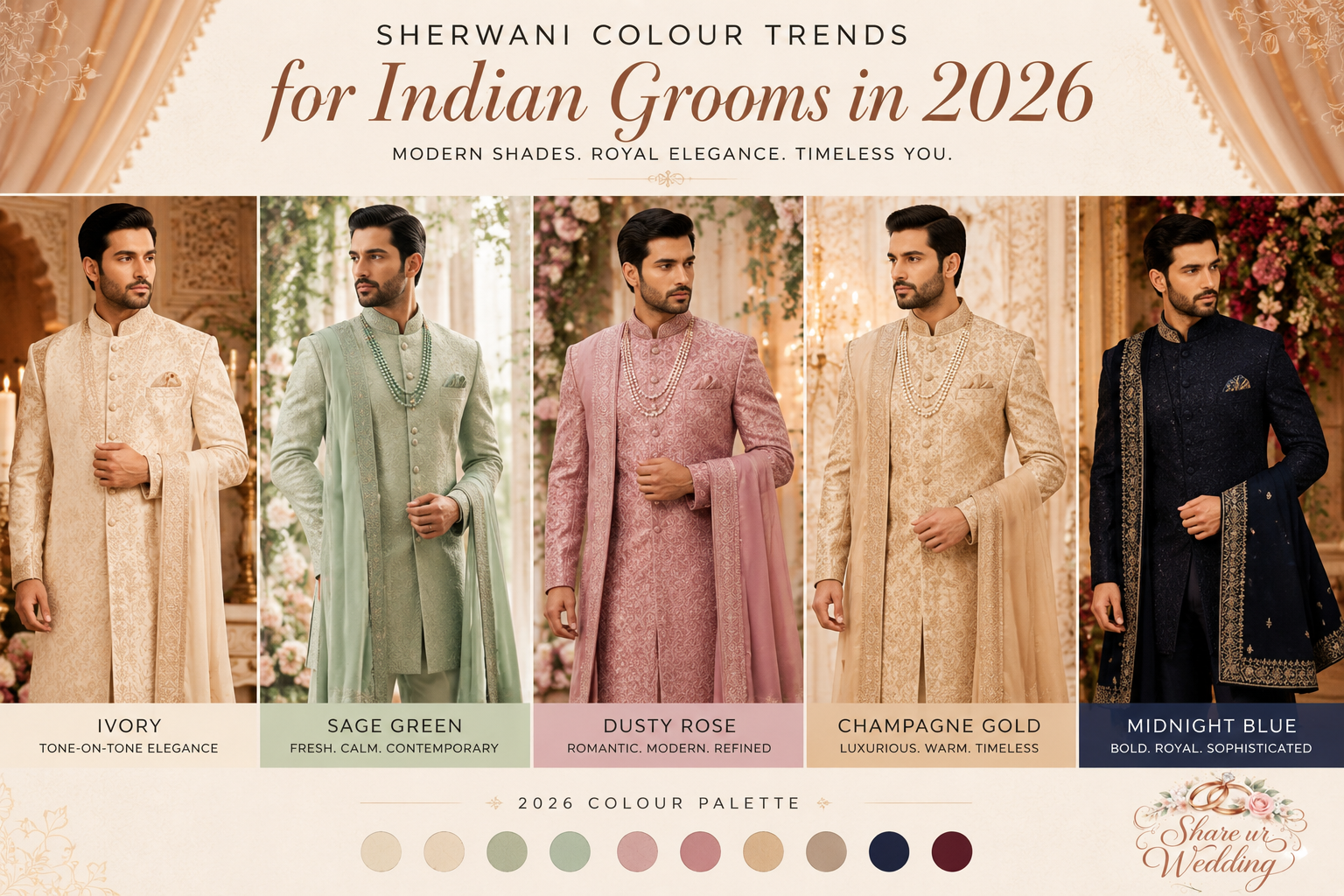
The days of grooms being limited to just basic cream or deep maroon are long gone. The current sherwani colour trends 2026 show an interesting shift toward sophisticated neutrals, muted pastels, and deep jewel tones that make a refined statement.
Sage Green and Muted Olive
This palette is incredibly popular for day weddings. It offers a fresh look that coordinates beautifully with outdoor decor, floral arrangements, and bridal lehengas in shades of pink, ivory, or blush.
Earthy Terracotta and Dusty Rose
For grooms looking for an alternative to classic red or maroon, these warmer tones provide a modern, sophisticated option. They add color without feeling overly bright, making them a great fit for sunset ceremonies.
Midnight Blue and Charcoal Grey
These deep shades are perfect for evening receptions. A deep matte charcoal or textured midnight blue looks exceptionally sharp under modern venue lighting and offers a timeless aesthetic.
Ivory, Alabaster, and Off-White
Classic shades remain popular for a reason. In 2026, the trend focuses on monochromatic tone-on-tone styling, where an ivory base is paired with matching ivory embroidery to create a clean, contemporary look.
Embroidery Styles: Understanding the Details
The embroidery on your outfit defines its overall character. Knowing the names of different sherwani embroidery styles helps you communicate clearly with your designer or tailor.
[Traditional Embroidery Styles]
  │
  ├── Zardozi: Heavy, metallic gold/silver threadwork for a classic look
  │
  ├── Resham: Matte, smooth silk thread embroidery offering subtle color depth
  │
  ├── Aari: Fine, intricate chain-stitch work ideal for detailed patterns
  │
  └── Cutdana: Reflective stone/bead details that add sparkle under evening lights
Zardozi
This traditional technique uses metallic threads to create raised, detailed patterns. It adds a classic, heavy look to your outfit. If you are opting for a grand royal aesthetic, zardozi details along the collar, cuffs, and button line work beautifully.
Resham
Resham work uses fine silk threads to create flat, intricate embroidery. Because it utilizes colored silk threads rather than metallic wire, it allows for subtle color gradations. It is an excellent choice if you want to incorporate soft floral motifs or match a specific shade in your partner’s attire.
Aari
Aari is a precise chain-stitch embroidery style done with a specialized hooked needle. It is known for its concentric, flowing patterns and is typically lighter than zardozi, making it comfortable to wear for extended periods.
Cutdana and Sequin Accents
This style uses small stones, glass beads, or sequins cut at specific angles to catch and reflect light. It is ideal for evening receptions or sangeet outfits, adding just the right amount of subtle shimmer under modern lighting.
How to Match Your Sherwani With Your Bride’s Outfit
Figuring out how to coordinate your look with your partner’s bridal wear can be tricky. You want your outfits to complement each other beautifully without looking like you were cut from the exact same bolt of cloth.
The Complementary Palette Approach
Instead of matching colors exactly, look for shades that naturally complement each other. If your partner is wearing a traditional red lehenga, look for an elegant ivory sherwani with subtle red piping or a delicate red motif in the embroidery. If they are wearing pink, consider a sage green or warm beige base.
The Accent Element Strategy
Keep your primary base color neutral, such as a soft cream or warm grey, and match your accessories to the bride’s attire. You can easily coordinate your safa (turban), pocket square, or dupatta (stole) with the exact fabric or color of their lehenga or saree. This creates a cohesive look while keeping your style clean and classic.
Ceremony-Wise Sherwani Guide: Tailoring Your Look
A typical Indian wedding involves multiple distinct events, and your wardrobe should match the specific energy and mood of each function. Here is how to plan your outfits across the celebrations.
The Mehendi and Haldi
Keep things comfortable, playful, and lightweight. This is not the place for a heavy, structured sherwani. Instead, opt for a light georgette or cotton-silk achkan or an asymmetrical kurta paired with a tailored Nehru jacket. Bright, festive tones like mustard yellow, mint green, or light peach work beautifully here.
The Sangeet Night
Your sangeet outfit needs to combine style with mobility because you will likely be dancing. A tailored jodhpuri suit or a modern short achkan with slim trousers is an excellent choice. Look for deeper colors like midnight blue, emerald, or deep purple with subtle cutdana or thread embroidery that catches the light as you move.
The Main Wedding Ceremony (Pheras/Nikah)
This is the time for your most formal, traditional look. A classic raw silk or brocade sherwani in ivory, soft gold, or deep maroon is the standard choice. Ensure it features elegant zardozi or resham work along the collar and chest, and pair it with a well-coordinated safa and dupatta to complete the ensemble.
The Reception
The reception allows you to transition into a sleek, contemporary aesthetic. A well-tailored bandhgala suit in charcoal grey, classic black, or deep navy offers a sharp, modern appearance. Pair it with structured formal trousers and polished leather shoes for a refined finish.
How to Get the Perfect Fit: Measurements, Tailoring & Timeline
The best fabric and design can lose their impact if the fit is not quite right. A well-tailored sherwani should feel comfortable while maintaining clean, structured lines.
Critical Fit Checkpoints
-
The Shoulders: The shoulder seams must sit exactly where your natural shoulders end. Any sagging will create an unintended boxy look.
-
The Armholes: Ensure the armholes are cut high enough to give you a clean silhouette, but leave enough room so you can easily raise your arms during rituals or hug guests.
-
The Length: A standard traditional sherwani should hit right about one to two inches below your knee. Anything shorter can look like an achkan, while anything longer might distort your proportions.
The Production Timeline
Do not leave your wedding shopping until the last minute. Custom tailoring takes time, and you want to avoid unnecessary stress as the date approaches.
[The Ideal 3-Month Outfitting Timeline]
  │
  ├── 90 Days Out: Initial research, brand visits, fabric selection, and first measurements.
  │
  ├── 45 Days Out: First trial (muslin or raw fabric structure check) to adjust overall drape.
  │
  ├── 15 Days Out: Final trial with your actual wedding shoes and accessories included.
  │
  └── 7 Days Out: Final steam iron and secure pickup of the complete ensemble.
Top Sherwani Brands and Designers in India 2026

Finding the right outfit depends heavily on your budget and preferences. The Indian groom wear market offers excellent options across three main categories.
Budget-Friendly Options (INR 15,000 to INR 35,000)
If you want a classic, well-made look without a premium designer price tag, national retail chains are a fantastic choice. Brands like Manyavar and Tasva (by Tarun Tahiliani and Aditya Birla Group) offer a wide variety of ready-to-wear sherwanis and achkans. They provide modern designs, reliable construction, and standard sizing options that work beautifully for grooms on a practical budget.
Mid-Range and Made-to-Measure (INR 40,000 to INR 1,200,000)
If you are looking for customized tailoring, premium fabrics, and unique embroidery patterns, look into specialized luxury labels. Designers like Samyakk, Kalki Fashion, and Frontier Raas offer excellent made-to-measure services. They allow you to select your preferred fabric bases and modify embroidery details to perfectly match your partner’s wedding look.
Luxury Designer Labels (INR 1,500,000 to INR 5,000,000+)
For unmatched luxury, heritage craftsmanship, and a truly bespoke experience, India’s top couture designers offer incredible statement pieces.
-
Sabyasachi Mukherjee: Famous for rich, heritage textiles, antique zardozi work, and classic royal Indian aesthetics.
-
Manish Malhotra: Known for contemporary silhouettes, elegant geometric embroidery, and striking evening styles for the modern groom.
-
Tarun Tahiliani: Renowned for precise, masterful tailoring, lightweight drapes, and structured garments that prioritize comfort.
Renting vs Buying a Sherwani — Which Makes Financial Sense?
It is no secret that a premium wedding outfit is a significant investment. When deciding whether to buy or rent your attire, consider how often you are likely to wear it again.
When Buying Makes Sense
If you want a sentimental keepsake from your wedding day, or if you anticipate attending several formal family weddings over the next few years where you can reuse the outfit, buying is a great choice. Purchasing also gives you complete freedom to customize the fit, fabric, and embroidery exactly to your liking.
When Renting is the Smarter Choice
Let’s be realistic: a heavily embroidered, traditional ivory sherwani is not something you can easily wear to a friend’s casual dinner or a standard office event. If you prefer to allocate your budget toward venue upgrades, gourmet catering, or a memorable honeymoon, renting is an excellent alternative. Premium rental platforms like Flyrobe or The Clothing Rental allow you to wear high-quality, professional-grade groom attire for a fraction of the retail cost, with professional altering services often included.
Accessories to Complete the Look: Your Day-Of Checklist
Your sherwani forms the foundation of your wedding look, but the right accessories pull the whole outfit together. Treat this section as your personal day-of checklist to ensure you don’t miss any key details.
-
The Safa (Turban): Choose your fabric carefully. A lightweight Chanderi or Kota doria tie is much easier to wear for four to five hours than a heavy brocade option. Ensure it is pinned securely so it stays perfectly in place.
-
The Mojris (Traditional Shoes): Never wear brand-new leather mojris on your wedding day without breaking them in first. Wear them around your house with thick socks for at least 3 to 4 days before the ceremony to prevent uncomfortable blisters.
-
The Dupatta (Stole): A fine georgette, silk, or velvet shawl adds an elegant touch to your look. Secure it neatly to your shoulder with a hidden safety pin so it doesn’t slide around while you are participating in the rituals.
-
The Statement Jewelry: A simple, elegant multi-layered string of fresh emerald beads or semi-precious pearls adds a classic touch to a neutral ivory or beige sherwani without overwhelming the design.
-
The Kalgi and Brooch: A small, finely crafted antique metal kalgi pinned to your turban adds a subtle royal touch that coordinates beautifully with traditional embroidery styles.
FAQs
How far in advance should a groom order a custom sherwani?
You should aim to place your order at least 2 to 3 months before your wedding day. Custom tailoring requires a multi-stage production process, including primary fabric cutting, detailed hand embroidery, and structural assembly. Booking early ensures you have time for at least two fitting trials and allows your tailor to make any final adjustments without any last-minute rush.
What is the most popular sherwani colour for Indian grooms in 2026?
Soft, sophisticated neutrals like ivory, alabaster, and warm champagne beige lead the trends for 2026, especially when styled with elegant tone-on-tone embroidery. For evening events, grooms are increasingly choosing deep, modern tones like sage green, earthy terracotta, and textured midnight blue over bright traditional shades.
Can I rent a designer sherwani in India?
Yes, you can absolutely rent premium groom wear across India. Trusted platforms like Flyrobe, Popxo Rent, and various regional luxury rental boutiques offer a wide selection of sherwanis, achkans, and jodhpuri suits. These services include professional dry cleaning and custom alterations to ensure a proper fit for your event.
How do I match my sherwani to my bride’s lehenga?
The most stylish approach is to choose complementary tones rather than matching the colors exactly. If your partner is wearing a traditional red lehenga, look for a classic ivory or cream sherwani and incorporate subtle red accents through your pocket square, turban, or embroidery details. This creates a beautifully balanced, coordinated look for your photos.
What shoes should a groom wear with a sherwani?
Traditional leather mojris or juttis are the classic choice for a formal sherwani or achkan. If you are opting for a modern jodhpuri suit, a structured bandhgala, or contemporary slim trousers, sophisticated leather oxford shoes or sleek patent leather loafers provide a sharp, polished finish.
Conclusion
At the end of the day, your wedding celebration is a shared milestone, and you deserve to look and feel just as exceptional as your partner when you step into the spotlight. Choosing the right outfit is about finding a balance between traditional elegance and personal comfort. Whether you choose a classic silk sherwani with detailed zardozi work or a clean, modern bandhgala suit, prioritize a proper fit and a fabric that suits your venue. When you feel comfortable in what you are wearing, it shows. Use this guide to make your choices, enjoy the planning process, and step forward into your new chapter with confidence.